Emergence of Telemedicine Services
The emergence of telemedicine services in India is transforming the landscape of healthcare delivery, particularly for patients with hemiplegic migraine. Telemedicine offers a convenient platform for patients to consult with specialists without the need for physical visits, which is especially beneficial for those experiencing debilitating symptoms. This accessibility may lead to increased patient engagement and adherence to treatment plans, thereby positively influencing the hemiplegic migraine market. Additionally, telemedicine can facilitate timely interventions and follow-ups, which are crucial for managing chronic conditions like hemiplegic migraine. As the Indian government continues to support digital health initiatives, the integration of telemedicine into routine care is likely to expand, further driving the market. The convenience and efficiency of telemedicine may encourage more patients to seek help, ultimately benefiting the hemiplegic migraine market.
Rising Demand for Personalized Medicine
The rising demand for personalized medicine in India is emerging as a significant driver for the hemiplegic migraine market. Patients are increasingly seeking tailored treatment options that cater to their specific genetic and phenotypic profiles. This trend is prompting pharmaceutical companies to invest in research and development of personalized therapies for hemiplegic migraine. As the understanding of genetic factors associated with this condition improves, it may lead to the creation of more effective and individualized treatment regimens. Furthermore, the Indian healthcare system is gradually adopting personalized medicine approaches, which could enhance patient outcomes and satisfaction. This shift towards personalized care is likely to stimulate growth in the hemiplegic migraine market, as patients and healthcare providers alike recognize the benefits of customized treatment strategies.
Rising Incidence of Hemiplegic Migraine
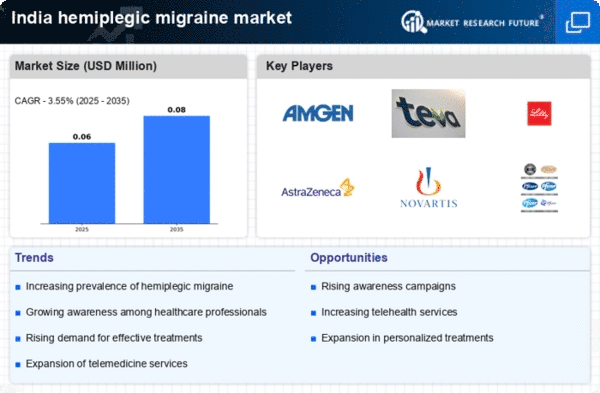
The rising incidence of hemiplegic migraine in India is a crucial driver for the hemiplegic migraine market. Recent studies indicate that the prevalence of this condition is increasing, with estimates suggesting that it affects approximately 0.1% to 0.5% of the population. This growing number of cases necessitates enhanced healthcare services and treatment options, thereby expanding the market. As awareness of hemiplegic migraine increases among healthcare professionals and patients, the demand for effective therapies is likely to rise. Furthermore, the Indian healthcare system is gradually improving its diagnostic capabilities, which may lead to earlier detection and treatment of hemiplegic migraine, further driving market growth. The combination of rising incidence and improved healthcare infrastructure positions the hemiplegic migraine market for significant expansion in the coming years.
Increased Investment in Neurological Research
In India, there is a notable increase in investment directed towards neurological research, which serves as a significant driver for the hemiplegic migraine market. Government and private sectors are allocating more funds to understand the underlying mechanisms of neurological disorders, including hemiplegic migraine. This investment is likely to foster innovation in treatment modalities, potentially leading to the development of new therapies and medications. As research progresses, it may result in more effective management strategies for hemiplegic migraine, thereby enhancing patient outcomes. The Indian government has also initiated various programs to promote research in the healthcare sector, which could further stimulate advancements in the hemiplegic migraine market. This focus on research not only benefits patients but also encourages pharmaceutical companies to invest in this niche market.
Growing Awareness Among Healthcare Professionals
The growing awareness among healthcare professionals regarding hemiplegic migraine is a pivotal driver for the hemiplegic migraine market. As medical education evolves, more practitioners are being trained to recognize and manage this complex condition. This increased knowledge base is likely to lead to improved diagnosis and treatment options for patients suffering from hemiplegic migraine. Furthermore, healthcare professionals are becoming more attuned to the nuances of this condition, which may result in better patient management strategies. The Indian healthcare system is witnessing a shift towards specialized training in neurology, which could enhance the overall understanding of hemiplegic migraine. Consequently, this heightened awareness among healthcare providers is expected to positively impact the hemiplegic migraine market by increasing the demand for targeted therapies and interventions.