
Request Free Sample ×

Kindly complete the form below to receive a free sample of this Report

* Please use a valid business email

Leading companies partner with us for data-driven Insights

clients tt-cursor
Hero Background
English
Chinese
French
Japanese
Korean
German
Spanish

Human Machine Interface Market Trends

ID: MRFR/SEM/0586-CR
188 Pages
Nirmit Biswas
February 2026

Human Machine Interface (HMI) Market Research Report Information by Component (Touch Sensors, Tactile Switches, Control and Signaling Components, ECU Processor Units, and Others.), By Technology Type (into Capacitive Touch Technology, Haptic Feedback Technology, Printed Electronics, Optical Bonding & Vacuum Lamination, Multi-Component Injection Molding, and Others), By Application Area (Industrial Automation, Automotive, Healthcare, Consumer Electronics, Aerospace & Defense, and Others), By Interface Type (Touchscreen Interfaces, Tactile Switches & Buttons, Joysticks, and Others) By Configuration(Manual Configuration, Semi-Automatic Configuration, and Fully Automatic Configuration) and By Region (North America, Europe, Asia-Pacific, South America, And Middle East & Africa) –Market Forecast Till 2035

Share:
Download PDF ×

We do not share your information with anyone. However, we may send you emails based on your report interest from time to time. You may contact us at any time to opt-out.

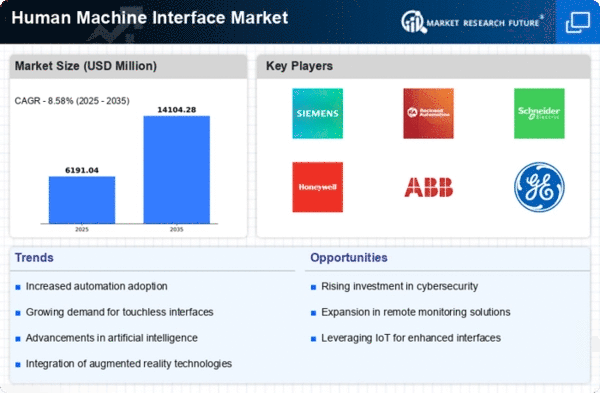
Human Machine Interface Market Infographic
Purchase Options

Market Trends

Key Emerging Trends in the Human Machine Interface Market

The Human Machine Interface (HMI) market is seeing some notable trends that are impacting its development path and the way humans connect with machines. One noticeable trend is the growing acceptance of touchless and gesture interfaces. Given the stress placed on hygiene and the need to minimize physical contact, touchless HMI solutions have been firmly embraced. Gesture recognition technology gives people the ability to control machines without having direct physical contact, a convenient and cleaner experience. The trend is particularly conspicuous in public places, medical environments and manufacturing areas where it's important to reduce touch points. The rise of augmented reality (AR) and virtual reality interfaces is another interesting trend in the HMI market. These technologies are changing the way humans interact with machines, from embedding digital information in the physical world to recreating immersive virtual environments. AR-based HMI displays real time data and instructions within the user's field of vision, improving decision making while boosting efficiency. Unlike AR, though, VR creates artificial environments for training and design. It can even be used to control robots remotely. But with technologies like AR and VR gaining ever wider popularity, industries are beginning to use these in their HMI implementations as a more human-centered experience. Another important trend influencing the HMI market is the combination of artificial intelligence and machine learning. HMI systems powered by AI can adjust to user needs, learn from the behavior of their users and continuously get better. With natural language processing (NLP), machines can even interact with users through spoken commands via voice-controlled interfaces. AI-driven analytics improve data processing and decision making, bringing important insight to operators. This trend not only makes HMI systems smarter, it also aids predictive maintenance in reducing downtime and improving overall system dependability. Also, modular and tailor-made HMI solutions are becoming increasingly popular. Industries are demanding flexible interfaces that can be flexibly adapted to their own respective needs and workflows. Modular HMI designs that easily accommodate new features and functionalities mean there is no need to redesign the entire system. The recognition that different industries and applications have special needs was an important reason for this trend. A single solution may not be right in all places. Flexible HMI solutions are needed to meet the different requirements of various industries from manufacturing, healthcare and transportation through smart cities.

Author
Author Profile
Nirmit Biswas
Senior Research Analyst

With 5+ years of expertise in Market Intelligence and Strategic Research, Nirmit Biswas specializes in ICT, Semiconductors, and BFSI. Backed by an MBA in Financial Services and a Computer Science foundation, Nirmit blends technical depth with business acumen. He has successfully led 100+ projects for global enterprises and startups, including Amazon, Cisco, L&T and Huawei, delivering market estimations, competitive benchmarking, and GTM strategies. His focus lies in transforming complex data into clear, actionable insights that drive growth, innovation, and investment decisions. Recognized for bridging engineering innovation with executive strategy, Nirmit helps businesses navigate dynamic markets with confidence.

Leave a Comment

FAQs

What is the projected market valuation of the Human Machine Interface Market by 2035?

<p>The Human Machine Interface Market is projected to reach a valuation of approximately 14104.28 USD Million by 2035.</p>

What was the market valuation of the Human Machine Interface Market in 2024?

<p>In 2024, the overall market valuation of the Human Machine Interface Market was 5701.82 USD Million.</p>

What is the expected CAGR for the Human Machine Interface Market during the forecast period 2025 - 2035?

<p>The expected CAGR for the Human Machine Interface Market during the forecast period 2025 - 2035 is 8.58%.</p>

Which application segment had the highest valuation in the Human Machine Interface Market?

<p>The Industrial Automation application segment had the highest valuation, reaching 1500.0 USD Million in 2024.</p>

What are the projected valuations for the Healthcare application segment by 2035?

<p>The Healthcare application segment is projected to reach valuations between 1200.0 USD Million and 3000.0 USD Million by 2035.</p>

Which technology segment is expected to grow significantly in the Human Machine Interface Market?

The Touch Screen technology segment is expected to grow significantly, with a valuation range of 2000.0 USD Million to 5000.0 USD Million by 2035.

What is the projected valuation range for the Automotive application segment by 2035?

The Automotive application segment is projected to have a valuation range of 1000.0 USD Million to 2500.0 USD Million by 2035.

Which end-use segment is anticipated to show substantial growth in the Human Machine Interface Market?

The Manufacturing end-use segment is anticipated to show substantial growth, with projected valuations between 1500.0 USD Million and 3800.0 USD Million by 2035.

Who are the key players in the Human Machine Interface Market?

Key players in the Human Machine Interface Market include Siemens, Rockwell Automation, Schneider Electric, Honeywell, ABB, Emerson Electric, General Electric, Mitsubishi Electric, Panasonic, and B&amp;R Industrial Automation.

What is the projected valuation for the Virtual Reality technology segment by 2035?

The Virtual Reality technology segment is projected to reach valuations between 1101.82 USD Million and 2604.28 USD Million by 2035.

Market Summary

As per MRFR analysis, The Human Machine Interface (HMI) Market Size Was Valued at USD 5,917.75 million in 2024. The Human Machine Interface (HMI) Market Industry Is Projected to grow from USD 6,315.49 million in 2025 to USD 14,709.41 million by 2035, Exhibiting A Compound Annual Growth Rate (CAGR) of 8.8% during the Forecast Period (2025 – 2035).

Key Market Trends & Highlights

The Human Machine Interface (HMI) Market is reflecting rapid evolution driven by automation, digital transformation, and advanced technologies.

  • Artificial intelligence is revolutionizing HMIs by enabling adaptive, learning interfaces that analyze user behaviors and environmental data for predictive insights. For instance, AI-powered HMIs deliver real-time maintenance alerts, optimize workflows, and personalize controls. Multimodal HMIs combine voice, gesture, touch, and visual inputs for seamless operation, especially in vehicles and factories were hands-free control boosts safety. Acoustic and motion-based HMIs grow fastest, supporting hygiene-focused touchless interactions post-pandemic. HMIs aid smart factories by visualizing data streams, minimizing downtime. Industrial applications dominate, with AR headsets enabling immersive maintenance in oil & gas and aerospace. Gesture and voice recognition rise for hygienic, ergonomic use in healthcare and food processing, reducing contamination risks. Haptic feedback adds tactile cues, making interactions more natural in robotics and EVs.

Market Size & Forecast

2024 Market Size 5,917.75 (USD Million)
2035 Market Size 14,709.41 (USD Million)
CAGR (2025 - 2035) 8.8%

Major Players

Siemens AG, Schneider Electric, Rockwell Automation (Allen-Bradley), Emerson Electric Co, Honeywell International Inc., Mitsubishi Electric Corporation, Panasonic Corporation, Advantech Co., Ltd., Beckhoff Automation GmbH, ABB Ltd., Yokogawa Electric Corporation, General Electric (GE), Jabil Inc., Omron Corporation, and Eaton Corporation PLC.

Market Trends

The Human Machine Interface (HMI) Market is experiencing a remarkable evolution—one driven by automation and digitization across industries, as well as the integration of operational technology (OT) and information technology (IT). As industry adopts smart manufacturing and Industry 4.0 paradigms, HMIs are evolving from "static" control panels into more interactive, intelligent feedback and user-centric interfaces. This is all driven by the increasing demand for real-time monitoring, predictive and data informed decision-making, operational safety and efficient human-machine collaboration.  Across manufacturing, automotive, energy, healthcare and many other industries, the demands on efficiency, reliability, and user centricity are changing how the company’s design and implementation HMIs. The coupling of artificial intelligence augmented, and virtual reality and cloud-based analysis will create opportunities for adaptive and predictive interfaces in complex operational environments to be optimized.

In addition to this, the change from hardware-based interfaces to software will reduce costs and increase flexibility enabling customization on a scale. On a geographic basis, Asia Pacific and North America remain at the forefront of adoption due to early adoption technology and the maturity of industrial automation infrastructure, while Asia-Pacific is emerging as a high-growth market backed by rapid industrialization, smart city agendas and a greater manufacturing footprint. There are many issues that continue to persist, such as cybersecurity challenges, interoperability with existing legacy systems, and skilled operator shortages.

As the global HMI market reaches maturity, the forces of technological innovation, human-centered design, and changing industrial standards continue to evolve human interaction as organizations transform industrial processes and change the relationships to human beings into more connected, efficient, and intelligent ecosystems.

Human Machine Interface Market Market Drivers

Growth of IOT and smart device integration

The rapid growth of Internet of Things technology and a range of smart devices is creating new, unprecedented opportunities to expand HMI systems and functionality. Through IoT integration, HMI systems can collect and process huge data streams and real-time information being generated continuously from connected sensors, devices and equipment in industrial environments with extensive monitoring and control capabilities. Because of this connectivity, operators can gain direct access to important machine performance data and detect problems instantaneously, as well as utilize predictive maintenance strategies to minimize equipment downtime, while potentially lowering operational costs. IoT's integration with HMI systems enables what were once isolated control interfaces into centralized data management platforms supporting intelligent decision-making frameworks.

Accelerated industry 4.0 and industrial automation adoption

The extensive use of the industry 4.0 technologies could be considered a transformational shift in how manufacturers and its industrial business operations take place and has created tremendous demand for next generation Human Machine Interface systems. Industry 4.0 is when cyber-physical systems, Internet of Things, Artificial Intelligence, and real-time data analytics are all incorporated together to make smarter connected manufacturing systems. This digital revolution requires advanced Human Machine Interface solutions to manage complex automated processes, connect operators and machines, and visualize all production data. Manufacturing facilities are leaving traditional production lines behind for smart factories where machines can autonomously communicate and adapt in real time to changes in conditions.

Increasing adoption of cloud-based and mobile HMI solutions

The shift to deploying the HMI systems in the cloud is a powerful market driver, providing organizations with the greater scale, flexibility, and accessibility than conventional on-premises systems. Cloud-based HMI systems can easily eliminate the restrictions of physical infrastructure requirements and permit operators to remotely monitor and control industrial processes from anywhere with internet connectivity. The cloud also provides significant cost advantages by reducing upfront investments in hardware and ongoing maintenance costs. Organizations can also easily scale its HMI infrastructure without the creation of additional on-site physical infrastructure, making cloud solutions especially appealing for companies with multiple locations or distributed operations.

Market Segment Insights

By Application: Industrial Automation (Largest) vs. Healthcare (Fastest-Growing)

<p>In the Human Machine Interface Market, the application segment is primarily dominated by <a href="https://www.marketresearchfuture.com/reports/industrial-automation-market-2212" target="_blank" title="industrial automation">Industrial Automation</a>, which encompasses a significant portion of the overall demand. This sector leverages HMI technology for efficient production processes and enhanced operational control. Following closely is the Healthcare application, which, while currently smaller in size, shows a rapid increase in adoption driven by advancements in medical technology and the need for intuitive user interfaces in patient monitoring systems. Examining growth trends, Healthcare stands out as the fastest-growing segment within the market due to rising investments in telemedicine, wearable devices, and patient-centric monitoring systems. Concurrently, Industrial Automation maintains robust growth as industries seek to enhance productivity and automate processes. Factors such as Industry 4.0 initiatives and increasing investments in smart factories are propelling the demand for HMI systems across both segments.</p>

<p>Healthcare: Sensor-Based Interfaces (Dominant) vs. Automotive: Touch-Based Controls (Emerging)</p>

<p>In the Human Machine Interface market, Sensor-Based Interfaces in Healthcare are recognized as the dominant category, providing high precision and reliability in medical applications. These interfaces facilitate seamless interaction between healthcare professionals and technology through touchless and gesture-based controls, ensuring hygiene and usability. On the other hand, Touch-Based Controls in Automotive applications are emerging, driven by consumer demand for intuitive vehicle systems and integrated connectivity solutions. While they currently play a supportive role compared to sensor interfaces in healthcare, advancements in technology and the increasing preference for touchscreen functionalities within vehicles position them as a rapidly adopting segment. Both interfaces reflect the evolution towards enhancing user experiences in their respective sectors.</p>

By Technology: Touch Screen (Largest) vs. Voice Recognition (Fastest-Growing)

<p>The Human Machine Interface (HMI) market is characterized by diverse technologies, with Touch Screens commanding the largest share due to their widespread adoption across various industries such as consumer electronics and automotive. Following closely, Voice Recognition is rapidly gaining traction, driven by advancements in artificial intelligence and increased user preference for hands-free devices. Other technologies like Gesture Recognition, Haptic Technology, and Virtual Reality present significant opportunities, but they currently hold smaller segments of the market.</p>

<p>Voice Recognition (Dominant) vs. Gesture Recognition (Emerging)</p>

<p>Voice Recognition technology has emerged as a dominant force in the Human Machine Interface market, enabled by advances in natural language processing and user interface design. It streamlines user interactions across smart home devices and virtual assistants, showcasing its versatility and user-friendliness. On the other hand, Gesture Recognition represents an emerging segment capturing interest, particularly in gaming and augmented reality applications. This innovative technology offers intuitive control methods but requires further development to enhance accuracy and consumer accessibility. Together, these technologies reflect a significant shift towards intuitive human-machine interactions.</p>

By End Use: Manufacturing (Largest) vs. Transportation (Fastest-Growing)

<p>The Human Machine Interface Market is significantly influenced by its end-use segments, with Manufacturing claiming the largest share in demand. This sector utilizes various interfaces like touchscreens and voice recognition to enhance efficiency and safety in production processes. Conversely, Transportation, while currently smaller, has been rapidly expanding, driven by increased automation and smart vehicle technologies that integrate HMI solutions for improved user experiences. Growth trends in the Human Machine Interface Market are notably driven by advancements in technology, particularly in the Transportation sector, where innovations such as autonomous vehicles embody the fastest-growing trends. Meanwhile, Manufacturing continues to evolve with Industry 4.0 implementations, driving the need for more sophisticated and integrated HMI solutions to streamline operations and improve responsiveness to market changes.</p>

<p>Manufacturing: Dominant vs. Transportation: Emerging</p>

<p>The Manufacturing sector remains the dominant end user of Human Machine Interfaces, as it leverages these technologies to enhance productivity and facilitate complex machinery control. This sector embraces a range of HMI solutions, including graphical user interfaces and advanced touch technologies, which support data visualization and real-time decision-making processes. In contrast, the Transportation sector emerges as a significant contender, characterized by rapid innovation and the growing implementation of smart technologies in vehicles. The increasing demand for connected and automated vehicles positions Transportation as an emerging segment in HMIs, incorporating features such as touchscreen dashboards and voice-activated controls to improve safety and user engagement.</p>

By Configuration: ICE vs Electric: Emerging

Based on Configuration, the Human Machine Interface (HMI) Market has been segmented into Manual Configuration, Semi-Automatic Configuration, and Fully Automatic Configuration. Semi-automatic and fully automatic configurations represent advanced approaches to setting up Human Machine Interfaces (HMIs) in industrial automation, streamlining deployment while reducing manual errors. These methods build on HMI market trends like self-adapting interfaces and graphical programming for faster scalability. Operators import base configurations (e.g., CSV tag lists for sensors or PLCs) via graphical tools, then software auto-generates screens, alarms, and trends. Customization occurs manually for logic rules, communication protocols (Modbus, OPC UA), or layouts, balancing flexibility with speed.​​ Common in water treatment or production lines, as seen in OPC Systems examples were adding a filter bed triggers partial UI update.

By Component: Others (Largest) vs. ECU Processor Units (Fastest-Growing)

Based on Component, the Human Machine Interface (HMI) Market has been segmented into Touch Sensors, Tactile Switches, Control and Signaling Components, ECU Processor Units, and Others. HMI components also include specialized sensors, actuators, and additional hardware that provides advanced capabilities beyond simple touch and to control interfaces, including proximity sensors, temperature sensors, pressure transducers, and environmental monitoring devices. Electronic Control Unit processor components form the computational core of HMI systems, executing embedded software routines that manage data processing, communication protocols, and system control functions within human-machine interface applications. These specialized processing units integrate microcontrollers, memory modules, input/output interfaces, and communication transceivers that enable real-time data acquisition, processing, and command execution. HMI components also include specialized sensors, actuators, and additional hardware that provides advanced capabilities beyond simple touch and to control interfaces, including proximity sensors, temperature sensors, pressure transducers, and environmental monitoring devices. These components extend HMI systems to encompass full monitoring, predictive maintenance capabilities, and advanced controls that can maximize the effectiveness of the industrial processes. The numerous sensor components track critical parameters including temperature, pressure, flow rates, and environmental conditions, and relay that information to the HMI system so that real-time values may be monitored and automated control actions performed. The variety of sensors allows for full system monitoring for many operating parameters

Get more detailed insights about Human Machine Interface (HMI) Market Research Report- Forecast Till 2035

Regional Insights

North America: Increased Human Machine Interface

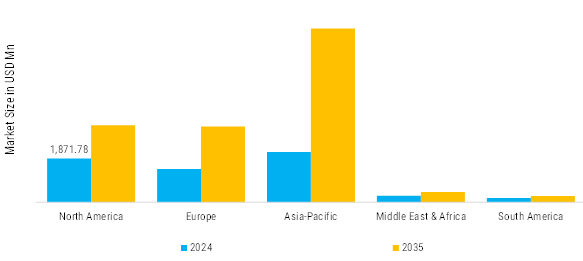
North America remains the second dominant region in the human machine interface (HMI) market with the largest share worldwide, continuing stable growth driven by rapid industrial automation and new technological developments. The region’s HMI market is valued at USD 1,871.78 Million in 2024, forecast to reach over USD 3,305.10 Million by 2035, due to strong demand in automotive, manufacturing, energy, and pharmaceutical sectors. The United States has driven sectors by applying Industry 4.0 principles, adhering to stringent occupational safety regulations, and offering federal tax incentives for business modernization. As a result, HMI upgrades and new upgrade cycles are in high demand. Furthermore, the existence of established Industrial bases and smart factories continues to provide ongoing need for advanced connected, real-time, and HMI solutions using private 5G networks to deliver ultra-low latency controls.

Human Machine Interface (HMI) Market Regional Insights

Europe: Emerging Human Machine Interface

European demand for HMI solutions is primarily driven by the required accessibility and ease of use of the hardware, availability of embedded touch systems, and intuitive interface that reduces operator training time, improves productivity, and increases safety. HMI solutions increasingly include high-resolution displays, multi-touch and gesture commands, augmented reality overlays, and advanced networking via IoT and 5G, demonstrating the region's ambitions towards interconnected and intelligent factories. The manufacturing, auto, packaging, and healthcare sectors are of primary importance, while other emerging sectors include demand for smart home devices and consumer electronics as growth factors. However, high implementation costs and financial related constraints from small and medium-sized organizations remains a limitation of the broader market

 Asia-Pacific: Rapidly Growing Human Machine Interface

Asia-Pacific human machine interface (HMI) market is dominating and experiencing strong growth, due to rapid industrialization and technology adoption in the region. The rise in the demand for advanced, user-oriented HMI interfaces from the growing automotive sector and the healthcare sector's acceptance of tactile and optical HMIs also lead to varied growth in the region. The relatively lower price point and versatility of tactile HMIs lead to better availability in emerging economies, while optical HMIs are gaining traction with the growth of AI-enabled technologies based on gesture and vision. Overall, the Asia-Pacific region is primed to be the fastest-growing HMI in the world based on technology innovation, government support, and increased integration to smart factory solutions. Moreover, the healthcare industry is also beginning to utilize HMI technology to streamline medical processes and better patient monitoring.

Middle East and Africa: Human Machine Interface

MEA are motivated by policy directed towards Industry 4.0 and smart infrastructure deployment. The market players expect to offer industrially-scaled, robust, multilingual HMI solutions suitable for the MEA industrial environment. Technology developers will be especially focused on ensuring a robust connection with cloud-based operations, integrating the IoT, enhancing cybersecurity, and understanding the digital platform transition. Challenges regarding HMI deployment will include high upfront capital, technical experience within local markets, and variations in civil infrastructure in less-developed areas may yield longer periods until HMI systems are more broadly adopted across the MEA. Moreover, the increasing strength of the collaborations between global HMI vendors and MEA enterprises, as well as general digital literacy affected by media organizations, will drive growth in HMI markets across the MEA as an emerging market.

South America: Rapidly Develop Human Machine Interface

South American market is still working on overcoming challenges to adoption, such as higher upfront costs of implementation, and inconsistent infrastructure in some regions. For some non-industrial applications, this may slow broad-scale adoption of HMI technologies among small and medium enterprises. However, HMI technology that has entered the markets on the back of cloud-based and IoT technologies, alongside growing understanding of Industry 4.0 benefits, has supported positive movements for HMI technology more broadly. The focus on remote monitoring and predictive maintenance products will assist regional soft industrials to decrease their downtime and operational costs, providing significant use cases for HMI technologies. The future outlook for the HMI market in South America as a region that is still developing and still has considerable promise which is driven by these industries continuing to diversify and also continue to adopt digital technologies in their own transformation.

Key Players and Competitive Insights

Many global, regional, and local vendors characterize the Human Machine Interface (HMI) Market. The market is highly competitive, with all the players competing to gain market share. Intense competition, rapid advances in technology, frequent changes in government policies, and environmental regulations are key factors that confront market growth. The vendors compete based on cost, product quality, reliability, and government regulations. Vendors must provide cost-efficient, high-quality products to survive and succeed in an intensely competitive market.
 
The major players in the market include Siemens AG, Schneider Electric, Rockwell Automation (Allen-Bradley), Emerson Electric Co, Honeywell International Inc., Mitsubishi Electric Corporation, Panasonic Corporation, Advantech Co., Ltd., Beckhoff Automation GmbH, ABB Ltd., Yokogawa Electric Corporation, General Electric (GE), Jabil Inc., Omron Corporation, and Eaton Corporation PLC strategic market developments and decisions to improve operational effectiveness.

Key Companies in the Human Machine Interface Market include

Industry Developments

In 2025, Mitsubishi Electric has announced the global launch of its GOT3000 Human-Machine Interface (HMI), which is designed to support the manufacturing sector’s accelerating digital transformation (DX) with powerful new capabilities that enhance connectivity, usability, and system integration. 

Future Outlook

Human Machine Interface Market Future Outlook

The Human Machine Interface (HMI) Market is projected to grow at a 8.8% CAGR from 2025 to 2035, driven by growing geriatric population and technological advancements.

New opportunities lie in:

  • <p>Increasing Investments in Renewable Power Projects</p>
  • <p>Expansion into Smart Cities and Infrastructure Projects</p>
  • <p>Growing Adoption of Edge Computing and 5G Connectivity</p>

By 2035, the market is expected to be robust, driven by innovative technologies and diverse applications.

Market Segmentation

Human Machine Interface (HMI) Market by Component Outlook

  • Touch Sensors
  • Tactile Switches
  • Control and Signaling Components
  • ECU Processor Units
  • and Others

Human Machine Interface (HMI) Market by Configuration Outlook

  • Manual Configuration
  • Semi-Automatic Configuration
  • and Fully Automatic Configuration

Human Machine Interface (HMI) Market by Interface Type Outlook

  • Touchscreen Interfaces
  • Tactile Switches & Buttons
  • Joysticks
  • and Others

Human Machine Interface (HMI) Market by Technology Type Outlook

  • into Capacitive Touch Technology
  • Haptic Feedback Technology
  • Printed Electronics
  • Optical Bonding & Vacuum Lamination
  • Multi-Component Injection Molding
  • and Others

Human Machine Interface (HMI) Market by Application Area Outlook

  • Industrial Automation
  • Automotive
  • Healthcare
  • Consumer Electronics
  • Aerospace & Defense
  • and Others

Report Scope

Market Size 2024 5,917.75 (USD Million)
Market Size 2025 6,315.49 (USD Million)
Market Size 2035 14,709.41 (USD Million)
Compound Annual Growth Rate (CAGR) 8.8% (2025 - 2035)
Report Coverage Revenue Forecast, Competitive Landscape, Growth Factors, and Trends
Base Year 2024
Market Forecast Period 2025 - 2035
Historical Data 2019 - 2023
Market Forecast Units USD Million
Key Companies Profiled Siemens AG, Schneider Electric, Rockwell Automation (Allen-Bradley), Emerson Electric Co, Honeywell International Inc., Mitsubishi Electric Corporation, Panasonic Corporation, Advantech Co., Ltd., Beckhoff Automation GmbH, ABB Ltd., Yokogawa Electric Corporation, General Electric (GE), Jabil Inc., Omron Corporation, and Eaton Corporation PLC.
Segments Covered By Application Area, By Interface Type, By Configuration, By Component, By Technology Type
Key Market Opportunities ·         Increasing Investments in Renewable Power Projects ·         Expansion into Smart Cities and Infrastructure Projects ·         Growing Adoption of Edge Computing and 5G Connectivity
Key Market Dynamics ·      Accelerated Industry 4.0 and Industrial Automation Adoption ·      Growth of IoT and Smart Device Integration ·      Increasing Adoption of Cloud-Based and Mobile HMI Solutions
Regional Covered North America, Europe, Asia Pacific, Latin America, Middle East & Africa.

FAQs

What is the projected market valuation of the Human Machine Interface Market by 2035?

<p>The Human Machine Interface Market is projected to reach a valuation of approximately 14104.28 USD Million by 2035.</p>

What was the market valuation of the Human Machine Interface Market in 2024?

<p>In 2024, the overall market valuation of the Human Machine Interface Market was 5701.82 USD Million.</p>

What is the expected CAGR for the Human Machine Interface Market during the forecast period 2025 - 2035?

<p>The expected CAGR for the Human Machine Interface Market during the forecast period 2025 - 2035 is 8.58%.</p>

Which application segment had the highest valuation in the Human Machine Interface Market?

<p>The Industrial Automation application segment had the highest valuation, reaching 1500.0 USD Million in 2024.</p>

What are the projected valuations for the Healthcare application segment by 2035?

<p>The Healthcare application segment is projected to reach valuations between 1200.0 USD Million and 3000.0 USD Million by 2035.</p>

Which technology segment is expected to grow significantly in the Human Machine Interface Market?

The Touch Screen technology segment is expected to grow significantly, with a valuation range of 2000.0 USD Million to 5000.0 USD Million by 2035.

What is the projected valuation range for the Automotive application segment by 2035?

The Automotive application segment is projected to have a valuation range of 1000.0 USD Million to 2500.0 USD Million by 2035.

Which end-use segment is anticipated to show substantial growth in the Human Machine Interface Market?

The Manufacturing end-use segment is anticipated to show substantial growth, with projected valuations between 1500.0 USD Million and 3800.0 USD Million by 2035.

Who are the key players in the Human Machine Interface Market?

Key players in the Human Machine Interface Market include Siemens, Rockwell Automation, Schneider Electric, Honeywell, ABB, Emerson Electric, General Electric, Mitsubishi Electric, Panasonic, and B&amp;R Industrial Automation.

What is the projected valuation for the Virtual Reality technology segment by 2035?

The Virtual Reality technology segment is projected to reach valuations between 1101.82 USD Million and 2604.28 USD Million by 2035.

  1. SECTION I: EXECUTIVE SUMMARY AND KEY HIGHLIGHTS
    1. | 1.1 EXECUTIVE SUMMARY
    2. | | 1.1.1 Market Overview
    3. | | 1.1.2 Key Findings
    4. | | 1.1.3 Market Segmentation
    5. | | 1.1.4 Competitive Landscape
    6. | | 1.1.5 Challenges and Opportunities
    7. | | 1.1.6 Future Outlook
  2. SECTION II: SCOPING, METHODOLOGY AND MARKET STRUCTURE
    1. | 2.1 MARKET INTRODUCTION
    2. | | 2.1.1 Definition
    3. | | 2.1.2 Scope of the study
    4. | | | 2.1.2.1 Research Objective
    5. | | | 2.1.2.2 Assumption
    6. | | | 2.1.2.3 Limitations
    7. | 2.2 RESEARCH METHODOLOGY
    8. | | 2.2.1 Overview
    9. | | 2.2.2 Data Mining
    10. | | 2.2.3 Secondary Research
    11. | | 2.2.4 Primary Research
    12. | | | 2.2.4.1 Primary Interviews and Information Gathering Process
    13. | | | 2.2.4.2 Breakdown of Primary Respondents
    14. | | 2.2.5 Forecasting Model
    15. | | 2.2.6 Market Size Estimation
    16. | | | 2.2.6.1 Bottom-Up Approach
    17. | | | 2.2.6.2 Top-Down Approach
    18. | | 2.2.7 Data Triangulation
    19. | | 2.2.8 Validation
  3. SECTION III: QUALITATIVE ANALYSIS
    1. | 3.1 MARKET DYNAMICS
    2. | | 3.1.1 Overview
    3. | | 3.1.2 Drivers
    4. | | 3.1.3 Restraints
    5. | | 3.1.4 Opportunities
    6. | 3.2 MARKET FACTOR ANALYSIS
    7. | | 3.2.1 Value chain Analysis
    8. | | 3.2.2 Porter's Five Forces Analysis
    9. | | | 3.2.2.1 Bargaining Power of Suppliers
    10. | | | 3.2.2.2 Bargaining Power of Buyers
    11. | | | 3.2.2.3 Threat of New Entrants
    12. | | | 3.2.2.4 Threat of Substitutes
    13. | | | 3.2.2.5 Intensity of Rivalry
    14. | | 3.2.3 COVID-19 Impact Analysis
    15. | | | 3.2.3.1 Market Impact Analysis
    16. | | | 3.2.3.2 Regional Impact
    17. | | | 3.2.3.3 Opportunity and Threat Analysis
  4. SECTION IV: QUANTITATIVE ANALYSIS
    1. | 4.1 Semiconductor & Electronics, BY Application (USD Million)
    2. | | 4.1.1 Industrial Automation
    3. | | 4.1.2 Healthcare
    4. | | 4.1.3 Automotive
    5. | | 4.1.4 Consumer Electronics
    6. | | 4.1.5 Aerospace
    7. | 4.2 Semiconductor & Electronics, BY Technology (USD Million)
    8. | | 4.2.1 Touch Screen
    9. | | 4.2.2 Voice Recognition
    10. | | 4.2.3 Gesture Recognition
    11. | | 4.2.4 Haptic Technology
    12. | | 4.2.5 Virtual Reality
    13. | 4.3 Semiconductor & Electronics, BY End Use (USD Million)
    14. | | 4.3.1 Manufacturing
    15. | | 4.3.2 Transportation
    16. | | 4.3.3 Medical Devices
    17. | | 4.3.4 Home Automation
    18. | | 4.3.5 Entertainment
    19. | 4.4 Semiconductor & Electronics, BY Region (USD Million)
    20. | | 4.4.1 North America
    21. | | | 4.4.1.1 US
    22. | | | 4.4.1.2 Canada
    23. | | 4.4.2 Europe
    24. | | | 4.4.2.1 Germany
    25. | | | 4.4.2.2 UK
    26. | | | 4.4.2.3 France
    27. | | | 4.4.2.4 Russia
    28. | | | 4.4.2.5 Italy
    29. | | | 4.4.2.6 Spain
    30. | | | 4.4.2.7 Rest of Europe
    31. | | 4.4.3 APAC
    32. | | | 4.4.3.1 China
    33. | | | 4.4.3.2 India
    34. | | | 4.4.3.3 Japan
    35. | | | 4.4.3.4 South Korea
    36. | | | 4.4.3.5 Malaysia
    37. | | | 4.4.3.6 Thailand
    38. | | | 4.4.3.7 Indonesia
    39. | | | 4.4.3.8 Rest of APAC
    40. | | 4.4.4 South America
    41. | | | 4.4.4.1 Brazil
    42. | | | 4.4.4.2 Mexico
    43. | | | 4.4.4.3 Argentina
    44. | | | 4.4.4.4 Rest of South America
    45. | | 4.4.5 MEA
    46. | | | 4.4.5.1 GCC Countries
    47. | | | 4.4.5.2 South Africa
    48. | | | 4.4.5.3 Rest of MEA
  5. SECTION V: COMPETITIVE ANALYSIS
    1. | 5.1 Competitive Landscape
    2. | | 5.1.1 Overview
    3. | | 5.1.2 Competitive Analysis
    4. | | 5.1.3 Market share Analysis
    5. | | 5.1.4 Major Growth Strategy in the Semiconductor & Electronics
    6. | | 5.1.5 Competitive Benchmarking
    7. | | 5.1.6 Leading Players in Terms of Number of Developments in the Semiconductor & Electronics
    8. | | 5.1.7 Key developments and growth strategies
    9. | | | 5.1.7.1 New Product Launch/Service Deployment
    10. | | | 5.1.7.2 Merger & Acquisitions
    11. | | | 5.1.7.3 Joint Ventures
    12. | | 5.1.8 Major Players Financial Matrix
    13. | | | 5.1.8.1 Sales and Operating Income
    14. | | | 5.1.8.2 Major Players R&D Expenditure. 2023
    15. | 5.2 Company Profiles
    16. | | 5.2.1 Siemens (DE)
    17. | | | 5.2.1.1 Financial Overview
    18. | | | 5.2.1.2 Products Offered
    19. | | | 5.2.1.3 Key Developments
    20. | | | 5.2.1.4 SWOT Analysis
    21. | | | 5.2.1.5 Key Strategies
    22. | | 5.2.2 Rockwell Automation (US)
    23. | | | 5.2.2.1 Financial Overview
    24. | | | 5.2.2.2 Products Offered
    25. | | | 5.2.2.3 Key Developments
    26. | | | 5.2.2.4 SWOT Analysis
    27. | | | 5.2.2.5 Key Strategies
    28. | | 5.2.3 Schneider Electric (FR)
    29. | | | 5.2.3.1 Financial Overview
    30. | | | 5.2.3.2 Products Offered
    31. | | | 5.2.3.3 Key Developments
    32. | | | 5.2.3.4 SWOT Analysis
    33. | | | 5.2.3.5 Key Strategies
    34. | | 5.2.4 Honeywell (US)
    35. | | | 5.2.4.1 Financial Overview
    36. | | | 5.2.4.2 Products Offered
    37. | | | 5.2.4.3 Key Developments
    38. | | | 5.2.4.4 SWOT Analysis
    39. | | | 5.2.4.5 Key Strategies
    40. | | 5.2.5 ABB (CH)
    41. | | | 5.2.5.1 Financial Overview
    42. | | | 5.2.5.2 Products Offered
    43. | | | 5.2.5.3 Key Developments
    44. | | | 5.2.5.4 SWOT Analysis
    45. | | | 5.2.5.5 Key Strategies
    46. | | 5.2.6 Emerson Electric (US)
    47. | | | 5.2.6.1 Financial Overview
    48. | | | 5.2.6.2 Products Offered
    49. | | | 5.2.6.3 Key Developments
    50. | | | 5.2.6.4 SWOT Analysis
    51. | | | 5.2.6.5 Key Strategies
    52. | | 5.2.7 General Electric (US)
    53. | | | 5.2.7.1 Financial Overview
    54. | | | 5.2.7.2 Products Offered
    55. | | | 5.2.7.3 Key Developments
    56. | | | 5.2.7.4 SWOT Analysis
    57. | | | 5.2.7.5 Key Strategies
    58. | | 5.2.8 Mitsubishi Electric (JP)
    59. | | | 5.2.8.1 Financial Overview
    60. | | | 5.2.8.2 Products Offered
    61. | | | 5.2.8.3 Key Developments
    62. | | | 5.2.8.4 SWOT Analysis
    63. | | | 5.2.8.5 Key Strategies
    64. | | 5.2.9 Panasonic (JP)
    65. | | | 5.2.9.1 Financial Overview
    66. | | | 5.2.9.2 Products Offered
    67. | | | 5.2.9.3 Key Developments
    68. | | | 5.2.9.4 SWOT Analysis
    69. | | | 5.2.9.5 Key Strategies
    70. | | 5.2.10 B&R Industrial Automation (AT)
    71. | | | 5.2.10.1 Financial Overview
    72. | | | 5.2.10.2 Products Offered
    73. | | | 5.2.10.3 Key Developments
    74. | | | 5.2.10.4 SWOT Analysis
    75. | | | 5.2.10.5 Key Strategies
    76. | 5.3 Appendix
    77. | | 5.3.1 References
    78. | | 5.3.2 Related Reports
  6. LIST OF FIGURES
    1. | 6.1 MARKET SYNOPSIS
    2. | 6.2 NORTH AMERICA MARKET ANALYSIS
    3. | 6.3 US MARKET ANALYSIS BY APPLICATION
    4. | 6.4 US MARKET ANALYSIS BY TECHNOLOGY
    5. | 6.5 US MARKET ANALYSIS BY END USE
    6. | 6.6 CANADA MARKET ANALYSIS BY APPLICATION
    7. | 6.7 CANADA MARKET ANALYSIS BY TECHNOLOGY
    8. | 6.8 CANADA MARKET ANALYSIS BY END USE
    9. | 6.9 EUROPE MARKET ANALYSIS
    10. | 6.10 GERMANY MARKET ANALYSIS BY APPLICATION
    11. | 6.11 GERMANY MARKET ANALYSIS BY TECHNOLOGY
    12. | 6.12 GERMANY MARKET ANALYSIS BY END USE
    13. | 6.13 UK MARKET ANALYSIS BY APPLICATION
    14. | 6.14 UK MARKET ANALYSIS BY TECHNOLOGY
    15. | 6.15 UK MARKET ANALYSIS BY END USE
    16. | 6.16 FRANCE MARKET ANALYSIS BY APPLICATION
    17. | 6.17 FRANCE MARKET ANALYSIS BY TECHNOLOGY
    18. | 6.18 FRANCE MARKET ANALYSIS BY END USE
    19. | 6.19 RUSSIA MARKET ANALYSIS BY APPLICATION
    20. | 6.20 RUSSIA MARKET ANALYSIS BY TECHNOLOGY
    21. | 6.21 RUSSIA MARKET ANALYSIS BY END USE
    22. | 6.22 ITALY MARKET ANALYSIS BY APPLICATION
    23. | 6.23 ITALY MARKET ANALYSIS BY TECHNOLOGY
    24. | 6.24 ITALY MARKET ANALYSIS BY END USE
    25. | 6.25 SPAIN MARKET ANALYSIS BY APPLICATION
    26. | 6.26 SPAIN MARKET ANALYSIS BY TECHNOLOGY
    27. | 6.27 SPAIN MARKET ANALYSIS BY END USE
    28. | 6.28 REST OF EUROPE MARKET ANALYSIS BY APPLICATION
    29. | 6.29 REST OF EUROPE MARKET ANALYSIS BY TECHNOLOGY
    30. | 6.30 REST OF EUROPE MARKET ANALYSIS BY END USE
    31. | 6.31 APAC MARKET ANALYSIS
    32. | 6.32 CHINA MARKET ANALYSIS BY APPLICATION
    33. | 6.33 CHINA MARKET ANALYSIS BY TECHNOLOGY
    34. | 6.34 CHINA MARKET ANALYSIS BY END USE
    35. | 6.35 INDIA MARKET ANALYSIS BY APPLICATION
    36. | 6.36 INDIA MARKET ANALYSIS BY TECHNOLOGY
    37. | 6.37 INDIA MARKET ANALYSIS BY END USE
    38. | 6.38 JAPAN MARKET ANALYSIS BY APPLICATION
    39. | 6.39 JAPAN MARKET ANALYSIS BY TECHNOLOGY
    40. | 6.40 JAPAN MARKET ANALYSIS BY END USE
    41. | 6.41 SOUTH KOREA MARKET ANALYSIS BY APPLICATION
    42. | 6.42 SOUTH KOREA MARKET ANALYSIS BY TECHNOLOGY
    43. | 6.43 SOUTH KOREA MARKET ANALYSIS BY END USE
    44. | 6.44 MALAYSIA MARKET ANALYSIS BY APPLICATION
    45. | 6.45 MALAYSIA MARKET ANALYSIS BY TECHNOLOGY
    46. | 6.46 MALAYSIA MARKET ANALYSIS BY END USE
    47. | 6.47 THAILAND MARKET ANALYSIS BY APPLICATION
    48. | 6.48 THAILAND MARKET ANALYSIS BY TECHNOLOGY
    49. | 6.49 THAILAND MARKET ANALYSIS BY END USE
    50. | 6.50 INDONESIA MARKET ANALYSIS BY APPLICATION
    51. | 6.51 INDONESIA MARKET ANALYSIS BY TECHNOLOGY
    52. | 6.52 INDONESIA MARKET ANALYSIS BY END USE
    53. | 6.53 REST OF APAC MARKET ANALYSIS BY APPLICATION
    54. | 6.54 REST OF APAC MARKET ANALYSIS BY TECHNOLOGY
    55. | 6.55 REST OF APAC MARKET ANALYSIS BY END USE
    56. | 6.56 SOUTH AMERICA MARKET ANALYSIS
    57. | 6.57 BRAZIL MARKET ANALYSIS BY APPLICATION
    58. | 6.58 BRAZIL MARKET ANALYSIS BY TECHNOLOGY
    59. | 6.59 BRAZIL MARKET ANALYSIS BY END USE
    60. | 6.60 MEXICO MARKET ANALYSIS BY APPLICATION
    61. | 6.61 MEXICO MARKET ANALYSIS BY TECHNOLOGY
    62. | 6.62 MEXICO MARKET ANALYSIS BY END USE
    63. | 6.63 ARGENTINA MARKET ANALYSIS BY APPLICATION
    64. | 6.64 ARGENTINA MARKET ANALYSIS BY TECHNOLOGY
    65. | 6.65 ARGENTINA MARKET ANALYSIS BY END USE
    66. | 6.66 REST OF SOUTH AMERICA MARKET ANALYSIS BY APPLICATION
    67. | 6.67 REST OF SOUTH AMERICA MARKET ANALYSIS BY TECHNOLOGY
    68. | 6.68 REST OF SOUTH AMERICA MARKET ANALYSIS BY END USE
    69. | 6.69 MEA MARKET ANALYSIS
    70. | 6.70 GCC COUNTRIES MARKET ANALYSIS BY APPLICATION
    71. | 6.71 GCC COUNTRIES MARKET ANALYSIS BY TECHNOLOGY
    72. | 6.72 GCC COUNTRIES MARKET ANALYSIS BY END USE
    73. | 6.73 SOUTH AFRICA MARKET ANALYSIS BY APPLICATION
    74. | 6.74 SOUTH AFRICA MARKET ANALYSIS BY TECHNOLOGY
    75. | 6.75 SOUTH AFRICA MARKET ANALYSIS BY END USE
    76. | 6.76 REST OF MEA MARKET ANALYSIS BY APPLICATION
    77. | 6.77 REST OF MEA MARKET ANALYSIS BY TECHNOLOGY
    78. | 6.78 REST OF MEA MARKET ANALYSIS BY END USE
    79. | 6.79 KEY BUYING CRITERIA OF SEMICONDUCTOR & ELECTRONICS
    80. | 6.80 RESEARCH PROCESS OF MRFR
    81. | 6.81 DRO ANALYSIS OF SEMICONDUCTOR & ELECTRONICS
    82. | 6.82 DRIVERS IMPACT ANALYSIS: SEMICONDUCTOR & ELECTRONICS
    83. | 6.83 RESTRAINTS IMPACT ANALYSIS: SEMICONDUCTOR & ELECTRONICS
    84. | 6.84 SUPPLY / VALUE CHAIN: SEMICONDUCTOR & ELECTRONICS
    85. | 6.85 SEMICONDUCTOR & ELECTRONICS, BY APPLICATION, 2024 (% SHARE)
    86. | 6.86 SEMICONDUCTOR & ELECTRONICS, BY APPLICATION, 2024 TO 2035 (USD Million)
    87. | 6.87 SEMICONDUCTOR & ELECTRONICS, BY TECHNOLOGY, 2024 (% SHARE)
    88. | 6.88 SEMICONDUCTOR & ELECTRONICS, BY TECHNOLOGY, 2024 TO 2035 (USD Million)
    89. | 6.89 SEMICONDUCTOR & ELECTRONICS, BY END USE, 2024 (% SHARE)
    90. | 6.90 SEMICONDUCTOR & ELECTRONICS, BY END USE, 2024 TO 2035 (USD Million)
    91. | 6.91 BENCHMARKING OF MAJOR COMPETITORS
  7. LIST OF TABLES
    1. | 7.1 LIST OF ASSUMPTIONS
    2. | | 7.1.1
    3. | 7.2 North America MARKET SIZE ESTIMATES; FORECAST
    4. | | 7.2.1 BY APPLICATION, 2025-2035 (USD Million)
    5. | | 7.2.2 BY TECHNOLOGY, 2025-2035 (USD Million)
    6. | | 7.2.3 BY END USE, 2025-2035 (USD Million)
    7. | 7.3 US MARKET SIZE ESTIMATES; FORECAST
    8. | | 7.3.1 BY APPLICATION, 2025-2035 (USD Million)
    9. | | 7.3.2 BY TECHNOLOGY, 2025-2035 (USD Million)
    10. | | 7.3.3 BY END USE, 2025-2035 (USD Million)
    11. | 7.4 Canada MARKET SIZE ESTIMATES; FORECAST
    12. | | 7.4.1 BY APPLICATION, 2025-2035 (USD Million)
    13. | | 7.4.2 BY TECHNOLOGY, 2025-2035 (USD Million)
    14. | | 7.4.3 BY END USE, 2025-2035 (USD Million)
    15. | 7.5 Europe MARKET SIZE ESTIMATES; FORECAST
    16. | | 7.5.1 BY APPLICATION, 2025-2035 (USD Million)
    17. | | 7.5.2 BY TECHNOLOGY, 2025-2035 (USD Million)
    18. | | 7.5.3 BY END USE, 2025-2035 (USD Million)
    19. | 7.6 Germany MARKET SIZE ESTIMATES; FORECAST
    20. | | 7.6.1 BY APPLICATION, 2025-2035 (USD Million)
    21. | | 7.6.2 BY TECHNOLOGY, 2025-2035 (USD Million)
    22. | | 7.6.3 BY END USE, 2025-2035 (USD Million)
    23. | 7.7 UK MARKET SIZE ESTIMATES; FORECAST
    24. | | 7.7.1 BY APPLICATION, 2025-2035 (USD Million)
    25. | | 7.7.2 BY TECHNOLOGY, 2025-2035 (USD Million)
    26. | | 7.7.3 BY END USE, 2025-2035 (USD Million)
    27. | 7.8 France MARKET SIZE ESTIMATES; FORECAST
    28. | | 7.8.1 BY APPLICATION, 2025-2035 (USD Million)
    29. | | 7.8.2 BY TECHNOLOGY, 2025-2035 (USD Million)
    30. | | 7.8.3 BY END USE, 2025-2035 (USD Million)
    31. | 7.9 Russia MARKET SIZE ESTIMATES; FORECAST
    32. | | 7.9.1 BY APPLICATION, 2025-2035 (USD Million)
    33. | | 7.9.2 BY TECHNOLOGY, 2025-2035 (USD Million)
    34. | | 7.9.3 BY END USE, 2025-2035 (USD Million)
    35. | 7.10 Italy MARKET SIZE ESTIMATES; FORECAST
    36. | | 7.10.1 BY APPLICATION, 2025-2035 (USD Million)
    37. | | 7.10.2 BY TECHNOLOGY, 2025-2035 (USD Million)
    38. | | 7.10.3 BY END USE, 2025-2035 (USD Million)
    39. | 7.11 Spain MARKET SIZE ESTIMATES; FORECAST
    40. | | 7.11.1 BY APPLICATION, 2025-2035 (USD Million)
    41. | | 7.11.2 BY TECHNOLOGY, 2025-2035 (USD Million)
    42. | | 7.11.3 BY END USE, 2025-2035 (USD Million)
    43. | 7.12 Rest of Europe MARKET SIZE ESTIMATES; FORECAST
    44. | | 7.12.1 BY APPLICATION, 2025-2035 (USD Million)
    45. | | 7.12.2 BY TECHNOLOGY, 2025-2035 (USD Million)
    46. | | 7.12.3 BY END USE, 2025-2035 (USD Million)
    47. | 7.13 APAC MARKET SIZE ESTIMATES; FORECAST
    48. | | 7.13.1 BY APPLICATION, 2025-2035 (USD Million)
    49. | | 7.13.2 BY TECHNOLOGY, 2025-2035 (USD Million)
    50. | | 7.13.3 BY END USE, 2025-2035 (USD Million)
    51. | 7.14 China MARKET SIZE ESTIMATES; FORECAST
    52. | | 7.14.1 BY APPLICATION, 2025-2035 (USD Million)
    53. | | 7.14.2 BY TECHNOLOGY, 2025-2035 (USD Million)
    54. | | 7.14.3 BY END USE, 2025-2035 (USD Million)
    55. | 7.15 India MARKET SIZE ESTIMATES; FORECAST
    56. | | 7.15.1 BY APPLICATION, 2025-2035 (USD Million)
    57. | | 7.15.2 BY TECHNOLOGY, 2025-2035 (USD Million)
    58. | | 7.15.3 BY END USE, 2025-2035 (USD Million)
    59. | 7.16 Japan MARKET SIZE ESTIMATES; FORECAST
    60. | | 7.16.1 BY APPLICATION, 2025-2035 (USD Million)
    61. | | 7.16.2 BY TECHNOLOGY, 2025-2035 (USD Million)
    62. | | 7.16.3 BY END USE, 2025-2035 (USD Million)
    63. | 7.17 South Korea MARKET SIZE ESTIMATES; FORECAST
    64. | | 7.17.1 BY APPLICATION, 2025-2035 (USD Million)
    65. | | 7.17.2 BY TECHNOLOGY, 2025-2035 (USD Million)
    66. | | 7.17.3 BY END USE, 2025-2035 (USD Million)
    67. | 7.18 Malaysia MARKET SIZE ESTIMATES; FORECAST
    68. | | 7.18.1 BY APPLICATION, 2025-2035 (USD Million)
    69. | | 7.18.2 BY TECHNOLOGY, 2025-2035 (USD Million)
    70. | | 7.18.3 BY END USE, 2025-2035 (USD Million)
    71. | 7.19 Thailand MARKET SIZE ESTIMATES; FORECAST
    72. | | 7.19.1 BY APPLICATION, 2025-2035 (USD Million)
    73. | | 7.19.2 BY TECHNOLOGY, 2025-2035 (USD Million)
    74. | | 7.19.3 BY END USE, 2025-2035 (USD Million)
    75. | 7.20 Indonesia MARKET SIZE ESTIMATES; FORECAST
    76. | | 7.20.1 BY APPLICATION, 2025-2035 (USD Million)
    77. | | 7.20.2 BY TECHNOLOGY, 2025-2035 (USD Million)
    78. | | 7.20.3 BY END USE, 2025-2035 (USD Million)
    79. | 7.21 Rest of APAC MARKET SIZE ESTIMATES; FORECAST
    80. | | 7.21.1 BY APPLICATION, 2025-2035 (USD Million)
    81. | | 7.21.2 BY TECHNOLOGY, 2025-2035 (USD Million)
    82. | | 7.21.3 BY END USE, 2025-2035 (USD Million)
    83. | 7.22 South America MARKET SIZE ESTIMATES; FORECAST
    84. | | 7.22.1 BY APPLICATION, 2025-2035 (USD Million)
    85. | | 7.22.2 BY TECHNOLOGY, 2025-2035 (USD Million)
    86. | | 7.22.3 BY END USE, 2025-2035 (USD Million)
    87. | 7.23 Brazil MARKET SIZE ESTIMATES; FORECAST
    88. | | 7.23.1 BY APPLICATION, 2025-2035 (USD Million)
    89. | | 7.23.2 BY TECHNOLOGY, 2025-2035 (USD Million)
    90. | | 7.23.3 BY END USE, 2025-2035 (USD Million)
    91. | 7.24 Mexico MARKET SIZE ESTIMATES; FORECAST
    92. | | 7.24.1 BY APPLICATION, 2025-2035 (USD Million)
    93. | | 7.24.2 BY TECHNOLOGY, 2025-2035 (USD Million)
    94. | | 7.24.3 BY END USE, 2025-2035 (USD Million)
    95. | 7.25 Argentina MARKET SIZE ESTIMATES; FORECAST
    96. | | 7.25.1 BY APPLICATION, 2025-2035 (USD Million)
    97. | | 7.25.2 BY TECHNOLOGY, 2025-2035 (USD Million)
    98. | | 7.25.3 BY END USE, 2025-2035 (USD Million)
    99. | 7.26 Rest of South America MARKET SIZE ESTIMATES; FORECAST
    100. | | 7.26.1 BY APPLICATION, 2025-2035 (USD Million)
    101. | | 7.26.2 BY TECHNOLOGY, 2025-2035 (USD Million)
    102. | | 7.26.3 BY END USE, 2025-2035 (USD Million)
    103. | 7.27 MEA MARKET SIZE ESTIMATES; FORECAST
    104. | | 7.27.1 BY APPLICATION, 2025-2035 (USD Million)
    105. | | 7.27.2 BY TECHNOLOGY, 2025-2035 (USD Million)
    106. | | 7.27.3 BY END USE, 2025-2035 (USD Million)
    107. | 7.28 GCC Countries MARKET SIZE ESTIMATES; FORECAST
    108. | | 7.28.1 BY APPLICATION, 2025-2035 (USD Million)
    109. | | 7.28.2 BY TECHNOLOGY, 2025-2035 (USD Million)
    110. | | 7.28.3 BY END USE, 2025-2035 (USD Million)
    111. | 7.29 South Africa MARKET SIZE ESTIMATES; FORECAST
    112. | | 7.29.1 BY APPLICATION, 2025-2035 (USD Million)
    113. | | 7.29.2 BY TECHNOLOGY, 2025-2035 (USD Million)
    114. | | 7.29.3 BY END USE, 2025-2035 (USD Million)
    115. | 7.30 Rest of MEA MARKET SIZE ESTIMATES; FORECAST
    116. | | 7.30.1 BY APPLICATION, 2025-2035 (USD Million)
    117. | | 7.30.2 BY TECHNOLOGY, 2025-2035 (USD Million)
    118. | | 7.30.3 BY END USE, 2025-2035 (USD Million)
    119. | 7.31 PRODUCT LAUNCH/PRODUCT DEVELOPMENT/APPROVAL
    120. | | 7.31.1
    121. | 7.32 ACQUISITION/PARTNERSHIP
    122. | | 7.32.1

Semiconductor & Electronics Market Segmentation

Semiconductor & Electronics By Application (USD Million, 2025-2035)

  • Industrial Automation
  • Healthcare
  • Automotive
  • Consumer Electronics
  • Aerospace

Semiconductor & Electronics By Technology (USD Million, 2025-2035)

  • Touch Screen
  • Voice Recognition
  • Gesture Recognition
  • Haptic Technology
  • Virtual Reality

Semiconductor & Electronics By End Use (USD Million, 2025-2035)

  • Manufacturing
  • Transportation
  • Medical Devices
  • Home Automation
  • Entertainment
Infographic

Free Sample Request

Kindly complete the form below to receive a free sample of this Report

Get Free Sample

Customer Strories

Compare Licence

×
Features License Type
Single User Multiuser License Enterprise User
Price $4,950 $5,950 $7,250
Maximum User Access Limit 1 User Upto 10 Users Unrestricted Access Throughout the Organization
Free Customization
Direct Access to Analyst
Deliverable Format
Platform Access
Discount on Next Purchase 10% 15% 15%
Printable Versions
%>