×
Hero Background
English
Chinese
French
Japanese
Korean
German
Spanish

Hemangioblastoma Market Trends

ID: MRFR/Pharma/4943-HCR
100 Pages
Rahul Gotadki
October 2025

Global Hemangioblastoma Market Research Report Information by Tumor Site (Brain, Spinal Cord, and Retina), Diagnosis (CT Scan, MRI Scan, and Others), Treatment (Surgery, Chemotherapy, Radiotherapy, Corticosteroids, Anticonvulsants, and Others)-Forecast Till 2035

Share:
Download PDF ×

We do not share your information with anyone. However, we may send you emails based on your report interest from time to time. You may contact us at any time to opt-out.

Hemangioblastoma Market Infographic
Purchase Options

Market Trends

Key Emerging Trends in the Hemangioblastoma Market

Recent years have seen huge improvement in analytic methods for hemangioblastoma. Further developed imaging advances, for example, magnetic resonance imaging (MRI) and computed tomography (CT) scans, empower more precise and early detection, supporting convenient intercession. Understanding the genetic premise of hemangioblastoma has turned into a key concentration. A striking extent of cases are related with von Hippel-Lindau (VHL) illness, a genetic condition connected to transformations in the VHL quality. This genetic connection has prompted expanded accentuation on hereditary testing and directing. The market patterns reflect a multidisciplinary way to deal with treating hemangioblastoma. Medical procedure stays an essential mediation, focusing on complete tumor removal. In any case, headways in radiation treatment and designated drug treatments are arising as reasonable other options, offering more choices for customized therapy plans. Expanded awareness among medical care experts and people in general has added to early detection of hemangioblastoma. Early mediation can altogether impact patient results, and progressing endeavors to instruct clinical practitioners about the nuances of this interesting tumor are observable market patterns. Progressing clinical preliminaries are investigating novel treatment modalities and remedial specialists for hemangioblastoma. The coordinated effort between drug organizations, research foundations, and clinical focuses is cultivating a unique scene of possible forward leaps, promising better results for patients later. Regardless of progress, challenges continue guaranteeing admittance to specific consideration for people determined to have hemangioblastoma. Geographic incompatibilities, restricted aptitude, and monetary requirements present difficulties to ideal management. Tending to these difficulties is a significant aspect of the developing business sector patterns. The market for hemangioblastoma is ready for proceeded with growth, driven by headways in exploration, diagnostics, and treatment modalities. As cooperative endeavors increase and awareness spreads, the visualization for people affected by this rare brain tumor is expected to improve, denoting a positive trajectory for the future of hemangioblastoma management.

Author
Rahul Gotadki
Assistant Manager

He holds an experience of about 7+ years in Market Research and Business Consulting, working under the spectrum of Life Sciences and Healthcare domains. Rahul conceptualizes and implements a scalable business strategy and provides strategic leadership to the clients. His expertise lies in market estimation, competitive intelligence, pipeline analysis, customer assessment, etc. In addition to the above, his other responsibility includes strategic tracking of high growth markets & advising clients on the potential areas of focus they could direct their business initiatives

Leave a Comment

FAQs

What would be the hemangioblastoma market CAGR during the forecast period of 2024 to 2032?

Hemangioblastoma market CAGR would be 7.48% during the forecast period of 2024 to 2032.

What could prevent the hemangioblastoma market growth?

The hemangioblastoma market growth can be prevented by the rising cost of tumor treatment and lack of experts.

What are the tumor sites discussed in the report of the hemangioblastoma market?

The tumor sites are spinal cord tumor, brain tumor, and retinal tumor for the discussion of the hemangioblastoma market.

By treatment, what are the segments included in the hemangioblastoma market report?

The segments included are chemotherapy, surgery, corticosteroids, radiotherapy, and anticonvulsants.

Which region would take the hemangioblastoma market ahead?

The Americas would lead the hemangioblastoma market.

Market Summary

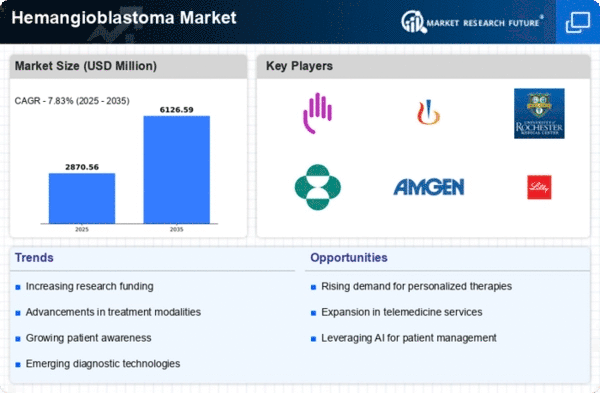
As per MRFR analysis, the Hemangioblastoma Market Size was estimated at 2662.12 USD Million in 2024. The Hemangioblastoma industry is projected to grow from 2901.06 in 2025 to 6126.59 by 2035, exhibiting a compound annual growth rate (CAGR) of 7.83 during the forecast period 2025 - 2035.

Key Market Trends & Highlights

The Hemangioblastoma Market is poised for growth driven by advancements in treatment and increasing awareness.

  • Personalized treatment approaches are gaining traction, reflecting a shift towards tailored therapies for hemangioblastoma patients.
  • Collaborative research initiatives are emerging, fostering partnerships between academic institutions and pharmaceutical companies to enhance treatment options.
  • Rising awareness and early diagnosis are contributing to an increase in patient numbers, particularly in North America, the largest market for hemangioblastoma.
  • Advancements in medical technology and increasing incidence of hemangioblastoma are key drivers propelling the market forward, especially in the surgical treatment segment.

Market Size & Forecast

2024 Market Size 2662.12 (USD Million)
2035 Market Size 6126.59 (USD Million)
CAGR (2025 - 2035) 7.83%
Largest Regional Market Share in 2024 North America

Major Players

<p>Bristol-Myers Squibb (US), Novartis (CH), Roche (CH), Merck & Co. (US), Amgen (US), Eli Lilly and Company (US), Pfizer (US), AstraZeneca (GB), Bayer (DE)</p>

Market Trends

The Hemangioblastoma Market is currently experiencing a notable evolution, driven by advancements in medical technology and an increasing understanding of the disease. Hemangioblastomas, which are vascular tumors primarily found in the central nervous system, have garnered attention due to their complex nature and the challenges associated with treatment. As research progresses, there appears to be a growing emphasis on personalized medicine, which may enhance treatment efficacy and patient outcomes. Furthermore, the rising incidence of neurological disorders is likely to contribute to the demand for innovative therapeutic solutions in this sector. In addition to technological advancements, the Hemangioblastoma Market is influenced by collaborative efforts among healthcare professionals, researchers, and pharmaceutical companies. These partnerships seem to foster a conducive environment for clinical trials and the development of novel therapies. Moreover, the increasing awareness of rare tumors among healthcare providers and patients may lead to earlier diagnosis and intervention, potentially improving prognosis. Overall, the Hemangioblastoma Market appears poised for growth, with a focus on enhancing treatment modalities and patient care strategies.

Personalized Treatment Approaches

The trend towards personalized medicine is gaining traction within the Hemangioblastoma Market. Tailoring treatment plans to individual patient profiles may enhance therapeutic effectiveness and minimize adverse effects. This approach is likely to be supported by advancements in genetic profiling and biomarker identification.

Collaborative Research Initiatives

There is a noticeable increase in collaborative research efforts among academic institutions, pharmaceutical companies, and healthcare organizations. These partnerships may facilitate the sharing of knowledge and resources, leading to accelerated development of innovative therapies and improved clinical outcomes for patients.

Rising Awareness and Early Diagnosis

Growing awareness of hemangioblastomas among healthcare professionals and the general public appears to be contributing to earlier diagnosis. This trend may result in timely interventions, which could significantly improve patient prognosis and overall treatment success.

Hemangioblastoma Market Market Drivers

Market Growth Projections

The Global Hemangioblastoma Market Industry is projected to experience substantial growth over the next decade. The market is anticipated to reach 2.52 USD Billion in 2024 and is expected to grow to 5.86 USD Billion by 2035. This growth trajectory suggests a robust compound annual growth rate of 7.97% from 2025 to 2035. Such projections indicate a rising demand for both diagnostic and therapeutic solutions as awareness and understanding of hemangioblastoma increase globally. The market's expansion is likely to be driven by advancements in treatment modalities, increased research funding, and the development of innovative diagnostic technologies.

Increased Research Funding

The Global Hemangioblastoma Market Industry benefits from increased research funding aimed at understanding and treating this rare tumor. Government and private organizations are allocating more resources to research initiatives, which may lead to breakthroughs in treatment and management strategies. For example, funding for clinical trials exploring new therapeutic agents is on the rise, potentially leading to more effective treatment options. This influx of financial support is likely to accelerate the pace of research and development, fostering innovation within the market. As a result, the market is expected to grow at a CAGR of 7.97% from 2025 to 2035, driven by these advancements.

Growing Awareness and Education

The Global Hemangioblastoma Market Industry is also propelled by growing awareness and education regarding hemangioblastoma among healthcare professionals and the general public. Increased educational initiatives, including workshops and seminars, are enhancing understanding of this rare tumor's symptoms and treatment options. This heightened awareness is likely to lead to earlier diagnosis and improved patient outcomes. Furthermore, advocacy groups are playing a crucial role in disseminating information, which may contribute to increased patient engagement in treatment decisions. As awareness continues to grow, it is anticipated that the market will see a corresponding increase in demand for diagnostic and therapeutic services.

Emerging Diagnostic Technologies

Emerging diagnostic technologies are shaping the Global Hemangioblastoma Market Industry by enabling more accurate and timely identification of hemangioblastoma. Innovations such as advanced imaging techniques and biomarker discovery are enhancing diagnostic precision, which is crucial for effective treatment planning. For instance, the integration of artificial intelligence in imaging analysis is showing promise in detecting tumors at earlier stages. These advancements not only improve patient outcomes but also drive market growth as healthcare providers seek to adopt the latest technologies. As the market evolves, the demand for these innovative diagnostic solutions is expected to rise, further contributing to the industry's expansion.

Advancements in Treatment Modalities

Innovations in treatment modalities are significantly influencing the Global Hemangioblastoma Market Industry. The development of targeted therapies and minimally invasive surgical techniques has improved patient outcomes and reduced recovery times. For instance, the introduction of novel pharmacological agents that specifically target tumor cells is gaining traction. Additionally, advancements in radiation therapy techniques, such as stereotactic radiosurgery, are enhancing the effectiveness of treatment. These innovations not only improve survival rates but also contribute to the overall market growth, with projections indicating a market value of 5.86 USD Billion by 2035, reflecting the ongoing evolution in treatment approaches.

Rising Incidence of Hemangioblastoma

The Global Hemangioblastoma Market Industry is experiencing growth due to the increasing incidence of hemangioblastoma, particularly in adults. This tumor, often associated with von Hippel-Lindau disease, appears to be diagnosed more frequently as awareness and diagnostic capabilities improve. The rise in imaging technologies, such as MRI and CT scans, facilitates earlier detection, which may lead to better treatment outcomes. As the global population ages, the prevalence of such tumors is likely to increase, contributing to the market's expansion. The market is projected to reach 2.52 USD Billion in 2024, indicating a growing need for effective treatment options.

Market Segment Insights

By Application: Surgical Treatment (Largest) vs. Radiation Therapy (Fastest-Growing)

<p>In the Hemangioblastoma Market, the application segment comprises several treatment modalities including Surgical Treatment, Radiation Therapy, Chemotherapy, and Clinical Trials. Surgical Treatment holds the largest market share due to its effectiveness in directly removing tumors, making it the preferred choice among healthcare professionals. In contrast, Radiation Therapy has gained traction as the fastest-growing segment, driven by advancements in targeting and reduced side effects, reflecting an increasing preference for non-invasive options.</p>

<p>Surgical Treatment (Dominant) vs. Radiation Therapy (Emerging)</p>

<p>Surgical Treatment remains the dominant application in the Hemangioblastoma Market, as it offers a direct approach to tumor removal and significant recovery outcomes. On the other hand, Radiation Therapy is emergent, proving to be an essential alternative for patients who are not candidates for surgical interventions. The latter segment is experiencing rapid growth fueled by technological innovations such as stereotactic radiosurgery, which enhances precision and minimizes collateral damage to surrounding tissues. Both segments play critical roles in treatment pathways, addressing diverse patient needs and preferences. Healthcare providers are increasingly integrating these modalities into treatment plans based on individual patient profiles.</p>

By Diagnosis Method: Magnetic Resonance Imaging (Largest) vs. Biopsy (Fastest-Growing)

<p>In the Hemangioblastoma market, Magnetic Resonance Imaging (MRI) holds the largest share among diagnosis methods, primarily due to its high sensitivity and non-invasive nature. As a result, MRI is the preferred choice for diagnosing hemangioblastomas, allowing for detailed imaging of soft tissues and vascular structures that are critical in determining tumor characteristics. In contrast, Biopsy, while traditionally considered a confirmation method, is emerging rapidly as a preferred approach due to its direct evaluation of tumor histology and the rise of minimally invasive techniques. This evolving paradigm is reflective of broader trends in precision medicine, where accurate tumor characterization is essential. The growth trends in this segment are being driven by advancements in imaging technologies and increasing awareness regarding early diagnosis of hemangioblastomas. MRI continues to witness innovations that enhance image quality and diagnostic capabilities, while the biopsy method is rapidly gaining traction due to technological advancements, such as image-guided biopsy techniques. These factors contribute to a more nuanced understanding of hemangioblastoma, enabling clinicians to make informed treatment decisions that are tailored to individual patient needs.</p>

<p>Diagnosis Method: MRI (Dominant) vs. Biopsy (Emerging)</p>

<p>Magnetic Resonance Imaging (MRI) remains the dominant diagnostic method in the hemangioblastoma market due to its unparalleled ability to produce high-resolution images of brain structures, significantly aiding in the identification and characterization of hemangioblastomas. Its non-invasive nature reduces patient risk and allows for multiple examinations, making it crucial for treatment planning. On the other hand, Biopsy is emerging as a key player, primarily driven by advancements in minimally invasive procedures such as stereotactic biopsy techniques. This method provides definitive histological confirmation of hemangioblastomas, which is essential for accurate diagnosis and subsequent therapeutic planning. As precision medicine gains importance, the shift towards biopsies reflects a desire for more personalized treatment approaches and further characterizes tumor biology.</p>

By Patient Demographics: Age Group (Largest) vs. Gender (Fastest-Growing)

<p>The Hemangioblastoma Market reveals significant trends in patient demographics, particularly in age groups and gender representation. The largest patient demographic within this market consists of individuals aged 30 to 50, accounting for a substantial portion of diagnoses. Meanwhile, gender representation shows a notable increase in female patients, which highlights shifts in awareness and diagnosis rates. Monitoring these segments is crucial as they comprise the majority of the patient population affected by Hemangioblastomas. In terms of growth trends, the market has observed a rapid increase in female diagnoses due to greater awareness and improved diagnostic technologies. Furthermore, younger age groups show emerging trends towards early detection and preventive care. This shift indicates a growing interest in improving treatment outcomes and education around this rare type of tumor, thus likely impacting future market dynamics significantly.</p>

<p>Age Group: 30-50 (Dominant) vs. Gender: Female (Emerging)</p>

<p>The age group of 30 to 50 is characterized as the dominant demographic in the Hemangioblastoma market, as individuals within this range frequently seek diagnosis and treatment options due to increased symptom awareness. This segment typically comprises adults who may be more health-conscious and proactive regarding unusual growths or symptoms. On the other hand, the emerging female demographic has gained traction in recent years, driven by increased health campaigns aimed at women's health and greater access to healthcare services. Women in this category are becoming increasingly empowered to seek medical advice, contributing to their rising presence in reported cases. Both demographics play a significant role in shaping the landscape of treatment options, research, and support networks.</p>

By Treatment Type: Surgical Intervention (Largest) vs. Targeted Therapy (Fastest-Growing)

<p>In the Hemangioblastoma Market, Surgical Intervention leads the treatment type segment with a significant share, primarily due to its established efficacy in removal of tumors and alleviation of symptoms. Targeted Therapy follows as an emerging treatment, gaining traction for its precision in targeting cancerous cells, which factors into its rapid growth dynamics. Immunotherapy and Palliative Care, while essential, comprise smaller shares of the overall market, serving as vital options for specific patient needs and stages of disease progression. As the market evolves, the growth trajectory for these treatment types is influenced by advancements in technology and ongoing research initiatives. Growing awareness of Hemangioblastoma, coupled with an increase in diagnosis rates, drives the demand for more effective treatments, notably Targeted Therapy. Additionally, the rise in personalized medicine and an aging population contribute to the expansion of treatment options, leading to accelerated growth across the segment, particularly for Targeted Therapies and Immunotherapies that address unique patient characteristics.</p>

<p>Surgical Intervention (Dominant) vs. Targeted Therapy (Emerging)</p>

<p>Surgical Intervention remains the dominant treatment option for Hemangioblastoma, characterized by its direct approach to tumor removal which significantly impacts patient outcomes. The procedures are well-established and backed by clinical evidence, making them a preferred choice among neuro-oncologists. Conversely, Targeted Therapy is an emerging segment, rapidly gaining popularity due to its innovative approach to cancer treatment. By focusing on specific molecular targets associated with Hemangioblastoma, this therapy offers a tailored treatment experience that improves efficacy and minimizes side effects. Both segments address critical aspects of patient care, but Surgical Intervention leads in overall treatment adoption while Targeted Therapy represents a promising future with significant potential for expansion.</p>

Get more detailed insights about Hemangioblastoma Market Research Report – Forecast to 2035

Regional Insights

North America : Market Leader in Hemangioblastoma

North America is poised to maintain its leadership in the Hemangioblastoma market, holding a significant market share of $1330.0M in 2024. The region's growth is driven by advanced healthcare infrastructure, increasing awareness of rare tumors, and supportive regulatory frameworks. The demand for innovative therapies is further fueled by ongoing clinical trials and research initiatives aimed at improving patient outcomes. The United States stands out as the leading country in this market, hosting major pharmaceutical companies such as Bristol-Myers Squibb, Merck & Co., and Pfizer. These key players are actively engaged in developing targeted therapies and novel treatment options. The competitive landscape is characterized by strategic collaborations and partnerships, enhancing the availability of effective treatments for Hemangioblastoma patients.

Europe : Emerging Market with Growth Potential

Europe is witnessing a growing interest in the Hemangioblastoma market, with a market size of $800.0M projected for 2025. The region benefits from robust healthcare systems and increasing investments in oncology research. Regulatory bodies are actively promoting clinical trials and innovative treatment pathways, which are essential for addressing the unmet needs of patients suffering from this rare tumor type. Leading countries such as Germany, France, and the UK are at the forefront of this market, with significant contributions from pharmaceutical giants like Novartis and Roche. The competitive landscape is evolving, with a focus on personalized medicine and advanced therapies. Collaborative efforts among key players are expected to enhance treatment options and improve patient access to innovative therapies.

Asia-Pacific : Emerging Powerhouse in Oncology

The Asia-Pacific region is emerging as a significant player in the Hemangioblastoma market, with a projected market size of $400.0M by 2025. The growth is driven by increasing healthcare expenditure, rising awareness of rare cancers, and government initiatives aimed at improving cancer care. Regulatory support for clinical trials is also a key factor in fostering innovation and expanding treatment options in this region. Countries like Japan, China, and Australia are leading the charge, with a growing presence of both local and international pharmaceutical companies. The competitive landscape is marked by collaborations and partnerships aimed at enhancing research and development efforts. Key players such as Amgen and Eli Lilly are actively involved in bringing new therapies to market, addressing the needs of Hemangioblastoma patients.

Middle East and Africa : Resource-Rich Frontier for Treatments

The Middle East and Africa region is gradually developing its Hemangioblastoma market, with a market size of $132.12M anticipated by 2025. The growth is supported by increasing healthcare investments and a rising focus on oncology treatments. Regulatory bodies are beginning to recognize the importance of rare diseases, leading to more initiatives aimed at improving patient access to innovative therapies. Countries such as South Africa and the UAE are emerging as key players in this market, with a growing number of clinical trials and research initiatives. The competitive landscape is characterized by a mix of local and international pharmaceutical companies, including Bayer and AstraZeneca, which are working to expand their presence and improve treatment options for patients suffering from Hemangioblastoma.

Key Players and Competitive Insights

The Hemangioblastoma Market is characterized by a competitive landscape that is increasingly shaped by innovation, strategic partnerships, and a focus on patient-centric solutions. Key players such as Bristol-Myers Squibb (US), Novartis (CH), and Roche (CH) are actively engaged in developing advanced therapies and treatment modalities. Bristol-Myers Squibb (US) has positioned itself as a leader in immunotherapy, emphasizing the potential of its novel agents to enhance patient outcomes. Meanwhile, Novartis (CH) is focusing on expanding its portfolio through strategic acquisitions and collaborations, which appear to bolster its capabilities in addressing rare tumors like hemangioblastoma. Roche (CH), on the other hand, is leveraging its robust research and development infrastructure to innovate targeted therapies, thereby enhancing its competitive edge in this niche market.

The business tactics employed by these companies reflect a concerted effort to optimize supply chains and localize manufacturing processes, which may enhance operational efficiency and reduce costs. The Hemangioblastoma Market is moderately fragmented, with a mix of established players and emerging biotech firms. This fragmentation allows for diverse approaches to treatment, yet the collective influence of major companies is significant, as they drive advancements in research and development while also shaping regulatory frameworks.

In November 2025, Novartis (CH) announced a strategic partnership with a leading biotech firm to co-develop a novel gene therapy aimed at treating hemangioblastoma. This collaboration is expected to leverage both companies' expertise in genetic engineering and could potentially accelerate the development timeline for this promising treatment. The strategic importance of this partnership lies in its potential to enhance Novartis's position in the market by diversifying its therapeutic offerings and addressing unmet medical needs.

In October 2025, Roche (CH) launched a new clinical trial for its investigational drug targeting hemangioblastoma, which is designed to improve patient outcomes through personalized medicine approaches. This initiative underscores Roche's commitment to innovation and its strategic focus on developing therapies that are tailored to the genetic profiles of patients. The trial's success could significantly impact Roche's market share and reinforce its reputation as a leader in oncology.

In December 2025, Bristol-Myers Squibb (US) revealed its plans to expand its research facilities in Europe, specifically aimed at enhancing its capabilities in developing treatments for rare cancers, including hemangioblastoma. This expansion is indicative of the company's long-term strategy to invest in research and development, which may yield innovative therapies and strengthen its competitive position in the market.

As of December 2025, the Hemangioblastoma Market is witnessing trends that emphasize digitalization, sustainability, and the integration of artificial intelligence in drug development. Strategic alliances are increasingly shaping the competitive landscape, allowing companies to pool resources and expertise. The shift from price-based competition to a focus on innovation and technology is evident, as firms prioritize the reliability of their supply chains and the development of cutting-edge therapies. This evolution suggests that future competitive differentiation will hinge on the ability to innovate and adapt to the rapidly changing healthcare environment.

Key Companies in the Hemangioblastoma Market market include

Industry Developments

Future Outlook

Hemangioblastoma Market Future Outlook

<p>The Hemangioblastoma Market is projected to grow at a 7.83% CAGR from 2024 to 2035, driven by advancements in treatment options, increased awareness, and improved diagnostic technologies.</p>

New opportunities lie in:

  • <p>Development of targeted therapies for hemangioblastoma patients</p>
  • <p>Expansion of telemedicine services for remote patient monitoring</p>
  • <p>Investment in AI-driven diagnostic tools for early detection</p>

<p>By 2035, the Hemangioblastoma Market is expected to achieve substantial growth and innovation.</p>

Market Segmentation

Hemangioblastoma Market Application Outlook

  • Surgical Treatment
  • Radiation Therapy
  • Chemotherapy
  • Clinical Trials

Hemangioblastoma Market Treatment Type Outlook

  • Surgical Intervention
  • Targeted Therapy
  • Immunotherapy
  • Palliative Care

Hemangioblastoma Market Diagnosis Method Outlook

  • Magnetic Resonance Imaging
  • Computed Tomography
  • Biopsy
  • Ultrasound

Hemangioblastoma Market Patient Demographics Outlook

  • Age Group
  • Gender
  • Genetic Predisposition
  • Comorbidities

Report Scope

MARKET SIZE 20242662.12(USD Million)
MARKET SIZE 20252901.06(USD Million)
MARKET SIZE 20356126.59(USD Million)
COMPOUND ANNUAL GROWTH RATE (CAGR)7.83% (2024 - 2035)
REPORT COVERAGERevenue Forecast, Competitive Landscape, Growth Factors, and Trends
BASE YEAR2024
Market Forecast Period2025 - 2035
Historical Data2019 - 2024
Market Forecast UnitsUSD Million
Key Companies ProfiledBristol-Myers Squibb (US), Novartis (CH), Roche (CH), Merck & Co. (US), Amgen (US), Eli Lilly and Company (US), Pfizer (US), AstraZeneca (GB), Bayer (DE)
Segments CoveredApplication, Diagnosis Method, Patient Demographics, Treatment Type
Key Market OpportunitiesAdvancements in targeted therapies and personalized medicine enhance treatment options in the Hemangioblastoma Market.
Key Market DynamicsRising demand for targeted therapies drives innovation and competition in the Hemangioblastoma treatment landscape.
Countries CoveredNorth America, Europe, APAC, South America, MEA

FAQs

What would be the hemangioblastoma market CAGR during the forecast period of 2024 to 2032?

Hemangioblastoma market CAGR would be 7.48% during the forecast period of 2024 to 2032.

What could prevent the hemangioblastoma market growth?

The hemangioblastoma market growth can be prevented by the rising cost of tumor treatment and lack of experts.

What are the tumor sites discussed in the report of the hemangioblastoma market?

The tumor sites are spinal cord tumor, brain tumor, and retinal tumor for the discussion of the hemangioblastoma market.

By treatment, what are the segments included in the hemangioblastoma market report?

The segments included are chemotherapy, surgery, corticosteroids, radiotherapy, and anticonvulsants.

Which region would take the hemangioblastoma market ahead?

The Americas would lead the hemangioblastoma market.

  1. Definition
    1. Scope of the Study
      1. Research Objective
      2. Assumptions
      3. Limitations
    2. Introduction
    3. Primary Research
    4. Secondary Research
    5. Market Size Estimation
    6. Drivers
    7. Restraints
    8. Opportunities
    9. Challenges
    10. Macroeconomic Indicators
    11. Technology Trends & Assessment
    12. Porter’s Five Forces Analysis
      1. Bargaining Power of Suppliers
      2. Bargaining Power of Buyers
      3. Threat of New Entrants
      4. Threat of Substitutes
      5. Intensity of Rivalry
    13. Value Chain Analysis
    14. Investment Feasibility Analysis
    15. Pricing Analysis
  2. Chapter 6. Global Hemangioblastoma Market, by Tumor Site
    1. Introduction
    2. Brain
  3. Market Estimates & Forecast, by Region, 2023–2030
  4. Market Estimates & Forecast, by Country, 2023–2030
    1. Spinal Cord
  5. Market Estimates & Forecast, by Region, 2023–2030
  6. Market Estimates & Forecast, by Country, 2023–2030
    1. Retina
  7. Market Estimates & Forecast, by Region, 2023–2030
  8. Market Estimates & Forecast, by Country, 2023–2030
  9. Chapter 7. Global Hemangioblastoma Market, by Diagnosis
    1. Introduction
    2. CT scan
  10. Market Estimates & Forecast, by Region, 2023–2030
  11. Market Estimates & Forecast, by Country, 2023–2030
    1. MRI Scan
  12. Market Estimates & Forecast, by Region, 2023–2030
  13. Market Estimates & Forecast, by Country, 2023–2030
    1. Angiogram
  14. Market Estimates & Forecast, by Region, 2023–2030
  15. Market Estimates & Forecast, by Country, 2023–2030
  16. Chapter 8. Global Hemangioblastoma Market, by Treatment
    1. Introduction
    2. Surgery
  17. Market Estimates & Forecast, by Region, 2023–2030
  18. Market Estimates & Forecast, by Country, 2023–2030
    1. Chemotherapy
  19. Market Estimates & Forecast, by Region, 2023–2030
  20. Market Estimates & Forecast, by Country, 2023–2030
    1. Radiotherapy
      1. Conformal Radiotherapy
  21. Market Estimates & Forecast, by Region, 2023–2030
  22. Market Estimates & Forecast, by Country, 2023–2030
  23. Intensity Modulated Radiotherapy (IMRT)
  24. Market Estimates & Forecast, by Region, 2023–2030
  25. Market Estimates & Forecast, by Country, 2023–2030
  26. Stereotactic Radiotherapy
  27. Market Estimates & Forecast, by Region, 2023–2030
  28. Market Estimates & Forecast, by Country, 2023–2030
  29. Radiosurgery
  30. Market Estimates & Forecast, by Region, 2023–2030
  31. Market Estimates & Forecast, by Country, 2023–2030
    1. Corticosteroids
      1. Hydrocortisone
  32. Market Estimates & Forecast, by Region, 2023–2030
  33. Market Estimates & Forecast, by Country, 2023–2030
  34. Dexamethasone
  35. Market Estimates & Forecast, by Region, 2023–2030
  36. Market Estimates & Forecast, by Country, 2023–2030
  37. Methylprednisolone
  38. Market Estimates & Forecast, by Region, 2023–2030
  39. Market Estimates & Forecast, by Country, 2023–2030
  40. Prednisolone
  41. Market Estimates & Forecast, by Region, 2023–2030
  42. Market Estimates & Forecast, by Country, 2023–2030
    1. Anticonvulsants
      1. Carbamazepine
  43. Market Estimates & Forecast, by Region, 2023–2030
  44. Market Estimates & Forecast, by Country, 2023–2030
  45. Lamotrigine
  46. Market Estimates & Forecast, by Region, 2023–2030
  47. Market Estimates & Forecast, by Country, 2023–2030
  48. Levetiracetam
  49. Market Estimates & Forecast, by Region, 2023–2030
  50. Market Estimates & Forecast, by Country, 2023–2030
  51. Phenytoin
  52. Market Estimates & Forecast, by Region, 2023–2030
  53. Market Estimates & Forecast, by Country, 2023–2030
  54. Sodium Valproate
  55. Market Estimates & Forecast, by Region, 2023–2030
  56. Market Estimates & Forecast, by Country, 2023–2030
  57. Chapter 9. Global Hemangioblastoma Market, by Region
    1. Introduction
    2. Americas
      1. North America
      2. South America
    3. Europe
      1. Western Europe
      2. Eastern Europe
    4. Asia-Pacific
      1. Japan
      2. China
      3. India
      4. Australia
      5. South Korea
      6. Rest of Asia-Pacific
    5. Middle East & Africa
      1. Middle East
      2. Africa
    6. Chapter 10. Company Landscape
    7. Introduction
    8. Market Share Analysis
    9. Key Development & Strategies
    10. Chapter 11. Company Profiles
    11. Eli Lilly and Company
      1. Company Overview
      2. Product Overview
      3. Financials Overview
      4. Key Developments
      5. SWOT Analysis
    12. Bedford Laboratories
      1. Company Overview
      2. Product Overview
      3. Financial Overview
      4. Key Developments
      5. SWOT Analysis
    13. Astellas US Holding, Inc.
      1. Company Overview
      2. Product Overview
      3. Financial Overview
      4. Key Development
      5. SWOT Analysis
    14. DNAtrix, Inc.
      1. Company Overview
      2. Technology/Business Segment Overview
      3. Financial Overview
      4. Key Development
      5. SWOT Analysis
    15. Advantagene, Inc
      1. Company Overview
      2. Product Overview
      3. Financial overview
      4. Key Developments
      5. SWOT Analysis
    16. Burzynski Research Institute, Inc.
      1. Company Overview
      2. Product Overview
      3. Financial Overview
      4. Key Developments
      5. SWOT Analysis
    17. Direct Therapeutics, Inc.
      1. Overview
      2. Product Overview
      3. Financial Overview
      4. Key Developments
      5. SWOT Analysis
    18. Cellectar Biosciences, Inc.
      1. Overview
      2. Product/ Technology Overview
      3. Financials
      4. Key Developments
      5. SWOT Analysis
    19. Chapter 12 MRFR Conclusion
    20. Key Findings
      1. From CEO’s Viewpoint
      2. Unmet Needs of the Market
    21. Key Companies to Watch
    22. Predictions for the Hemangioblastoma Industry
    23. Chapter 13. Appendix
  58. LIST OF TABLES
  59. Global Hemangioblastoma Market Synopsis, 2023–2030
  60. Global Hemangioblastoma Market Estimates and Forecast, 2023–2030 (USD Million)
  61. Global Hemangioblastoma Market, by Region, 2023–2030 (USD Million)
  62. Global Hemangioblastoma Market, by Tumor Site, 2023–2030 (USD Million)
  63. Global Hemangioblastoma Market, by Diagnosis, 2023–2030 (USD Million)
  64. Global Hemangioblastoma Market, by Treatment, 2023–2030 (USD Million)
  65. North America: Hemangioblastoma Market, by Tumor Site, 2023–2030 (USD
    1. Million)
  66. North America: Hemangioblastoma Market, by Diagnosis, 2023–2030 (USD
    1. Million)
  67. North America: Hemangioblastoma Market, by Treatment, 2023–2030 (USD
    1. Million)
  68. US: Hemangioblastoma Market, by Tumor Site, 2023–2030 (USD Million)
  69. US: Hemangioblastoma Market, by Diagnosis, 2023–2030 (USD Million)
  70. US: Hemangioblastoma Market, by Treatment, 2023–2030 (USD Million)
  71. Canada: Hemangioblastoma Market, by Tumor Site, 2023–2030 (USD Million)
  72. Canada: Hemangioblastoma Market, by Diagnosis, 2023–2030 (USD Million)
  73. Canada: Hemangioblastoma Market, by Treatment, 2023–2030 (USD
    1. Million)
  74. South America: Hemangioblastoma Market, by Tumor Site, 2023–2030 (USD
    1. Million)
  75. South America: Hemangioblastoma Market, by Diagnosis, 2023–2030 (USD
    1. Million)
  76. South America: Hemangioblastoma Market, by Treatment, 2023–2030 (USD
    1. Million)
  77. Europe: Hemangioblastoma Market, by Tumor Site, 2023–2030 (USD Million)
  78. Europe: Hemangioblastoma Market, by Diagnosis, 2023–2030 (USD Million)
  79. Europe: Hemangioblastoma Market, by Treatment, 2023–2030 (USD Million)
  80. Western Europe: Hemangioblastoma Market, by Tumor Site, 2023–2030 (USD
    1. Million)
  81. Western Europe: Hemangioblastoma Market, by Diagnosis, 2023–2030 (USD
    1. Million)
  82. Western Europe: Hemangioblastoma Market, by Treatment, 2023–2030
    1. (USD Million)
  83. Eastern Europe: Hemangioblastoma Market, by Tumor Site, 2023–2030 (USD
    1. Million)
  84. Eastern Europe: Hemangioblastoma Market, by Diagnosis, 2023–2030 (USD
    1. Million)
  85. Eastern Europe: Hemangioblastoma Market, by Treatment, 2023–2030
    1. (USD Million)
  86. Asia-Pacific: Hemangioblastoma Market, by Tumor Site, 2023–2030 (USD
    1. Million)
  87. Asia-Pacific: Hemangioblastoma Market, by Diagnosis, 2023–2030 (USD
    1. Million)
  88. Asia-Pacific: Hemangioblastoma Market, by Treatment, 2023–2030 (USD
    1. Million)
  89. Middle East & Africa: Hemangioblastoma Market, by Tumor Site, 2023–2030
    1. (USD Million)
  90. Middle East & Africa: Hemangioblastoma Market, by Diagnosis, 2023–2030
    1. (USD Million)
  91. Middle East & Africa: Hemangioblastoma Market, by Treatment, 2023–2030
    1. (USD Million)
  92. LIST OF FIGURES
  93. Research Process
  94. Segmentation for Global Hemangioblastoma Market
  95. Segmentation Market Dynamics for Global Hemangioblastoma Market
  96. Global Hemangioblastoma Market Share, by Tumor Site, 2023
  97. Global Hemangioblastoma Market Share, by Diagnosis, 2023
  98. Global Hemangioblastoma Market Share, by Treatment, 2023
  99. Global Hemangioblastoma Market Share, by Region, 2023
  100. North America: Hemangioblastoma Market Share, by Country, 2023
  101. Europe: Hemangioblastoma Market Share, by Country, 2023
  102. Asia-Pacific: Hemangioblastoma Market Share, by Country, 2023
  103. Middle East & Africa: Hemangioblastoma Market Share, by Country, 2023
  104. Global Hemangioblastoma Market: Company Share Analysis, 2023 (%)
  105. Eli Lilly and Company: Key Financials
  106. Eli Lilly and Company: Segmental Revenue
  107. Eli Lilly and Company: Geographical Revenue
  108. Bedford Laboratories: Key Financials
  109. Bedford Laboratories: Segmental Revenue
  110. Bedford Laboratories: Geographical Revenue
  111. Astellas US Holding, Inc.: Key Financials
  112. Astellas US Holding, Inc.: Segmental Revenue
  113. Astellas US Holding, Inc.: Geographical Revenue
  114. DNAtrix, Inc.: Key Financials
  115. DNAtrix, Inc.: Segmental Revenue
  116. DNAtrix, Inc.: Geographical Revenue
  117. Advantagene, Inc: Key Financials
  118. Advantagene, Inc: Segmental Revenue
  119. Advantagene, Inc. Geographical Revenue
  120. Burzynski Research Institute, Inc.: Key Financials
  121. Burzynski Research Institute, Inc.: Segmental Revenue
  122. Burzynski Research Institute, Inc.: Geographical Revenue
  123. Direct Therapeutics, Inc.: Key Financials
  124. Direct Therapeutics, Inc.: Segmental Revenue
  125. Direct Therapeutics, Inc.: Geographical Revenue
  126. Cellectar Biosciences, Inc.: Key Financials
  127. Cellectar Biosciences, Inc.: Segmental Revenue
  128. Cellectar Biosciences, Inc.: Geographical Revenue
  129. Commonwealth Serum Laboratories (CSL): Key Financials'

Hemangioblastoma Market Segmentation

Market Segmentation Overview

  • Detailed segmentation data will be available in the full report
  • Comprehensive analysis by multiple parameters
  • Regional and country-level breakdowns
  • Market size forecasts by segment
Infographic

Free Sample Request

Kindly complete the form below to receive a free sample of this Report

Get Free Sample

Customer Strories

Compare Licence

×
Features License Type
Single User Multiuser License Enterprise User
Price $4,950 $5,950 $7,250
Maximum User Access Limit 1 User Upto 10 Users Unrestricted Access Throughout the Organization
Free Customization
Direct Access to Analyst
Deliverable Format
Platform Access
Discount on Next Purchase 10% 15% 15%
Printable Versions