
Request Free Sample ×

Kindly complete the form below to receive a free sample of this Report

* Please use a valid business email

Leading companies partner with us for data-driven Insights

clients tt-cursor
Hero Background
English
Chinese
French
Japanese
Korean
German
Spanish

GaN powered Chargers Market Trends

ID: MRFR/SEM/10363-CR
128 Pages
Ankit Gupta
March 2026

GaN Powered Chargers Market Research Report Information by Power Output (25W GaN Chargers, 30W GaN Chargers, 45W GaN Chargers, 60W GaN Chargers, 65W GaN Chargers, Above 65W GaN Chargers), By Application (Smartphones and Tablets, Laptops and Notebooks, Autonomous Robots, Industrial Equipment Wireless Charging), By End User(Consumer Electronics, IT and Telecommunication, Automotive, Aerospace and Defense, Others), By Region (North America, Europe, Asia Pacific, South America, Middle East & Africa) -Global Forecast to 2035

Share:
Download PDF ×

We do not share your information with anyone. However, we may send you emails based on your report interest from time to time. You may contact us at any time to opt-out.

GaN powered Chargers Market Infographic
Purchase Options

Market Trends

Key Emerging Trends in the GaN powered Chargers Market

The gaming monitors market is witnessing several notable trends that are shaping the industry and influencing consumer choices. One prominent trend is the emphasis on higher refresh rates. Gamers are increasingly seeking monitors with refresh rates well beyond the standard 60Hz, aiming for smoother and more responsive gameplay. Monitors with 144Hz, 240Hz, and even higher refresh rates have become popular choices, especially among competitive gamers who prioritize fluid visuals and reduced motion blur.

Another significant trend is the integration of adaptive sync technologies. Both NVIDIA's G-Sync and AMD's FreeSync have gained traction, as they eliminate screen tearing and stuttering by synchronizing the monitor's refresh rate with the graphics card's frame rate. This technology enhances the overall gaming experience, providing a seamless and tear-free display, and it has become a key consideration for gamers when selecting a monitor.

The quest for higher resolutions is also a prevailing trend in the gaming monitors market. While 1080p (Full HD) remains popular, there's a growing demand for higher resolutions such as 1440p (Quad HD) and 4K (Ultra HD). Gamers are drawn to the increased clarity and detail offered by higher resolutions, especially when paired with larger monitor sizes. This trend reflects the industry's commitment to providing immersive and visually stunning gaming experiences.

Curved displays have become increasingly popular, contributing to the immersive trend in gaming monitors. Curved monitors aim to provide a more enveloping viewing experience, especially for users with ultrawide displays. The curvature is designed to match the natural field of view, creating a more immersive and engaging gaming environment. This trend caters to gamers seeking a heightened sense of presence and realism in their gameplay.

RGB lighting has emerged as a stylish and customizable feature in gaming monitors. Manufacturers incorporate RGB LEDs into the monitor design, allowing users to customize lighting effects to match their gaming setups or preferences. This trend aligns with the broader gaming peripherals market, where RGB lighting has become a popular aesthetic choice among gamers, adding a touch of personalization to their gaming stations.

Ultra-fast response times are a key trend in the gaming monitors market. Lower response times, measured in milliseconds, reduce motion blur and ghosting, enhancing the visual clarity during fast-paced gaming scenarios. Monitors with response times of 1ms or less are highly sought after by gamers, especially those involved in competitive gaming where split-second reactions can make a significant difference.

The rise of HDR (High Dynamic Range) technology is transforming the visual quality of gaming monitors. HDR-enabled monitors offer a wider range of colors and increased contrast ratios, resulting in more vibrant and lifelike visuals. As HDR content becomes more prevalent in the gaming industry, monitors supporting HDR are becoming a popular choice for gamers who prioritize stunning visuals and realistic color reproduction.

Inclusivity and accessibility are emerging trends in the gaming monitors market. Manufacturers are recognizing the diverse needs of gamers, including those with specific requirements, such as color vision deficiencies. Monitors with enhanced accessibility features, such as customizable color profiles and user-friendly interfaces, are gaining attention as the industry moves towards making gaming experiences more inclusive for a broader audience.

Wireless technology is making its mark in the gaming monitors market. Wireless connectivity, such as Bluetooth and Wi-Fi, is being integrated into monitors, providing a cable-free gaming setup. This trend aligns with the overall movement towards cleaner and more minimalist gaming stations, eliminating the need for cable management and offering greater flexibility in arranging gaming setups.

Author
Author Profile
Ankit Gupta
Team Lead - Research

Ankit Gupta is a seasoned market intelligence and strategic research professional with over six plus years of experience in the ICT and Semiconductor industries. With academic roots in Telecom, Marketing, and Electronics, he blends technical insight with business strategy. Ankit has led 200+ projects, including work for Fortune 500 clients like Microsoft and Rio Tinto, covering market sizing, tech forecasting, and go-to-market strategies. Known for bridging engineering and enterprise decision-making, his insights support growth, innovation, and investment planning across diverse technology markets.

Leave a Comment

FAQs

What is the projected market valuation for GaN-powered chargers by 2035?

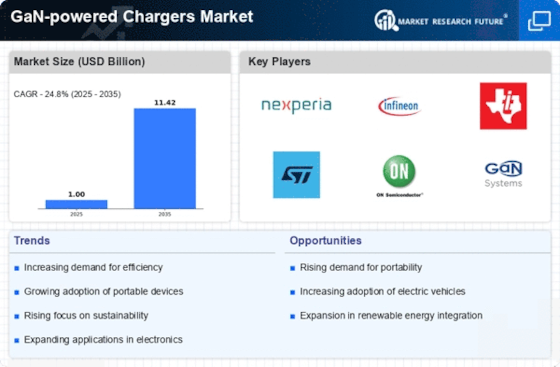
<p>The projected market valuation for GaN-powered chargers is expected to reach 11.42 USD Billion by 2035.</p>

What was the overall market valuation for GaN-powered chargers in 2024?

<p>The overall market valuation for GaN-powered chargers was 0.9984 USD Billion in 2024.</p>

What is the expected CAGR for the GaN-powered chargers market during the forecast period 2025 - 2035?

<p>The expected CAGR for the GaN-powered chargers market during the forecast period 2025 - 2035 is 24.8%.</p>

Which companies are considered key players in the GaN-powered chargers market?

<p>Key players in the GaN-powered chargers market include Nexperia, Infineon Technologies, Texas Instruments, and others.</p>

What are the market segments for GaN-powered chargers based on power output?

<p>Market segments for GaN-powered chargers based on power output include 25W, 30W, 45W, 60W, 65W, 90W, and 100W chargers.</p>

How do the application segments for GaN-powered chargers break down?

Application segments for GaN-powered chargers include smartphones and tablets, laptops and notebooks, autonomous robots, and more.

What is the valuation of the consumer electronics segment in the GaN-powered chargers market?

The valuation of the consumer electronics segment in the GaN-powered chargers market is 4.56 USD Billion.

What is the projected growth for the automotive segment in the GaN-powered chargers market?

The automotive segment in the GaN-powered chargers market is projected to grow to 1.71 USD Billion by 2035.

What is the expected valuation for 60W GaN chargers by 2035?

The expected valuation for 60W GaN chargers is projected to reach 3.0 USD Billion by 2035.

How does the performance of 45W GaN chargers compare to other power output segments?

The performance of 45W GaN chargers is projected to reach 2.5 USD Billion, indicating strong demand relative to other segments.

Market Summary

As per Market Research Future analysis, the GaN Powered Chargers Market Size was valued at USD 1,068.36 Million in 2024. The GaN Powered Chargers Industry is projected to grow from USD 1,307.57 Million in 2025 to USD 11,137.0 Million by 2035, exhibiting a compound annual growth rate (CAGR) of 23.9% during the forecast period 2025 - 2035

Key Market Trends & Highlights

The GaN Powered Chargers Market is utilizing gallium nitride semiconductors, are transforming the global charging landscape with superior efficiency, compactness, and speed over silicon alternatives.

  • GaN's higher power density cuts energy loss by 40% versus silicon, enabling smaller, lighter designs ideal for travel and space-constrained setups. Ultra-high wattage models target gaming laptops and workstations, while integration into power strips and hubs creates all-in-one docking solutions. Online sales channels lead revenue, leveraging e-commerce demos of compact designs; offline retail highlights tactile benefits. OEM bundling with devices accelerates penetration. GaN's low energy waste supports green standards, reducing e-waste via durable, efficient units.

Market Size & Forecast

2024 Market Size 1,068.36 (USD Million)
2035 Market Size 11,137.0 (USD Million)
CAGR (2025 - 2035) 23.9

Major Players

Xiaomi, Samsung Electronics, Realme, Apple, RAV Power, Sense Charge, Anker, Baseus, Hama, J5create, Belkin, Momax, Cygnett, Iniu, Minix.

Market Trends

 The GaN can handle higher voltages, switch frequencies, and operate at higher temperatures while remaining compact. This change from silicon to GaN is a paradigm shift rather than a gradual one. The shift is anticipated to quicken over the course of the following ten years, with GaN power gadgets progressively taking the place of conventional silicon-based systems in several applications. The uptake of GaN technology in consumer electronics has rapidly pushed GaN‑powered chargers from niche luxury accessories toward mainstream fast‑charging solutions, driven by demand for smaller size, higher power, lower heat, and better efficiency. For example, Navitas Semiconductor has shipped over 13 million GaN power ICs (with zero failures reported) to major OEMs like Dell, Lenovo, and Xiaomi, illustrating how fast GaN is migrating into laptop adapter and charger supply chains.

Apple’s move to introduce a 140W MagSafe charger that uses GaN is another sign showing that even premium device lines are choosing GaN for high‑wattage fast charging. In terms of adoption. Further, GaN‑based chargers are enabling dramatic form factor improvements   size reductions of ~40% relative to silicon designs are cited in charger architectures like those for Dell’s GaN chargers. These combined trends are driving consumer preference for multi‑port, compact, and efficient chargers (for phones, laptops, tablets), pushing GaN as a key technology in the charger market’s future.

GaN powered Chargers Market Market Drivers

Growing integration in the automotive industry

As electric vehicles (EVs) proliferate, automotive OEMs and power electronics suppliers are increasingly integrating GaN (Gallium Nitride) technology into onboard chargers (OBCs), DC/DC converters, and other auxiliary systems boosting charging efficiency, shrinking size and weight, and speeding up charge/discharge cycles. For instance, GaN Systems has partnered with ACEpower in China to apply automotive‑grade GaN transistors in EV charging modules and onboard chargers, aiming to improve power density and thermal performance. Another concrete example comes from Europe: one European EV charger OEM reported reducing the volume of their onboard charger module from around 30 liters to about 16 liters after switching to GaN‑based designs, directly benefiting range and efficiency by reducing weight and thermal losses. Online On the performance side, GaN‑based solutions in automotive applications are reported to cut power loss significantly, and to deliver higher switching frequency and better thermal handling than traditional silicon‑based ones, enabling faster charging rates.

Surging deployment in the energy and power industry

The surging deployment of Gallium Nitride (GaN) technology in the energy and power industry is emerging as a key driver of the GaN-powered chargers market. GaN’s superior efficiency, high switching speeds, and thermal performance make it highly suitable for modern power electronics applications, particularly in electric mobility and renewable energy systems. As the global push for electrification accelerates, especially in regions like India and Southeast Asia, GaN-based chargers are becoming the preferred choice for electric two- and four-wheelers, battery energy storage systems, and fast-charging infrastructure. The energy sector benefits from GaN’s ability to reduce power losses, minimize heat generation, and enable more compact charger designs—aligning with the industry’s focus on sustainability, space optimization, and long-term cost savings. This trend is reinforced by power electronics manufacturers increasingly integrating GaN modules into EV chargers and grid-connected solutions, signaling strong future growth across both automotive and stationary energy markets.

Market Segment Insights

By Power Output: 65W GaN Chargers (Largest) vs. 45W GaN Chargers (Fastest-Growing)

The GaN-powered chargers market is characterized by a diverse range of power outputs, with the 65W GaN chargers holding the largest market share. This segment caters to a wide array of devices, including laptops and high-performance gadgets, making it a preferred choice among consumers. Following closely, the 45W GaN chargers are gaining traction as an emerging choice due to their balance of power and portability, appealing to individuals seeking efficient charging solutions for mid-range devices. In terms of growth trends, the demand for GaN-powered chargers is driven by the increasing adoption of fast-charging technologies and the proliferation of devices requiring higher power outputs. As users demand more efficient and compact charging solutions, the 45W segment is forecasted to grow rapidly, appealing to a demographic that prioritizes mobility without compromising on charging capabilities. The broader trend highlights a shift towards more sustainable technology, positioning GaN chargers favorably in the competitive landscape.

65W GaN Chargers (Dominant) vs. 45W GaN Chargers (Emerging)

The 65W GaN chargers are the dominant force in the market, recognized for their ability to deliver substantial power tailored for high-end laptops and power-hungry devices. Their robust design ensures compatibility with a variety of devices, providing a reliable solution for both office and travel use. Meanwhile, the 45W GaN chargers are emerging as an attractive option for users seeking portability and efficiency. This segment strikes a balance between sufficient power delivery and compact size, making it ideal for everyday use with <a href="https://www.marketresearchfuture.com/reports/smartphone-market-8165" target="_blank" title="smartphone">smartphones</a> and smaller laptops. As consumers increasingly prioritize versatile charging solutions, both segments highlight the evolving demands within the GaN-powered chargers market.

By Application: Smartphones and Tablets (Largest) vs. Laptops and Notebooks (Fastest-Growing)

The GaN-powered Chargers Market has seen significant segmentation based on application, with Smartphones and Tablets accounting for the largest share. This is primarily due to the widespread adoption of smartphones and tablets across various demographics, driving demand for faster and more efficient charging solutions. Meanwhile, Laptops and Notebooks are rapidly gaining traction as the fastest-growing segment, as more users transition to portable computing devices that require high-performance chargers to sustain prolonged usage periods.

Smartphones and Tablets (Dominant) vs. Laptops and Notebooks (Emerging)

Smartphones and Tablets represent the dominant force in the GaN-powered Chargers Market, driven by the increasing reliance on mobile devices for everyday tasks and entertainment. These devices require compact and highly efficient charging solutions to meet consumer demands for quick and convenient power sources. In contrast, Laptops and Notebooks are emerging as a vital segment as remote work and online education become more prevalent, necessitating charging solutions that can support extended usage without compromising on performance. This segment is characterized by the need for higher power outputs and fast charging capabilities, positioning it as a significant growth area within the market.

By End User: Consumer Electronics (Largest) vs. IT and Telecommunication (Fastest-Growing)

In the GaN-powered Chargers Market, the distribution of market share among the end-user segments reveals a strong inclination towards Consumer Electronics, which holds the largest share due to the proliferation of smart devices and the demand for efficient charging solutions. Consumer electronics customers are increasingly seeking compact, lightweight, and effective charging options, which GaN technology provides, leading to a significant adoption rate in this sector. Conversely, the IT and Telecommunication segment is emerging rapidly, driven by the expanding need for efficient power solutions in data centers and networking equipment. The rising trend of virtualization and remote work is propelling demand, making this segment the fastest-growing in the market.

Consumer Electronics (Dominant) vs. IT and Telecommunication (Emerging)

The Consumer Electronics segment remains dominant in the GaN-powered Chargers Market, characterized by a high adoption rate of charging solutions for gadgets such as smartphones, tablets, and laptops. This segment drives innovation towards more compact designs that do not compromise on power efficiency. In contrast, the IT and Telecommunication sector, while currently emerging, showcases significant potential due to increased reliance on powerful charging solutions for networking hardware and servers. The rapid growth of cloud services and online data consumption is pushing this sector to invest in advanced technologies. Both segments are distinctively positioned, with Consumer Electronics leveraging widespread consumer demand and IT and Telecommunication pivoting towards tailored industrial solutions that prompt energy efficiency.

Get more detailed insights about GaN-powered Chargers Market Research Report—Forecast Till 2035

Regional Insights

North America: Expanding charging solutions

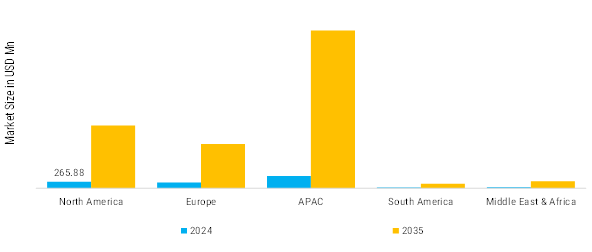
North America's Gallium Nitride (GaN) charger demand is experiencing rapid growth, driven by the increasing need for fast, compact, and efficient charging solutions for consumer electronics and electric vehicles (EVs).  The region benefits from heavy R&D and early adoption of new PD/PPS profiles in consumer electronics, which favors compact, high-efficiency GaN designs for laptops, phones, and multi-port travel chargers. It’s a premium-driven GaN charger market, with the U.S. leading adoption due to strong demand for fast-charging laptops, tablets, and smartphones. The rise of Apple’s 35W dual USB-C GaN charger and Anker’s Nano series demonstrates how local brands capitalize on consumers’ willingness to pay more for compact, travel-friendly solutions. Enterprises are also adopting multi-port GaN hubs for hybrid workforces, fueling steady B2B demand. Product launches from established accessory brands and US distribution networks mean new GaN SKUs (30–65W and above) reach consumers quickly, while enterprise buyers adopt multi-port and fast chargers for hybrid work.

GaN Powered Chargers Market Regional Insights

Europe: Strong Production smartphone and laptop adoption

Europe's demand for GaN chargers is significantly growing, driven by increasing smartphone and laptop adoption, government initiatives promoting energy efficiency, and the inherent advantages of GaN technology, such as smaller size and faster charging speeds.  Widespread use of smartphones and laptops is a significant factor driving the rising demand for advanced charging solutions, notably seen in the growing preference for GaN chargers.  With consumers heavily depending on electronic devices for communication, work, and entertainment, there's an increasing requirement for fast and effective charging options, a demand that GaN chargers effortlessly fulfill with their innovative features. Germany, the UK, and France lead adoption, with Ugreen’s 65W and 100W GaN chargers gaining traction through Amazon EU and regional electronics chains. Regulatory moves like the EU’s common charging standard mandating USB-C have accelerated GaN adoption, as OEMs pivot to universal chargers.

Asia Pacific: Fastest Growing GaN chargers both in manufacturing and demand

APAC dominates the global GaN charger market with the largest share and the highest CAGR. APAC is the global epicenter for GaN chargers both in manufacturing and demand. China and Taiwan host OEM/ODM giants supplying to brands worldwide, while Xiaomi, Realme, and Samsung bundle or sell standalone GaN chargers to meet domestic demand. India is witnessing rapid adoption, with Reliance Digital and Flipkart popularizing budget 65W GaN chargers for students and professionals. Japan and South Korea, being early adopters, focus on premium fast-charging for ultrabooks and foldable phones. The region also drives R&D, with GaN component suppliers in China, Japan, and Taiwan investing heavily in next-gen chipsets. Price competition is intense, and APAC is the only region where ASPs consistently fall year-over-year due to scale.

South America: Growing widespread GaN adoption

South America is a developing market for GaN chargers, with Brazil as the dominant contributor. Smartphone penetration is high, but economic factors limit widespread GaN adoption, keeping the market in low single-digit global share. Still, GaN is growing at a healthy CAGR as e-commerce platforms like Mercado Libre and Amazon Brazil introduce affordable 30–65W GaN chargers. Consumers in countries like Brazil and Argentina lean toward mid-priced imports from Chinese brands (Baseus, Ugreen, and Anker). Unlike North America or Europe, GaN adoption is consumer-driven rather than enterprise-driven. Gamers and young professionals are the fastest adopters, purchasing high-wattage chargers for laptops, handheld consoles, and smartphones. Business travelers also make up a growing segment, especially in Brazil’s financial centers (São Paulo, Rio).

Middle East & Africa: Emerging hubs drive adoption

The MEA GaN charger market is small but high-growth, with demand concentrated in UAE, Saudi Arabia, and South Africa. These hubs drive adoption through premium smartphone ecosystems (iPhone 15, Samsung Galaxy Ultra) and strong retail presence. In the UAE, Sharaf DG and Jumbo Electronics prominently stock GaN chargers, while e-commerce platforms like Noon and Amazon.ae list multi-port 65–100W models from Anker, Belkin, and Ugreen. Saudi Arabia’s tech-savvy population also contributes to rapid adoption of higher-wattage GaN chargers, particularly for business laptops and travel.

Key Players and Competitive Insights

Many global, regional, and local vendors characterize the GaN Powered Chargers Market. The market is highly competitive, with all the players competing to gain market share. Intense competition, rapid advances in technology, frequent changes in government policies, and environmental regulations are key factors that confront market growth. The vendors compete based on cost, product quality, reliability, and government regulations. Vendors must provide cost-efficient, high-quality products to survive and succeed in an intensely competitive market. The major players in the market Include Xiaomi, Samsung Electronics, Realme, Apple, RAV Power, Sense Charge, Anker, Baseus, Hama, J5create, Belkin, Momax, Cygnett, Iniu, Minix strategic market developments and decisions to improve operational effectiveness.

Key Companies in the GaN powered Chargers Market include

Industry Developments

April 2025: A comprehensive user manual was released for the NEO P1 Mini 33W GaN charger, which showcased the dynamic power-sharing technology with the related safety features, multi-protection, along with its small size and travel factors benign to multiple fast-charging protocols. NEO released the P3 100W 4 port wall charger that includes foldable plugs for global travel and utilizes the unique GaN technology that is advantageous for charging multiple devices efficiently and also for power density and thermal performance.

June 2025: Momax launched a new series called "Flow," which offered 1-Charge GaN devices, travel and desktop chargers, and wireless charging options with MagSafe compatibility. The new products laid the groundwork to believe production was justified for GaN devices that have improved charging power density with a more efficient charging power delivery. Momax introduced the 67W 3-Port GaN Charger in the Hong Kong for smartphones, tablets, laptops and other portable devices. The compact 67W charging unit improved charging efficiency through increasing power delivery capacity, produced a smaller sized unit, and maximum thermal performance

September 2025: Baseus announced that it became one of the first brands to deliver Qi2.2-certified power banks to consumers. Three new models rolled out globally starting August 2025, offering enhanced wireless charging speed, safety, and precision through practical and stylish devices. Baseus introduced the 65W PowerCombo GaN charger, designed as an all-in-one charging solution. The charger addresses the growing need for efficient multi-device charging in cluttered workspaces while maintaining portability and power efficiency.

Future Outlook

GaN powered Chargers Market Future Outlook

The GaN Powered Chargers Market is projected to grow at a 23.9% CAGR from 2025 to 2035, driven by increasing demand for high-performance computing and enhanced security features.

New opportunities lie in:

  • <p>Ultra-High Power Desktop Chargers for Power Users</p>
  • <p>Compact Travel-Friendly Chargers with Display and Multiple Ports</p>
  • <p>Adoption of New Fast Charging and Wireless Charging Standards.</p>

By 2035, the GaN-powered Chargers Market is expected to be a dominant force in the global charging solutions landscape.

Market Segmentation

GaN powered Chargers Market End User Outlook

  • Consumer Electronics
  • IT and Telecommunication
  • Automotive
  • Aerospace and Defense
  • Others

GaN powered Chargers Market Application Outlook

  • Smartphones and Tablets
  • Laptops and Notebooks
  • Autonomous Robots
  • Industrial Equipment
  • Wireless Charging

GaN powered Chargers Market Power Output Outlook

  • 25W GaN Chargers
  • 30W GaN Chargers
  • 45W GaN Chargers
  • 60W GaN Chargers
  • 65W GaN Chargers
  • Above 65W GaN Chargers

Report Scope

Market Size 2024

1,068.36 (USD Million)

Market Size 2025

1,298.47 (USD Million)

Market Size 2035

11,036.48 (USD Million)

Compound Annual Growth Rate (CAGR)

23.9% (2025 - 2035)

Report Coverage

Revenue Forecast, Competitive Landscape, Growth Factors, and Trends

Base Year

2024

Market Forecast Period

2025 - 2035

Historical Data

2019 - 2023

Market Forecast Units

USD Million

Key Companies Profiled

Xiaomi, Samsung Electronics, Realme, Apple, RAV Power, Sense Charge, Anker, Baseus, Hama, J5create, Belkin, Momax, Cygnett, Iniu, Minix.

Segments Covered

By Power Output, By Application, By End-User

Key Market Opportunities

Ultra-High Power Desktop Chargers for Power Users.

Compact Travel-Friendly Chargers with Display and Multiple Ports.

Adoption of New Fast Charging and Wireless Charging Standards.

Key Market Dynamics

Increasing adoption of GaN in consumer electronics.

Growing integration in the automotive industry.

Surging deployment in the energy and power industry.

Region Covered

North America, Europe, Asia Pacific, South America, Middle East & Africa.


FAQs

What is the projected market valuation for GaN-powered chargers by 2035?

<p>The projected market valuation for GaN-powered chargers is expected to reach 11.42 USD Billion by 2035.</p>

What was the overall market valuation for GaN-powered chargers in 2024?

<p>The overall market valuation for GaN-powered chargers was 0.9984 USD Billion in 2024.</p>

What is the expected CAGR for the GaN-powered chargers market during the forecast period 2025 - 2035?

<p>The expected CAGR for the GaN-powered chargers market during the forecast period 2025 - 2035 is 24.8%.</p>

Which companies are considered key players in the GaN-powered chargers market?

<p>Key players in the GaN-powered chargers market include Nexperia, Infineon Technologies, Texas Instruments, and others.</p>

What are the market segments for GaN-powered chargers based on power output?

<p>Market segments for GaN-powered chargers based on power output include 25W, 30W, 45W, 60W, 65W, 90W, and 100W chargers.</p>

How do the application segments for GaN-powered chargers break down?

Application segments for GaN-powered chargers include smartphones and tablets, laptops and notebooks, autonomous robots, and more.

What is the valuation of the consumer electronics segment in the GaN-powered chargers market?

The valuation of the consumer electronics segment in the GaN-powered chargers market is 4.56 USD Billion.

What is the projected growth for the automotive segment in the GaN-powered chargers market?

The automotive segment in the GaN-powered chargers market is projected to grow to 1.71 USD Billion by 2035.

What is the expected valuation for 60W GaN chargers by 2035?

The expected valuation for 60W GaN chargers is projected to reach 3.0 USD Billion by 2035.

How does the performance of 45W GaN chargers compare to other power output segments?

The performance of 45W GaN chargers is projected to reach 2.5 USD Billion, indicating strong demand relative to other segments.

  1. SECTION I: EXECUTIVE SUMMARY AND KEY HIGHLIGHTS
    1. | 1.1 EXECUTIVE SUMMARY
    2. | | 1.1.1 Market Overview
    3. | | 1.1.2 Key Findings
    4. | | 1.1.3 Market Segmentation
    5. | | 1.1.4 Competitive Landscape
    6. | | 1.1.5 Challenges and Opportunities
    7. | | 1.1.6 Future Outlook
  2. SECTION II: SCOPING, METHODOLOGY AND MARKET STRUCTURE
    1. | 2.1 MARKET INTRODUCTION
    2. | | 2.1.1 Definition
    3. | | 2.1.2 Scope of the study
    4. | | | 2.1.2.1 Research Objective
    5. | | | 2.1.2.2 Assumption
    6. | | | 2.1.2.3 Limitations
    7. | 2.2 RESEARCH METHODOLOGY
    8. | | 2.2.1 Overview
    9. | | 2.2.2 Data Mining
    10. | | 2.2.3 Secondary Research
    11. | | 2.2.4 Primary Research
    12. | | | 2.2.4.1 Primary Interviews and Information Gathering Process
    13. | | | 2.2.4.2 Breakdown of Primary Respondents
    14. | | 2.2.5 Forecasting Model
    15. | | 2.2.6 Market Size Estimation
    16. | | | 2.2.6.1 Bottom-Up Approach
    17. | | | 2.2.6.2 Top-Down Approach
    18. | | 2.2.7 Data Triangulation
    19. | | 2.2.8 Validation
  3. SECTION III: QUALITATIVE ANALYSIS
    1. | 3.1 MARKET DYNAMICS
    2. | | 3.1.1 Overview
    3. | | 3.1.2 Drivers
    4. | | 3.1.3 Restraints
    5. | | 3.1.4 Opportunities
    6. | 3.2 MARKET FACTOR ANALYSIS
    7. | | 3.2.1 Value chain Analysis
    8. | | 3.2.2 Porter's Five Forces Analysis
    9. | | | 3.2.2.1 Bargaining Power of Suppliers
    10. | | | 3.2.2.2 Bargaining Power of Buyers
    11. | | | 3.2.2.3 Threat of New Entrants
    12. | | | 3.2.2.4 Threat of Substitutes
    13. | | | 3.2.2.5 Intensity of Rivalry
    14. | | 3.2.3 COVID-19 Impact Analysis
    15. | | | 3.2.3.1 Market Impact Analysis
    16. | | | 3.2.3.2 Regional Impact
    17. | | | 3.2.3.3 Opportunity and Threat Analysis
  4. SECTION IV: QUANTITATIVE ANALYSIS
    1. | 4.1 Semiconductor & Electronics, BY Power Output (USD Billion)
    2. | | 4.1.1 25W GaN Chargers
    3. | | 4.1.2 30W GaN Chargers
    4. | | 4.1.3 45W GaN Chargers
    5. | | 4.1.4 60W GaN Chargers
    6. | | 4.1.5 65W GaN Chargers
    7. | | 4.1.6 90W GaN Chargers
    8. | | 4.1.7 100W GaN Chargers
    9. | 4.2 Semiconductor & Electronics, BY Application (USD Billion)
    10. | | 4.2.1 Smartphones and Tablets
    11. | | 4.2.2 Laptops and Notebooks
    12. | | 4.2.3 Autonomous Robots
    13. | | 4.2.4 Industrial Equipment
    14. | | 4.2.5 Wireless Charging
    15. | 4.3 Semiconductor & Electronics, BY End User (USD Billion)
    16. | | 4.3.1 Consumer Electronics
    17. | | 4.3.2 IT and Telecommunication
    18. | | 4.3.3 Automotive
    19. | | 4.3.4 Aerospace and Defense
    20. | | 4.3.5 Others
    21. | 4.4 Semiconductor & Electronics, BY Region (USD Billion)
    22. | | 4.4.1 North America
    23. | | | 4.4.1.1 US
    24. | | | 4.4.1.2 Canada
    25. | | 4.4.2 Europe
    26. | | | 4.4.2.1 Germany
    27. | | | 4.4.2.2 UK
    28. | | | 4.4.2.3 France
    29. | | | 4.4.2.4 Russia
    30. | | | 4.4.2.5 Italy
    31. | | | 4.4.2.6 Spain
    32. | | | 4.4.2.7 Rest of Europe
    33. | | 4.4.3 APAC
    34. | | | 4.4.3.1 China
    35. | | | 4.4.3.2 India
    36. | | | 4.4.3.3 Japan
    37. | | | 4.4.3.4 South Korea
    38. | | | 4.4.3.5 Malaysia
    39. | | | 4.4.3.6 Thailand
    40. | | | 4.4.3.7 Indonesia
    41. | | | 4.4.3.8 Rest of APAC
    42. | | 4.4.4 South America
    43. | | | 4.4.4.1 Brazil
    44. | | | 4.4.4.2 Mexico
    45. | | | 4.4.4.3 Argentina
    46. | | | 4.4.4.4 Rest of South America
    47. | | 4.4.5 MEA
    48. | | | 4.4.5.1 GCC Countries
    49. | | | 4.4.5.2 South Africa
    50. | | | 4.4.5.3 Rest of MEA
  5. SECTION V: COMPETITIVE ANALYSIS
    1. | 5.1 Competitive Landscape
    2. | | 5.1.1 Overview
    3. | | 5.1.2 Competitive Analysis
    4. | | 5.1.3 Market share Analysis
    5. | | 5.1.4 Major Growth Strategy in the Semiconductor & Electronics
    6. | | 5.1.5 Competitive Benchmarking
    7. | | 5.1.6 Leading Players in Terms of Number of Developments in the Semiconductor & Electronics
    8. | | 5.1.7 Key developments and growth strategies
    9. | | | 5.1.7.1 New Product Launch/Service Deployment
    10. | | | 5.1.7.2 Merger & Acquisitions
    11. | | | 5.1.7.3 Joint Ventures
    12. | | 5.1.8 Major Players Financial Matrix
    13. | | | 5.1.8.1 Sales and Operating Income
    14. | | | 5.1.8.2 Major Players R&D Expenditure. 2023
    15. | 5.2 Company Profiles
    16. | | 5.2.1 Nexperia (NL)
    17. | | | 5.2.1.1 Financial Overview
    18. | | | 5.2.1.2 Products Offered
    19. | | | 5.2.1.3 Key Developments
    20. | | | 5.2.1.4 SWOT Analysis
    21. | | | 5.2.1.5 Key Strategies
    22. | | 5.2.2 Infineon Technologies (DE)
    23. | | | 5.2.2.1 Financial Overview
    24. | | | 5.2.2.2 Products Offered
    25. | | | 5.2.2.3 Key Developments
    26. | | | 5.2.2.4 SWOT Analysis
    27. | | | 5.2.2.5 Key Strategies
    28. | | 5.2.3 Texas Instruments (US)
    29. | | | 5.2.3.1 Financial Overview
    30. | | | 5.2.3.2 Products Offered
    31. | | | 5.2.3.3 Key Developments
    32. | | | 5.2.3.4 SWOT Analysis
    33. | | | 5.2.3.5 Key Strategies
    34. | | 5.2.4 STMicroelectronics (FR)
    35. | | | 5.2.4.1 Financial Overview
    36. | | | 5.2.4.2 Products Offered
    37. | | | 5.2.4.3 Key Developments
    38. | | | 5.2.4.4 SWOT Analysis
    39. | | | 5.2.4.5 Key Strategies
    40. | | 5.2.5 ON Semiconductor (US)
    41. | | | 5.2.5.1 Financial Overview
    42. | | | 5.2.5.2 Products Offered
    43. | | | 5.2.5.3 Key Developments
    44. | | | 5.2.5.4 SWOT Analysis
    45. | | | 5.2.5.5 Key Strategies
    46. | | 5.2.6 GaN Systems (CA)
    47. | | | 5.2.6.1 Financial Overview
    48. | | | 5.2.6.2 Products Offered
    49. | | | 5.2.6.3 Key Developments
    50. | | | 5.2.6.4 SWOT Analysis
    51. | | | 5.2.6.5 Key Strategies
    52. | | 5.2.7 Power Integrations (US)
    53. | | | 5.2.7.1 Financial Overview
    54. | | | 5.2.7.2 Products Offered
    55. | | | 5.2.7.3 Key Developments
    56. | | | 5.2.7.4 SWOT Analysis
    57. | | | 5.2.7.5 Key Strategies
    58. | | 5.2.8 Efficient Power Conversion (US)
    59. | | | 5.2.8.1 Financial Overview
    60. | | | 5.2.8.2 Products Offered
    61. | | | 5.2.8.3 Key Developments
    62. | | | 5.2.8.4 SWOT Analysis
    63. | | | 5.2.8.5 Key Strategies
    64. | | 5.2.9 Transphorm (US)
    65. | | | 5.2.9.1 Financial Overview
    66. | | | 5.2.9.2 Products Offered
    67. | | | 5.2.9.3 Key Developments
    68. | | | 5.2.9.4 SWOT Analysis
    69. | | | 5.2.9.5 Key Strategies
    70. | 5.3 Appendix
    71. | | 5.3.1 References
    72. | | 5.3.2 Related Reports
  6. LIST OF FIGURES
    1. | 6.1 MARKET SYNOPSIS
    2. | 6.2 NORTH AMERICA MARKET ANALYSIS
    3. | 6.3 US MARKET ANALYSIS BY POWER OUTPUT
    4. | 6.4 US MARKET ANALYSIS BY APPLICATION
    5. | 6.5 US MARKET ANALYSIS BY END USER
    6. | 6.6 CANADA MARKET ANALYSIS BY POWER OUTPUT
    7. | 6.7 CANADA MARKET ANALYSIS BY APPLICATION
    8. | 6.8 CANADA MARKET ANALYSIS BY END USER
    9. | 6.9 EUROPE MARKET ANALYSIS
    10. | 6.10 GERMANY MARKET ANALYSIS BY POWER OUTPUT
    11. | 6.11 GERMANY MARKET ANALYSIS BY APPLICATION
    12. | 6.12 GERMANY MARKET ANALYSIS BY END USER
    13. | 6.13 UK MARKET ANALYSIS BY POWER OUTPUT
    14. | 6.14 UK MARKET ANALYSIS BY APPLICATION
    15. | 6.15 UK MARKET ANALYSIS BY END USER
    16. | 6.16 FRANCE MARKET ANALYSIS BY POWER OUTPUT
    17. | 6.17 FRANCE MARKET ANALYSIS BY APPLICATION
    18. | 6.18 FRANCE MARKET ANALYSIS BY END USER
    19. | 6.19 RUSSIA MARKET ANALYSIS BY POWER OUTPUT
    20. | 6.20 RUSSIA MARKET ANALYSIS BY APPLICATION
    21. | 6.21 RUSSIA MARKET ANALYSIS BY END USER
    22. | 6.22 ITALY MARKET ANALYSIS BY POWER OUTPUT
    23. | 6.23 ITALY MARKET ANALYSIS BY APPLICATION
    24. | 6.24 ITALY MARKET ANALYSIS BY END USER
    25. | 6.25 SPAIN MARKET ANALYSIS BY POWER OUTPUT
    26. | 6.26 SPAIN MARKET ANALYSIS BY APPLICATION
    27. | 6.27 SPAIN MARKET ANALYSIS BY END USER
    28. | 6.28 REST OF EUROPE MARKET ANALYSIS BY POWER OUTPUT
    29. | 6.29 REST OF EUROPE MARKET ANALYSIS BY APPLICATION
    30. | 6.30 REST OF EUROPE MARKET ANALYSIS BY END USER
    31. | 6.31 APAC MARKET ANALYSIS
    32. | 6.32 CHINA MARKET ANALYSIS BY POWER OUTPUT
    33. | 6.33 CHINA MARKET ANALYSIS BY APPLICATION
    34. | 6.34 CHINA MARKET ANALYSIS BY END USER
    35. | 6.35 INDIA MARKET ANALYSIS BY POWER OUTPUT
    36. | 6.36 INDIA MARKET ANALYSIS BY APPLICATION
    37. | 6.37 INDIA MARKET ANALYSIS BY END USER
    38. | 6.38 JAPAN MARKET ANALYSIS BY POWER OUTPUT
    39. | 6.39 JAPAN MARKET ANALYSIS BY APPLICATION
    40. | 6.40 JAPAN MARKET ANALYSIS BY END USER
    41. | 6.41 SOUTH KOREA MARKET ANALYSIS BY POWER OUTPUT
    42. | 6.42 SOUTH KOREA MARKET ANALYSIS BY APPLICATION
    43. | 6.43 SOUTH KOREA MARKET ANALYSIS BY END USER
    44. | 6.44 MALAYSIA MARKET ANALYSIS BY POWER OUTPUT
    45. | 6.45 MALAYSIA MARKET ANALYSIS BY APPLICATION
    46. | 6.46 MALAYSIA MARKET ANALYSIS BY END USER
    47. | 6.47 THAILAND MARKET ANALYSIS BY POWER OUTPUT
    48. | 6.48 THAILAND MARKET ANALYSIS BY APPLICATION
    49. | 6.49 THAILAND MARKET ANALYSIS BY END USER
    50. | 6.50 INDONESIA MARKET ANALYSIS BY POWER OUTPUT
    51. | 6.51 INDONESIA MARKET ANALYSIS BY APPLICATION
    52. | 6.52 INDONESIA MARKET ANALYSIS BY END USER
    53. | 6.53 REST OF APAC MARKET ANALYSIS BY POWER OUTPUT
    54. | 6.54 REST OF APAC MARKET ANALYSIS BY APPLICATION
    55. | 6.55 REST OF APAC MARKET ANALYSIS BY END USER
    56. | 6.56 SOUTH AMERICA MARKET ANALYSIS
    57. | 6.57 BRAZIL MARKET ANALYSIS BY POWER OUTPUT
    58. | 6.58 BRAZIL MARKET ANALYSIS BY APPLICATION
    59. | 6.59 BRAZIL MARKET ANALYSIS BY END USER
    60. | 6.60 MEXICO MARKET ANALYSIS BY POWER OUTPUT
    61. | 6.61 MEXICO MARKET ANALYSIS BY APPLICATION
    62. | 6.62 MEXICO MARKET ANALYSIS BY END USER
    63. | 6.63 ARGENTINA MARKET ANALYSIS BY POWER OUTPUT
    64. | 6.64 ARGENTINA MARKET ANALYSIS BY APPLICATION
    65. | 6.65 ARGENTINA MARKET ANALYSIS BY END USER
    66. | 6.66 REST OF SOUTH AMERICA MARKET ANALYSIS BY POWER OUTPUT
    67. | 6.67 REST OF SOUTH AMERICA MARKET ANALYSIS BY APPLICATION
    68. | 6.68 REST OF SOUTH AMERICA MARKET ANALYSIS BY END USER
    69. | 6.69 MEA MARKET ANALYSIS
    70. | 6.70 GCC COUNTRIES MARKET ANALYSIS BY POWER OUTPUT
    71. | 6.71 GCC COUNTRIES MARKET ANALYSIS BY APPLICATION
    72. | 6.72 GCC COUNTRIES MARKET ANALYSIS BY END USER
    73. | 6.73 SOUTH AFRICA MARKET ANALYSIS BY POWER OUTPUT
    74. | 6.74 SOUTH AFRICA MARKET ANALYSIS BY APPLICATION
    75. | 6.75 SOUTH AFRICA MARKET ANALYSIS BY END USER
    76. | 6.76 REST OF MEA MARKET ANALYSIS BY POWER OUTPUT
    77. | 6.77 REST OF MEA MARKET ANALYSIS BY APPLICATION
    78. | 6.78 REST OF MEA MARKET ANALYSIS BY END USER
    79. | 6.79 KEY BUYING CRITERIA OF SEMICONDUCTOR & ELECTRONICS
    80. | 6.80 RESEARCH PROCESS OF MRFR
    81. | 6.81 DRO ANALYSIS OF SEMICONDUCTOR & ELECTRONICS
    82. | 6.82 DRIVERS IMPACT ANALYSIS: SEMICONDUCTOR & ELECTRONICS
    83. | 6.83 RESTRAINTS IMPACT ANALYSIS: SEMICONDUCTOR & ELECTRONICS
    84. | 6.84 SUPPLY / VALUE CHAIN: SEMICONDUCTOR & ELECTRONICS
    85. | 6.85 SEMICONDUCTOR & ELECTRONICS, BY POWER OUTPUT, 2024 (% SHARE)
    86. | 6.86 SEMICONDUCTOR & ELECTRONICS, BY POWER OUTPUT, 2024 TO 2035 (USD Billion)
    87. | 6.87 SEMICONDUCTOR & ELECTRONICS, BY APPLICATION, 2024 (% SHARE)
    88. | 6.88 SEMICONDUCTOR & ELECTRONICS, BY APPLICATION, 2024 TO 2035 (USD Billion)
    89. | 6.89 SEMICONDUCTOR & ELECTRONICS, BY END USER, 2024 (% SHARE)
    90. | 6.90 SEMICONDUCTOR & ELECTRONICS, BY END USER, 2024 TO 2035 (USD Billion)
    91. | 6.91 BENCHMARKING OF MAJOR COMPETITORS
  7. LIST OF TABLES
    1. | 7.1 LIST OF ASSUMPTIONS
    2. | | 7.1.1
    3. | 7.2 North America MARKET SIZE ESTIMATES; FORECAST
    4. | | 7.2.1 BY POWER OUTPUT, 2025-2035 (USD Billion)
    5. | | 7.2.2 BY APPLICATION, 2025-2035 (USD Billion)
    6. | | 7.2.3 BY END USER, 2025-2035 (USD Billion)
    7. | 7.3 US MARKET SIZE ESTIMATES; FORECAST
    8. | | 7.3.1 BY POWER OUTPUT, 2025-2035 (USD Billion)
    9. | | 7.3.2 BY APPLICATION, 2025-2035 (USD Billion)
    10. | | 7.3.3 BY END USER, 2025-2035 (USD Billion)
    11. | 7.4 Canada MARKET SIZE ESTIMATES; FORECAST
    12. | | 7.4.1 BY POWER OUTPUT, 2025-2035 (USD Billion)
    13. | | 7.4.2 BY APPLICATION, 2025-2035 (USD Billion)
    14. | | 7.4.3 BY END USER, 2025-2035 (USD Billion)
    15. | 7.5 Europe MARKET SIZE ESTIMATES; FORECAST
    16. | | 7.5.1 BY POWER OUTPUT, 2025-2035 (USD Billion)
    17. | | 7.5.2 BY APPLICATION, 2025-2035 (USD Billion)
    18. | | 7.5.3 BY END USER, 2025-2035 (USD Billion)
    19. | 7.6 Germany MARKET SIZE ESTIMATES; FORECAST
    20. | | 7.6.1 BY POWER OUTPUT, 2025-2035 (USD Billion)
    21. | | 7.6.2 BY APPLICATION, 2025-2035 (USD Billion)
    22. | | 7.6.3 BY END USER, 2025-2035 (USD Billion)
    23. | 7.7 UK MARKET SIZE ESTIMATES; FORECAST
    24. | | 7.7.1 BY POWER OUTPUT, 2025-2035 (USD Billion)
    25. | | 7.7.2 BY APPLICATION, 2025-2035 (USD Billion)
    26. | | 7.7.3 BY END USER, 2025-2035 (USD Billion)
    27. | 7.8 France MARKET SIZE ESTIMATES; FORECAST
    28. | | 7.8.1 BY POWER OUTPUT, 2025-2035 (USD Billion)
    29. | | 7.8.2 BY APPLICATION, 2025-2035 (USD Billion)
    30. | | 7.8.3 BY END USER, 2025-2035 (USD Billion)
    31. | 7.9 Russia MARKET SIZE ESTIMATES; FORECAST
    32. | | 7.9.1 BY POWER OUTPUT, 2025-2035 (USD Billion)
    33. | | 7.9.2 BY APPLICATION, 2025-2035 (USD Billion)
    34. | | 7.9.3 BY END USER, 2025-2035 (USD Billion)
    35. | 7.10 Italy MARKET SIZE ESTIMATES; FORECAST
    36. | | 7.10.1 BY POWER OUTPUT, 2025-2035 (USD Billion)
    37. | | 7.10.2 BY APPLICATION, 2025-2035 (USD Billion)
    38. | | 7.10.3 BY END USER, 2025-2035 (USD Billion)
    39. | 7.11 Spain MARKET SIZE ESTIMATES; FORECAST
    40. | | 7.11.1 BY POWER OUTPUT, 2025-2035 (USD Billion)
    41. | | 7.11.2 BY APPLICATION, 2025-2035 (USD Billion)
    42. | | 7.11.3 BY END USER, 2025-2035 (USD Billion)
    43. | 7.12 Rest of Europe MARKET SIZE ESTIMATES; FORECAST
    44. | | 7.12.1 BY POWER OUTPUT, 2025-2035 (USD Billion)
    45. | | 7.12.2 BY APPLICATION, 2025-2035 (USD Billion)
    46. | | 7.12.3 BY END USER, 2025-2035 (USD Billion)
    47. | 7.13 APAC MARKET SIZE ESTIMATES; FORECAST
    48. | | 7.13.1 BY POWER OUTPUT, 2025-2035 (USD Billion)
    49. | | 7.13.2 BY APPLICATION, 2025-2035 (USD Billion)
    50. | | 7.13.3 BY END USER, 2025-2035 (USD Billion)
    51. | 7.14 China MARKET SIZE ESTIMATES; FORECAST
    52. | | 7.14.1 BY POWER OUTPUT, 2025-2035 (USD Billion)
    53. | | 7.14.2 BY APPLICATION, 2025-2035 (USD Billion)
    54. | | 7.14.3 BY END USER, 2025-2035 (USD Billion)
    55. | 7.15 India MARKET SIZE ESTIMATES; FORECAST
    56. | | 7.15.1 BY POWER OUTPUT, 2025-2035 (USD Billion)
    57. | | 7.15.2 BY APPLICATION, 2025-2035 (USD Billion)
    58. | | 7.15.3 BY END USER, 2025-2035 (USD Billion)
    59. | 7.16 Japan MARKET SIZE ESTIMATES; FORECAST
    60. | | 7.16.1 BY POWER OUTPUT, 2025-2035 (USD Billion)
    61. | | 7.16.2 BY APPLICATION, 2025-2035 (USD Billion)
    62. | | 7.16.3 BY END USER, 2025-2035 (USD Billion)
    63. | 7.17 South Korea MARKET SIZE ESTIMATES; FORECAST
    64. | | 7.17.1 BY POWER OUTPUT, 2025-2035 (USD Billion)
    65. | | 7.17.2 BY APPLICATION, 2025-2035 (USD Billion)
    66. | | 7.17.3 BY END USER, 2025-2035 (USD Billion)
    67. | 7.18 Malaysia MARKET SIZE ESTIMATES; FORECAST
    68. | | 7.18.1 BY POWER OUTPUT, 2025-2035 (USD Billion)
    69. | | 7.18.2 BY APPLICATION, 2025-2035 (USD Billion)
    70. | | 7.18.3 BY END USER, 2025-2035 (USD Billion)
    71. | 7.19 Thailand MARKET SIZE ESTIMATES; FORECAST
    72. | | 7.19.1 BY POWER OUTPUT, 2025-2035 (USD Billion)
    73. | | 7.19.2 BY APPLICATION, 2025-2035 (USD Billion)
    74. | | 7.19.3 BY END USER, 2025-2035 (USD Billion)
    75. | 7.20 Indonesia MARKET SIZE ESTIMATES; FORECAST
    76. | | 7.20.1 BY POWER OUTPUT, 2025-2035 (USD Billion)
    77. | | 7.20.2 BY APPLICATION, 2025-2035 (USD Billion)
    78. | | 7.20.3 BY END USER, 2025-2035 (USD Billion)
    79. | 7.21 Rest of APAC MARKET SIZE ESTIMATES; FORECAST
    80. | | 7.21.1 BY POWER OUTPUT, 2025-2035 (USD Billion)
    81. | | 7.21.2 BY APPLICATION, 2025-2035 (USD Billion)
    82. | | 7.21.3 BY END USER, 2025-2035 (USD Billion)
    83. | 7.22 South America MARKET SIZE ESTIMATES; FORECAST
    84. | | 7.22.1 BY POWER OUTPUT, 2025-2035 (USD Billion)
    85. | | 7.22.2 BY APPLICATION, 2025-2035 (USD Billion)
    86. | | 7.22.3 BY END USER, 2025-2035 (USD Billion)
    87. | 7.23 Brazil MARKET SIZE ESTIMATES; FORECAST
    88. | | 7.23.1 BY POWER OUTPUT, 2025-2035 (USD Billion)
    89. | | 7.23.2 BY APPLICATION, 2025-2035 (USD Billion)
    90. | | 7.23.3 BY END USER, 2025-2035 (USD Billion)
    91. | 7.24 Mexico MARKET SIZE ESTIMATES; FORECAST
    92. | | 7.24.1 BY POWER OUTPUT, 2025-2035 (USD Billion)
    93. | | 7.24.2 BY APPLICATION, 2025-2035 (USD Billion)
    94. | | 7.24.3 BY END USER, 2025-2035 (USD Billion)
    95. | 7.25 Argentina MARKET SIZE ESTIMATES; FORECAST
    96. | | 7.25.1 BY POWER OUTPUT, 2025-2035 (USD Billion)
    97. | | 7.25.2 BY APPLICATION, 2025-2035 (USD Billion)
    98. | | 7.25.3 BY END USER, 2025-2035 (USD Billion)
    99. | 7.26 Rest of South America MARKET SIZE ESTIMATES; FORECAST
    100. | | 7.26.1 BY POWER OUTPUT, 2025-2035 (USD Billion)
    101. | | 7.26.2 BY APPLICATION, 2025-2035 (USD Billion)
    102. | | 7.26.3 BY END USER, 2025-2035 (USD Billion)
    103. | 7.27 MEA MARKET SIZE ESTIMATES; FORECAST
    104. | | 7.27.1 BY POWER OUTPUT, 2025-2035 (USD Billion)
    105. | | 7.27.2 BY APPLICATION, 2025-2035 (USD Billion)
    106. | | 7.27.3 BY END USER, 2025-2035 (USD Billion)
    107. | 7.28 GCC Countries MARKET SIZE ESTIMATES; FORECAST
    108. | | 7.28.1 BY POWER OUTPUT, 2025-2035 (USD Billion)
    109. | | 7.28.2 BY APPLICATION, 2025-2035 (USD Billion)
    110. | | 7.28.3 BY END USER, 2025-2035 (USD Billion)
    111. | 7.29 South Africa MARKET SIZE ESTIMATES; FORECAST
    112. | | 7.29.1 BY POWER OUTPUT, 2025-2035 (USD Billion)
    113. | | 7.29.2 BY APPLICATION, 2025-2035 (USD Billion)
    114. | | 7.29.3 BY END USER, 2025-2035 (USD Billion)
    115. | 7.30 Rest of MEA MARKET SIZE ESTIMATES; FORECAST
    116. | | 7.30.1 BY POWER OUTPUT, 2025-2035 (USD Billion)
    117. | | 7.30.2 BY APPLICATION, 2025-2035 (USD Billion)
    118. | | 7.30.3 BY END USER, 2025-2035 (USD Billion)
    119. | 7.31 PRODUCT LAUNCH/PRODUCT DEVELOPMENT/APPROVAL
    120. | | 7.31.1
    121. | 7.32 ACQUISITION/PARTNERSHIP
    122. | | 7.32.1

Semiconductor & Electronics Market Segmentation

Semiconductor & Electronics By Power Output (USD Billion, 2025-2035)

  • 25W GaN Chargers
  • 30W GaN Chargers
  • 45W GaN Chargers
  • 60W GaN Chargers
  • 65W GaN Chargers
  • 90W GaN Chargers
  • 100W GaN Chargers

Semiconductor & Electronics By Application (USD Billion, 2025-2035)

  • Smartphones and Tablets
  • Laptops and Notebooks
  • Autonomous Robots
  • Industrial Equipment
  • Wireless Charging

Semiconductor & Electronics By End User (USD Billion, 2025-2035)

  • Consumer Electronics
  • IT and Telecommunication
  • Automotive
  • Aerospace and Defense
  • Others
Infographic

Free Sample Request

Kindly complete the form below to receive a free sample of this Report

Get Free Sample

Customer Strories

Compare Licence

×
Features License Type
Single User Multiuser License Enterprise User
Price $4,950 $5,950 $7,250
Maximum User Access Limit 1 User Upto 10 Users Unrestricted Access Throughout the Organization
Free Customization
Direct Access to Analyst
Deliverable Format
Platform Access
Discount on Next Purchase 10% 15% 15%
Printable Versions
%>