Renal Dialysis Market

Key Players: Companies such as Fresenius Medical Care (DE), DaVita Inc. (US), Baxter International Inc. (US), Nipro Corporation (JP), Medtronic plc (IE), Asahi Kasei Corporation (JP), Dialysis Clinic Inc. (US), KfH Kuratorium fĂźr Dialyse und Nierentransplantation e.V. (DE) are some of the major participants in the global market.
Renal Dialysis Market

Renal Dialysis Market Research Report Information by Type of Dialysis (Primary Dialysis, Secondary Dialysis), by Dialysis Products (Dialysis Machines, Dialyzers, Dialysis Concentrates, Dialysis Catheters, Others), by End-Users (Hospitals & Clinic, Dialysis Centers, Home Care Settings) and by Region (North America, Europe, Asia-Pacific, and Rest of the World) - Forecast till 2035
ID: MRFR/Pharma/0900-CR
123 Pages
Nidhi Mandole, Rahul Gotadki
Last Updated: June 18, 2026

Renal Dialysis Market Summary

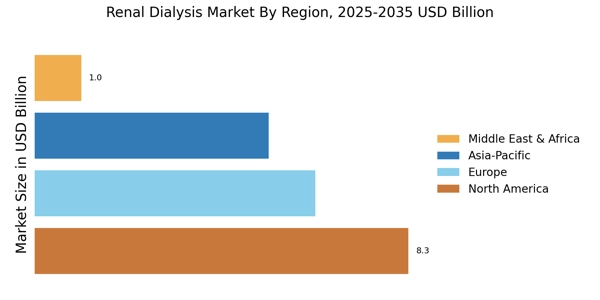
The Global Renal Dialysis Market size was valued at USD 20.66 Billion in 2024, and the market is projected to grow from USD 21.69 Billion in 2025 to USD 35.23 Billion by 2035, registering a CAGR of 4.97% during the forecast period 2025–2035. North America led the market in 2024 with over 40.0% share, generating around USD 8.3 Billion in revenue.
 
Rising prevalence of chronic kidney disease, diabetes, and hypertension is a major growth factor for renal dialysis demand, alongside aging populations and improved healthcare access, driving adoption of advanced dialysis technologies and expanding treatment infrastructure across emerging and developed regions.
 
According to WHO, chronic kidney disease affects about 10% of the global population, nearly 850 million people, while CDC reports approximately 37 million adults in the U.S. have CKD, and IHME Global Burden Study shows rising mortality linked to kidney failure worldwide.

Key Market Trends & Highlights

The Renal Dialysis Market is experiencing a transformative shift towards home-based solutions and technological advancements.

  • North America leads renal dialysis market, capturing over 40% global revenue share driven by CKD prevalence and Medicare support.
  • Europe holds 30% share, valued at USD 6.20 Billion in 2024, supported by rising diabetes and hypertension prevalence.
  • Technological advancements including portable dialysis machines significantly improve treatment efficiency and expand home-based care adoption and accessibility globally.
  • Patient education initiatives improve early diagnosis and management of chronic kidney disease, reducing progression to dialysis dependence globally.

Market Size & Forecast

2024 Market Size 20.66 (USD Billion)
2035 Market Size 35.23 (USD Billion)
CAGR (2025 - 2035) 4.97%

Major Players

Companies such as Fresenius Medical Care (DE), DaVita Inc. (US), Baxter International Inc. (US), Nipro Corporation (JP), Medtronic plc (IE), Asahi Kasei Corporation (JP), Dialysis Clinic Inc. (US), KfH Kuratorium fĂźr Dialyse und Nierentransplantation e.V. (DE) are some of the major participants in the global market.
Our Impact
Enabled $4.3B Revenue Impact for Fortune 500 and Leading Multinationals
Partnering with 2000+ Global Organizations Each Year
30K+ Citations by Top-Tier Firms in the Industry

Renal Dialysis Market Trends

The Renal Dialysis Market is currently experiencing a transformative phase, driven by advancements in technology and an increasing prevalence of chronic kidney diseases. Innovations in dialysis equipment and techniques are enhancing patient outcomes and improving the overall quality of care. Furthermore, the growing awareness of kidney health among the population is prompting more individuals to seek early diagnosis and treatment options.

This shift in patient behavior is likely to influence market dynamics significantly, as healthcare providers adapt to meet the rising demand for renal care services. In addition, the global market is witnessing a surge in the adoption of home dialysis solutions. 

Patients are increasingly favoring at-home treatment options due to their convenience and flexibility. This trend is further supported by the development of user-friendly devices that facilitate self-administration. As healthcare systems evolve, the emphasis on personalized care and patient-centric approaches is expected to shape the future landscape of the global market, potentially leading to more innovative solutions tailored to individual needs.

Technological Advancements

The Renal Dialysis Industry is seeing rapid technological progress, with new devices and methods enhancing treatment efficacy. Innovations such as portable dialysis machines and automated systems are making treatments more accessible and efficient, thereby improving patient experiences.

  • Fresenius Medical Care continues to strengthen technological innovation through AI-enabled clinical tools, next-generation dialysis technologies, and extensive research programs. In 2025, the company presented 52 research abstracts at the European Renal Association Congress and expanded strategic collaborations supporting precision kidney care. These product development initiatives and partnerships are accelerating treatment efficiency, improving patient outcomes, and advancing dialysis technology adoption globally.

Shift Towards Home Dialysis

There is a noticeable trend towards home dialysis, as patients prefer the comfort and flexibility of receiving treatment in their own environments. This shift is supported by advancements in technology that allow for safer and more effective home-based therapies.

  • DaVita Inc. continues expanding patient-centric dialysis services through portfolio enhancement strategies and clinical advancements supporting home-based care. Growing investments in digital patient monitoring, telehealth integration, and innovative dialysis programs are helping improve treatment flexibility. Regulatory progress and expanded renal care offerings are encouraging greater adoption of home dialysis solutions, supporting the industry's transition toward convenient and personalized treatment environments.

Increased Focus on Patient Education

Healthcare providers are placing greater emphasis on educating patients about kidney health and treatment options. This trend aims to empower individuals to take charge of their health, leading to earlier interventions and better management of chronic kidney diseases.

  • Baxter International Inc. continues strengthening patient education through innovation-driven home dialysis platforms and clinically supported renal care programs. Regulatory-backed advancements in peritoneal dialysis technologies and patient training initiatives are improving treatment adherence and self-management. These developments empower patients with better disease understanding and treatment confidence, supporting improved outcomes while increasing awareness of kidney health management worldwide.

Renal Dialysis Market Drivers

Government Initiatives and Funding

Government initiatives aimed at improving healthcare access and funding for renal care are pivotal in shaping the Renal Dialysis Industry. Many countries are implementing policies to subsidize dialysis treatments, thereby making them more accessible to patients. For instance, reimbursement programs for dialysis services are being expanded, which encourages healthcare providers to invest in renal care facilities.
 
Additionally, public health campaigns aimed at raising awareness about kidney health are likely to lead to earlier diagnosis and treatment of kidney diseases. This proactive approach not only benefits patients but also stimulates growth in the Renal Dialysis Industry, as increased funding and support can lead to enhanced service delivery and technological advancements.
 

  • According to World Bank health data, global health expenditure remains above 9% of global GDP, reflecting sustained government commitment toward healthcare infrastructure and patient access programs. Increasing public investments, reimbursement expansion, and healthcare funding initiatives continue supporting dialysis accessibility, renal care facility development, and advanced treatment adoption across both developed and emerging healthcare markets.

Rising Prevalence of Kidney Diseases

The increasing incidence of chronic kidney diseases (CKD) is a primary driver of the Renal Dialysis Industry. According to recent statistics, approximately 10% of the population is affected by some form of kidney disease, leading to a heightened demand for dialysis services. This trend is particularly pronounced in aging populations, where the prevalence of diabetes and hypertension, both significant risk factors for CKD, is on the rise.
 
As more individuals require renal replacement therapy, the global industry is expected to expand, with projections indicating a compound annual growth rate (CAGR) of around 5% over the next several years. This growing patient base necessitates advancements in dialysis technology and increased healthcare resources, thereby driving market growth.
 

  • According to PubMed, chronic kidney disease affects approximately 10% of the global population, making it one of the fastest-growing non-communicable diseases worldwide. The increasing prevalence of diabetes, hypertension, and aging populations continues to expand the dialysis patient base, creating long-term demand for renal replacement therapies and advanced dialysis technologies.

Growing Demand for Home Dialysis Solutions

The shift towards home dialysis solutions is significantly influencing the Renal Dialysis Industry. Patients increasingly prefer home-based treatments due to their convenience and flexibility, which allows for a better quality of life. This trend is supported by advancements in home dialysis technologies, such as peritoneal dialysis and portable hemodialysis machines, which are becoming more user-friendly.
 
Market data suggests that the home dialysis segment is expected to grow at a CAGR of over 7% in the coming years, reflecting a substantial shift in patient preferences. As healthcare providers adapt to this demand, the global market is likely to see a transformation in service delivery models, emphasizing home care options.

Technological Innovations in Dialysis Equipment

Technological advancements in dialysis equipment are transforming the Renal Dialysis Industry. Innovations such as portable dialysis machines and automated systems are enhancing patient convenience and treatment efficacy. The introduction of wearable dialysis devices is particularly noteworthy, as they allow for continuous monitoring and treatment, potentially improving patient outcomes.
 
Furthermore, the integration of telemedicine in dialysis care is facilitating remote patient management, which is becoming increasingly vital in today's healthcare landscape. As these technologies evolve, they are likely to attract more patients to dialysis, thereby expanding the market. The global market for dialysis equipment is projected to reach several billion dollars by the end of the decade, underscoring the importance of innovation in driving the global industry.

Increased Awareness and Education on Kidney Health

The rising awareness and education regarding kidney health are crucial drivers of the Renal Dialysis Industry. Public health initiatives and educational programs are effectively informing individuals about the risks associated with kidney diseases and the importance of early detection. As more people become aware of the symptoms and risk factors of chronic kidney disease, there is a corresponding increase in screening and diagnosis rates.
 
This heightened awareness is likely to lead to a greater number of patients requiring dialysis treatment, thereby expanding the global market. Furthermore, educational efforts aimed at healthcare professionals are enhancing the quality of care provided to patients, which is essential for the growth and sustainability of the global industry.

Market Segment Insights

By Type: Primary Dialysis (Largest) vs. Secondary Dialysis (Fastest-Growing)

In the Renal Dialysis Market, Primary Dialysis holds a substantial share of 68%, as it is the most commonly utilized method among patients requiring renal replacement therapy. This segment benefits from a well-established infrastructure and a robust range of available products and services catering to a diverse patient demographic. In contrast, Secondary Dialysis is emerging and gaining traction, attributed to innovation and the introduction of new techniques and technologies that enhance patient outcomes, positioning it as a competitive alternative to Primary Dialysis.

Nipro Corporation continues expanding its dialysis product portfolio and global manufacturing capabilities to support growing demand for primary dialysis therapies. The company’s focus on high-performance dialyzers, blood tubing systems, and integrated renal care solutions strengthens treatment accessibility and efficiency, reinforcing the dominance of primary dialysis within the global renal replacement therapy landscape.

By Product: Dialysis Machines (Largest) vs. Dialyzers (Fastest-Growing)

The Renal Dialysis Market is segmented into several key product categories including Dialysis Machines, Dialyzers, Dialysis Concentrates, Dialysis Catheters, and Others. Among these, Dialysis Machines hold the largest market share at 40% due to their essential role in renal replacement therapy for patients with end-stage renal disease. Dialyzers, on the other hand, are experiencing rapid growth driven by technological advancements and an increasing incidence of kidney-related disorders, positioning them as the fastest-growing segment within this market.

Medtronic plc continues advancing renal care technologies through innovative patient monitoring, connected healthcare solutions, and medical device development. Its expertise in automation, remote monitoring, and digital health integration supports the modernization of dialysis equipment, contributing to stronger adoption of advanced dialysis machines across healthcare facilities worldwide.

By End User: Dialysis Centers (Largest) vs. Home Care Settings (Fastest-Growing)

In the Renal Dialysis Market, the distribution of market share among end users is prominently led by Dialysis Centers, which have established themselves as the largest segment with 70%. The specialized services offered by these centers cater effectively to patient needs, making them a preferred choice for many. In contrast, Home Care Settings are emerging rapidly as a viable alternative, capturing the interest of patients seeking more autonomy and convenience in their treatment options. This shift is reflective of changing consumer preferences that increasingly favor home-based healthcare solutions.

Data Backup (KfH Kuratorium fĂźr Dialyse und Nierentransplantation e.V.):
KfH Kuratorium fĂźr Dialyse und Nierentransplantation e.V. remains a leading provider of outpatient dialysis services in Europe, operating extensive renal care networks that support large patient volumes. Its established infrastructure, specialized clinical expertise, and comprehensive patient management programs reinforce dialysis centers as the preferred treatment setting for renal replacement therapy.

Get more detailed insights about Renal Dialysis Market

Regional Insights

North America : Market Leader in Dialysis

North America is the largest market for renal dialysis, accounting for approximately 40% of the global market share. The growth is driven by an increasing prevalence of chronic kidney diseases, an aging population, and advancements in dialysis technology. Regulatory support, such as Medicare coverage for dialysis treatments, further catalyzes market expansion. The U.S. is the primary contributor, followed by Canada, which holds around 10% of the market share.

  • According to CDC estimates, approximately 35.5 million U.S. adults are living with chronic kidney disease, creating substantial demand for dialysis services and renal care infrastructure. The growing disease burden, combined with strong healthcare spending and reimbursement support, continues to strengthen North America's leadership position within the global market.

The competitive landscape in North America is characterized by major players like Fresenius Medical Care and DaVita Inc., which dominate the market with extensive service networks and innovative product offerings. The presence of advanced healthcare infrastructure and a focus on patient-centric care enhances the competitive edge of these companies. Additionally, partnerships and collaborations among key players are expected to drive further growth in this region.

  • Dialysis Clinic Inc. (DCI) operates more than 260 dialysis centers across the United States, providing comprehensive renal care services to thousands of patients annually. Its expanding clinical network and commitment to patient-centered treatment continue enhancing dialysis accessibility, supporting sustained market growth throughout North America.

Europe : Emerging Market Dynamics

Europe is witnessing significant growth in the market, holding approximately 30% of the global share. The increasing incidence of diabetes and hypertension, which are primary risk factors for kidney diseases, is driving demand. Regulatory frameworks across countries, such as the European Medicines Agency's guidelines, support innovation and access to advanced dialysis technologies. Germany and the UK are the largest markets, contributing around 12% and 8% respectively to the overall market.

  • The European Medicines Agency (EMA) continues supporting innovation through regulatory pathways that facilitate access to advanced dialysis technologies and renal care products. Strong regulatory oversight and growing adoption of modern treatment solutions across major markets such as Germany and the UK are helping strengthen Europe’s approximately 30% share of the global market.

Leading countries in Europe are characterized by a robust healthcare system and a high prevalence of dialysis patients. Key players like Fresenius Medical Care and Baxter International are well-established, providing a range of dialysis solutions. The competitive landscape is marked by ongoing research and development efforts, with companies focusing on enhancing treatment efficacy and patient outcomes. This dynamic environment is expected to foster further advancements in renal care across the region.

Asia-Pacific : Rapidly Growing Market

The Asia-Pacific region is emerging as a significant player in the market, accounting for approximately 25% of the global share. The rapid increase in the aging population, coupled with rising rates of diabetes and hypertension, is driving demand for dialysis services. Countries like China and India are at the forefront, with China holding about 15% of the market share. Government initiatives aimed at improving healthcare access and affordability are also contributing to market growth.

In this region, the competitive landscape is evolving, with both local and international players vying for market share. Companies like Nipro Corporation and Asahi Kasei are expanding their presence through strategic partnerships and localized production. The focus on enhancing patient care and the introduction of innovative dialysis technologies are key trends shaping the market. As healthcare infrastructure improves, the potential for growth in renal dialysis services is substantial.

Middle East and Africa : Emerging Healthcare Solutions

The Middle East and Africa (MEA) region is gradually developing its market, currently holding about 5% of the global share. The growth is primarily driven by increasing awareness of chronic kidney diseases and the need for improved healthcare services. Countries like South Africa and Saudi Arabia are leading the market, with government initiatives aimed at enhancing healthcare infrastructure and access to dialysis treatments. The region's market is expected to grow as investments in healthcare increase.

The competitive landscape in MEA is characterized by a mix of local and international players. Companies such as Medtronic and Dialysis Clinic Inc. are expanding their operations to meet the rising demand. The focus on affordable and accessible dialysis solutions is crucial, as many patients face financial barriers to treatment. As healthcare policies evolve, the potential for market growth in this region is promising, with an emphasis on improving patient outcomes and service delivery.

Renal Dialysis Market Regional Image

Key Players and Competitive Insights

The Renal Dialysis Market is characterized by a dynamic competitive landscape, driven by increasing prevalence of chronic kidney diseases and a growing aging population. Key players such as Fresenius Medical Care (Germany), DaVita Inc. (US), and Baxter International Inc. (US) are at the forefront, each adopting distinct strategies to enhance their market positioning. Fresenius Medical Care (Germany) focuses on innovation in dialysis technologies, while DaVita Inc. (US) emphasizes patient-centric care models.
 
Baxter International Inc. (US) is actively pursuing partnerships to expand its product offerings, thereby shaping a competitive environment that is increasingly collaborative and innovation-driven. The market structure appears moderately fragmented, with a mix of large multinational corporations and regional players. Key business tactics include localizing manufacturing to reduce costs and optimize supply chains, which is crucial in maintaining competitive pricing. The collective influence of these major players fosters a competitive atmosphere where innovation and operational efficiency are paramount, allowing them to respond adeptly to market demands.
 
In August 2025, Fresenius Medical Care (Germany) announced the launch of a new home dialysis system designed to enhance patient convenience and treatment adherence. This strategic move not only aligns with the growing trend towards home-based therapies but also positions the company to capture a larger share of the home dialysis market, which is expected to expand significantly in the coming years. The introduction of this system underscores Fresenius's commitment to innovation and patient-centered care.
 
In September 2025, DaVita Inc. (US) entered into a strategic partnership with a leading telehealth provider to integrate remote monitoring capabilities into its dialysis services. This initiative aims to improve patient outcomes by enabling real-time health monitoring and personalized care plans. The partnership reflects DaVita's focus on leveraging technology to enhance service delivery and patient engagement, which is increasingly vital in today's healthcare landscape.
 
In July 2025, Baxter International Inc. (US) completed the acquisition of a regional dialysis provider, thereby expanding its footprint in the North American market. This acquisition is strategically significant as it allows Baxter to enhance its service capabilities and integrate its innovative dialysis products into a broader network of care. Such moves indicate a trend towards consolidation in the global market, where larger players seek to enhance their competitive edge through strategic acquisitions. 
 
As of October 2025, the global market is witnessing trends such as digitalization, sustainability, and the integration of artificial intelligence in treatment protocols. Strategic alliances are increasingly shaping the competitive landscape, enabling companies to pool resources and expertise. Looking ahead, competitive differentiation is likely to evolve from traditional price-based competition to a focus on innovation, technological advancements, and supply chain reliability, as companies strive to meet the complex needs of patients and healthcare systems.

Key Companies in the Renal Dialysis Market include

Industry Developments

  • Q4 2024: Fresenius announced plans for a broad commercial launch of HDF in US markets in 2025. Fresenius Medical Care announced in December 2024 that it will launch Hemodiafiltration (HDF) technology across US markets in 2025, aiming to improve convective clearance in dialysis treatments.
  • Q4 2024: Calendar Year 2025 End-Stage Renal Disease (ESRD) Prospective Payment System (PPS) Final Rule (CMS-1805-F) CMS finalized the CY 2025 ESRD PPS base rate at $273.82, up from $271.02 in 2024, with total payments to ESRD facilities projected to increase by 2.7% for 2025.

Future Outlook

Renal Dialysis Market Future Outlook

The Renal Dialysis Market size is projected to reach USD 35.23 Billion by 2035, growing at a CAGR of 4.97%, driven by technological advancements, increasing patient populations, and rising healthcare expenditures.

New opportunities lie in:

  • Expansion of telehealth services for remote patient monitoring Development of portable dialysis devices for home use Investment in AI-driven predictive analytics for treatment optimization

By 2035, the market is expected to achieve substantial growth, enhancing patient care and operational efficiencies.

Market Segmentation

Renal Dialysis Market Type Outlook

  • Primary Dialysis
  • Secondary Dialysis

Renal Dialysis Market Product Outlook

  • Dialysis Machines
  • Dialyzers
  • Dialysis Concentrates
  • Dialysis Catheters
  • Others

Renal Dialysis Market End User Outlook

  • Hospitals & Clinics
  • Dialysis Centers
  • Home Care Settings

Report Scope

MARKET SIZE 2024 20.66(USD Billion)
MARKET SIZE 2025 21.69(USD Billion)
MARKET SIZE 2035 35.23(USD Billion)
COMPOUND ANNUAL GROWTH RATE (CAGR) 4.97% (2025 - 2035)
REPORT COVERAGE Revenue Forecast, Competitive Landscape, Growth Factors, and Trends
BASE YEAR 2024
Market Forecast Period 2025 - 2035
Historical Data 2019 - 2024
Market Forecast Units USD Billion
Key Companies Profiled Fresenius Medical Care (DE), DaVita Inc. (US), Baxter International Inc. (US), Nipro Corporation (JP), Medtronic plc (IE), Asahi Kasei Corporation (JP), Dialysis Clinic Inc. (US), KfH Kuratorium fĂźr Dialyse und Nierentransplantation e.V. (DE)
Segments Covered Type of Dialysis, Dialysis Products, End-Users, Region
Key Market Opportunities Integration of telehealth solutions enhances patient monitoring in the Renal Dialysis Market.
Key Market Dynamics Technological advancements and regulatory changes are reshaping competitive dynamics in the renal dialysis market.
Countries Covered North America, Europe, APAC, South America, MEA

FAQs

What is the current valuation of the market in 2025?

The market is valued at approximately 20.66 USD Billion in 2024.

What is the projected market size for the market by 2035?

The market is expected to reach a valuation of 35.23 USD Billion by 2035.

What is the expected CAGR for the market during the forecast period 2025 - 2035?

The expected CAGR for the market during this period is 4.97%.

Which companies are the key players in the Renal Dialysis Market?

Key players include Fresenius Medical Care, DaVita Inc., Baxter International Inc., and others.

What are the primary and secondary dialysis market segments valued at in 2025?

The primary dialysis segment is valued at 17.61 USD Billion, while the secondary dialysis segment is valued at 17.62 USD Billion.

How do dialysis machines contribute to the Renal Dialysis Market?

Dialysis machines are projected to be valued at 8.0 USD Billion by 2035.

What is the market valuation for dialyzers in the Renal Dialysis Market?

Dialyzers are expected to reach a valuation of 6.5 USD Billion by 2035.

What is the expected growth for home care settings in the Renal Dialysis Market?

Home care settings are projected to grow to 10.23 USD Billion by 2035.

How do hospitals and clinics perform in the Renal Dialysis Market?

Hospitals and clinics are expected to be valued at 13.25 USD Billion by 2035.

What is the valuation of dialysis concentrates in the market?

Dialysis concentrates are projected to reach a valuation of 5.0 USD Billion by 2035.
Author
Author
Author Profile
Nidhi Mandole LinkedIn
Senior Research Analyst
She is an extremely curious individual currently working in Healthcare and Medical Devices Domain. Nidhi is comfortably versed in data centric research backed by healthcare educational background. She leverages extensive data mining and analytics tools such as Primary and Secondary Research, Statistical Analysis, Machine Learning, Data Modelling. Her key role also involves Technical Sales Support, Client Interaction and Project management within the Healthcare team. Lastly, she showcases extensive affinity towards learning new skills and remain fascinated in implementing them.
Co-Author
Co-Author Profile
Rahul Gotadki LinkedIn
Research Manager
He holds an experience of about 9+ years in Market Research and Business Consulting, working under the spectrum of Life Sciences and Healthcare domains. Rahul conceptualizes and implements a scalable business strategy and provides strategic leadership to the clients. His expertise lies in market estimation, competitive intelligence, pipeline analysis, customer assessment, etc.
Leave a Comment

Research Approach


Secondary Research

The secondary research process involved comprehensive analysis of regulatory databases, peer-reviewed nephrology journals, clinical publications, and authoritative health organizations. Key sources included:

Regulatory & Government Authorities:

US Food & Drug Administration (FDA) – 510(k) clearances, PMA approvals, and medical device regulations for dialysis equipment

European Medicines Agency (EMA) – CE marking and medical device regulations under MDR

Centers for Medicare & Medicaid Services (CMS) – ESRD Prospective Payment System (PPS) final rules, reimbursement rates, and coverage policies

National Institute for Health and Care Excellence (NICE) – Clinical guidelines for renal replacement therapy

Health Canada – Medical device licenses for dialysis products

Pharmaceuticals and Medical Devices Agency (PMDA) Japan – Approval status for dialysis machines and consumables

State Food and Drug Administration (SFDA) China – NMPA registrations for imported dialysis equipment

Professional & Clinical Organizations:

National Kidney Foundation (NKF) – Clinical practice guidelines and CKD prevalence data

International Society of Nephrology (ISN) – Global kidney health initiatives and epidemiological data

American Society of Nephrology (ASN) – Research publications and clinical trial outcomes

European Renal Association (ERA) – Registry data and treatment statistics

Kidney Disease: Improving Global Outcomes (KDIGO) – Evidence-based clinical practice guidelines

United States Renal Data System (USRDS) – Annual Data Report on ESRD incidence, prevalence, and treatment modalities

European Renal Association Registry (ERA-EDTA) – European dialysis and transplant registry data

Australia and New Zealand Dialysis and Transplant Registry (ANZDATA)

Health Statistics & Epidemiological Databases:

Centers for Disease Control and Prevention (CDC) – Chronic kidney disease surveillance data

National Center for Health Statistics (NCHS) – Health surveys and mortality data

World Health Organization (WHO) – Global Health Observatory data on kidney disease burden

Global Burden of Disease Study (GBD) – Disability-adjusted life years (DALYs) and prevalence estimates

Organization for Economic Co-operation and Development (OECD) – Health expenditure and dialysis treatment data

Eurostat Health Database – European healthcare statistics and dialysis facility data

National health ministry reports from key markets (China NHC, India MoHFW, Brazil MoH, Saudi Arabia MoH)

Market & Industry Sources:

Company annual reports and SEC filings (10-K, 10-Q) of major dialysis providers (Fresenius Medical Care, DaVita, Baxter)

Medical device industry associations (AdvaMed, MedTech Europe)

Dialysis facility accreditation bodies (Joint Commission, DNV GL)

These sources were used to collect ESRD incidence and prevalence statistics, dialysis procedure volumes by modality (hemodialysis, peritoneal dialysis), regulatory approval data, clinical safety studies, reimbursement landscape analysis, and competitive intelligence for dialysis machines, dialyzers, concentrates, and catheters.


Primary Research

In the primary research process, supply-side and demand-side stakeholders were interviewed to obtain qualitative and quantitative insights.

Supply-side sources included CEOs, VPs of Product Development, regulatory affairs heads, manufacturing directors, and commercial directors from dialysis equipment manufacturers (Fresenius Medical Care, Baxter, Nipro, Asahi Kasei, Medtronic, B. Braun, Nikkiso, Toray Medical), OEM component suppliers, and dialysis service providers.

Demand-side sources comprised chief nephrologists, dialysis center medical directors, procurement leads from hospital systems, dialysis center administrators, home dialysis program coordinators, and reimbursement specialists from academic medical centers, freestanding dialysis clinics, and

Download Free Sample

Kindly complete the form below to receive a free sample of this Report

Download PDF ×

We do not share your information with anyone. However, we may send you emails based on your report interest from time to time. You may contact us at any time to opt-out.