Request Free Sample ×

Kindly complete the form below to receive a free sample of this Report

* Please use a valid business email

Leading companies partner with us for data-driven Insights

clients tt-cursor
Hero Background
English
Chinese
French
Japanese
Korean
German
Spanish

Esophageal Squamous Cell Carcinoma Market Size

ID: MRFR/LS/10527-CR
128 Pages
Vikita Thakur
Last Updated: January 30, 2026

Esophageal Squamous Cell Carcinoma Market Research Report Information By Diagnosis and Treatment (Diagnosis and Treatment) by End User (Hospital, Specialty Centers and Others), by Region (North America, Europe, Asia-Pacific, and Rest of the World) - Forecast till 2035

Share:
Download PDF ×

We do not share your information with anyone. However, we may send you emails based on your report interest from time to time. You may contact us at any time to opt-out.

Esophageal Squamous Cell Carcinoma Market Infographic
Purchase Options

Esophageal Squamous Cell Carcinoma Size

Esophageal Squamous Cell Carcinoma Market Growth Projections and Opportunities

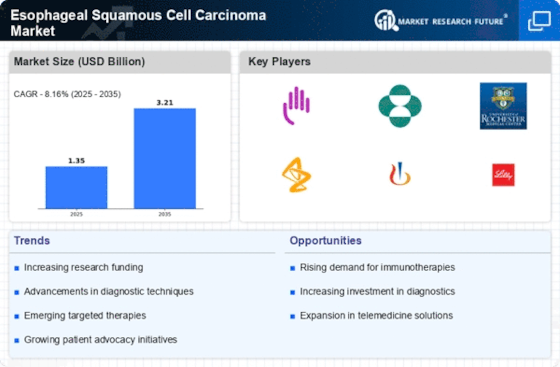
Esophageal Squamous Cell Carcinoma Market to reach USD 1.45 billion by 2032 at 8.16% CAGR. Market dynamics depend on Esophageal Squamous Cell Carcinoma prevalence and incidence. ESCC is more common in Asia, Africa, and South America. These variances affect diagnostic and treatment demand, prompting region-specific techniques and medicines. Improved early detection and screening programs also help with late-stage diagnoses.

ESCC market dynamics depend on diagnostic advances. Imaging, endoscopic, and biomarker innovations aid early and accurate diagnosis. Early detection is crucial for better treatment outcomes, increasing diagnostic tool demand and novel method research. The necessity for non-invasive, sensitive, and specific approaches to detect ESCC at various stages drives market dynamics as diagnostic technologies evolve.

ESCC market dynamics depend on ongoing R&D. Pharmaceutical corporations, research institutions, and biotech enterprises investigate new therapeutic targets, biomarkers, and treatments. Precision medicine and tailored treatment techniques improve when more effective and focused medicines are developed and the molecular and genetic foundation of ESCC is more understood. Research and cooperation affect market dynamics and new therapy availability.

Precision medicine and cancer care changes affect the ESCC market. Genotyping, molecular profiling, and mutation discovery help develop targeted medicines. ESCC patients' treatment options are affected by personalized medicine, which tailors medicines to tumor genetics. New therapy paradigms, particularly immunotherapies, reflect oncology trends and impact the ESCC market.

ESCC market dynamics depend on regulation. The approval and regulatory processes for new medications, diagnostics, and therapies affect their availability and adoption. Regulatory bodies ensure the safety and efficacy of novel therapies, affecting timeframes and commercialization plans. Market entry requires regulatory compliance, and enterprises proactively traverse these concerns to affect ESCC market dynamics.

Collaboration between healthcare experts, advocacy groups, and government agencies affects the ESCC market. Awareness campaigns, screening programs, and early detection measures improve patient outcomes and market dynamics. Researchers, doctors, and patient advocacy groups collaborate to develop holistic ESCC prevention, diagnosis, and treatment solutions.
Esophageal Squamous Cell Carcinoma Market Size Graph
Author
Author Profile
Vikita Thakur
Senior Research Analyst

She holds an experience of about 5+ years in market research and business consulting projects for sectors such as life sciences, medical devices, and healthcare IT. She possesses a robust background in data analysis, market estimation, competitive intelligence, pipeline analysis market trend identification, and consumer behavior insights. Her expertise lies in technical Sales support, client interaction and project management, designing and implementing market research studies, conducting competitive analysis, and synthesizing complex data into actionable recommendations that drive business growth.

Leave a Comment

FAQs

What is the projected market valuation for Esophageal Squamous Cell Carcinoma by 2035?

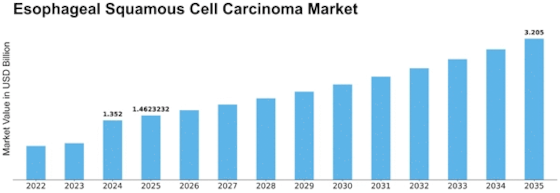
<p>The projected market valuation for Esophageal Squamous Cell Carcinoma is expected to reach 3.205 USD Billion by 2035.</p>

What was the overall market valuation for Esophageal Squamous Cell Carcinoma in 2024?

<p>The overall market valuation for Esophageal Squamous Cell Carcinoma was 1.352 USD Billion in 2024.</p>

What is the expected CAGR for the Esophageal Squamous Cell Carcinoma Market during the forecast period 2025 - 2035?

<p>The expected CAGR for the Esophageal Squamous Cell Carcinoma Market during the forecast period 2025 - 2035 is 8.16%.</p>

Which companies are key players in the Esophageal Squamous Cell Carcinoma Market?

<p>Key players in the Esophageal Squamous Cell Carcinoma Market include Bristol Myers Squibb, Merck & Co, Roche, AstraZeneca, Novartis, Eli Lilly and Company, Pfizer, Bayer, and Amgen.</p>

What are the main diagnostic segments in the Esophageal Squamous Cell Carcinoma Market?

<p>The main diagnostic segments include Endoscopy, CT Scan, Esophagram, Positron Emission Tomography (PET), and Others, with valuations ranging from 0.15 to 0.9 USD Billion.</p>

What treatment options are available for Esophageal Squamous Cell Carcinoma?

<p>Treatment options include Surgery, Chemotherapy, Radiotherapy, Immunotherapy, and Others, with valuations between 0.1 and 0.9 USD Billion.</p>

How do hospitals and specialty centers compare as end users in the Esophageal Squamous Cell Carcinoma Market?

Hospitals and Specialty Centres are significant end users, with valuations of 0.541 USD Billion and 0.405 USD Billion, respectively.

What is the valuation range for the Endoscopy diagnostic segment?

The valuation range for the Endoscopy diagnostic segment is between 0.5 and 0.9 USD Billion.

What is the valuation range for the Surgery treatment segment?

The valuation range for the Surgery treatment segment is between 0.5 and 0.9 USD Billion.

What does the future hold for the Esophageal Squamous Cell Carcinoma Market?

The future of the Esophageal Squamous Cell Carcinoma Market appears promising, with a projected growth to 3.205 USD Billion by 2035.

Market Summary

As per Market Research Future analysis, the Esophageal Squamous Cell Carcinoma Market Size was estimated at 1.352 USD Billion in 2024. The Esophageal Squamous Cell Carcinoma industry is projected to grow from 1.462 USD Billion in 2025 to 3.205 USD Billion by 2035, exhibiting a compound annual growth rate (CAGR) of 8.16% during the forecast period 2025 - 2035

Key Market Trends & Highlights

The Esophageal Squamous Cell Carcinoma Market is poised for substantial growth driven by innovative diagnostic and therapeutic advancements.

  • Advancements in diagnostic techniques are enhancing early detection and treatment outcomes in the Esophageal Squamous Cell Carcinoma Market. There is a notable shift towards personalized medicine, tailoring treatments to individual patient profiles, particularly in North America. Emerging therapeutic agents are gaining traction, with immunotherapy becoming the fastest-growing segment in the Asia-Pacific region. The increasing incidence of Esophageal Squamous Cell Carcinoma Market and growing awareness through screening programs are key drivers propelling market expansion.

Market Size & Forecast

2024 Market Size 1.352 (USD Billion)
2035 Market Size 3.205 (USD Billion)
CAGR (2025 - 2035) 8.16%
Largest Regional Market Share in 2024 North America

Major Players

Bristol Myers Squibb (US), Merck &amp; Co (US), Roche (CH), AstraZeneca (GB), Novartis (CH), Eli Lilly and Company (US), Pfizer (US), Bayer (DE), Amgen (US)

Market Trends

The Esophageal Squamous Cell Carcinoma Market is currently experiencing notable shifts driven by advancements in diagnostic techniques and treatment modalities. Enhanced imaging technologies and biomarker identification are facilitating earlier detection, which is crucial for improving patient outcomes. Furthermore, the growing emphasis on personalized medicine appears to be reshaping therapeutic approaches, allowing for tailored treatments that align with individual patient profiles. This trend may lead to more effective management strategies and potentially better survival rates for patients diagnosed with this aggressive form of cancer. In addition, the increasing prevalence of risk factors such as smoking and alcohol consumption continues to influence the landscape of the Esophageal Squamous Cell Carcinoma Market. Public health initiatives aimed at reducing these risk factors may play a pivotal role in shaping future market dynamics. Moreover, ongoing research into novel therapeutic agents, including immunotherapies and targeted therapies, suggests a promising horizon for treatment options. As the market evolves, stakeholders must remain vigilant to emerging trends and adapt strategies accordingly to meet the changing needs of patients and healthcare providers.

Advancements in Diagnostic Techniques

Recent innovations in imaging and biomarker discovery are enhancing early detection capabilities. These advancements are likely to improve patient outcomes by facilitating timely interventions.

Shift Towards Personalized Medicine

The focus on personalized treatment strategies is gaining traction, allowing therapies to be tailored to individual patient characteristics. This trend may lead to more effective management of Esophageal Squamous Cell Carcinoma Market.

Emerging Therapeutic Agents

Research into new treatment modalities, including immunotherapies and targeted therapies, is expanding. These developments could significantly alter the therapeutic landscape for patients.

Esophageal Squamous Cell Carcinoma Market Market Drivers

Advancements in Treatment Modalities

Recent advancements in treatment modalities for esophageal squamous cell carcinoma are significantly influencing the Esophageal Squamous Cell Carcinoma Market. Innovations in surgical techniques, radiation therapy, and chemotherapy have improved patient outcomes and survival rates. The introduction of targeted therapies and immunotherapies has also transformed the treatment landscape, offering new hope to patients. Market data indicates that the adoption of these advanced therapies is on the rise, with a projected increase in market share for companies developing novel treatment options. Furthermore, ongoing clinical trials are exploring combination therapies that may enhance efficacy. As these advancements continue to emerge, they are expected to drive the growth of the Esophageal Squamous Cell Carcinoma Market, attracting investments and fostering competition among key players.

Investment in Research and Development

Investment in research and development is a significant driver for the Esophageal Squamous Cell Carcinoma Market. Pharmaceutical companies and research institutions are increasingly allocating resources to explore novel therapeutic agents and improve existing treatment protocols. This focus on R&D is driven by the urgent need for more effective therapies, particularly for advanced stages of the disease. Market analysis indicates that the R&D expenditure in oncology, including esophageal squamous cell carcinoma, is projected to increase substantially in the coming years. This investment not only fosters innovation but also enhances collaboration between academia and industry, leading to the development of cutting-edge solutions. As a result, the Esophageal Squamous Cell Carcinoma Market is likely to witness a surge in new product launches and treatment options, catering to the evolving needs of patients.

Growing Awareness and Screening Programs

The growing awareness of esophageal squamous cell carcinoma and the implementation of screening programs are crucial drivers for the Esophageal Squamous Cell Carcinoma Market. Educational initiatives aimed at both healthcare professionals and the general public have led to increased recognition of the disease's symptoms and risk factors. Consequently, more individuals are seeking medical advice and undergoing diagnostic procedures. Data suggests that regions with established screening programs have reported earlier detection rates, which are associated with improved treatment outcomes. This trend is likely to encourage further investment in diagnostic technologies and therapeutic solutions within the Esophageal Squamous Cell Carcinoma Market. As awareness continues to rise, the demand for effective screening and treatment options is expected to grow, thereby enhancing market dynamics.

Regulatory Support and Approval Processes

Regulatory support and streamlined approval processes are emerging as vital drivers for the Esophageal Squamous Cell Carcinoma Market. Regulatory agencies are increasingly recognizing the need for expedited pathways for innovative therapies, particularly in oncology. This shift is aimed at addressing the urgent medical needs of patients suffering from esophageal squamous cell carcinoma. Recent initiatives have led to faster review times and approvals for new drugs and treatment modalities, thereby facilitating quicker access to potentially life-saving therapies. Market data suggests that this regulatory environment is conducive to fostering innovation and encouraging investment in the Esophageal Squamous Cell Carcinoma Market. As regulatory frameworks continue to evolve, they are likely to enhance the overall market landscape, promoting the development and availability of effective treatment options.

Increasing Incidence of Esophageal Squamous Cell Carcinoma

The rising incidence of esophageal squamous cell carcinoma is a pivotal driver for the Esophageal Squamous Cell Carcinoma Market. Factors such as lifestyle changes, dietary habits, and increased tobacco and alcohol consumption contribute to this trend. According to recent data, the incidence rates have shown a notable increase in certain regions, particularly in Asia and parts of Africa. This surge in cases necessitates enhanced diagnostic and therapeutic options, thereby propelling market growth. The growing awareness among healthcare professionals and patients regarding the disease's prevalence further emphasizes the need for effective treatment modalities. As the population ages, the demand for innovative solutions in the Esophageal Squamous Cell Carcinoma Market is likely to escalate, creating opportunities for pharmaceutical companies and healthcare providers alike.

Market Segment Insights

By Diagnosis: Endoscopy (Largest) vs. CT Scan (Fastest-Growing)

The Esophageal Squamous Cell Carcinoma Market is primarily dominated by the Endoscopy segment, which plays a crucial role in the diagnosis and assessment of esophageal cancer. It provides real-time visualization of the esophagus, allowing for accurate detection of malignancies, thereby occupying a significant share of the market. Following endoscopy, the CT Scan segment also holds a substantial position, especially in patients where endoscopic procedures may pose risks, thus making it an essential diagnostic alternative. As the healthcare landscape evolves, the growth trajectory of the CT Scan segment is noteworthy, driven by technological advancements and an increasing emphasis on early detection. Additionally, the rising prevalence of esophageal cancer and a greater focus on precise diagnostic tools contribute to the brisk growth of this segment. Innovations in imaging techniques and integration with artificial intelligence further enhance diagnostic accuracy, propelling CT Scans into a faster-growing position within the market.

Endoscopy (Dominant) vs. PET (Emerging)

Endoscopy stands as the dominant technology in the diagnosis of Esophageal Squamous Cell Carcinoma Market, offering direct visualization and biopsy capabilities that are critical for accurate diagnosis. Its robustness stems from a long-standing historical use in clinical practice, coupled with advancements in technique that enhance patient safety and comfort. In contrast, Positron Emission Tomography (PET) represents an emerging technology that, while increasingly relevant, is still establishing its foothold in routine diagnostics. PE's strength lies in its ability to provide metabolic and functional imaging, which aids in distinguishing between benign and malignant lesions. While PET is gaining traction due to increasing awareness of its benefits, endoscopy remains the preferred method for initial diagnosis, demonstrating significant utility in clinical pathways.

By Treatment: Surgery (Largest) vs. Immunotherapy (Fastest-Growing)

The Esophageal Squamous Cell Carcinoma Market reflects diverse treatment modalities, with Surgery holding the largest share, followed by Chemotherapy and Radiotherapy. Immunotherapy, previously a minor contributor, has shown a significant rise in adoption, reflecting a shift in clinical preferences toward more targeted therapies. Other small segments, like specialized drug treatments and palliative care options, contribute marginally to the overall landscape. As the treatment landscape evolves, a multi-modal approach is increasingly favored, capitalizing on the unique benefits of each modality. Growth trends indicate a robust increase in Immunotherapy, fueled by advancements in biotechnology and increased awareness about personalized medicine. The shift from traditional methods, like Surgery and Chemotherapy, is driven by the quest for better patient outcomes and reduced side effects. Furthermore, regulatory approvals and ongoing clinical trials are enhancing the credibility and acceptance of emerging treatments, positioning Immunotherapy as a vital component in the management of Esophageal Squamous Cell Carcinoma Market.

Surgery (Dominant) vs. Immunotherapy (Emerging)

Surgery remains the dominant treatment choice for Esophageal Squamous Cell Carcinoma Market due to its effectiveness in tumor removal and the availability of minimally invasive techniques. This approach is often preferred for localized cancers, significantly impacting patient survival. However, as clinical research progresses, Immunotherapy is emerging as a promising alternative, leveraging the body's immune system to combat cancer cells. This treatment modality is gaining traction due to its minimal invasiveness and the potential for lasting effects post-treatment. While Surgery is essential for immediate tumor removal, Immunotherapy offers hope for long-term remission, signaling a pivotal shift in treatment paradigms that emphasizes not only addressing tumors but also enhancing the body's innate defenses against cancer.

By End User: Hospitals (Largest) vs. Specialty Centres (Fastest-Growing)

In the Esophageal Squamous Cell Carcinoma Market, hospitals hold the largest share among the end-user segments. They play a crucial role in patient care, diagnosis, and treatment of the disease. Specialty centers are gaining traction, contributing to innovative treatment options and specialized care tailored for patients suffering from this type of cancer. The presence and accessibility of advanced medical technologies in these facilities further enhance their market position. Growth trends in this segment are largely driven by technological advancements and an increase in patient awareness regarding esophageal cancer treatments. Hospitals benefit from established infrastructure and comprehensive service offerings, while specialty centers are emphasizing precision medicine and multidisciplinary care. As the patient population grows, both segments are anticipated to adapt and expand their services, leading to dynamic changes in the market landscape.

Hospitals (Dominant) vs. Specialty Centres (Emerging)

Hospitals are crucial in the treatment pathway for esophageal squamous cell carcinoma, providing comprehensive care and access to multidisciplinary teams. They often have more resources, including advanced imaging techniques, surgical options, and chemotherapy administration, making them the dominant player in the market. Conversely, specialty centers are emerging with a strong focus on specific cancer types, offering tailored treatment plans and cutting-edge clinical trials. These centers often leverage recent advancements in targeted therapies and immunotherapy, attracting patients seeking specialized care. The competition between these two types of end-users is likely to enhance treatment options available, benefiting patients and driving further innovations in cancer treatment.

Get more detailed insights about Esophageal Squamous Cell Carcinoma Market Research Report—Global Forecast till 2035

Regional Insights

North America : Leading Market Innovators

The North American market for Esophageal Squamous Cell Carcinoma Market (ESCC) is driven by advanced healthcare infrastructure, high R&D investments, and increasing awareness of cancer screening. The U.S. holds the largest market share at approximately 70%, followed by Canada at around 15%. Regulatory support from agencies like the FDA accelerates the approval of innovative therapies, enhancing treatment options for patients. In this region, the competitive landscape is dominated by major players such as Bristol Myers Squibb, Merck & Co, and Pfizer. These companies are actively involved in developing novel therapies and conducting clinical trials to improve patient outcomes. The presence of leading research institutions further strengthens the market, fostering collaboration between academia and industry to drive innovation in ESCC treatment.

Europe : Emerging Treatment Landscape

Europe is witnessing significant growth in the Esophageal Squamous Cell Carcinoma Market, driven by increasing incidence rates and advancements in treatment options. Germany and the UK are the largest markets, holding approximately 30% and 25% market shares, respectively. Regulatory bodies like the European Medicines Agency (EMA) are pivotal in facilitating the approval of new therapies, ensuring patient access to innovative treatments. Leading countries in this region include France, Italy, and Spain, alongside Germany and the UK. The competitive landscape features key players such as Roche and AstraZeneca, which are investing heavily in research and development. Collaborative efforts between pharmaceutical companies and healthcare providers are enhancing treatment protocols, ultimately improving patient outcomes in ESCC management. The EMA emphasizes the importance of timely access to effective therapies for cancer patients.

Asia-Pacific : Rapidly Expanding Market

The Asia-Pacific region is emerging as a significant player in the Esophageal Squamous Cell Carcinoma Market, driven by rising healthcare expenditure and increasing awareness of cancer prevention. China and Japan are the largest markets, accounting for approximately 40% and 20% of the market share, respectively. Government initiatives aimed at improving cancer care and treatment accessibility are key growth drivers in this region. Countries like India and South Korea are also contributing to market expansion, with a growing number of clinical trials and research initiatives. The competitive landscape includes major players such as Novartis and Bayer, which are focusing on innovative therapies tailored to the unique needs of the region. Collaborations between local and international firms are fostering advancements in treatment options, enhancing the overall market landscape for ESCC.

Middle East and Africa : Emerging Market Potential

The Middle East and Africa region is gradually developing its Esophageal Squamous Cell Carcinoma Market, driven by increasing healthcare investments and rising cancer awareness. South Africa and the UAE are the leading markets, holding approximately 25% and 15% market shares, respectively. Government initiatives aimed at improving healthcare infrastructure are crucial for market growth, as they enhance access to cancer treatments and screenings. In this region, the competitive landscape is characterized by a mix of local and international players, including Amgen and Eli Lilly. The presence of key healthcare organizations is fostering collaborations to improve treatment protocols and patient care. As awareness of ESCC increases, the market is expected to expand, driven by both public and private sector investments in healthcare services.

Key Players and Competitive Insights

The Esophageal Squamous Cell Carcinoma Market is characterized by the presence of many global, regional, and local vendors catering to the demand created by research scientists and pharmaceutical and biotechnology companies operating in the industry. The market comprises tier-1, tier-2, and local players. The tier-1 and tier-2 players have reach across the globe with diverse product portfolios. Companies such as include Chia Tai Tianqing Pharmaceutical Group Co. Ltd. (China) and Seagen Inc. (US) among others, dominate the Market of Esophageal Squamous Cell Carcinoma Market due to product differentiation, financial stability, strategic developments, and diversified regional presence. The players are focused on investing in research and development. Furthermore, they adopt strategic growth initiatives, such as expansion, product launches, joint ventures, and partnerships, to strengthen their market position and capture a large customer base. One of the primary business strategies adopted by manufacturers in the global Esophageal Squamous Cell Carcinoma industry to benefit clients and expand the market of Esophageal Squamous Cell Carcinoma Market sector is to manufacture locally to reduce operating costs.


    • Hoffmann-La Roche Ltd (Roche) is one of the leading companies in the field of diagnostics and pharmaceuticals. It develops and markets products for the diagnosis & treatment of anemia, cancer, anticoagulation therapy, cardiovascular diseases, diabetes, central nervous system, chlamydia, dermatology, gonorrhea, gout, hepatitis B and C, hemostasis disorders, HIV/AIDS, HPV, infectious diseases, and autoimmune diseases. The company supplies in-vitro diagnostics and drugs for cancer and transplantation. Moreover, it specializes in the field of molecular diagnostics and medicines for oncology, virology, inflammation, metabolism, central nervous system (CNS), clinical chemistry, immunology, urinalysis, blood screening, genetics, infectious diseases, and microbiology. In addition, the company has offices and subsidiaries throughout the Americas, Europe, the Middle East, Africa, and Asia-Pacific.


  • Hoffmann-La Roche Ltd (Roche) is one of the leading companies in the field of diagnostics and pharmaceuticals. It develops and markets products for the diagnosis & treatment of anemia, cancer, anticoagulation therapy, cardiovascular diseases, diabetes, central nervous system, chlamydia, dermatology, gonorrhea, gout, hepatitis B and C, hemostasis disorders, HIV/AIDS, HPV, infectious diseases, and autoimmune diseases. The company supplies in-vitro diagnostics and drugs for cancer and transplantation. Moreover, it specializes in the field of molecular diagnostics and medicines for oncology, virology, inflammation, metabolism, central nervous system (CNS), clinical chemistry, immunology, urinalysis, blood screening, genetics, infectious diseases, and microbiology. In addition, the company has offices and subsidiaries throughout the Americas, Europe, the Middle East, Africa, and Asia-Pacific.


Also, AstraZeneca is a leading biopharmaceutical company. It focuses on developing and commercializing prescribed medicines. It has three main therapy areas, namely, cardiovascular, and metabolic disease (CVMD), oncology, and respiratory. It is also active in areas such as neuroscience autoimmunity and infection. It has more than 164 projects in its pipeline, nine new molecular entities in its late-stage pipeline, and one new molecular entity approval in the last quarter of 2019. Its product portfolio includes medications in the field of oncology, cardiovascular, renal & metabolism, and respiratory diseases, among others. Geographically the company operates in more than 100 countries by offering its healthcare products to millions of people across the globe.

Key Companies in the Esophageal Squamous Cell Carcinoma Market include

Industry Developments

September 2021: The FDA has approved Seagen Inc’s TIVDAK (Tisotumab vedotin). It is used to treat cervical cancer that is recurrent or metastatic and Esophageal Squamous Cell Carcinoma Market cancer. It is also used in women whose cancer got worse during or after treatment with chemotherapy.

September 2022: The US FDA has approved AstraZeneca's Imfinzi plus in the US for patients with advanced biliary tract cancer, HCC, BTC, esophageal and gastric cancer.

Future Outlook

Esophageal Squamous Cell Carcinoma Market Future Outlook

The Esophageal Squamous Cell Carcinoma Market is projected to grow at an 8.16% CAGR from 2025 to 2035, driven by advancements in treatment modalities and increasing awareness.

New opportunities lie in:

  • <p>Development of targeted immunotherapy treatments for personalized patient care. Expansion of telemedicine platforms for remote patient monitoring and consultations. Investment in AI-driven diagnostic tools to enhance early detection rates.</p>

By 2035, the market is expected to exhibit robust growth, reflecting advancements in treatment and increased patient engagement.

Market Segmentation

Esophageal Squamous Cell Carcinoma Market End User Outlook

  • Hospitals
  • Specialty Centres
  • Others

Esophageal Squamous Cell Carcinoma Market Diagnosis Outlook

  • Endoscopy
  • CT Scan
  • Esophagram
  • Positron Emission Tomography (PET)
  • Others

Esophageal Squamous Cell Carcinoma Market Treatment Outlook

  • Surgery
  • Chemotherapy
  • Radiotherapy
  • Immunotherapy
  • Others

Report Scope

MARKET SIZE 2024 1.352(USD Billion)
MARKET SIZE 2025 1.462(USD Billion)
MARKET SIZE 2035 3.205(USD Billion)
COMPOUND ANNUAL GROWTH RATE (CAGR) 8.16% (2025 - 2035)
REPORT COVERAGE Revenue Forecast, Competitive Landscape, Growth Factors, and Trends
BASE YEAR 2024
Market Forecast Period 2025 - 2035
Historical Data 2019 - 2024
Market Forecast Units USD Billion
Key Companies Profiled Bristol Myers Squibb (US), Merck & Co (US), Roche (CH), AstraZeneca (GB), Novartis (CH), Eli Lilly and Company (US), Pfizer (US), Bayer (DE), Amgen (US)
Segments Covered Diagnosis and Treatment, End User, Region
Key Market Opportunities Advancements in targeted therapies and immunotherapies enhance treatment options in the Esophageal Squamous Cell Carcinoma Market.
Key Market Dynamics Rising demand for targeted therapies drives innovation and competition in the Esophageal Squamous Cell Carcinoma treatment landscape.
Countries Covered North America, Europe, APAC, South America, MEA

FAQs

What is the projected market valuation for Esophageal Squamous Cell Carcinoma by 2035?

<p>The projected market valuation for Esophageal Squamous Cell Carcinoma is expected to reach 3.205 USD Billion by 2035.</p>

What was the overall market valuation for Esophageal Squamous Cell Carcinoma in 2024?

<p>The overall market valuation for Esophageal Squamous Cell Carcinoma was 1.352 USD Billion in 2024.</p>

What is the expected CAGR for the Esophageal Squamous Cell Carcinoma Market during the forecast period 2025 - 2035?

<p>The expected CAGR for the Esophageal Squamous Cell Carcinoma Market during the forecast period 2025 - 2035 is 8.16%.</p>

Which companies are key players in the Esophageal Squamous Cell Carcinoma Market?

<p>Key players in the Esophageal Squamous Cell Carcinoma Market include Bristol Myers Squibb, Merck & Co, Roche, AstraZeneca, Novartis, Eli Lilly and Company, Pfizer, Bayer, and Amgen.</p>

What are the main diagnostic segments in the Esophageal Squamous Cell Carcinoma Market?

<p>The main diagnostic segments include Endoscopy, CT Scan, Esophagram, Positron Emission Tomography (PET), and Others, with valuations ranging from 0.15 to 0.9 USD Billion.</p>

What treatment options are available for Esophageal Squamous Cell Carcinoma?

<p>Treatment options include Surgery, Chemotherapy, Radiotherapy, Immunotherapy, and Others, with valuations between 0.1 and 0.9 USD Billion.</p>

How do hospitals and specialty centers compare as end users in the Esophageal Squamous Cell Carcinoma Market?

Hospitals and Specialty Centres are significant end users, with valuations of 0.541 USD Billion and 0.405 USD Billion, respectively.

What is the valuation range for the Endoscopy diagnostic segment?

The valuation range for the Endoscopy diagnostic segment is between 0.5 and 0.9 USD Billion.

What is the valuation range for the Surgery treatment segment?

The valuation range for the Surgery treatment segment is between 0.5 and 0.9 USD Billion.

What does the future hold for the Esophageal Squamous Cell Carcinoma Market?

The future of the Esophageal Squamous Cell Carcinoma Market appears promising, with a projected growth to 3.205 USD Billion by 2035.

  1. SECTION I: EXECUTIVE SUMMARY AND KEY HIGHLIGHTS
    1. | 1.1 EXECUTIVE SUMMARY
    2. | | 1.1.1 Market Overview
    3. | | 1.1.2 Key Findings
    4. | | 1.1.3 Market Segmentation
    5. | | 1.1.4 Competitive Landscape
    6. | | 1.1.5 Challenges and Opportunities
    7. | | 1.1.6 Future Outlook
  2. SECTION II: SCOPING, METHODOLOGY AND MARKET STRUCTURE
    1. | 2.1 MARKET INTRODUCTION
    2. | | 2.1.1 Definition
    3. | | 2.1.2 Scope of the study
    4. | | | 2.1.2.1 Research Objective
    5. | | | 2.1.2.2 Assumption
    6. | | | 2.1.2.3 Limitations
    7. | 2.2 RESEARCH METHODOLOGY
    8. | | 2.2.1 Overview
    9. | | 2.2.2 Data Mining
    10. | | 2.2.3 Secondary Research
    11. | | 2.2.4 Primary Research
    12. | | | 2.2.4.1 Primary Interviews and Information Gathering Process
    13. | | | 2.2.4.2 Breakdown of Primary Respondents
    14. | | 2.2.5 Forecasting Model
    15. | | 2.2.6 Market Size Estimation
    16. | | | 2.2.6.1 Bottom-Up Approach
    17. | | | 2.2.6.2 Top-Down Approach
    18. | | 2.2.7 Data Triangulation
    19. | | 2.2.8 Validation
  3. SECTION III: QUALITATIVE ANALYSIS
    1. | 3.1 MARKET DYNAMICS
    2. | | 3.1.1 Overview
    3. | | 3.1.2 Drivers
    4. | | 3.1.3 Restraints
    5. | | 3.1.4 Opportunities
    6. | 3.2 MARKET FACTOR ANALYSIS
    7. | | 3.2.1 Value chain Analysis
    8. | | 3.2.2 Porter's Five Forces Analysis
    9. | | | 3.2.2.1 Bargaining Power of Suppliers
    10. | | | 3.2.2.2 Bargaining Power of Buyers
    11. | | | 3.2.2.3 Threat of New Entrants
    12. | | | 3.2.2.4 Threat of Substitutes
    13. | | | 3.2.2.5 Intensity of Rivalry
    14. | | 3.2.3 COVID-19 Impact Analysis
    15. | | | 3.2.3.1 Market Impact Analysis
    16. | | | 3.2.3.2 Regional Impact
    17. | | | 3.2.3.3 Opportunity and Threat Analysis
  4. SECTION IV: QUANTITATIVE ANALYSIS
    1. | 4.1 Healthcare, BY Diagnosis (USD Billion)
    2. | | 4.1.1 Endoscopy
    3. | | 4.1.2 CT Scan
    4. | | 4.1.3 Esophagram
    5. | | 4.1.4 Positron Emission Tomography (PET)
    6. | | 4.1.5 Others
    7. | 4.2 Healthcare, BY Treatment (USD Billion)
    8. | | 4.2.1 Surgery
    9. | | 4.2.2 Chemotherapy
    10. | | 4.2.3 Radiotherapy
    11. | | 4.2.4 Immunotherapy
    12. | | 4.2.5 Others
    13. | 4.3 Healthcare, BY End User (USD Billion)
    14. | | 4.3.1 Hospitals
    15. | | 4.3.2 Specialty Centres
    16. | | 4.3.3 Others
    17. | 4.4 Healthcare, BY Region (USD Billion)
    18. | | 4.4.1 North America
    19. | | | 4.4.1.1 US
    20. | | | 4.4.1.2 Canada
    21. | | 4.4.2 Europe
    22. | | | 4.4.2.1 Germany
    23. | | | 4.4.2.2 UK
    24. | | | 4.4.2.3 France
    25. | | | 4.4.2.4 Russia
    26. | | | 4.4.2.5 Italy
    27. | | | 4.4.2.6 Spain
    28. | | | 4.4.2.7 Rest of Europe
    29. | | 4.4.3 APAC
    30. | | | 4.4.3.1 China
    31. | | | 4.4.3.2 India
    32. | | | 4.4.3.3 Japan
    33. | | | 4.4.3.4 South Korea
    34. | | | 4.4.3.5 Malaysia
    35. | | | 4.4.3.6 Thailand
    36. | | | 4.4.3.7 Indonesia
    37. | | | 4.4.3.8 Rest of APAC
    38. | | 4.4.4 South America
    39. | | | 4.4.4.1 Brazil
    40. | | | 4.4.4.2 Mexico
    41. | | | 4.4.4.3 Argentina
    42. | | | 4.4.4.4 Rest of South America
    43. | | 4.4.5 MEA
    44. | | | 4.4.5.1 GCC Countries
    45. | | | 4.4.5.2 South Africa
    46. | | | 4.4.5.3 Rest of MEA
  5. SECTION V: COMPETITIVE ANALYSIS
    1. | 5.1 Competitive Landscape
    2. | | 5.1.1 Overview
    3. | | 5.1.2 Competitive Analysis
    4. | | 5.1.3 Market share Analysis
    5. | | 5.1.4 Major Growth Strategy in the Healthcare
    6. | | 5.1.5 Competitive Benchmarking
    7. | | 5.1.6 Leading Players in Terms of Number of Developments in the Healthcare
    8. | | 5.1.7 Key developments and growth strategies
    9. | | | 5.1.7.1 New Product Launch/Service Deployment
    10. | | | 5.1.7.2 Merger & Acquisitions
    11. | | | 5.1.7.3 Joint Ventures
    12. | | 5.1.8 Major Players Financial Matrix
    13. | | | 5.1.8.1 Sales and Operating Income
    14. | | | 5.1.8.2 Major Players R&D Expenditure. 2023
    15. | 5.2 Company Profiles
    16. | | 5.2.1 Bristol Myers Squibb (US)
    17. | | | 5.2.1.1 Financial Overview
    18. | | | 5.2.1.2 Products Offered
    19. | | | 5.2.1.3 Key Developments
    20. | | | 5.2.1.4 SWOT Analysis
    21. | | | 5.2.1.5 Key Strategies
    22. | | 5.2.2 Merck & Co (US)
    23. | | | 5.2.2.1 Financial Overview
    24. | | | 5.2.2.2 Products Offered
    25. | | | 5.2.2.3 Key Developments
    26. | | | 5.2.2.4 SWOT Analysis
    27. | | | 5.2.2.5 Key Strategies
    28. | | 5.2.3 Roche (CH)
    29. | | | 5.2.3.1 Financial Overview
    30. | | | 5.2.3.2 Products Offered
    31. | | | 5.2.3.3 Key Developments
    32. | | | 5.2.3.4 SWOT Analysis
    33. | | | 5.2.3.5 Key Strategies
    34. | | 5.2.4 AstraZeneca (GB)
    35. | | | 5.2.4.1 Financial Overview
    36. | | | 5.2.4.2 Products Offered
    37. | | | 5.2.4.3 Key Developments
    38. | | | 5.2.4.4 SWOT Analysis
    39. | | | 5.2.4.5 Key Strategies
    40. | | 5.2.5 Novartis (CH)
    41. | | | 5.2.5.1 Financial Overview
    42. | | | 5.2.5.2 Products Offered
    43. | | | 5.2.5.3 Key Developments
    44. | | | 5.2.5.4 SWOT Analysis
    45. | | | 5.2.5.5 Key Strategies
    46. | | 5.2.6 Eli Lilly and Company (US)
    47. | | | 5.2.6.1 Financial Overview
    48. | | | 5.2.6.2 Products Offered
    49. | | | 5.2.6.3 Key Developments
    50. | | | 5.2.6.4 SWOT Analysis
    51. | | | 5.2.6.5 Key Strategies
    52. | | 5.2.7 Pfizer (US)
    53. | | | 5.2.7.1 Financial Overview
    54. | | | 5.2.7.2 Products Offered
    55. | | | 5.2.7.3 Key Developments
    56. | | | 5.2.7.4 SWOT Analysis
    57. | | | 5.2.7.5 Key Strategies
    58. | | 5.2.8 Bayer (DE)
    59. | | | 5.2.8.1 Financial Overview
    60. | | | 5.2.8.2 Products Offered
    61. | | | 5.2.8.3 Key Developments
    62. | | | 5.2.8.4 SWOT Analysis
    63. | | | 5.2.8.5 Key Strategies
    64. | | 5.2.9 Amgen (US)
    65. | | | 5.2.9.1 Financial Overview
    66. | | | 5.2.9.2 Products Offered
    67. | | | 5.2.9.3 Key Developments
    68. | | | 5.2.9.4 SWOT Analysis
    69. | | | 5.2.9.5 Key Strategies
    70. | 5.3 Appendix
    71. | | 5.3.1 References
    72. | | 5.3.2 Related Reports
  6. LIST OF FIGURES
    1. | 6.1 MARKET SYNOPSIS
    2. | 6.2 NORTH AMERICA MARKET ANALYSIS
    3. | 6.3 US MARKET ANALYSIS BY DIAGNOSIS
    4. | 6.4 US MARKET ANALYSIS BY TREATMENT
    5. | 6.5 US MARKET ANALYSIS BY END USER
    6. | 6.6 CANADA MARKET ANALYSIS BY DIAGNOSIS
    7. | 6.7 CANADA MARKET ANALYSIS BY TREATMENT
    8. | 6.8 CANADA MARKET ANALYSIS BY END USER
    9. | 6.9 EUROPE MARKET ANALYSIS
    10. | 6.10 GERMANY MARKET ANALYSIS BY DIAGNOSIS
    11. | 6.11 GERMANY MARKET ANALYSIS BY TREATMENT
    12. | 6.12 GERMANY MARKET ANALYSIS BY END USER
    13. | 6.13 UK MARKET ANALYSIS BY DIAGNOSIS
    14. | 6.14 UK MARKET ANALYSIS BY TREATMENT
    15. | 6.15 UK MARKET ANALYSIS BY END USER
    16. | 6.16 FRANCE MARKET ANALYSIS BY DIAGNOSIS
    17. | 6.17 FRANCE MARKET ANALYSIS BY TREATMENT
    18. | 6.18 FRANCE MARKET ANALYSIS BY END USER
    19. | 6.19 RUSSIA MARKET ANALYSIS BY DIAGNOSIS
    20. | 6.20 RUSSIA MARKET ANALYSIS BY TREATMENT
    21. | 6.21 RUSSIA MARKET ANALYSIS BY END USER
    22. | 6.22 ITALY MARKET ANALYSIS BY DIAGNOSIS
    23. | 6.23 ITALY MARKET ANALYSIS BY TREATMENT
    24. | 6.24 ITALY MARKET ANALYSIS BY END USER
    25. | 6.25 SPAIN MARKET ANALYSIS BY DIAGNOSIS
    26. | 6.26 SPAIN MARKET ANALYSIS BY TREATMENT
    27. | 6.27 SPAIN MARKET ANALYSIS BY END USER
    28. | 6.28 REST OF EUROPE MARKET ANALYSIS BY DIAGNOSIS
    29. | 6.29 REST OF EUROPE MARKET ANALYSIS BY TREATMENT
    30. | 6.30 REST OF EUROPE MARKET ANALYSIS BY END USER
    31. | 6.31 APAC MARKET ANALYSIS
    32. | 6.32 CHINA MARKET ANALYSIS BY DIAGNOSIS
    33. | 6.33 CHINA MARKET ANALYSIS BY TREATMENT
    34. | 6.34 CHINA MARKET ANALYSIS BY END USER
    35. | 6.35 INDIA MARKET ANALYSIS BY DIAGNOSIS
    36. | 6.36 INDIA MARKET ANALYSIS BY TREATMENT
    37. | 6.37 INDIA MARKET ANALYSIS BY END USER
    38. | 6.38 JAPAN MARKET ANALYSIS BY DIAGNOSIS
    39. | 6.39 JAPAN MARKET ANALYSIS BY TREATMENT
    40. | 6.40 JAPAN MARKET ANALYSIS BY END USER
    41. | 6.41 SOUTH KOREA MARKET ANALYSIS BY DIAGNOSIS
    42. | 6.42 SOUTH KOREA MARKET ANALYSIS BY TREATMENT
    43. | 6.43 SOUTH KOREA MARKET ANALYSIS BY END USER
    44. | 6.44 MALAYSIA MARKET ANALYSIS BY DIAGNOSIS
    45. | 6.45 MALAYSIA MARKET ANALYSIS BY TREATMENT
    46. | 6.46 MALAYSIA MARKET ANALYSIS BY END USER
    47. | 6.47 THAILAND MARKET ANALYSIS BY DIAGNOSIS
    48. | 6.48 THAILAND MARKET ANALYSIS BY TREATMENT
    49. | 6.49 THAILAND MARKET ANALYSIS BY END USER
    50. | 6.50 INDONESIA MARKET ANALYSIS BY DIAGNOSIS
    51. | 6.51 INDONESIA MARKET ANALYSIS BY TREATMENT
    52. | 6.52 INDONESIA MARKET ANALYSIS BY END USER
    53. | 6.53 REST OF APAC MARKET ANALYSIS BY DIAGNOSIS
    54. | 6.54 REST OF APAC MARKET ANALYSIS BY TREATMENT
    55. | 6.55 REST OF APAC MARKET ANALYSIS BY END USER
    56. | 6.56 SOUTH AMERICA MARKET ANALYSIS
    57. | 6.57 BRAZIL MARKET ANALYSIS BY DIAGNOSIS
    58. | 6.58 BRAZIL MARKET ANALYSIS BY TREATMENT
    59. | 6.59 BRAZIL MARKET ANALYSIS BY END USER
    60. | 6.60 MEXICO MARKET ANALYSIS BY DIAGNOSIS
    61. | 6.61 MEXICO MARKET ANALYSIS BY TREATMENT
    62. | 6.62 MEXICO MARKET ANALYSIS BY END USER
    63. | 6.63 ARGENTINA MARKET ANALYSIS BY DIAGNOSIS
    64. | 6.64 ARGENTINA MARKET ANALYSIS BY TREATMENT
    65. | 6.65 ARGENTINA MARKET ANALYSIS BY END USER
    66. | 6.66 REST OF SOUTH AMERICA MARKET ANALYSIS BY DIAGNOSIS
    67. | 6.67 REST OF SOUTH AMERICA MARKET ANALYSIS BY TREATMENT
    68. | 6.68 REST OF SOUTH AMERICA MARKET ANALYSIS BY END USER
    69. | 6.69 MEA MARKET ANALYSIS
    70. | 6.70 GCC COUNTRIES MARKET ANALYSIS BY DIAGNOSIS
    71. | 6.71 GCC COUNTRIES MARKET ANALYSIS BY TREATMENT
    72. | 6.72 GCC COUNTRIES MARKET ANALYSIS BY END USER
    73. | 6.73 SOUTH AFRICA MARKET ANALYSIS BY DIAGNOSIS
    74. | 6.74 SOUTH AFRICA MARKET ANALYSIS BY TREATMENT
    75. | 6.75 SOUTH AFRICA MARKET ANALYSIS BY END USER
    76. | 6.76 REST OF MEA MARKET ANALYSIS BY DIAGNOSIS
    77. | 6.77 REST OF MEA MARKET ANALYSIS BY TREATMENT
    78. | 6.78 REST OF MEA MARKET ANALYSIS BY END USER
    79. | 6.79 KEY BUYING CRITERIA OF HEALTHCARE
    80. | 6.80 RESEARCH PROCESS OF MRFR
    81. | 6.81 DRO ANALYSIS OF HEALTHCARE
    82. | 6.82 DRIVERS IMPACT ANALYSIS: HEALTHCARE
    83. | 6.83 RESTRAINTS IMPACT ANALYSIS: HEALTHCARE
    84. | 6.84 SUPPLY / VALUE CHAIN: HEALTHCARE
    85. | 6.85 HEALTHCARE, BY DIAGNOSIS, 2024 (% SHARE)
    86. | 6.86 HEALTHCARE, BY DIAGNOSIS, 2024 TO 2035 (USD Billion)
    87. | 6.87 HEALTHCARE, BY TREATMENT, 2024 (% SHARE)
    88. | 6.88 HEALTHCARE, BY TREATMENT, 2024 TO 2035 (USD Billion)
    89. | 6.89 HEALTHCARE, BY END USER, 2024 (% SHARE)
    90. | 6.90 HEALTHCARE, BY END USER, 2024 TO 2035 (USD Billion)
    91. | 6.91 BENCHMARKING OF MAJOR COMPETITORS
  7. LIST OF TABLES
    1. | 7.1 LIST OF ASSUMPTIONS
    2. | | 7.1.1
    3. | 7.2 North America MARKET SIZE ESTIMATES; FORECAST
    4. | | 7.2.1 BY DIAGNOSIS, 2025-2035 (USD Billion)
    5. | | 7.2.2 BY TREATMENT, 2025-2035 (USD Billion)
    6. | | 7.2.3 BY END USER, 2025-2035 (USD Billion)
    7. | 7.3 US MARKET SIZE ESTIMATES; FORECAST
    8. | | 7.3.1 BY DIAGNOSIS, 2025-2035 (USD Billion)
    9. | | 7.3.2 BY TREATMENT, 2025-2035 (USD Billion)
    10. | | 7.3.3 BY END USER, 2025-2035 (USD Billion)
    11. | 7.4 Canada MARKET SIZE ESTIMATES; FORECAST
    12. | | 7.4.1 BY DIAGNOSIS, 2025-2035 (USD Billion)
    13. | | 7.4.2 BY TREATMENT, 2025-2035 (USD Billion)
    14. | | 7.4.3 BY END USER, 2025-2035 (USD Billion)
    15. | 7.5 Europe MARKET SIZE ESTIMATES; FORECAST
    16. | | 7.5.1 BY DIAGNOSIS, 2025-2035 (USD Billion)
    17. | | 7.5.2 BY TREATMENT, 2025-2035 (USD Billion)
    18. | | 7.5.3 BY END USER, 2025-2035 (USD Billion)
    19. | 7.6 Germany MARKET SIZE ESTIMATES; FORECAST
    20. | | 7.6.1 BY DIAGNOSIS, 2025-2035 (USD Billion)
    21. | | 7.6.2 BY TREATMENT, 2025-2035 (USD Billion)
    22. | | 7.6.3 BY END USER, 2025-2035 (USD Billion)
    23. | 7.7 UK MARKET SIZE ESTIMATES; FORECAST
    24. | | 7.7.1 BY DIAGNOSIS, 2025-2035 (USD Billion)
    25. | | 7.7.2 BY TREATMENT, 2025-2035 (USD Billion)
    26. | | 7.7.3 BY END USER, 2025-2035 (USD Billion)
    27. | 7.8 France MARKET SIZE ESTIMATES; FORECAST
    28. | | 7.8.1 BY DIAGNOSIS, 2025-2035 (USD Billion)
    29. | | 7.8.2 BY TREATMENT, 2025-2035 (USD Billion)
    30. | | 7.8.3 BY END USER, 2025-2035 (USD Billion)
    31. | 7.9 Russia MARKET SIZE ESTIMATES; FORECAST
    32. | | 7.9.1 BY DIAGNOSIS, 2025-2035 (USD Billion)
    33. | | 7.9.2 BY TREATMENT, 2025-2035 (USD Billion)
    34. | | 7.9.3 BY END USER, 2025-2035 (USD Billion)
    35. | 7.10 Italy MARKET SIZE ESTIMATES; FORECAST
    36. | | 7.10.1 BY DIAGNOSIS, 2025-2035 (USD Billion)
    37. | | 7.10.2 BY TREATMENT, 2025-2035 (USD Billion)
    38. | | 7.10.3 BY END USER, 2025-2035 (USD Billion)
    39. | 7.11 Spain MARKET SIZE ESTIMATES; FORECAST
    40. | | 7.11.1 BY DIAGNOSIS, 2025-2035 (USD Billion)
    41. | | 7.11.2 BY TREATMENT, 2025-2035 (USD Billion)
    42. | | 7.11.3 BY END USER, 2025-2035 (USD Billion)
    43. | 7.12 Rest of Europe MARKET SIZE ESTIMATES; FORECAST
    44. | | 7.12.1 BY DIAGNOSIS, 2025-2035 (USD Billion)
    45. | | 7.12.2 BY TREATMENT, 2025-2035 (USD Billion)
    46. | | 7.12.3 BY END USER, 2025-2035 (USD Billion)
    47. | 7.13 APAC MARKET SIZE ESTIMATES; FORECAST
    48. | | 7.13.1 BY DIAGNOSIS, 2025-2035 (USD Billion)
    49. | | 7.13.2 BY TREATMENT, 2025-2035 (USD Billion)
    50. | | 7.13.3 BY END USER, 2025-2035 (USD Billion)
    51. | 7.14 China MARKET SIZE ESTIMATES; FORECAST
    52. | | 7.14.1 BY DIAGNOSIS, 2025-2035 (USD Billion)
    53. | | 7.14.2 BY TREATMENT, 2025-2035 (USD Billion)
    54. | | 7.14.3 BY END USER, 2025-2035 (USD Billion)
    55. | 7.15 India MARKET SIZE ESTIMATES; FORECAST
    56. | | 7.15.1 BY DIAGNOSIS, 2025-2035 (USD Billion)
    57. | | 7.15.2 BY TREATMENT, 2025-2035 (USD Billion)
    58. | | 7.15.3 BY END USER, 2025-2035 (USD Billion)
    59. | 7.16 Japan MARKET SIZE ESTIMATES; FORECAST
    60. | | 7.16.1 BY DIAGNOSIS, 2025-2035 (USD Billion)
    61. | | 7.16.2 BY TREATMENT, 2025-2035 (USD Billion)
    62. | | 7.16.3 BY END USER, 2025-2035 (USD Billion)
    63. | 7.17 South Korea MARKET SIZE ESTIMATES; FORECAST
    64. | | 7.17.1 BY DIAGNOSIS, 2025-2035 (USD Billion)
    65. | | 7.17.2 BY TREATMENT, 2025-2035 (USD Billion)
    66. | | 7.17.3 BY END USER, 2025-2035 (USD Billion)
    67. | 7.18 Malaysia MARKET SIZE ESTIMATES; FORECAST
    68. | | 7.18.1 BY DIAGNOSIS, 2025-2035 (USD Billion)
    69. | | 7.18.2 BY TREATMENT, 2025-2035 (USD Billion)
    70. | | 7.18.3 BY END USER, 2025-2035 (USD Billion)
    71. | 7.19 Thailand MARKET SIZE ESTIMATES; FORECAST
    72. | | 7.19.1 BY DIAGNOSIS, 2025-2035 (USD Billion)
    73. | | 7.19.2 BY TREATMENT, 2025-2035 (USD Billion)
    74. | | 7.19.3 BY END USER, 2025-2035 (USD Billion)
    75. | 7.20 Indonesia MARKET SIZE ESTIMATES; FORECAST
    76. | | 7.20.1 BY DIAGNOSIS, 2025-2035 (USD Billion)
    77. | | 7.20.2 BY TREATMENT, 2025-2035 (USD Billion)
    78. | | 7.20.3 BY END USER, 2025-2035 (USD Billion)
    79. | 7.21 Rest of APAC MARKET SIZE ESTIMATES; FORECAST
    80. | | 7.21.1 BY DIAGNOSIS, 2025-2035 (USD Billion)
    81. | | 7.21.2 BY TREATMENT, 2025-2035 (USD Billion)
    82. | | 7.21.3 BY END USER, 2025-2035 (USD Billion)
    83. | 7.22 South America MARKET SIZE ESTIMATES; FORECAST
    84. | | 7.22.1 BY DIAGNOSIS, 2025-2035 (USD Billion)
    85. | | 7.22.2 BY TREATMENT, 2025-2035 (USD Billion)
    86. | | 7.22.3 BY END USER, 2025-2035 (USD Billion)
    87. | 7.23 Brazil MARKET SIZE ESTIMATES; FORECAST
    88. | | 7.23.1 BY DIAGNOSIS, 2025-2035 (USD Billion)
    89. | | 7.23.2 BY TREATMENT, 2025-2035 (USD Billion)
    90. | | 7.23.3 BY END USER, 2025-2035 (USD Billion)
    91. | 7.24 Mexico MARKET SIZE ESTIMATES; FORECAST
    92. | | 7.24.1 BY DIAGNOSIS, 2025-2035 (USD Billion)
    93. | | 7.24.2 BY TREATMENT, 2025-2035 (USD Billion)
    94. | | 7.24.3 BY END USER, 2025-2035 (USD Billion)
    95. | 7.25 Argentina MARKET SIZE ESTIMATES; FORECAST
    96. | | 7.25.1 BY DIAGNOSIS, 2025-2035 (USD Billion)
    97. | | 7.25.2 BY TREATMENT, 2025-2035 (USD Billion)
    98. | | 7.25.3 BY END USER, 2025-2035 (USD Billion)
    99. | 7.26 Rest of South America MARKET SIZE ESTIMATES; FORECAST
    100. | | 7.26.1 BY DIAGNOSIS, 2025-2035 (USD Billion)
    101. | | 7.26.2 BY TREATMENT, 2025-2035 (USD Billion)
    102. | | 7.26.3 BY END USER, 2025-2035 (USD Billion)
    103. | 7.27 MEA MARKET SIZE ESTIMATES; FORECAST
    104. | | 7.27.1 BY DIAGNOSIS, 2025-2035 (USD Billion)
    105. | | 7.27.2 BY TREATMENT, 2025-2035 (USD Billion)
    106. | | 7.27.3 BY END USER, 2025-2035 (USD Billion)
    107. | 7.28 GCC Countries MARKET SIZE ESTIMATES; FORECAST
    108. | | 7.28.1 BY DIAGNOSIS, 2025-2035 (USD Billion)
    109. | | 7.28.2 BY TREATMENT, 2025-2035 (USD Billion)
    110. | | 7.28.3 BY END USER, 2025-2035 (USD Billion)
    111. | 7.29 South Africa MARKET SIZE ESTIMATES; FORECAST
    112. | | 7.29.1 BY DIAGNOSIS, 2025-2035 (USD Billion)
    113. | | 7.29.2 BY TREATMENT, 2025-2035 (USD Billion)
    114. | | 7.29.3 BY END USER, 2025-2035 (USD Billion)
    115. | 7.30 Rest of MEA MARKET SIZE ESTIMATES; FORECAST
    116. | | 7.30.1 BY DIAGNOSIS, 2025-2035 (USD Billion)
    117. | | 7.30.2 BY TREATMENT, 2025-2035 (USD Billion)
    118. | | 7.30.3 BY END USER, 2025-2035 (USD Billion)
    119. | 7.31 PRODUCT LAUNCH/PRODUCT DEVELOPMENT/APPROVAL
    120. | | 7.31.1
    121. | 7.32 ACQUISITION/PARTNERSHIP
    122. | | 7.32.1

Healthcare Market Segmentation

Healthcare By Diagnosis (USD Billion, 2025-2035)

  • Endoscopy
  • CT Scan
  • Esophagram
  • Positron Emission Tomography (PET)
  • Others

Healthcare By Treatment (USD Billion, 2025-2035)

  • Surgery
  • Chemotherapy
  • Radiotherapy
  • Immunotherapy
  • Others

Healthcare By End User (USD Billion, 2025-2035)

  • Hospitals
  • Specialty Centres
  • Others
Infographic

Free Sample Request

Kindly complete the form below to receive a free sample of this Report

Get Free Sample

Customer Strories

Compare Licence

×
Features License Type
Single User Multiuser License Enterprise User
Price $4,950 $5,950 $7,250
Maximum User Access Limit 1 User Upto 10 Users Unrestricted Access Throughout the Organization
Free Customization
Direct Access to Analyst
Deliverable Format
Platform Access
Discount on Next Purchase 10% 15% 15%
Printable Versions