Request Free Sample ×

Kindly complete the form below to receive a free sample of this Report

* Please use a valid business email

Leading companies partner with us for data-driven Insights

clients tt-cursor
Hero Background
English
Chinese
French
Japanese
Korean
German
Spanish

Carbon Capture and Storage Market Size

ID: MRFR/EnP/1330-HCR
128 Pages
Chitranshi Jaiswal
April 2026

Carbon Capture and Storage Market Size, Share & Growth Analysis Report By Technology (Post-Combustion Capture, Pre-Combustion Capture, Oxy-Fuel Combustion, Direct Air Capture), By Application (Power Generation, Industrial Processes, Natural Gas Processing, Transport and Storage), By End Use (Energy Sector, Manufacturing Sector, Chemical Sector, Healthcare Sector), By Method (Bioenergy with Carbon Capture and Storage, Mineralization, Enhanced Oil Recovery, Aquifer Storage) and By Regional - Growth & Industry Forecast to 2035

Share:
Download PDF ×

We do not share your information with anyone. However, we may send you emails based on your report interest from time to time. You may contact us at any time to opt-out.

Carbon Capture Storage Market Infographic
Purchase Options

Carbon Capture Storage Size

Carbon Capture Storage Market Growth Projections and Opportunities

A wide range of factors influence the CCS market, all which together determine its dynamics and growth pattern. Essential determinant is the regulatory environment. Government policies and regulations also play a crucial role in incentivizing or mandating the implementation of CCS technologies. The stringent carbon emission reduction targets due to the introduction of CCS demand a favorable market environment that is fertile for innovation. Moreover, economic incentives are tax credits and subsidies that serve to drive the market by making CCS projects more cost-effective for businesses. The other driving force is global energy scenario. In the transition to cleaner and greener forms of energy, industries primarily dependent on fossil fuels are being decarbonized. This transformation is an important stimulus for the CCS market, as industries want to limit their carbon print and conform with new environmental norms. The growing emphasis on Corporate Social Responsibility (CSR) by businesses also adds to the demand for CCS technologies, as firms seek ways of demonstrating their dedication towards environmental conservation. Market factors are also intrinsically linked to technological developments. The three main factors that determine the use of CCS technologies include their efficiency, cost-effectiveness, and scalability. With the research and development advances, breakthroughs in capture, transporting as well as storage of CO2 fully improve CCS solutions’ feasibility. Innovations that help solve the challenges associated with energy usage, storage capacity and infrastructure needs are positive factors for market growth as they make CCS more convenient and applicable to a wider audience of industries. In addition, public perception and consciousness is key to developing CCS market. Social consciousness regarding CCS technologies can depend on government policies and even regulatory decisions. The resulting positive feedback loop can then create a favorable environment for the development of CCS market. On the other hand, scepticism or reluctance can halt any progress in regulation and slow market development. Economic factors are also very important. The economic situation of a region or country may affect the attitude towards adoption measures by industries to adopt CCS technologies. During periods of economic slump, companies may focus more on cost- reduction strategies rather than investing in sustainability programs. Conversely, when the economy is booming businesses may be more willing to spend money on adopting cleaner technologies including CCS.
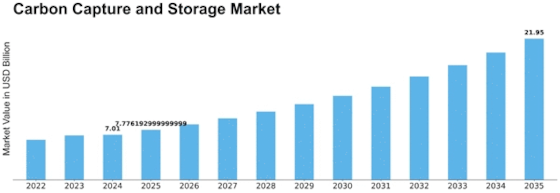
Carbon Capture Storage Market Size Graph
Author
Author Profile
Chitranshi Jaiswal
Team Lead - Research

Chitranshi is a Team Leader in the Chemicals & Materials (CnM) and Energy & Power (EnP) domains, with 6+ years of experience in market research. She leads and mentors teams to deliver cross-domain projects that equip clients with actionable insights and growth strategies. She is skilled in market estimation, forecasting, competitive benchmarking, and both primary & secondary research, enabling her to turn complex data into decision-ready insights. An engineer and MBA professional, she combines technical expertise with strategic acumen to solve dynamic market challenges. Chitranshi has successfully managed projects that support market entry, investment planning, and competitive positioning, while building strong client relationships. Certified in Advanced Excel & Power BI she leverages data-driven approaches to ensure accuracy, clarity, and impactful outcomes.

Leave a Comment

FAQs

What is the projected market valuation of the Carbon Capture and Storage Market by 2035?

<p>The projected market valuation for the Carbon Capture and Storage Market is 21.95 USD Billion by 2035.</p>

What was the market valuation of the Carbon Capture and Storage Market in 2024?

<p>The overall market valuation was 7.01 USD Billion in 2024.</p>

What is the expected CAGR for the Carbon Capture and Storage Market during the forecast period 2025 - 2035?

<p>The expected CAGR for the Carbon Capture and Storage Market during the forecast period 2025 - 2035 is 10.93%.</p>

Which technology segment is anticipated to have the highest valuation by 2035?

<p>The Direct Air Capture technology segment is anticipated to reach 7.95 USD Billion by 2035.</p>

What are the key applications driving the Carbon Capture and Storage Market?

<p>Key applications include Power Generation, Industrial Processes, Natural Gas Processing, and Transport and Storage.</p>

Which end-use sector is projected to grow significantly in the Carbon Capture and Storage Market?

<p>The Chemical Sector is projected to grow significantly, reaching 6.0 USD Billion by 2035.</p>

Who are the leading players in the Carbon Capture and Storage Market?

<p>Leading players include ExxonMobil, Shell, TotalEnergies, Chevron, BP, Equinor, and Occidental Petroleum.</p>

What is the expected valuation of the Enhanced Oil Recovery method by 2035?

<p>The Enhanced Oil Recovery method is expected to reach a valuation of 9.0 USD Billion by 2035.</p>

How does the market for Bioenergy with Carbon Capture and Storage compare to other methods?

<p>Bioenergy with Carbon Capture and Storage is projected to reach 5.5 USD Billion by 2035, indicating strong growth.</p>

What trends are influencing the growth of the Carbon Capture and Storage Market?

<p>Trends include increasing regulatory support, technological advancements, and rising demand for sustainable energy solutions.</p>

Market Summary

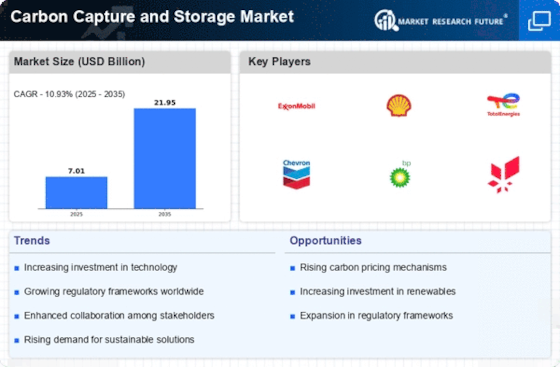
As per Market Research Future analysis, the Carbon Capture and Storage Market was estimated at 7.01 USD Billion in 2024. The Carbon Capture and Storage industry is projected to grow from 7.776 USD Billion in 2025 to 21.95 USD Billion by 2035, exhibiting a compound annual growth rate (CAGR) of 10.9% during the forecast period 2025 - 2035

Key Market Trends & Highlights

The Carbon Capture and Storage Market is poised for substantial growth driven by technological advancements and regulatory support.

  • North America remains the largest market for carbon capture and storage technologies, reflecting robust investment and infrastructure. Asia-Pacific is emerging as the fastest-growing region, propelled by increasing industrialization and environmental awareness. Post-combustion capture continues to dominate the market, while direct air capture is rapidly gaining traction as a viable solution. Key market drivers include increasing environmental regulations and corporate sustainability initiatives, which are shaping industry dynamics.

Market Size & Forecast

2024 Market Size 7.01 (USD Billion)
2035 Market Size 21.95 (USD Billion)
CAGR (2025 - 2035) 10.93%
Largest Regional Market Share in 2024 North America

Major Players

ExxonMobil (US), Shell (GB), <a href="https://totalenergies.com/features/totalenergies-and-co2-capture-and-storage">TotalEnergies </a>(FR), Chevron (US), BP (GB), Equinor (NO), Occidental Petroleum (US), Carbon Clean Solutions (GB), Aker Solutions (NO), Global CCS Institute (AU)

Market Trends

The Carbon Capture and Storage Market is currently experiencing a notable evolution, driven by increasing global awareness of climate change and the urgent need for sustainable solutions. Governments and industries are actively seeking innovative technologies to mitigate greenhouse gas emissions, which has led to a surge in investments and research initiatives. This market appears to be characterized by a diverse range of applications, spanning from industrial processes to energy generation, indicating a broad potential for growth. Furthermore, collaborations between public and private sectors seem to be fostering advancements in carbon capture technologies, enhancing their efficiency and cost-effectiveness. In addition, the regulatory landscape is evolving, with many countries implementing stricter emissions targets and providing incentives for carbon capture projects. This regulatory support may encourage further development and deployment of carbon capture technologies, potentially leading to a more robust market. As the world transitions towards a low-carbon economy, the Carbon Capture and Storage Market is likely to play a crucial role in achieving climate goals, suggesting a promising future for stakeholders involved in this sector.

Technological Advancements

Recent innovations in carbon capture technologies are enhancing efficiency and reducing costs. These advancements may lead to broader adoption across various industries, potentially transforming the market landscape.

Regulatory Support

Governments worldwide are increasingly implementing policies that favor carbon capture initiatives. This regulatory backing could stimulate investment and accelerate the deployment of carbon capture projects.

Collaborative Efforts

Partnerships between public and private entities are becoming more prevalent, fostering knowledge sharing and resource pooling. Such collaborations might enhance the development of effective carbon capture solutions.

Carbon Capture Storage Market Market Drivers

Technological Innovations

Technological innovations play a pivotal role in shaping the Carbon Capture and Storage Market. Advancements in capture technologies, such as direct air capture and bioenergy with carbon capture and storage, are enhancing the efficiency and cost-effectiveness of carbon capture processes. Recent developments indicate that new materials and methods are being explored to improve capture rates and reduce energy consumption. For example, the introduction of advanced sorbents and membranes has the potential to lower operational costs significantly. As these technologies mature, they are expected to attract substantial investments, with projections suggesting that the market could reach a valuation of several billion dollars by the end of the decade. The continuous evolution of technology is likely to drive the Carbon Capture and Storage Market forward, making it a critical component of global climate strategies.

Public Awareness and Support

Public awareness regarding climate change and the importance of carbon management is on the rise, positively influencing the Carbon Capture and Storage Market. As communities become more informed about the impacts of carbon emissions, there is a growing demand for effective solutions to mitigate these effects. This heightened awareness is leading to increased public support for carbon capture initiatives, which, in turn, encourages governments and industries to invest in these technologies. Surveys indicate that a significant portion of the population supports the implementation of carbon capture projects, viewing them as essential for achieving climate goals. This societal shift towards sustainability is likely to bolster the Carbon Capture and Storage Market, as stakeholders recognize the necessity of integrating carbon capture solutions into broader environmental strategies.

Corporate Sustainability Initiatives

In the Carbon Capture and Storage Market, corporate sustainability initiatives are becoming increasingly prevalent. Many companies are recognizing the importance of reducing their carbon footprints and are investing in carbon capture technologies as part of their sustainability strategies. This trend is particularly evident in sectors such as energy, manufacturing, and transportation, where emissions are substantial. A report indicates that over 70% of Fortune 500 companies have set net-zero emissions targets, which necessitates the integration of carbon capture solutions. As businesses strive to enhance their environmental credentials, the demand for carbon capture technologies is expected to rise, further propelling the growth of the Carbon Capture and Storage Market. This alignment of corporate goals with environmental responsibility is likely to create a robust market for innovative carbon management solutions.

Increasing Environmental Regulations

The Carbon Capture and Storage Market is experiencing a surge in demand due to the tightening of environmental regulations across various regions. Governments are implementing stricter emissions targets, compelling industries to adopt carbon capture technologies. For instance, the European Union has set ambitious climate goals, aiming for a 55% reduction in greenhouse gas emissions by 2030. This regulatory landscape creates a favorable environment for the Carbon Capture and Storage Market, as companies seek compliance and sustainability. The market is projected to grow significantly, with estimates suggesting a compound annual growth rate of over 20% in the coming years. As regulations become more stringent, the necessity for effective carbon management solutions will likely drive investments in carbon capture technologies.

Investment in Research and Development

Investment in research and development is a crucial driver for the Carbon Capture and Storage Market. Governments and private entities are allocating substantial funds to advance carbon capture technologies, recognizing their potential to combat climate change. Recent funding initiatives have highlighted the importance of innovation in enhancing the efficiency and scalability of carbon capture solutions. For instance, various countries have established grants and incentives to support R&D efforts in this field. This financial backing is expected to accelerate the development of new technologies and methodologies, ultimately leading to more effective carbon capture systems. As R&D continues to flourish, the Carbon Capture and Storage Market is likely to benefit from a pipeline of innovative solutions that can address the pressing challenges of carbon emissions.

Market Segment Insights

By Technology: Post-Combustion Capture (Largest) vs. Direct Air Capture (Fastest-Growing)

In the Carbon Capture and Storage Market, Post-Combustion Capture holds a substantial market share, largely due to its widespread applicability across existing <a href="https://www.marketresearchfuture.com/reports/peaking-power-plant-market-23692">power plants</a> and industrial processes. This technology effectively captures emissions from burning fossil fuels, making it an essential part of many companies' carbon management strategies. In contrast, Direct Air Capture, while currently having a smaller market share, is rapidly gaining traction as an innovative solution that directly removes CO2 from the atmosphere, appealing to a range of industries focused on sustainability.

Technology: Post-Combustion Capture (Dominant) vs. Direct Air Capture (Emerging)

Post-Combustion Capture is characterized by its established presence and efficiency in filtering emissions from flue gases, providing compliance with strict environmental regulations. Its dominance is supported by extensive research, development, and actual deployment in various sectors. Conversely, Direct Air Capture is emerging as a disruptive technology, leveraging advances in sorbent materials and energy-efficient processes to draw down atmospheric <a href="https://www.marketresearchfuture.com/reports/carbon-dioxide-market-20689">CO2</a>. This technology's appeal lies in its flexibility and the potential for large-scale impact, as it addresses the growing need for actionable climate solutions, making it a focal point for innovation and investment.

By Application: Power Generation (Largest) vs. Industrial Processes (Fastest-Growing)

The Carbon Capture and Storage Market is significantly influenced by its application segments, with Power Generation commanding the largest share. This segment benefits from widespread technological adoption, regulatory support, and the urgency to reduce carbon emissions from fossil fuel-based power plants. In contrast, Industrial Processes represent the fastest-growing segment, driven by increasing industrial demand for carbon management solutions and the need for compliance with stricter environmental regulations, making it a key focal point for future investments and innovations.

Power Generation (Dominant) vs. Industrial Processes (Emerging)

Power Generation remains the dominant application in the Carbon Capture and Storage Market, leveraging established technologies that integrate seamlessly with existing infrastructure. This segment is characterized by its large-scale implementation of CCS technologies aimed at reducing emissions from power plants generating electricity from fossil fuels. On the other hand, Industrial Processes are emerging as a critical area due to heightened awareness of carbon footprints across manufacturing sectors. The adoption of CCS in industries such as cement, steel, and chemicals is gaining momentum, driven by the urgent need for sustainable operational practices. This juxtaposition highlights the established dominance of Power Generation against the promising horizon of Industrial Processes.

By End Use: Energy Sector (Largest) vs. Healthcare Sector (Fastest-Growing)

The Carbon Capture and Storage Market exhibits a varied market share across its end-use sectors. The Energy Sector stands out as the largest contributor to the market, accounting for a significant portion of total demand due to its ongoing efforts to reduce carbon emissions and the implementation of carbon capture technologies in <a href="https://www.marketresearchfuture.com/reports/fossil-fuel-market-31570">fossil fuel</a> production. Following closely, the Manufacturing and Chemical Sectors also contribute notably, focusing on integrating carbon capture to enhance sustainability and compliance with environmental regulations. Meanwhile, the Healthcare Sector, while smaller in share, is gaining ground rapidly as healthcare facilities adopt carbon capture solutions to mitigate their environmental footprint and enhance operational efficiency. The growth trends in the Carbon Capture and Storage Market are significantly influenced by regulatory pressures, technological advancements, and a growing awareness of climate change impacts. The Energy Sector is expected to continue its dominance due to the global shift towards cleaner energy sources and investments in carbon capture infrastructure. Conversely, the Healthcare Sector is emerging rapidly, driven by sustainability goals and the need to handle increased waste and emissions from healthcare activities. This sector is witnessing a surge in innovation as institutions seek effective solutions for carbon management, indicating a healthy demand trend for carbon capture technologies in the healthcare context.

Energy Sector (Dominant) vs. Healthcare Sector (Emerging)

The Energy Sector is a dominant player in the Carbon Capture and Storage Market, primarily due to its reliance on large-scale carbon capture projects aimed at reducing emissions from power generation activities. This sector encompasses conventional fossil fuel energy production as well as renewable energy innovations, which necessitate advanced carbon capture technologies. The need for regulatory compliance and corporate sustainability initiatives propels substantial investments in carbon capture solutions. In contrast, the Healthcare Sector is emerging as a critical player with a growing focus on ecological responsibility. As healthcare facilities strive to minimize their carbon footprints through innovative practices and energy-efficient solutions, the demand for carbon capture technologies is accelerating. This sector's growth is largely driven by increasing regulations and the necessity for improved environmental practices in patient care, positioning it as a significant future market for carbon capture solutions.

By Method: Bioenergy with Carbon Capture and Storage (Largest) vs. Enhanced Oil Recovery (Fastest-Growing)

In the Carbon Capture and Storage Market, the methods used showcase varying distributions of market share. Bioenergy with Carbon Capture and Storage (BECCS) stands as the largest segment, capitalizing on its well-recognized potential for mitigating climate change while generating renewable energy. In contrast, Enhanced Oil Recovery (EOR) is gaining rapid traction due to its ability to boost oil production while simultaneously allowing for carbon dioxide storage, thus positioning itself as a significant player in the market.

Bioenergy with Carbon Capture and Storage (Dominant) vs. Enhanced Oil Recovery (Emerging)

Bioenergy with Carbon Capture and Storage (BECCS) is a dominant method, integrating biomass energy generation with carbon capture technology, offering a dual advantage of sustainable energy and reduced carbon emissions. This method is pivotal for achieving net-negative emissions, making it crucial in climate strategies. Conversely, Enhanced Oil Recovery (EOR) employs captured carbon to improve oil extraction efficiency, presenting an emerging market opportunity. As oil prices fluctuate and demand strategies evolve, EOR's attractiveness lies in its dual role—facilitating ongoing fossil fuel production while addressing carbon emissions, thus appealing to both traditional energy sectors and environmental goals.

Get more detailed insights about Carbon Capture and Storage Market Research Report - Forecast to 2035

Regional Insights

North America : Leading Innovation and Investment

North America is the largest market for Carbon Capture and Storage (CCS), holding approximately 45% of the global market share. The region's growth is driven by stringent environmental regulations, significant investments in clean technology, and a strong focus on reducing greenhouse gas emissions. The U.S. government has implemented various incentives, including tax credits, to promote CCS projects, further boosting demand for these technologies. The United States and Canada are the leading countries in this sector, with major players like ExxonMobil, Chevron, and Occidental Petroleum leading the charge. The competitive landscape is characterized by partnerships between private companies and government entities, fostering innovation and deployment of CCS technologies. The presence of organizations like The Carbon Capture and Storage, ensuring a collaborative approach to carbon management.

Europe : Regulatory Framework and Innovation

Europe is the second-largest market for Carbon Capture and Storage, accounting for approximately 30% of the global market share. The region's growth is propelled by ambitious climate targets set by the European Union, aiming for net-zero emissions by 2050. Regulatory frameworks, such as the EU Emissions Trading System, incentivize CCS projects, making them financially viable and attractive for investment. Leading countries in Europe include the United Kingdom, Norway, and the Netherlands, where significant CCS projects are underway. Key players like Shell and TotalEnergies are actively involved in developing innovative solutions to capture and store carbon. The competitive landscape is marked by collaboration between governments and private sectors, ensuring that Europe remains at the forefront of CCS technology development. The European Commission emphasizes the importance of CCS in achieving climate goals, stating that it is essential for decarbonizing hard-to-abate sectors.

Asia-Pacific : Emerging Market with Potential

Asia-Pacific is rapidly emerging as a significant player in the Carbon Capture and Storage market, holding about 15% of the global market share. The region's growth is driven by increasing industrial emissions and a growing awareness of climate change impacts. Countries like China and Japan are investing heavily in CCS technologies to meet their environmental targets and reduce carbon footprints, supported by government policies and international collaborations. China is the leading country in this region, with numerous large-scale CCS projects in development. Japan also plays a crucial role, focusing on innovative technologies to enhance carbon capture efficiency. The competitive landscape features both local and international players, with companies like Aker Solutions and Carbon Clean Solutions contributing to the market. The region's potential for growth is significant, as more countries recognize the importance of CCS in their climate strategies.

Middle East and Africa : Resource-Rich with Growing Interest

The Middle East and Africa region is gradually recognizing the importance of Carbon Capture and Storage, currently holding about 10% of the global market share. The growth is driven by the region's reliance on fossil fuels and the need to address environmental concerns. Countries like Saudi Arabia and South Africa are beginning to invest in CCS technologies as part of their broader sustainability initiatives, supported by government policies aimed at reducing carbon emissions. Saudi Arabia is leading the charge in the Middle East, with significant investments in CCS projects to enhance oil recovery and reduce emissions. South Africa is also exploring CCS as a means to meet its climate commitments. The competitive landscape is evolving, with both local and international players entering the market, indicating a growing interest in sustainable solutions. The region's potential for CCS is promising, as it aligns with global efforts to combat climate change.

Key Players and Competitive Insights

The Carbon Capture and Storage (CCS) market is currently characterized by a dynamic competitive landscape, driven by increasing regulatory pressures and a global push towards decarbonization. Major players such as ExxonMobil (US), Shell (GB), and TotalEnergies (FR) are strategically positioning themselves through innovation and partnerships to enhance their operational capabilities. ExxonMobil (US) has been focusing on expanding its CCS projects, particularly in the Gulf Coast region, which appears to be a critical area for carbon storage due to its geological advantages. Shell (GB), on the other hand, is investing heavily in digital transformation initiatives to optimize its CCS operations, indicating a trend towards integrating advanced technologies in carbon management. Collectively, these strategies not only enhance their competitive edge but also contribute to shaping a more sustainable energy landscape. In terms of business tactics, companies are increasingly localizing their operations and optimizing supply chains to enhance efficiency and reduce costs. The CCS market is moderately fragmented, with a mix of established players and emerging companies vying for market share. This competitive structure allows for a diverse range of solutions and innovations, as key players leverage their strengths to influence market dynamics. The collective influence of these companies is significant, as they drive advancements in technology and operational practices that are essential for the growth of the CCS sector. In August 2025, TotalEnergies (FR) announced a partnership with a leading technology firm to develop a new carbon capture technology that promises to enhance efficiency and reduce costs. This strategic move is likely to position TotalEnergies at the forefront of technological innovation in the CCS market, potentially allowing them to capture a larger share of the growing demand for carbon management solutions. The collaboration underscores the importance of technological advancements in achieving sustainability goals and reflects a broader trend within the industry towards innovation-driven growth. In September 2025, Occidental Petroleum (US) revealed plans to expand its carbon capture facilities in Texas, aiming to increase its capacity significantly. This expansion is indicative of Occidental's commitment to scaling up its operations in response to the rising demand for carbon capture solutions. By enhancing its infrastructure, Occidental is not only reinforcing its market position but also contributing to the overall growth of the CCS sector, which is essential for meeting global climate targets. As of October 2025, the CCS market is witnessing trends that emphasize digitalization, sustainability, and the integration of artificial intelligence in operational processes. Strategic alliances are becoming increasingly important, as companies recognize the value of collaboration in driving innovation and enhancing competitive positioning. The shift from price-based competition to a focus on technological advancement and supply chain reliability is evident, suggesting that future competitive differentiation will hinge on the ability to innovate and adapt to changing market demands. This evolution reflects a broader understanding that sustainable practices and advanced technologies are paramount for long-term success in the CCS market.

Key Companies in the Carbon Capture Storage Market include

Industry Developments

  • Q1 2025: A breakout year for our carbon capture and storage business In 2024, ExxonMobil signed two new CCS customers—CF Industries’ nitrogen plant in Mississippi and the NG3 natural gas gathering facility in Louisiana—bringing total CCS commitments to over 14 million tons of CO2 per year. The company also completed its first CO2 injection well in east Texas and integrated its acquisition of Denbury Resources, expanding its CO2 pipeline network.
  • Q1 2025: A breakout year for our carbon capture and storage business ExxonMobil secured the largest offshore CO2 storage site in the U.S., covering more than 270,000 acres in Texas state waters, intended for large-scale CO2 storage.
  • Q1 2025: Major Developments And Challenges In Carbon Capture & Storage (CCS) 2023-2025 Northern Lights in Norway became operational in 2024 as the world’s first commercial cross-border CO2 transport and storage project, with Phase 1 capacity of 1.5 million tonnes annually and Phase 2 expansion planned to 5 million tonnes by 2028, supported by €131 million in EU funding.
  • Q4 2024: Major Developments And Challenges In Carbon Capture & Storage (CCS) 2023-2025 Australia’s Moomba CCS project became operational in October 2024, capturing 1.7 million tonnes of CO2 annually and achieving full injection rates with 340,000 tonnes stored in its first operational year.
  • Q1 2025: CCUS: Carbon capture is growing but there's still much to do A major CCS project in Norway became operational in early 2025, with a capacity to capture 400,000 tonnes of CO2 per year, according to IEA data.
  • Q1 2025: A breakout year for our carbon capture and storage business ExxonMobil completed the integration of Denbury Resources in 2024, giving it the largest CO2 pipeline network in the U.S. for transporting captured CO2 to storage sites.
  • Q1 2025: A breakout year for our carbon capture and storage business ExxonMobil completed its first-ever CO2 injection well in east Texas in 2024, pending EPA approval for permanent storage operations.

Future Outlook

Carbon Capture Storage Market Future Outlook

The Carbon Capture and Storage Market is projected to grow at a 10.93% CAGR from 2025 to 2035, driven by regulatory support, technological advancements, and increasing carbon emissions awareness.

New opportunities lie in:

  • <p>Development of modular carbon capture units for industrial applications. Investment in carbon utilization technologies for enhanced revenue streams. Partnerships with energy companies for integrated carbon management solutions.</p>

By 2035, the market is expected to be robust, driven by innovation and strategic partnerships.

Market Segmentation

Carbon Capture Storage Market Method Outlook

  • Bioenergy with Carbon Capture and Storage
  • Mineralization
  • Enhanced Oil Recovery
  • Aquifer Storage

Carbon Capture Storage Market End Use Outlook

  • Energy Sector
  • Manufacturing Sector
  • Chemical Sector
  • Healthcare Sector

Carbon Capture Storage Market Technology Outlook

  • Post-Combustion Capture
  • Pre-Combustion Capture
  • Oxy-Fuel Combustion
  • Direct Air Capture

Carbon Capture Storage Market Application Outlook

  • Power Generation
  • Industrial Processes
  • Natural Gas Processing
  • Transport and Storage

Report Scope

MARKET SIZE 2024 7.01(USD Billion)
MARKET SIZE 2025 7.776(USD Billion)
MARKET SIZE 2035 21.95(USD Billion)
COMPOUND ANNUAL GROWTH RATE (CAGR) 10.93% (2025 - 2035)
REPORT COVERAGE Revenue Forecast, Competitive Landscape, Growth Factors, and Trends
BASE YEAR 2024
Market Forecast Period 2025 - 2035
Historical Data 2019 - 2024
Market Forecast Units USD Billion
Key Companies Profiled ExxonMobil (US), Shell (GB), TotalEnergies (FR), Chevron (US), BP (GB), Equinor (NO), Occidental Petroleum (US), Carbon Clean Solutions (GB), Aker Solutions (NO), Global CCS Institute (AU)
Segments Covered Technology, Application, End Use, Method, Regional - Forecast to 2035
Key Market Opportunities Advancements in direct air capture technologies enhance potential in the Carbon Capture and Storage Market.
Key Market Dynamics Rising regulatory pressures and technological advancements drive innovation and investment in the Carbon Capture and Storage Market.
Countries Covered North America, Europe, APAC, South America, MEA

FAQs

What is the projected market valuation of the Carbon Capture and Storage Market by 2035?

<p>The projected market valuation for the Carbon Capture and Storage Market is 21.95 USD Billion by 2035.</p>

What was the market valuation of the Carbon Capture and Storage Market in 2024?

<p>The overall market valuation was 7.01 USD Billion in 2024.</p>

What is the expected CAGR for the Carbon Capture and Storage Market during the forecast period 2025 - 2035?

<p>The expected CAGR for the Carbon Capture and Storage Market during the forecast period 2025 - 2035 is 10.93%.</p>

Which technology segment is anticipated to have the highest valuation by 2035?

<p>The Direct Air Capture technology segment is anticipated to reach 7.95 USD Billion by 2035.</p>

What are the key applications driving the Carbon Capture and Storage Market?

<p>Key applications include Power Generation, Industrial Processes, Natural Gas Processing, and Transport and Storage.</p>

Which end-use sector is projected to grow significantly in the Carbon Capture and Storage Market?

<p>The Chemical Sector is projected to grow significantly, reaching 6.0 USD Billion by 2035.</p>

Who are the leading players in the Carbon Capture and Storage Market?

<p>Leading players include ExxonMobil, Shell, TotalEnergies, Chevron, BP, Equinor, and Occidental Petroleum.</p>

What is the expected valuation of the Enhanced Oil Recovery method by 2035?

<p>The Enhanced Oil Recovery method is expected to reach a valuation of 9.0 USD Billion by 2035.</p>

How does the market for Bioenergy with Carbon Capture and Storage compare to other methods?

<p>Bioenergy with Carbon Capture and Storage is projected to reach 5.5 USD Billion by 2035, indicating strong growth.</p>

What trends are influencing the growth of the Carbon Capture and Storage Market?

<p>Trends include increasing regulatory support, technological advancements, and rising demand for sustainable energy solutions.</p>

  1. SECTION I: EXECUTIVE SUMMARY AND KEY HIGHLIGHTS
    1. | 1.1 EXECUTIVE SUMMARY
    2. | | 1.1.1 Market Overview
    3. | | 1.1.2 Key Findings
    4. | | 1.1.3 Market Segmentation
    5. | | 1.1.4 Competitive Landscape
    6. | | 1.1.5 Challenges and Opportunities
    7. | | 1.1.6 Future Outlook
  2. SECTION II: SCOPING, METHODOLOGY AND MARKET STRUCTURE
    1. | 2.1 MARKET INTRODUCTION
    2. | | 2.1.1 Definition
    3. | | 2.1.2 Scope of the study
    4. | | | 2.1.2.1 Research Objective
    5. | | | 2.1.2.2 Assumption
    6. | | | 2.1.2.3 Limitations
    7. | 2.2 RESEARCH METHODOLOGY
    8. | | 2.2.1 Overview
    9. | | 2.2.2 Data Mining
    10. | | 2.2.3 Secondary Research
    11. | | 2.2.4 Primary Research
    12. | | | 2.2.4.1 Primary Interviews and Information Gathering Process
    13. | | | 2.2.4.2 Breakdown of Primary Respondents
    14. | | 2.2.5 Forecasting Model
    15. | | 2.2.6 Market Size Estimation
    16. | | | 2.2.6.1 Bottom-Up Approach
    17. | | | 2.2.6.2 Top-Down Approach
    18. | | 2.2.7 Data Triangulation
    19. | | 2.2.8 Validation
  3. SECTION III: QUALITATIVE ANALYSIS
    1. | 3.1 MARKET DYNAMICS
    2. | | 3.1.1 Overview
    3. | | 3.1.2 Drivers
    4. | | 3.1.3 Restraints
    5. | | 3.1.4 Opportunities
    6. | 3.2 MARKET FACTOR ANALYSIS
    7. | | 3.2.1 Value chain Analysis
    8. | | 3.2.2 Porter's Five Forces Analysis
    9. | | | 3.2.2.1 Bargaining Power of Suppliers
    10. | | | 3.2.2.2 Bargaining Power of Buyers
    11. | | | 3.2.2.3 Threat of New Entrants
    12. | | | 3.2.2.4 Threat of Substitutes
    13. | | | 3.2.2.5 Intensity of Rivalry
    14. | | 3.2.3 COVID-19 Impact Analysis
    15. | | | 3.2.3.1 Market Impact Analysis
    16. | | | 3.2.3.2 Regional Impact
    17. | | | 3.2.3.3 Opportunity and Threat Analysis
  4. SECTION IV: QUANTITATIVE ANALYSIS
    1. | 4.1 Energy & Power, BY Technology (USD Billion)
    2. | | 4.1.1 Post-Combustion Capture
    3. | | 4.1.2 Pre-Combustion Capture
    4. | | 4.1.3 Oxy-Fuel Combustion
    5. | | 4.1.4 Direct Air Capture
    6. | 4.2 Energy & Power, BY Application (USD Billion)
    7. | | 4.2.1 Power Generation
    8. | | 4.2.2 Industrial Processes
    9. | | 4.2.3 Natural Gas Processing
    10. | | 4.2.4 Transport and Storage
    11. | 4.3 Energy & Power, BY End Use (USD Billion)
    12. | | 4.3.1 Energy Sector
    13. | | 4.3.2 Manufacturing Sector
    14. | | 4.3.3 Chemical Sector
    15. | | 4.3.4 Healthcare Sector
    16. | 4.4 Energy & Power, BY Method (USD Billion)
    17. | | 4.4.1 Bioenergy with Carbon Capture and Storage
    18. | | 4.4.2 Mineralization
    19. | | 4.4.3 Enhanced Oil Recovery
    20. | | 4.4.4 Aquifer Storage
    21. | 4.5 Energy & Power, BY Region (USD Billion)
    22. | | 4.5.1 North America
    23. | | | 4.5.1.1 US
    24. | | | 4.5.1.2 Canada
    25. | | 4.5.2 Europe
    26. | | | 4.5.2.1 Germany
    27. | | | 4.5.2.2 UK
    28. | | | 4.5.2.3 France
    29. | | | 4.5.2.4 Russia
    30. | | | 4.5.2.5 Italy
    31. | | | 4.5.2.6 Spain
    32. | | | 4.5.2.7 Rest of Europe
    33. | | 4.5.3 APAC
    34. | | | 4.5.3.1 China
    35. | | | 4.5.3.2 India
    36. | | | 4.5.3.3 Japan
    37. | | | 4.5.3.4 South Korea
    38. | | | 4.5.3.5 Malaysia
    39. | | | 4.5.3.6 Thailand
    40. | | | 4.5.3.7 Indonesia
    41. | | | 4.5.3.8 Rest of APAC
    42. | | 4.5.4 South America
    43. | | | 4.5.4.1 Brazil
    44. | | | 4.5.4.2 Mexico
    45. | | | 4.5.4.3 Argentina
    46. | | | 4.5.4.4 Rest of South America
    47. | | 4.5.5 MEA
    48. | | | 4.5.5.1 GCC Countries
    49. | | | 4.5.5.2 South Africa
    50. | | | 4.5.5.3 Rest of MEA
  5. SECTION V: COMPETITIVE ANALYSIS
    1. | 5.1 Competitive Landscape
    2. | | 5.1.1 Overview
    3. | | 5.1.2 Competitive Analysis
    4. | | 5.1.3 Market share Analysis
    5. | | 5.1.4 Major Growth Strategy in the Energy & Power
    6. | | 5.1.5 Competitive Benchmarking
    7. | | 5.1.6 Leading Players in Terms of Number of Developments in the Energy & Power
    8. | | 5.1.7 Key developments and growth strategies
    9. | | | 5.1.7.1 New Product Launch/Service Deployment
    10. | | | 5.1.7.2 Merger & Acquisitions
    11. | | | 5.1.7.3 Joint Ventures
    12. | | 5.1.8 Major Players Financial Matrix
    13. | | | 5.1.8.1 Sales and Operating Income
    14. | | | 5.1.8.2 Major Players R&D Expenditure. 2023
    15. | 5.2 Company Profiles
    16. | | 5.2.1 ExxonMobil (US)
    17. | | | 5.2.1.1 Financial Overview
    18. | | | 5.2.1.2 Products Offered
    19. | | | 5.2.1.3 Key Developments
    20. | | | 5.2.1.4 SWOT Analysis
    21. | | | 5.2.1.5 Key Strategies
    22. | | 5.2.2 Shell (GB)
    23. | | | 5.2.2.1 Financial Overview
    24. | | | 5.2.2.2 Products Offered
    25. | | | 5.2.2.3 Key Developments
    26. | | | 5.2.2.4 SWOT Analysis
    27. | | | 5.2.2.5 Key Strategies
    28. | | 5.2.3 TotalEnergies (FR)
    29. | | | 5.2.3.1 Financial Overview
    30. | | | 5.2.3.2 Products Offered
    31. | | | 5.2.3.3 Key Developments
    32. | | | 5.2.3.4 SWOT Analysis
    33. | | | 5.2.3.5 Key Strategies
    34. | | 5.2.4 Chevron (US)
    35. | | | 5.2.4.1 Financial Overview
    36. | | | 5.2.4.2 Products Offered
    37. | | | 5.2.4.3 Key Developments
    38. | | | 5.2.4.4 SWOT Analysis
    39. | | | 5.2.4.5 Key Strategies
    40. | | 5.2.5 BP (GB)
    41. | | | 5.2.5.1 Financial Overview
    42. | | | 5.2.5.2 Products Offered
    43. | | | 5.2.5.3 Key Developments
    44. | | | 5.2.5.4 SWOT Analysis
    45. | | | 5.2.5.5 Key Strategies
    46. | | 5.2.6 Equinor (NO)
    47. | | | 5.2.6.1 Financial Overview
    48. | | | 5.2.6.2 Products Offered
    49. | | | 5.2.6.3 Key Developments
    50. | | | 5.2.6.4 SWOT Analysis
    51. | | | 5.2.6.5 Key Strategies
    52. | | 5.2.7 Occidental Petroleum (US)
    53. | | | 5.2.7.1 Financial Overview
    54. | | | 5.2.7.2 Products Offered
    55. | | | 5.2.7.3 Key Developments
    56. | | | 5.2.7.4 SWOT Analysis
    57. | | | 5.2.7.5 Key Strategies
    58. | | 5.2.8 Carbon Clean Solutions (GB)
    59. | | | 5.2.8.1 Financial Overview
    60. | | | 5.2.8.2 Products Offered
    61. | | | 5.2.8.3 Key Developments
    62. | | | 5.2.8.4 SWOT Analysis
    63. | | | 5.2.8.5 Key Strategies
    64. | | 5.2.9 Aker Solutions (NO)
    65. | | | 5.2.9.1 Financial Overview
    66. | | | 5.2.9.2 Products Offered
    67. | | | 5.2.9.3 Key Developments
    68. | | | 5.2.9.4 SWOT Analysis
    69. | | | 5.2.9.5 Key Strategies
    70. | | 5.2.10 Global CCS Institute (AU)
    71. | | | 5.2.10.1 Financial Overview
    72. | | | 5.2.10.2 Products Offered
    73. | | | 5.2.10.3 Key Developments
    74. | | | 5.2.10.4 SWOT Analysis
    75. | | | 5.2.10.5 Key Strategies
    76. | 5.3 Appendix
    77. | | 5.3.1 References
    78. | | 5.3.2 Related Reports
  6. LIST OF FIGURES
    1. | 6.1 MARKET SYNOPSIS
    2. | 6.2 NORTH AMERICA MARKET ANALYSIS
    3. | 6.3 US MARKET ANALYSIS BY TECHNOLOGY
    4. | 6.4 US MARKET ANALYSIS BY APPLICATION
    5. | 6.5 US MARKET ANALYSIS BY END USE
    6. | 6.6 US MARKET ANALYSIS BY METHOD
    7. | 6.7 CANADA MARKET ANALYSIS BY TECHNOLOGY
    8. | 6.8 CANADA MARKET ANALYSIS BY APPLICATION
    9. | 6.9 CANADA MARKET ANALYSIS BY END USE
    10. | 6.10 CANADA MARKET ANALYSIS BY METHOD
    11. | 6.11 EUROPE MARKET ANALYSIS
    12. | 6.12 GERMANY MARKET ANALYSIS BY TECHNOLOGY
    13. | 6.13 GERMANY MARKET ANALYSIS BY APPLICATION
    14. | 6.14 GERMANY MARKET ANALYSIS BY END USE
    15. | 6.15 GERMANY MARKET ANALYSIS BY METHOD
    16. | 6.16 UK MARKET ANALYSIS BY TECHNOLOGY
    17. | 6.17 UK MARKET ANALYSIS BY APPLICATION
    18. | 6.18 UK MARKET ANALYSIS BY END USE
    19. | 6.19 UK MARKET ANALYSIS BY METHOD
    20. | 6.20 FRANCE MARKET ANALYSIS BY TECHNOLOGY
    21. | 6.21 FRANCE MARKET ANALYSIS BY APPLICATION
    22. | 6.22 FRANCE MARKET ANALYSIS BY END USE
    23. | 6.23 FRANCE MARKET ANALYSIS BY METHOD
    24. | 6.24 RUSSIA MARKET ANALYSIS BY TECHNOLOGY
    25. | 6.25 RUSSIA MARKET ANALYSIS BY APPLICATION
    26. | 6.26 RUSSIA MARKET ANALYSIS BY END USE
    27. | 6.27 RUSSIA MARKET ANALYSIS BY METHOD
    28. | 6.28 ITALY MARKET ANALYSIS BY TECHNOLOGY
    29. | 6.29 ITALY MARKET ANALYSIS BY APPLICATION
    30. | 6.30 ITALY MARKET ANALYSIS BY END USE
    31. | 6.31 ITALY MARKET ANALYSIS BY METHOD
    32. | 6.32 SPAIN MARKET ANALYSIS BY TECHNOLOGY
    33. | 6.33 SPAIN MARKET ANALYSIS BY APPLICATION
    34. | 6.34 SPAIN MARKET ANALYSIS BY END USE
    35. | 6.35 SPAIN MARKET ANALYSIS BY METHOD
    36. | 6.36 REST OF EUROPE MARKET ANALYSIS BY TECHNOLOGY
    37. | 6.37 REST OF EUROPE MARKET ANALYSIS BY APPLICATION
    38. | 6.38 REST OF EUROPE MARKET ANALYSIS BY END USE
    39. | 6.39 REST OF EUROPE MARKET ANALYSIS BY METHOD
    40. | 6.40 APAC MARKET ANALYSIS
    41. | 6.41 CHINA MARKET ANALYSIS BY TECHNOLOGY
    42. | 6.42 CHINA MARKET ANALYSIS BY APPLICATION
    43. | 6.43 CHINA MARKET ANALYSIS BY END USE
    44. | 6.44 CHINA MARKET ANALYSIS BY METHOD
    45. | 6.45 INDIA MARKET ANALYSIS BY TECHNOLOGY
    46. | 6.46 INDIA MARKET ANALYSIS BY APPLICATION
    47. | 6.47 INDIA MARKET ANALYSIS BY END USE
    48. | 6.48 INDIA MARKET ANALYSIS BY METHOD
    49. | 6.49 JAPAN MARKET ANALYSIS BY TECHNOLOGY
    50. | 6.50 JAPAN MARKET ANALYSIS BY APPLICATION
    51. | 6.51 JAPAN MARKET ANALYSIS BY END USE
    52. | 6.52 JAPAN MARKET ANALYSIS BY METHOD
    53. | 6.53 SOUTH KOREA MARKET ANALYSIS BY TECHNOLOGY
    54. | 6.54 SOUTH KOREA MARKET ANALYSIS BY APPLICATION
    55. | 6.55 SOUTH KOREA MARKET ANALYSIS BY END USE
    56. | 6.56 SOUTH KOREA MARKET ANALYSIS BY METHOD
    57. | 6.57 MALAYSIA MARKET ANALYSIS BY TECHNOLOGY
    58. | 6.58 MALAYSIA MARKET ANALYSIS BY APPLICATION
    59. | 6.59 MALAYSIA MARKET ANALYSIS BY END USE
    60. | 6.60 MALAYSIA MARKET ANALYSIS BY METHOD
    61. | 6.61 THAILAND MARKET ANALYSIS BY TECHNOLOGY
    62. | 6.62 THAILAND MARKET ANALYSIS BY APPLICATION
    63. | 6.63 THAILAND MARKET ANALYSIS BY END USE
    64. | 6.64 THAILAND MARKET ANALYSIS BY METHOD
    65. | 6.65 INDONESIA MARKET ANALYSIS BY TECHNOLOGY
    66. | 6.66 INDONESIA MARKET ANALYSIS BY APPLICATION
    67. | 6.67 INDONESIA MARKET ANALYSIS BY END USE
    68. | 6.68 INDONESIA MARKET ANALYSIS BY METHOD
    69. | 6.69 REST OF APAC MARKET ANALYSIS BY TECHNOLOGY
    70. | 6.70 REST OF APAC MARKET ANALYSIS BY APPLICATION
    71. | 6.71 REST OF APAC MARKET ANALYSIS BY END USE
    72. | 6.72 REST OF APAC MARKET ANALYSIS BY METHOD
    73. | 6.73 SOUTH AMERICA MARKET ANALYSIS
    74. | 6.74 BRAZIL MARKET ANALYSIS BY TECHNOLOGY
    75. | 6.75 BRAZIL MARKET ANALYSIS BY APPLICATION
    76. | 6.76 BRAZIL MARKET ANALYSIS BY END USE
    77. | 6.77 BRAZIL MARKET ANALYSIS BY METHOD
    78. | 6.78 MEXICO MARKET ANALYSIS BY TECHNOLOGY
    79. | 6.79 MEXICO MARKET ANALYSIS BY APPLICATION
    80. | 6.80 MEXICO MARKET ANALYSIS BY END USE
    81. | 6.81 MEXICO MARKET ANALYSIS BY METHOD
    82. | 6.82 ARGENTINA MARKET ANALYSIS BY TECHNOLOGY
    83. | 6.83 ARGENTINA MARKET ANALYSIS BY APPLICATION
    84. | 6.84 ARGENTINA MARKET ANALYSIS BY END USE
    85. | 6.85 ARGENTINA MARKET ANALYSIS BY METHOD
    86. | 6.86 REST OF SOUTH AMERICA MARKET ANALYSIS BY TECHNOLOGY
    87. | 6.87 REST OF SOUTH AMERICA MARKET ANALYSIS BY APPLICATION
    88. | 6.88 REST OF SOUTH AMERICA MARKET ANALYSIS BY END USE
    89. | 6.89 REST OF SOUTH AMERICA MARKET ANALYSIS BY METHOD
    90. | 6.90 MEA MARKET ANALYSIS
    91. | 6.91 GCC COUNTRIES MARKET ANALYSIS BY TECHNOLOGY
    92. | 6.92 GCC COUNTRIES MARKET ANALYSIS BY APPLICATION
    93. | 6.93 GCC COUNTRIES MARKET ANALYSIS BY END USE
    94. | 6.94 GCC COUNTRIES MARKET ANALYSIS BY METHOD
    95. | 6.95 SOUTH AFRICA MARKET ANALYSIS BY TECHNOLOGY
    96. | 6.96 SOUTH AFRICA MARKET ANALYSIS BY APPLICATION
    97. | 6.97 SOUTH AFRICA MARKET ANALYSIS BY END USE
    98. | 6.98 SOUTH AFRICA MARKET ANALYSIS BY METHOD
    99. | 6.99 REST OF MEA MARKET ANALYSIS BY TECHNOLOGY
    100. | 6.100 REST OF MEA MARKET ANALYSIS BY APPLICATION
    101. | 6.101 REST OF MEA MARKET ANALYSIS BY END USE
    102. | 6.102 REST OF MEA MARKET ANALYSIS BY METHOD
    103. | 6.103 KEY BUYING CRITERIA OF ENERGY & POWER
    104. | 6.104 RESEARCH PROCESS OF MRFR
    105. | 6.105 DRO ANALYSIS OF ENERGY & POWER
    106. | 6.106 DRIVERS IMPACT ANALYSIS: ENERGY & POWER
    107. | 6.107 RESTRAINTS IMPACT ANALYSIS: ENERGY & POWER
    108. | 6.108 SUPPLY / VALUE CHAIN: ENERGY & POWER
    109. | 6.109 ENERGY & POWER, BY TECHNOLOGY, 2024 (% SHARE)
    110. | 6.110 ENERGY & POWER, BY TECHNOLOGY, 2024 TO 2035 (USD Billion)
    111. | 6.111 ENERGY & POWER, BY APPLICATION, 2024 (% SHARE)
    112. | 6.112 ENERGY & POWER, BY APPLICATION, 2024 TO 2035 (USD Billion)
    113. | 6.113 ENERGY & POWER, BY END USE, 2024 (% SHARE)
    114. | 6.114 ENERGY & POWER, BY END USE, 2024 TO 2035 (USD Billion)
    115. | 6.115 ENERGY & POWER, BY METHOD, 2024 (% SHARE)
    116. | 6.116 ENERGY & POWER, BY METHOD, 2024 TO 2035 (USD Billion)
    117. | 6.117 BENCHMARKING OF MAJOR COMPETITORS
  7. LIST OF TABLES
    1. | 7.1 LIST OF ASSUMPTIONS
    2. | | 7.1.1
    3. | 7.2 North America MARKET SIZE ESTIMATES; FORECAST
    4. | | 7.2.1 BY TECHNOLOGY, 2025-2035 (USD Billion)
    5. | | 7.2.2 BY APPLICATION, 2025-2035 (USD Billion)
    6. | | 7.2.3 BY END USE, 2025-2035 (USD Billion)
    7. | | 7.2.4 BY METHOD, 2025-2035 (USD Billion)
    8. | 7.3 US MARKET SIZE ESTIMATES; FORECAST
    9. | | 7.3.1 BY TECHNOLOGY, 2025-2035 (USD Billion)
    10. | | 7.3.2 BY APPLICATION, 2025-2035 (USD Billion)
    11. | | 7.3.3 BY END USE, 2025-2035 (USD Billion)
    12. | | 7.3.4 BY METHOD, 2025-2035 (USD Billion)
    13. | 7.4 Canada MARKET SIZE ESTIMATES; FORECAST
    14. | | 7.4.1 BY TECHNOLOGY, 2025-2035 (USD Billion)
    15. | | 7.4.2 BY APPLICATION, 2025-2035 (USD Billion)
    16. | | 7.4.3 BY END USE, 2025-2035 (USD Billion)
    17. | | 7.4.4 BY METHOD, 2025-2035 (USD Billion)
    18. | 7.5 Europe MARKET SIZE ESTIMATES; FORECAST
    19. | | 7.5.1 BY TECHNOLOGY, 2025-2035 (USD Billion)
    20. | | 7.5.2 BY APPLICATION, 2025-2035 (USD Billion)
    21. | | 7.5.3 BY END USE, 2025-2035 (USD Billion)
    22. | | 7.5.4 BY METHOD, 2025-2035 (USD Billion)
    23. | 7.6 Germany MARKET SIZE ESTIMATES; FORECAST
    24. | | 7.6.1 BY TECHNOLOGY, 2025-2035 (USD Billion)
    25. | | 7.6.2 BY APPLICATION, 2025-2035 (USD Billion)
    26. | | 7.6.3 BY END USE, 2025-2035 (USD Billion)
    27. | | 7.6.4 BY METHOD, 2025-2035 (USD Billion)
    28. | 7.7 UK MARKET SIZE ESTIMATES; FORECAST
    29. | | 7.7.1 BY TECHNOLOGY, 2025-2035 (USD Billion)
    30. | | 7.7.2 BY APPLICATION, 2025-2035 (USD Billion)
    31. | | 7.7.3 BY END USE, 2025-2035 (USD Billion)
    32. | | 7.7.4 BY METHOD, 2025-2035 (USD Billion)
    33. | 7.8 France MARKET SIZE ESTIMATES; FORECAST
    34. | | 7.8.1 BY TECHNOLOGY, 2025-2035 (USD Billion)
    35. | | 7.8.2 BY APPLICATION, 2025-2035 (USD Billion)
    36. | | 7.8.3 BY END USE, 2025-2035 (USD Billion)
    37. | | 7.8.4 BY METHOD, 2025-2035 (USD Billion)
    38. | 7.9 Russia MARKET SIZE ESTIMATES; FORECAST
    39. | | 7.9.1 BY TECHNOLOGY, 2025-2035 (USD Billion)
    40. | | 7.9.2 BY APPLICATION, 2025-2035 (USD Billion)
    41. | | 7.9.3 BY END USE, 2025-2035 (USD Billion)
    42. | | 7.9.4 BY METHOD, 2025-2035 (USD Billion)
    43. | 7.10 Italy MARKET SIZE ESTIMATES; FORECAST
    44. | | 7.10.1 BY TECHNOLOGY, 2025-2035 (USD Billion)
    45. | | 7.10.2 BY APPLICATION, 2025-2035 (USD Billion)
    46. | | 7.10.3 BY END USE, 2025-2035 (USD Billion)
    47. | | 7.10.4 BY METHOD, 2025-2035 (USD Billion)
    48. | 7.11 Spain MARKET SIZE ESTIMATES; FORECAST
    49. | | 7.11.1 BY TECHNOLOGY, 2025-2035 (USD Billion)
    50. | | 7.11.2 BY APPLICATION, 2025-2035 (USD Billion)
    51. | | 7.11.3 BY END USE, 2025-2035 (USD Billion)
    52. | | 7.11.4 BY METHOD, 2025-2035 (USD Billion)
    53. | 7.12 Rest of Europe MARKET SIZE ESTIMATES; FORECAST
    54. | | 7.12.1 BY TECHNOLOGY, 2025-2035 (USD Billion)
    55. | | 7.12.2 BY APPLICATION, 2025-2035 (USD Billion)
    56. | | 7.12.3 BY END USE, 2025-2035 (USD Billion)
    57. | | 7.12.4 BY METHOD, 2025-2035 (USD Billion)
    58. | 7.13 APAC MARKET SIZE ESTIMATES; FORECAST
    59. | | 7.13.1 BY TECHNOLOGY, 2025-2035 (USD Billion)
    60. | | 7.13.2 BY APPLICATION, 2025-2035 (USD Billion)
    61. | | 7.13.3 BY END USE, 2025-2035 (USD Billion)
    62. | | 7.13.4 BY METHOD, 2025-2035 (USD Billion)
    63. | 7.14 China MARKET SIZE ESTIMATES; FORECAST
    64. | | 7.14.1 BY TECHNOLOGY, 2025-2035 (USD Billion)
    65. | | 7.14.2 BY APPLICATION, 2025-2035 (USD Billion)
    66. | | 7.14.3 BY END USE, 2025-2035 (USD Billion)
    67. | | 7.14.4 BY METHOD, 2025-2035 (USD Billion)
    68. | 7.15 India MARKET SIZE ESTIMATES; FORECAST
    69. | | 7.15.1 BY TECHNOLOGY, 2025-2035 (USD Billion)
    70. | | 7.15.2 BY APPLICATION, 2025-2035 (USD Billion)
    71. | | 7.15.3 BY END USE, 2025-2035 (USD Billion)
    72. | | 7.15.4 BY METHOD, 2025-2035 (USD Billion)
    73. | 7.16 Japan MARKET SIZE ESTIMATES; FORECAST
    74. | | 7.16.1 BY TECHNOLOGY, 2025-2035 (USD Billion)
    75. | | 7.16.2 BY APPLICATION, 2025-2035 (USD Billion)
    76. | | 7.16.3 BY END USE, 2025-2035 (USD Billion)
    77. | | 7.16.4 BY METHOD, 2025-2035 (USD Billion)
    78. | 7.17 South Korea MARKET SIZE ESTIMATES; FORECAST
    79. | | 7.17.1 BY TECHNOLOGY, 2025-2035 (USD Billion)
    80. | | 7.17.2 BY APPLICATION, 2025-2035 (USD Billion)
    81. | | 7.17.3 BY END USE, 2025-2035 (USD Billion)
    82. | | 7.17.4 BY METHOD, 2025-2035 (USD Billion)
    83. | 7.18 Malaysia MARKET SIZE ESTIMATES; FORECAST
    84. | | 7.18.1 BY TECHNOLOGY, 2025-2035 (USD Billion)
    85. | | 7.18.2 BY APPLICATION, 2025-2035 (USD Billion)
    86. | | 7.18.3 BY END USE, 2025-2035 (USD Billion)
    87. | | 7.18.4 BY METHOD, 2025-2035 (USD Billion)
    88. | 7.19 Thailand MARKET SIZE ESTIMATES; FORECAST
    89. | | 7.19.1 BY TECHNOLOGY, 2025-2035 (USD Billion)
    90. | | 7.19.2 BY APPLICATION, 2025-2035 (USD Billion)
    91. | | 7.19.3 BY END USE, 2025-2035 (USD Billion)
    92. | | 7.19.4 BY METHOD, 2025-2035 (USD Billion)
    93. | 7.20 Indonesia MARKET SIZE ESTIMATES; FORECAST
    94. | | 7.20.1 BY TECHNOLOGY, 2025-2035 (USD Billion)
    95. | | 7.20.2 BY APPLICATION, 2025-2035 (USD Billion)
    96. | | 7.20.3 BY END USE, 2025-2035 (USD Billion)
    97. | | 7.20.4 BY METHOD, 2025-2035 (USD Billion)
    98. | 7.21 Rest of APAC MARKET SIZE ESTIMATES; FORECAST
    99. | | 7.21.1 BY TECHNOLOGY, 2025-2035 (USD Billion)
    100. | | 7.21.2 BY APPLICATION, 2025-2035 (USD Billion)
    101. | | 7.21.3 BY END USE, 2025-2035 (USD Billion)
    102. | | 7.21.4 BY METHOD, 2025-2035 (USD Billion)
    103. | 7.22 South America MARKET SIZE ESTIMATES; FORECAST
    104. | | 7.22.1 BY TECHNOLOGY, 2025-2035 (USD Billion)
    105. | | 7.22.2 BY APPLICATION, 2025-2035 (USD Billion)
    106. | | 7.22.3 BY END USE, 2025-2035 (USD Billion)
    107. | | 7.22.4 BY METHOD, 2025-2035 (USD Billion)
    108. | 7.23 Brazil MARKET SIZE ESTIMATES; FORECAST
    109. | | 7.23.1 BY TECHNOLOGY, 2025-2035 (USD Billion)
    110. | | 7.23.2 BY APPLICATION, 2025-2035 (USD Billion)
    111. | | 7.23.3 BY END USE, 2025-2035 (USD Billion)
    112. | | 7.23.4 BY METHOD, 2025-2035 (USD Billion)
    113. | 7.24 Mexico MARKET SIZE ESTIMATES; FORECAST
    114. | | 7.24.1 BY TECHNOLOGY, 2025-2035 (USD Billion)
    115. | | 7.24.2 BY APPLICATION, 2025-2035 (USD Billion)
    116. | | 7.24.3 BY END USE, 2025-2035 (USD Billion)
    117. | | 7.24.4 BY METHOD, 2025-2035 (USD Billion)
    118. | 7.25 Argentina MARKET SIZE ESTIMATES; FORECAST
    119. | | 7.25.1 BY TECHNOLOGY, 2025-2035 (USD Billion)
    120. | | 7.25.2 BY APPLICATION, 2025-2035 (USD Billion)
    121. | | 7.25.3 BY END USE, 2025-2035 (USD Billion)
    122. | | 7.25.4 BY METHOD, 2025-2035 (USD Billion)
    123. | 7.26 Rest of South America MARKET SIZE ESTIMATES; FORECAST
    124. | | 7.26.1 BY TECHNOLOGY, 2025-2035 (USD Billion)
    125. | | 7.26.2 BY APPLICATION, 2025-2035 (USD Billion)
    126. | | 7.26.3 BY END USE, 2025-2035 (USD Billion)
    127. | | 7.26.4 BY METHOD, 2025-2035 (USD Billion)
    128. | 7.27 MEA MARKET SIZE ESTIMATES; FORECAST
    129. | | 7.27.1 BY TECHNOLOGY, 2025-2035 (USD Billion)
    130. | | 7.27.2 BY APPLICATION, 2025-2035 (USD Billion)
    131. | | 7.27.3 BY END USE, 2025-2035 (USD Billion)
    132. | | 7.27.4 BY METHOD, 2025-2035 (USD Billion)
    133. | 7.28 GCC Countries MARKET SIZE ESTIMATES; FORECAST
    134. | | 7.28.1 BY TECHNOLOGY, 2025-2035 (USD Billion)
    135. | | 7.28.2 BY APPLICATION, 2025-2035 (USD Billion)
    136. | | 7.28.3 BY END USE, 2025-2035 (USD Billion)
    137. | | 7.28.4 BY METHOD, 2025-2035 (USD Billion)
    138. | 7.29 South Africa MARKET SIZE ESTIMATES; FORECAST
    139. | | 7.29.1 BY TECHNOLOGY, 2025-2035 (USD Billion)
    140. | | 7.29.2 BY APPLICATION, 2025-2035 (USD Billion)
    141. | | 7.29.3 BY END USE, 2025-2035 (USD Billion)
    142. | | 7.29.4 BY METHOD, 2025-2035 (USD Billion)
    143. | 7.30 Rest of MEA MARKET SIZE ESTIMATES; FORECAST
    144. | | 7.30.1 BY TECHNOLOGY, 2025-2035 (USD Billion)
    145. | | 7.30.2 BY APPLICATION, 2025-2035 (USD Billion)
    146. | | 7.30.3 BY END USE, 2025-2035 (USD Billion)
    147. | | 7.30.4 BY METHOD, 2025-2035 (USD Billion)
    148. | 7.31 PRODUCT LAUNCH/PRODUCT DEVELOPMENT/APPROVAL
    149. | | 7.31.1
    150. | 7.32 ACQUISITION/PARTNERSHIP
    151. | | 7.32.1

Energy & Power Market Segmentation

Energy & Power By Technology (USD Billion, 2025-2035)

  • Post-Combustion Capture
  • Pre-Combustion Capture
  • Oxy-Fuel Combustion
  • Direct Air Capture

Energy & Power By Application (USD Billion, 2025-2035)

  • Power Generation
  • Industrial Processes
  • Natural Gas Processing
  • Transport and Storage

Energy & Power By End Use (USD Billion, 2025-2035)

  • Energy Sector
  • Manufacturing Sector
  • Chemical Sector
  • Healthcare Sector

Energy & Power By Method (USD Billion, 2025-2035)

  • Bioenergy with Carbon Capture and Storage
  • Mineralization
  • Enhanced Oil Recovery
  • Aquifer Storage
Infographic

Free Sample Request

Kindly complete the form below to receive a free sample of this Report

Get Free Sample

Customer Strories

Compare Licence

×
Features License Type
Single User Multiuser License Enterprise User
Price $4,950 $5,950 $7,250
Maximum User Access Limit 1 User Upto 10 Users Unrestricted Access Throughout the Organization
Free Customization
Direct Access to Analyst
Deliverable Format
Platform Access
Discount on Next Purchase 10% 15% 15%
Printable Versions
%>