×
Request Free Sample ×

Kindly complete the form below to receive a free sample of this Report

* Please use a valid business email

Leading companies partner with us for data-driven Insights

clients tt-cursor
Hero Background
English
Chinese
French
Japanese
Korean
German
Spanish

Brucellosis Market Analysis

ID: MRFR/LS/3722-HCR
90 Pages
Kinjoll Dey
October 2025

Brucellosis Market research report– by species (Brucella suis, B. abortus, B. melitensis), Diagnosis (serological tests, molecular techniques, bone marrow biopsy, CT, MRI), Treatment (vaccine, antibiotics), End user– Forecast till 2035.

Share:
Download PDF ×

We do not share your information with anyone. However, we may send you emails based on your report interest from time to time. You may contact us at any time to opt-out.

Brucellosis Market Infographic
×
Brucellosis Market Infographic Full View
Purchase Options

Market Analysis

In-depth Analysis of Brucellosis Market Industry Landscape

The bacterial disease brucellosis, which may be spread from animals to people, has garnered interest in worldwide healthcare. Multiple factors interact closely to form Brucellosis market dynamics. These variables affect illness prevalence, diagnosis, treatment, and prevention. Global Brucellosis prevalence and incidence information underpins market dynamics. Livestock-intensive regions sometimes have higher infection rates. This is because humans and animals are so near in these areas. Thus, brucellosis-related healthcare therapies are desired. Diagnostics technology has greatly changed the sector. Combining serological testing with molecular and imaging methods improves detection accuracy and speed. Diagnostic tool markets change, affecting investments and research. Antibiotics remain the best Brucellosis prevention method. However, drug-resistant strains are changing market dynamics. Innovative formulations and combination medications are being studied by the pharmaceutical industry to enhance therapeutic effects and boost competition. Experimental formulations and combination medicines are being studied. Vaccine research is crucial to the business. The lack of a universally recognized human vaccine presents several obstacles and possibilities. In a competitive market, vaccine development businesses may dominate their rivals if regulatory bodies approve a successful vaccine. The regulatory framework greatly affects Brucellosis market dynamics. The mechanism used to approve diagnostic tests, treatments, and immunizations affects healthcare solutions' accessibility and market time. Due to legislative changes, manufacturers must meet the highest standards to protect people. Public awareness and education campaigns greatly impact market dynamics. Brucellosis awareness increases the need for prevention, early diagnosis, and effective treatment. Healthcare, government, and non-governmental groups' influence on public opinion benefits market dynamics. International cooperation and research funding are needed to combat Brucellosis. The partnership between pharmaceutical companies, research institutions, and governments impacts market dynamics. Knowledge sharing and resource sharing accelerate innovation. Cattle management affects Brucellosis. Sustainable and effective farming methods and strict animal health standards reduce the spread of pathogens from animals to humans. Disease-prevention-focused agriculture and animal husbandry affect market reactions. Telemedicine, digital health, and AI are changing brucellosis management. Remote monitoring and data analytics enhance diagnosis and treatment methods, which affects market dynamics in the digital age.

Author
Kinjoll Dey
Research Analyst Level I

He is an extremely curious individual currently working in Healthcare and Medical Devices Domain. Kinjoll is comfortably versed in data centric research backed by healthcare educational background. He leverages extensive data mining and analytics tools such as Primary and Secondary Research, Statistical Analysis, Machine Learning, Data Modelling. His key role also involves Technical Sales Support, Client Interaction and Project management within the Healthcare team. Lastly, he showcases extensive affinity towards learning new skills and remain fascinated in implementing them.

Leave a Comment

FAQs

At what CAGR is the brucellosis market projected to grow in the forecast period (2022-2030)?

brucellosiss market is projected to grow at approximately 8.9% CAGR during the assessment period (2023-2032).

What are the major tailwinds pushing the growth of the brucellosis market?

Favorable government policies for R&D required to discover breakthrough therapeutics and the presence of a large number of players, are major tailwinds pushing the growth of the global brucellosiss market.

What are the key growth impeders of the brucellosis market?

The lack of knowledge about the availability of treatments is a major growth impeder for the global brucellosiss market.

Which region holds the largest share in the brucellosis market?

Europe holds the largest share in the global brucellosiss market, followed by North America and the Asia Pacific, respectively.

Who are the top players in the brucellosis market?

Hester Biosciences Limited, Biogénesis-Bagó S.A., ATA FEN Inc., Biopharma, Merck Animal Health (MSD Animal Health), Biovet, Calier & Biologicos Laverlam, Colorado Serum Company, Dollvet, Indian Immunologicals Limited, Veterinary Technologies Corporation, LABIOFAM, China Animal Husbandry Co., Ltd. (CAHIC), and BCG Vaccine Laboratory, are some of the top players operating in the global brucellosiss market.

Market Summary

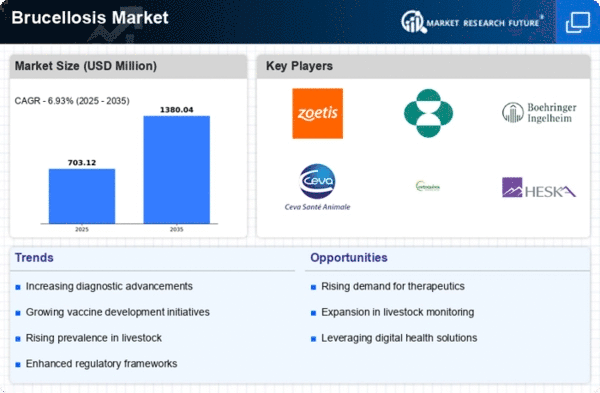
As per MRFR analysis, the Brucellosis Market Size was estimated at 657.55 USD Million in 2024. The Brucellosis industry is projected to grow from 710.65 USD Million in 2025 to 1380.04 USD Million by 2035, exhibiting a compound annual growth rate (CAGR) of 6.93 during the forecast period 2025 - 2035.

Key Market Trends & Highlights

The Brucellosis Market is experiencing notable growth driven by increased awareness and technological advancements.

  • Rising awareness of zoonotic diseases is propelling the demand for brucellosis diagnostics and vaccinations.
  • Advancements in diagnostic technologies are enhancing the accuracy and speed of brucellosis detection, particularly in healthcare facilities.
  • Research and development initiatives are fostering innovation in vaccination programs, especially within veterinary clinics.
  • The increasing incidence of brucellosis and government initiatives are driving market growth, particularly in North America and the Asia-Pacific region.

Market Size & Forecast

2024 Market Size 657.55 (USD Million)
2035 Market Size 1380.04 (USD Million)
CAGR (2025 - 2035) 6.93%
Largest Regional Market Share in 2024 North America

Major Players

Zoetis (US), Merck Animal Health (US), Boehringer Ingelheim (DE), Ceva Santé Animale (FR), Vetoquinol (FR), Heska Corporation (US), Elanco Animal Health (US), Virbac (FR)

Market Trends

The Brucellosis Market is currently experiencing notable developments driven by a combination of factors including rising awareness of zoonotic diseases and advancements in diagnostic technologies. The increasing incidence of brucellosis, particularly in regions with high livestock populations, has prompted governments and health organizations to prioritize control measures. This heightened focus on prevention and treatment is likely to stimulate growth in the market, as stakeholders seek effective solutions to combat this infectious disease. Furthermore, the integration of innovative technologies in diagnostics and therapeutics appears to enhance the overall management of brucellosis, potentially leading to improved patient outcomes and reduced transmission rates. In addition, the Brucellosis Market is influenced by ongoing research initiatives aimed at developing vaccines and novel treatment options. Collaborations between public health entities and private sector organizations may foster a more robust response to the challenges posed by brucellosis. As awareness continues to expand, it seems plausible that investment in research and development will increase, thereby contributing to the market's evolution. Overall, the Brucellosis Market is poised for growth, driven by a multifaceted approach to disease management and prevention, which may ultimately lead to a decline in the prevalence of this condition across affected regions.

Rising Awareness of Zoonotic Diseases

The growing recognition of zoonotic diseases, including brucellosis, is prompting increased public health initiatives. This trend indicates a shift towards proactive measures aimed at preventing transmission from animals to humans, thereby enhancing overall community health.

Advancements in Diagnostic Technologies

Innovations in diagnostic methods are transforming the Brucellosis Market. Enhanced testing capabilities allow for quicker and more accurate identification of infections, which is crucial for effective management and control of the disease.

Research and Development Initiatives

Ongoing research efforts focused on vaccine development and novel treatment strategies are shaping the future of the Brucellosis Market. Collaborative projects between various stakeholders may lead to breakthroughs that significantly impact disease prevention and management.

Brucellosis Market Market Drivers

Rising Incidence of Brucellosis

The increasing incidence of brucellosis globally is a primary driver for the Global Brucellosis Market Industry. In 2024, the estimated market size is 0.09 USD Billion, reflecting heightened awareness and reporting of the disease. Brucellosis Market, primarily affecting livestock, poses significant health risks to humans, particularly in regions with high animal husbandry practices. Countries with endemic brucellosis face economic burdens due to livestock losses and healthcare costs. This situation necessitates improved diagnostic and therapeutic solutions, thereby propelling market growth. As awareness spreads, the demand for effective vaccines and treatments is likely to increase, further stimulating the Global Brucellosis Market Industry.

Government Initiatives and Funding

Government initiatives aimed at controlling and eradicating brucellosis are pivotal for the Global Brucellosis Market Industry. Various countries are implementing vaccination programs and surveillance systems to monitor and reduce the disease's prevalence. Increased funding for research and development of vaccines and treatments is expected to enhance market growth. For instance, public health campaigns focusing on education and prevention strategies are likely to raise awareness among farmers and the general population. This proactive approach not only aims to reduce infection rates but also encourages investment in the development of innovative solutions, thereby fostering a more robust Global Brucellosis Market Industry.

Growing Awareness of Zoonotic Diseases

The rising awareness of zoonotic diseases, including brucellosis, is driving the Global Brucellosis Market Industry. Public health organizations are emphasizing the importance of understanding how diseases can transfer from animals to humans. This awareness is particularly relevant in regions where livestock farming is prevalent. As consumers become more informed about the risks associated with zoonotic infections, there is a growing demand for preventive measures, including vaccination and improved food safety practices. This trend is likely to lead to increased investments in research and development, ultimately contributing to the expansion of the Global Brucellosis Market Industry as stakeholders seek to mitigate risks associated with brucellosis.

Advancements in Diagnostic Technologies

Technological advancements in diagnostic methods are significantly influencing the Global Brucellosis Market Industry. Enhanced diagnostic tools, such as serological tests and molecular techniques, allow for quicker and more accurate detection of brucellosis. This is crucial for managing outbreaks and implementing control measures effectively. As these technologies become more accessible, healthcare providers are likely to adopt them, leading to an increase in reported cases and subsequent demand for treatment options. The integration of these advanced diagnostics into routine veterinary practices may also contribute to the market's growth, as early detection can mitigate the economic impact of the disease on livestock and public health.

Projected Market Growth and Economic Potential

The Global Brucellosis Market Industry is projected to experience substantial growth, with estimates indicating a market size of 0.81 USD Billion by 2035. This growth trajectory, characterized by a compound annual growth rate (CAGR) of 22.62% from 2025 to 2035, suggests a robust demand for brucellosis-related products and services. Factors contributing to this growth include increased investments in vaccine development, enhanced diagnostic capabilities, and rising awareness of the disease's impact on public health. As the market evolves, stakeholders are likely to explore innovative solutions to address the challenges posed by brucellosis, thereby solidifying the industry's position in the global healthcare landscape.

Market Segment Insights

By Application: Diagnosis (Largest) vs. Vaccination (Fastest-Growing)

The application segment of the Brucellosis Market is primarily divided into Diagnosis, Vaccination, Research, and Surveillance. Currently, the Diagnosis segment holds the largest share due to the increasing prevalence of brucellosis and the growing focus on effective detection methods. Vaccination, while smaller in comparison, is rapidly gaining traction as the importance of preventive measures becomes more recognized in combating the disease.

Diagnosis (Dominant) vs. Vaccination (Emerging)

The Diagnosis segment is characterized by innovative techniques and tests for brucellosis detection, including serological tests and molecular methods that have improved accuracy and speed. On the other hand, Vaccination represents an emerging area with a growing pipeline of vaccines aimed at preventing the disease. The increasing investment in research and development, alongside the heightened awareness of zoonotic diseases, is driving growth in the Vaccination segment, making it a pivotal focus for stakeholders in the market.

By End Use: Healthcare Facilities (Largest) vs. Veterinary Clinics (Fastest-Growing)

In the Brucellosis Market, Healthcare Facilities hold the largest market share, driven by their critical role in treating and managing brucellosis cases. These facilities emphasize diagnostics, treatment protocols, and patient management, contributing significantly to their dominance. Veterinary Clinics, on the other hand, are experiencing rapid growth as awareness about brucellosis in livestock increases. With more attention on zoonotic diseases, these clinics are becoming essential in controlling outbreaks and educating pet owners and farmers alike.

Healthcare Facilities (Dominant) vs. Veterinary Clinics (Emerging)

Healthcare Facilities are critical in the Brucellosis Market due to their extensive involvement in diagnosis and treatment protocols for humans affected by the disease. Their established infrastructure and trained medical professionals enable effective management of brucellosis cases, making them the dominant force in the market. Conversely, Veterinary Clinics are an emerging segment, rapidly adapting to the growing concerns about zoonotic diseases. These clinics not only cater to individual and livestock health but also focus on prevention and education. Their proactive approach to brucellosis control is vital as the understanding of its impact on both human and animal health gains traction, positioning them as key players in this evolving landscape.

By Pathogen Type: Brucella melitensis (Largest) vs. Brucella canis (Fastest-Growing)

In the Brucellosis Market, the distribution of market share among the pathogen types shows that Brucella melitensis holds the largest segment, primarily due to its prevalence in human infections and livestock. This pathogen is the most commonly identified species in outbreaks, significantly impacting public health measures and veterinary practices. Meanwhile, Brucella abortus and Brucella suis follow, representing notable segments as well due to their associations with cattle and swine respectively, fostering significant veterinary interventions.

Brucella melitensis (Dominant) vs. Brucella canis (Emerging)

Brucella melitensis is recognized as the dominant pathogen in the Brucellosis Market, largely due to its high transmission rate and capacity to cause severe illness in humans. This pathogen accounts for a significant portion of the market due to its widespread occurrence in sheep and goats, necessitating extensive monitoring and vaccination efforts. On the other hand, Brucella canis is emerging as a fast-growing segment; it is increasingly being recognized for its role in canine infections, leading to significant implications for veterinary health and human infections through zoonotic transmission. This shift is supported by rising awareness and advancements in diagnostic technologies that focus on the canine population.

By Test Type: Serological Tests (Largest) vs. Molecular Tests (Fastest-Growing)

The Brucellosis Market is distinctly characterized by its test types, with serological tests holding the largest market share due to their widespread adoption in diagnosing brucellosis. These tests are favored for their reliability and efficiency in identifying anti-brucella antibodies in patients. In contrast, molecular tests are increasingly gaining traction and represent the fastest-growing segment due to advancements in technology that allow for rapid and accurate detection of Brucella DNA, showcasing a shift in preference towards more precise diagnostic methods. Analyzing growth trends within the 'Test Type' segment reveals significant drivers contributing to the rising adoption of molecular tests. Factors such as the increasing prevalence of brucellosis globally, coupled with rising healthcare investments in diagnostic technologies, are propelling the growth of this segment. The ongoing efforts to improve diagnostic accuracy and reduce testing times are also spurring demand, making molecular tests a key focus for innovation in the market.

Serological Tests (Dominant) vs. Culture Tests (Emerging)

Serological tests remain the dominant choice in the Brucellosis Market due to their extensive use in routine diagnostics across various healthcare settings. These tests are not only cost-effective but also provide rapid results, making them suitable for large-scale screenings. On the other hand, culture tests, while currently positioned as an emerging segment, are vital for confirming brucellosis diagnosis through the isolation of the bacteria from infected tissues or fluids. Although culture tests have a longer turnaround time, their specificity complements serological testing, thus enhancing diagnostic accuracy. As treatment protocols evolve, the integration of these two testing methods is likely to optimize patient outcomes and support public health initiatives aimed at controlling brucellosis.

Get more detailed insights about Brucellosis Market Research Report - Forecast to 2035

Regional Insights

North America : Market Leader in Brucellosis

North America holds a significant position in the Brucellosis market, with a market size of $328.78M in 2025. The region's growth is driven by increasing livestock populations, heightened awareness of animal health, and stringent regulations aimed at controlling zoonotic diseases. The demand for effective vaccines and diagnostics is on the rise, supported by government initiatives to enhance animal health standards and reduce disease prevalence. The competitive landscape in North America is robust, featuring key players such as Zoetis, Merck Animal Health, and Elanco Animal Health. These companies are investing in R&D to innovate and improve treatment options. The U.S. leads the market, followed by Canada, with a strong focus on veterinary healthcare. The presence of established firms and a growing emphasis on animal welfare further solidify North America's market dominance.

Europe : Emerging Market Dynamics

Europe's Brucellosis market is valued at $215.03M in 2025, driven by increasing livestock trade and regulatory frameworks promoting animal health. The European Union has implemented stringent regulations to control Brucellosis, enhancing the demand for effective vaccines and diagnostic tools. The focus on sustainable farming practices and animal welfare is also propelling market growth, as consumers demand higher standards in food safety and quality. Leading countries in this region include Germany, France, and the UK, where companies like Boehringer Ingelheim and Ceva Santé Animale are prominent. The competitive landscape is characterized by innovation and collaboration among key players to develop advanced veterinary solutions. The European market is witnessing a shift towards preventive healthcare, with an emphasis on vaccination programs and disease management strategies.

Asia-Pacific : Growing Awareness and Demand

The Asia-Pacific region, with a market size of $85.15M in 2025, is witnessing a surge in demand for Brucellosis management solutions. Factors such as increasing livestock farming, rising awareness of animal health, and government initiatives to combat zoonotic diseases are driving market growth. Countries like India and China are focusing on improving veterinary healthcare standards, which is expected to boost the demand for vaccines and diagnostics in the coming years. The competitive landscape is evolving, with both local and international players entering the market. Companies like Virbac and Heska Corporation are expanding their presence in this region. The growing emphasis on food safety and quality assurance is prompting investments in veterinary health, making Asia-Pacific a promising market for Brucellosis solutions.

Middle East and Africa : Untapped Market Potential

The Middle East and Africa region, with a market size of $28.59M in 2025, presents significant growth potential in the Brucellosis market. The increasing prevalence of livestock diseases and the need for effective management solutions are driving demand. Government initiatives aimed at improving animal health and food safety standards are also contributing to market growth. The region is gradually recognizing the importance of veterinary healthcare, leading to increased investments in disease control measures. Countries like South Africa and Kenya are at the forefront of this market, with local players and international companies exploring opportunities. The competitive landscape is characterized by a mix of established firms and emerging players, focusing on innovative solutions to address Brucellosis. The region's untapped potential makes it an attractive area for investment and development in veterinary health solutions.

Key Players and Competitive Insights

The Brucellosis Market is characterized by a competitive landscape that is increasingly shaped by innovation, strategic partnerships, and regional expansions. Key players such as Zoetis (US), Merck Animal Health (US), and Boehringer Ingelheim (DE) are actively pursuing strategies that enhance their market positioning. For instance, Zoetis (US) has focused on developing advanced diagnostic tools and vaccines, which are critical in managing brucellosis outbreaks. Meanwhile, Merck Animal Health (US) emphasizes a robust portfolio of vaccines and therapeutics, aiming to leverage its research capabilities to address emerging challenges in animal health. Boehringer Ingelheim (DE) appears to be concentrating on strategic acquisitions to bolster its product offerings, thereby enhancing its competitive edge in the market.The business tactics employed by these companies reflect a trend towards localizing manufacturing and optimizing supply chains to meet regional demands effectively. The market structure is moderately fragmented, with several players vying for market share, yet the collective influence of these key companies is substantial. Their strategies not only enhance their individual market positions but also contribute to a more dynamic competitive environment, where innovation and responsiveness to market needs are paramount.

In November Zoetis (US) announced the launch of a new vaccine specifically targeting brucellosis in cattle, which is expected to significantly reduce infection rates in livestock. This strategic move underscores the company's commitment to innovation and its proactive approach to addressing the challenges posed by brucellosis. The introduction of this vaccine could potentially reshape vaccination protocols and improve herd health, thereby enhancing productivity in the agricultural sector.

In October Merck Animal Health (US) expanded its distribution network in Latin America, aiming to increase access to its brucellosis vaccine. This expansion is strategically important as it allows Merck to tap into emerging markets where brucellosis remains a significant concern. By enhancing its presence in these regions, the company is likely to strengthen its market share and foster long-term relationships with local veterinarians and farmers.

In September Boehringer Ingelheim (DE) completed the acquisition of a biotechnology firm specializing in animal health diagnostics. This acquisition is indicative of the company's strategy to integrate advanced diagnostic capabilities into its existing product line, thereby providing comprehensive solutions for brucellosis management. The integration of these technologies may enhance the company's competitive positioning by offering veterinarians and farmers more effective tools for disease prevention and management.

As of December the competitive trends in the Brucellosis Market are increasingly influenced by digitalization, sustainability, and the integration of artificial intelligence (AI) in diagnostics and treatment protocols. Strategic alliances among key players are shaping the landscape, fostering innovation and collaboration. The shift from price-based competition to a focus on technological advancements and supply chain reliability is evident. Companies that prioritize innovation and adaptability are likely to emerge as leaders in this evolving market.

Key Companies in the Brucellosis Market include

Industry Developments

Future Outlook

Brucellosis Market Future Outlook

The Brucellosis Market is projected to grow at a 6.93% CAGR from 2025 to 2035, driven by increased awareness, advancements in diagnostics, and rising livestock health concerns.

New opportunities lie in:

  • Development of rapid diagnostic kits for field use
  • Expansion of telemedicine services for remote consultations
  • Investment in vaccine research for livestock and wildlife

By 2035, the Brucellosis Market is expected to achieve substantial growth and enhanced global health initiatives.

Market Segmentation

Brucellosis Market End Use Outlook

  • Healthcare Facilities
  • Research Laboratories
  • Veterinary Clinics
  • Pharmaceutical Companies

Brucellosis Market Test Type Outlook

  • Serological Tests
  • Molecular Tests
  • Culture Tests
  • Skin Tests

Brucellosis Market Application Outlook

  • Diagnosis
  • Vaccination
  • Research
  • Surveillance

Brucellosis Market Pathogen Type Outlook

  • Brucella abortus
  • Brucella melitensis
  • Brucella suis
  • Brucella canis

Report Scope

MARKET SIZE 2024657.55(USD Million)
MARKET SIZE 2025710.65(USD Million)
MARKET SIZE 20351380.04(USD Million)
COMPOUND ANNUAL GROWTH RATE (CAGR)6.93% (2025 - 2035)
REPORT COVERAGERevenue Forecast, Competitive Landscape, Growth Factors, and Trends
BASE YEAR2024
Market Forecast Period2025 - 2035
Historical Data2019 - 2024
Market Forecast UnitsUSD Million
Key Companies ProfiledZoetis (US), Merck Animal Health (US), Boehringer Ingelheim (DE), Ceva Santé Animale (FR), Vetoquinol (FR), Heska Corporation (US), Elanco Animal Health (US), Virbac (FR)
Segments CoveredApplication, End Use, Pathogen Type, Test Type
Key Market OpportunitiesAdvancements in diagnostic technologies enhance early detection and treatment options in the Brucellosis Market.
Key Market DynamicsRising regulatory scrutiny and advancements in diagnostics are reshaping the competitive landscape of the Brucellosis Market.
Countries CoveredNorth America, Europe, APAC, South America, MEA

FAQs

At what CAGR is the brucellosis market projected to grow in the forecast period (2022-2030)?

brucellosiss market is projected to grow at approximately 8.9% CAGR during the assessment period (2023-2032).

What are the major tailwinds pushing the growth of the brucellosis market?

Favorable government policies for R&D required to discover breakthrough therapeutics and the presence of a large number of players, are major tailwinds pushing the growth of the global brucellosiss market.

What are the key growth impeders of the brucellosis market?

The lack of knowledge about the availability of treatments is a major growth impeder for the global brucellosiss market.

Which region holds the largest share in the brucellosis market?

Europe holds the largest share in the global brucellosiss market, followed by North America and the Asia Pacific, respectively.

Who are the top players in the brucellosis market?

Hester Biosciences Limited, Biogénesis-Bagó S.A., ATA FEN Inc., Biopharma, Merck Animal Health (MSD Animal Health), Biovet, Calier & Biologicos Laverlam, Colorado Serum Company, Dollvet, Indian Immunologicals Limited, Veterinary Technologies Corporation, LABIOFAM, China Animal Husbandry Co., Ltd. (CAHIC), and BCG Vaccine Laboratory, are some of the top players operating in the global brucellosiss market.

  1. SECTION I: EXECUTIVE SUMMARY AND KEY HIGHLIGHTS
    1. | 1.1 EXECUTIVE SUMMARY
  2. SECTION II: SCOPING, METHODOLOGY AND MARKET STRUCTURE
    1. | 2.1 MARKET INTRODUCTION
    2. | 2.2 RESEARCH METHODOLOGY
  3. SECTION III: QUALITATIVE ANALYSIS
    1. | 3.1 MARKET DYNAMICS
    2. | 3.2 MARKET FACTOR ANALYSIS
  4. SECTION IV: QUANTITATIVE ANALYSIS
    1. | 4.1 Healthcare, BY Application (USD Million)
    2. | 4.2 Healthcare, BY End Use (USD Million)
    3. | 4.3 Healthcare, BY Pathogen Type (USD Million)
    4. | 4.4 Healthcare, BY Test Type (USD Million)
    5. | 4.5 Healthcare, BY Region (USD Million)
  5. SECTION V: COMPETITIVE ANALYSIS
    1. | 5.1 Competitive Landscape
    2. | 5.2 Company Profiles
    3. | 5.3 Appendix

Brucellosis Market Segmentation

Market Segmentation Overview

  • Detailed segmentation data will be available in the full report
  • Comprehensive analysis by multiple parameters
  • Regional and country-level breakdowns
  • Market size forecasts by segment
Infographic

Free Sample Request

Kindly complete the form below to receive a free sample of this Report

Get Free Sample

Customer Strories

Compare Licence

×
Features License Type
Single User Multiuser License Enterprise User
Price $4,950 $5,950 $7,250
Maximum User Access Limit 1 User Upto 10 Users Unrestricted Access Throughout the Organization
Free Customization
Direct Access to Analyst
Deliverable Format
Platform Access
Discount on Next Purchase 10% 15% 15%
Printable Versions