×
Request Free Sample ×

Kindly complete the form below to receive a free sample of this Report

* Please use a valid business email

Leading companies partner with us for data-driven Insights

clients tt-cursor
Hero Background
English
Chinese
French
Japanese
Korean
German
Spanish

Americas Interventional Radiology Market Share

ID: MRFR/MED/0409-HCR
117 Pages
Rahul Gotadki
February 2026

Americas Interventional Radiology Market Research Report Information: by Type (MRI, Ultrasound imaging, CT scan, angiography), by Procedure (diagnostic, therapeutic), by Application (cardiology, oncology, urology & nephrology), by End User (hospitals, catheterization labs, and ambulatory surgical centers) - Growth & Industry Forecast 2025 To 2035

Share:
Download PDF ×

We do not share your information with anyone. However, we may send you emails based on your report interest from time to time. You may contact us at any time to opt-out.

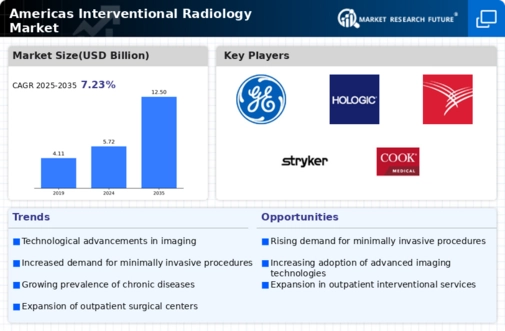
Americas Interventional Radiology Market Infographic
Purchase Options

Market Share

Americas Interventional Radiology Market Share Analysis

Market share situating is a vital key thought for organizations working in the Interventional Radiology area. It includes the conscious endeavors to get a huge part of the market, exhibiting an organization's solidarity and impact inside the business. One of the essential procedures utilized by organizations in the Americas Interventional Radiology market is the consistent turn of events and joining of imaginative advances. Firms endeavor to improve their item portfolios, offering state of the art tools and arrangements that address advancing medical services needs. By remaining at the front line of mechanical improvements, organizations mean to catch a bigger market share. To reinforce their market presence, organizations embrace an essential way to deal with geological development. By focusing in on explicit regions inside the Americas, organizations tailor their mediations to fulfill the novel needs and inclinations of nearby markets, subsequently cementing their condition and acquiring an upper hand. Educating medical services experts and bringing issues to light among end-clients are essential parts of market share situating. Organizations take part in exhaustive instructive projects to exhibit the advantages of their Interventional Radiology items. This proactive methodology assists work with trusting and validity, prompting an expanded market share. Evaluating procedures assume a vital part in market share elements. Organizations cautiously examine market patterns and contender evaluating to lay out aggressive yet productive valuing structures. By offering value for cash, organizations can draw in a more extensive client base and gain a bigger market share. The obligation to progressing innovative work is a sign of productive organizations in the Americas Interventional Radiology market. By remaining in front of arising patterns and persistently further developing their item contributions, organizations position themselves as industry pioneers, drawing in clients and getting a critical market share.

Author
Rahul Gotadki
Research Manager

He holds an experience of about 9+ years in Market Research and Business Consulting, working under the spectrum of Life Sciences and Healthcare domains. Rahul conceptualizes and implements a scalable business strategy and provides strategic leadership to the clients. His expertise lies in market estimation, competitive intelligence, pipeline analysis, customer assessment, etc.

Leave a Comment

FAQs

What is the projected market valuation of the North America Interventional Radiology Products Market by 2035?

The market is projected to reach a valuation of 17.44 USD Billion by 2035.

What was the market valuation of the North America Interventional Radiology Products Market in 2024?

The market valuation was 9.92 USD Billion in 2024.

What is the expected CAGR for the North America Interventional Radiology Products Market during the forecast period 2025 - 2035?

The expected CAGR for the market during this period is 5.26%.

Which application segment is projected to have the highest growth in the North America Interventional Radiology Products Market?

The Oncology segment is projected to grow from 2.5 USD Billion in 2024 to 4.4 USD Billion by 2035.

What are the key product types in the North America Interventional Radiology Products Market?

Key product types include Catheters, Guidewires, Embolization Devices, Ablation Devices, and Stents.

Which end user segment is expected to dominate the North America Interventional Radiology Products Market by 2035?

Hospitals are expected to dominate, growing from 3.96 USD Billion in 2024 to 6.93 USD Billion by 2035.

What is the projected growth for the Ablation procedure type in the North America Interventional Radiology Products Market?

The Ablation procedure type is projected to grow from 2.48 USD Billion in 2024 to 4.34 USD Billion by 2035.

Who are the leading companies in the North America Interventional Radiology Products Market?

Key players include Medtronic, Boston Scientific, Johnson & Johnson, Siemens Healthineers, and Bayer.

What technology segment is anticipated to see substantial growth in the North America Interventional Radiology Products Market?

CT Imaging is anticipated to grow from 2.5 USD Billion in 2024 to 4.0 USD Billion by 2035.

How does the North America Interventional Radiology Products Market compare to other regions?

While specific regional comparisons are not provided, the North America market is characterized by robust growth and significant investments from leading companies.

Market Summary

As per analysis, the North America Interventional Radiology Products Market is projected to grow from USD 9.92 Billion in 2024 to USD 17.44 Billion by 2035, exhibiting a compound annual growth rate (CAGR) of 5.26% during the forecast period (2025 - 2035).

Key Market Trends & Highlights

The North America Interventional Radiology Products Market is poised for substantial growth driven by technological advancements and increasing demand for minimally invasive procedures.

  • Technological advancements are enhancing the efficacy and safety of interventional radiology procedures across North America.
  • The US remains the largest market, while Canada is emerging as the fastest-growing region in this sector.
  • Oncology continues to dominate the market, whereas urology is witnessing the fastest growth among interventional radiology segments.
  • Rising prevalence of chronic diseases and increased investment in healthcare infrastructure are key drivers propelling market expansion.

Market Size & Forecast

2024 Market Size 9.92 (USD Billion)
2035 Market Size 17.44 (USD Billion)
CAGR (2025 - 2035) 5.26%

Major Players

<p>Medtronic (US), Boston Scientific (US), Johnson & Johnson (US), Siemens Healthineers (DE), Bayer (DE), Cook Medical (US), Terumo Corporation (JP), Philips (NL), Stryker Corporation (US)</p>

Market Trends

The North America Interventional Radiology Products Market is currently experiencing a dynamic evolution, driven by advancements in technology and an increasing demand for minimally invasive procedures. The integration of innovative imaging techniques and the development of sophisticated devices are enhancing the capabilities of interventional radiologists. This market is characterized by a growing emphasis on patient safety and comfort, which is prompting healthcare providers to adopt cutting-edge solutions that facilitate quicker recovery times and reduced hospital stays. Furthermore, the rising prevalence of chronic diseases necessitates the use of interventional radiology, as it offers effective treatment options that are less traumatic compared to traditional surgical methods. In addition, regulatory bodies in North America are actively promoting the adoption of interventional radiology products through streamlined approval processes and guidelines that ensure safety and efficacy. This supportive environment is likely to encourage further investment in research and development, fostering innovation within the sector. As healthcare systems continue to prioritize cost-effective solutions, the North America Interventional Radiology Products Market appears poised for sustained growth. The interplay of technological advancements, regulatory support, and evolving patient needs suggests a promising future for this market, with potential expansions in product offerings and applications across various medical specialties.

Technological Advancements

The North America Interventional Radiology Products Market is witnessing rapid technological advancements that enhance procedural efficiency and patient outcomes. Innovations in imaging modalities, such as real-time ultrasound and advanced CT imaging, are improving the precision of interventions. Additionally, the development of new materials and designs for catheters and stents is likely to reduce complications and improve the overall effectiveness of treatments.

Increased Demand for Minimally Invasive Procedures

There is a notable increase in the demand for minimally invasive procedures within the North America Interventional Radiology Products Market. Patients and healthcare providers are increasingly favoring these techniques due to their associated benefits, including shorter recovery times and reduced postoperative pain. This trend is driving the adoption of interventional radiology products, as they align with the growing preference for less invasive treatment options.

Regulatory Support and Innovation

Regulatory bodies in North America are providing robust support for the interventional radiology sector, facilitating innovation and the introduction of new products. Streamlined approval processes and updated guidelines are encouraging manufacturers to invest in research and development. This regulatory environment is likely to foster a culture of innovation, leading to the emergence of advanced interventional radiology products that meet evolving healthcare needs.

Americas Interventional Radiology Market Market Drivers

Rising Prevalence of Chronic Diseases

The North America Interventional Radiology Products Market is experiencing growth due to the increasing prevalence of chronic diseases such as cardiovascular disorders, cancer, and diabetes. According to the Centers for Disease Control and Prevention, chronic diseases account for approximately 70% of all deaths in the United States. This alarming statistic drives the demand for advanced interventional radiology procedures, which are often less invasive and more effective than traditional surgical methods. As healthcare providers seek to improve patient outcomes, the adoption of interventional radiology products is likely to rise. Furthermore, the aging population in North America, which is more susceptible to these diseases, further fuels the market. The combination of these factors suggests a robust growth trajectory for the North America Interventional Radiology Products Market.

Growing Preference for Outpatient Procedures

The North America Interventional Radiology Products Market is witnessing a shift towards outpatient procedures, driven by patient preferences and healthcare cost considerations. Patients increasingly favor minimally invasive procedures that allow for quicker recovery times and reduced hospital stays. According to a report from the American College of Radiology, outpatient interventional radiology procedures have seen a significant rise, with many patients opting for these alternatives to traditional surgeries. This trend not only enhances patient satisfaction but also reduces healthcare costs, making it an attractive option for providers. As more healthcare facilities adopt outpatient models, the demand for interventional radiology products is likely to grow. This shift towards outpatient care is indicative of a broader transformation in the North America Interventional Radiology Products Market, emphasizing efficiency and patient-centered care.

Regulatory Support for Innovative Treatments

Regulatory support for innovative treatments is a key driver of the North America Interventional Radiology Products Market. Agencies such as the Food and Drug Administration (FDA) are actively promoting the development and approval of new interventional radiology products that demonstrate safety and efficacy. The FDA's expedited review processes for breakthrough devices facilitate quicker access to advanced technologies for healthcare providers and patients. This regulatory environment encourages innovation and investment in the interventional radiology sector, as companies are more likely to pursue research and development of novel products. As regulatory frameworks continue to evolve in favor of innovation, the North America Interventional Radiology Products Market is poised for growth, with an increasing array of products entering the market to meet the demands of healthcare providers.

Technological Innovations in Imaging Techniques

Technological advancements in imaging techniques are significantly influencing the North America Interventional Radiology Products Market. Innovations such as 3D imaging, MRI-guided interventions, and advanced ultrasound technologies enhance the precision and effectiveness of interventional procedures. These technologies not only improve diagnostic accuracy but also facilitate real-time monitoring during procedures, thereby reducing complications and enhancing patient safety. The integration of artificial intelligence in imaging is also emerging, potentially streamlining workflows and improving decision-making processes for healthcare professionals. As hospitals and clinics invest in state-of-the-art imaging technologies, the demand for interventional radiology products is expected to increase. This trend indicates a promising future for the North America Interventional Radiology Products Market, as healthcare providers strive to adopt the latest innovations to improve patient care.

Increased Investment in Healthcare Infrastructure

The North America Interventional Radiology Products Market is benefiting from increased investment in healthcare infrastructure. Governments and private entities are allocating substantial funds to enhance healthcare facilities, particularly in the realm of advanced medical technologies. This investment is crucial for the development and expansion of interventional radiology services, as it enables hospitals to acquire the latest equipment and technologies necessary for effective patient care. For instance, the U.S. government has implemented various initiatives aimed at improving healthcare access and quality, which indirectly supports the growth of interventional radiology. As healthcare infrastructure continues to evolve, the demand for interventional radiology products is expected to rise, reflecting the industry's adaptability to changing healthcare landscapes. This trend underscores the potential for sustained growth within the North America Interventional Radiology Products Market.


Market Segment Insights

By Application: Oncology (Largest) vs. Urology (Fastest-Growing)

<p>In the North America Interventional Radiology Products Market, Oncology emerges as the dominant segment, holding a significant share due to the rising prevalence of cancer and the increasing adoption of minimally invasive procedures. Urology closely follows, witnessing rapid growth as advancements in technology and an aging population drive demand for interventional radiology solutions in urinary issues. As healthcare providers focus on improving patient outcomes, these segments are expected to shape the market dynamics significantly.</p>

<p>Oncology: Dominant vs. Urology: Emerging</p>

<p>Oncology, as the dominant segment, leverages sophisticated imaging techniques, allowing for precise tumor targeting and enhanced treatment efficacy. This segment benefits from the increasing number of cancer cases and escalating awareness regarding early diagnosis. Urology represents an emerging segment, fueled by technological innovations that enable less invasive procedures, thereby improving patient comfort and recovery times. The growing incidence of urological disorders, coupled with robust research and development efforts, positions Urology for substantial growth and increased market penetration, benefiting from the cross-specialty application of interventional radiology.</p>

By Product Type: Catheters (Largest) vs. Guidewires (Fastest-Growing)

<p>In the North America Interventional Radiology Products Market, catheters hold the largest market share among product types, significantly influencing procedural outcomes and patient care. Following catheters, guidewires are gaining traction based on their essential role in successfully navigating complex vascular pathways during minimally invasive procedures. Other product types, such as embolization devices, ablation devices, and stents, also play crucial roles but are generally smaller in terms of market share.</p>

<p>Catheters (Dominant) vs. Guidewires (Emerging)</p>

<p>Catheters dominate the North America Interventional Radiology Products Market due to their extensive application in diagnostic and therapeutic procedures. They are engineered for optimal flexibility and maneuverability, enabling clinicians to achieve precise placements in challenging anatomies. Meanwhile, guidewires, considered an emerging product, are experiencing rapid growth as they are pivotal in various interventional techniques, particularly in enhancing the access and delivery of other devices. The evolution in design and materials, along with advancements in imaging techniques, is significantly boosting their adoption rates.</p>

By End User: Hospitals (Largest) vs. Ambulatory Surgical Centers (Fastest-Growing)

<p>In the North America Interventional Radiology Products Market, hospitals hold the largest share, benefiting from extensive patient throughput and comprehensive medical services. This segment is bolstered by sophisticated infrastructure and a wide range of interventional procedures. In contrast, ambulatory surgical centers are rapidly gaining ground, responding to the increasing demand for outpatient services and cost-effective procedures.</p>

<p>Hospitals (Dominant) vs. Ambulatory Surgical Centers (Emerging)</p>

<p>The hospitals segment is characterized by a well-established infrastructure, facilitating advanced interventional radiology procedures with a broad array of technologies. Their dominance is attributed to higher patient volumes and access to a variety of specialists. On the other hand, ambulatory surgical centers are emerging as significant players, driven by the trend towards outpatient care. These centers focus on specific procedures and provide patients with a streamlined experience, leading to shorter recovery times and reduced healthcare costs. This growth reflects changing patient preferences towards less invasive procedures and better healthcare efficiency.</p>

By Procedure Type: Ablation (Largest) vs. Embolization (Fastest-Growing)

<p>In the North America Interventional Radiology Products Market, the distribution of procedure types showcases a diverse landscape. Ablation leads as the largest segment, driven by increasing adoption in cancer treatment and various cardiovascular conditions. Following closely are biopsy and vascular intervention segments, representing significant shares due to their routine applications in diagnostic procedures and vascular disease management. Drainage and embolization, while not as dominant, contribute notably to the overall market dynamics. The growth trends reveal that embolization is the fastest-growing procedure type, spurred by advancements in technology and increased procedural volume. Factors such as the rising prevalence of liver and kidney diseases, along with greater awareness and diagnosis capabilities for cancer, encourage a shift towards minimally invasive techniques, positioning embolization for rapid growth. Overall, the interplay among these procedure types illustrates a robust and evolving market landscape focused on enhanced patient care.</p>

<p>Ablation (Dominant) vs. Embolization (Emerging)</p>

<p>Ablation stands out as the dominant procedure type in the North America Interventional Radiology Products Market, primarily due to its established role in treating tumors and cardiovascular issues. This segment benefits from extensive clinical support and robust technology, making it a preferred choice among healthcare professionals. Meanwhile, embolization is emerging rapidly, characterized by innovative techniques and the ability to treat a wide range of conditions effectively. This segment is gaining traction with advancements in catheter technologies and an increasing number of clinical applications. The growing demand for minimally invasive surgery underscores embolization's potential to reshape interventional radiology, complementing the long-standing prominence of ablation in the healthcare sector.</p>

By Technology: Fluoroscopy (Largest) vs. Ultrasound (Fastest-Growing)

<p>In the North America Interventional Radiology Products Market, Fluoroscopy currently holds the largest market share among the various technologies employed in this field. Following closely, Ultrasound is gaining significant traction as a preferred imaging modality, particularly in outpatient settings and in patient-friendly environments. Other technologies like CT and MRI imaging continue to contribute to overall market dynamics but don't match the leading positions of Fluoroscopy and Ultrasound. Market trends indicate a growing preference for less invasive techniques, which is driving the uptake of imaging technologies such as Ultrasound. Factors such as technological advancements, improved imaging quality, and an increase in the prevalence of chronic diseases bolster the expansion of this segment. Additionally, the rising focus on patient safety and lower radiation exposure further favor the growth of these modalities in interventional radiology.</p>

<p>Fluoroscopy: Dominant vs. Ultrasound: Emerging</p>

<p>Fluoroscopy remains the dominant technology in the North America Interventional Radiology Products Market due to its ability to provide real-time imaging, which is crucial for various interventional procedures. It allows for the visualization of internal structures during minimally invasive surgeries, making it indispensable in clinical practices. Conversely, Ultrasound is emerging as a preferred alternative, especially in non-invasive settings, as it offers enhanced safety and greater patient comfort. The technology has seen rapid advancements, leading to better image clarity and diagnostic capabilities. Consequently, while Fluoroscopy is established in interventional use, Ultrasound is carving out a valuable position, particularly in early diagnosis and routine check-ups.</p>

Get more detailed insights about Americas Interventional Radiology Market Research Report - Forecast to 2035

Regional Insights

US : Innovative Technologies Drive Growth

The US holds a commanding market share of 8.12% in the Interventional Radiology Products Market, valued at approximately $8 billion. Key growth drivers include advancements in minimally invasive procedures, increasing prevalence of chronic diseases, and a robust healthcare infrastructure. Regulatory support from agencies like the FDA and government initiatives aimed at improving healthcare access further bolster demand. The rise in outpatient procedures and technological innovations are shaping consumption patterns favorably.

Canada : Regulatory Support Fuels Development

Canada's Interventional Radiology Products Market accounts for 1.8% of the North American share, valued at around $1.8 billion. Growth is driven by increasing investments in healthcare technology, a rising aging population, and supportive regulatory frameworks. The Canadian government is actively promoting healthcare innovation, which is reflected in the growing demand for advanced radiology products. Infrastructure improvements in urban centers are also enhancing service delivery.

Key Players and Competitive Insights

The Interventional Radiology Products Market in North America is characterized by a dynamic competitive landscape, driven by technological advancements, increasing demand for minimally invasive procedures, and a growing aging population. Key players such as Medtronic (US), Boston Scientific (US), and Johnson & Johnson (US) are strategically positioned to leverage innovation and expand their market presence. Medtronic (US) focuses on enhancing its product portfolio through continuous research and development, while Boston Scientific (US) emphasizes strategic partnerships to bolster its technological capabilities. Johnson & Johnson (US) adopts a multifaceted approach, integrating digital transformation into its operations to improve patient outcomes and streamline processes. Collectively, these strategies contribute to a competitive environment that is increasingly focused on innovation and patient-centric solutions.

In terms of business tactics, companies are localizing manufacturing and optimizing supply chains to enhance efficiency and reduce costs. The market structure appears moderately fragmented, with several key players exerting influence over various segments. This fragmentation allows for a diverse range of products and services, catering to the specific needs of healthcare providers and patients alike. The collective influence of these companies shapes the market dynamics, fostering an environment where innovation and quality are paramount.

In December 2025, Medtronic (US) announced the launch of its latest imaging technology designed to improve the accuracy of interventional procedures. This strategic move is significant as it not only enhances Medtronic's product offerings but also positions the company as a leader in the integration of advanced imaging solutions within interventional radiology. Such innovations are likely to attract healthcare providers seeking to improve procedural outcomes.

In November 2025, Boston Scientific (US) entered into a partnership with a leading AI technology firm to develop predictive analytics tools for interventional radiology. This collaboration is indicative of the growing trend towards digitalization in healthcare, suggesting that Boston Scientific is keen on harnessing AI to enhance decision-making processes in clinical settings. The implications of this partnership could lead to improved patient management and operational efficiencies.

In October 2025, Johnson & Johnson (US) expanded its product line by acquiring a smaller firm specializing in advanced catheter technologies. This acquisition is strategically important as it not only diversifies Johnson & Johnson's offerings but also strengthens its competitive position in the market. The integration of these advanced technologies is expected to enhance the company's capabilities in delivering innovative solutions to healthcare providers.

As of January 2026, current competitive trends in the Interventional Radiology Products Market are increasingly defined by digitalization, sustainability, and the integration of AI technologies. Strategic alliances are becoming more prevalent, enabling companies to pool resources and expertise to drive innovation. Looking ahead, competitive differentiation is likely to evolve, shifting from price-based competition to a focus on technological advancements, innovation, and supply chain reliability. This transition underscores the importance of delivering high-quality, efficient solutions that meet the evolving needs of the healthcare sector.

Key Companies in the Americas Interventional Radiology Market include

Industry Developments

Future Outlook

Americas Interventional Radiology Market Future Outlook

The North America Interventional Radiology Products Market is projected to grow at a 5.26% CAGR from 2025 to 2035, driven by technological advancements, increasing prevalence of chronic diseases, and rising demand for minimally invasive procedures.

New opportunities lie in:

  • Development of AI-driven imaging solutions for enhanced diagnostic accuracy.
  • Expansion of telehealth services for remote interventional radiology consultations.
  • Investment in biodegradable stents to meet sustainability goals in healthcare.

By 2035, the market is expected to achieve robust growth, positioning itself as a leader in innovative healthcare solutions.

Market Segmentation

Americas Interventional Radiology Market End User Outlook

  • Hospitals
  • Ambulatory Surgical Centers
  • Diagnostic Imaging Centers
  • Specialty Clinics

Americas Interventional Radiology Market Technology Outlook

  • Fluoroscopy
  • Ultrasound
  • CT Imaging
  • MRI Imaging
  • Radiofrequency Ablation

Americas Interventional Radiology Market Application Outlook

  • Oncology
  • Urology
  • Gastroenterology
  • Cardiology
  • Pulmonology

Americas Interventional Radiology Market Product Type Outlook

  • Catheters
  • Guidewires
  • Embolization Devices
  • Ablation Devices
  • Stents

Americas Interventional Radiology Market Procedure Type Outlook

  • Biopsy
  • Drainage
  • Ablation
  • Embolization
  • Vascular Intervention

Report Scope

MARKET SIZE 2024 9.92(USD Billion)
MARKET SIZE 2025 10.5(USD Billion)
MARKET SIZE 2035 17.44(USD Billion)
COMPOUND ANNUAL GROWTH RATE (CAGR) 5.26% (2024 - 2035)
REPORT COVERAGE Revenue Forecast, Competitive Landscape, Growth Factors, and Trends
BASE YEAR 2024
Market Forecast Period 2025 - 2035
Historical Data 2019 - 2024
Market Forecast Units USD Billion
Key Companies Profiled Medtronic (US), Boston Scientific (US), Johnson & Johnson (US), Siemens Healthineers (DE), Bayer (DE), Cook Medical (US), Terumo Corporation (JP), Philips (NL), Stryker Corporation (US)
Segments Covered Application, Product Type, End User, Procedure Type, Technology
Key Market Opportunities Advancements in minimally invasive techniques drive growth in the North America Interventional Radiology Products Market.

Key Market Dynamics Technological advancements and regulatory changes drive growth in North America's Interventional Radiology Products Market.
Countries Covered US, Canada

FAQs

What is the projected market valuation of the North America Interventional Radiology Products Market by 2035?

The market is projected to reach a valuation of 17.44 USD Billion by 2035.

What was the market valuation of the North America Interventional Radiology Products Market in 2024?

The market valuation was 9.92 USD Billion in 2024.

What is the expected CAGR for the North America Interventional Radiology Products Market during the forecast period 2025 - 2035?

The expected CAGR for the market during this period is 5.26%.

Which application segment is projected to have the highest growth in the North America Interventional Radiology Products Market?

The Oncology segment is projected to grow from 2.5 USD Billion in 2024 to 4.4 USD Billion by 2035.

What are the key product types in the North America Interventional Radiology Products Market?

Key product types include Catheters, Guidewires, Embolization Devices, Ablation Devices, and Stents.

Which end user segment is expected to dominate the North America Interventional Radiology Products Market by 2035?

Hospitals are expected to dominate, growing from 3.96 USD Billion in 2024 to 6.93 USD Billion by 2035.

What is the projected growth for the Ablation procedure type in the North America Interventional Radiology Products Market?

The Ablation procedure type is projected to grow from 2.48 USD Billion in 2024 to 4.34 USD Billion by 2035.

Who are the leading companies in the North America Interventional Radiology Products Market?

Key players include Medtronic, Boston Scientific, Johnson &amp; Johnson, Siemens Healthineers, and Bayer.

What technology segment is anticipated to see substantial growth in the North America Interventional Radiology Products Market?

CT Imaging is anticipated to grow from 2.5 USD Billion in 2024 to 4.0 USD Billion by 2035.

How does the North America Interventional Radiology Products Market compare to other regions?

While specific regional comparisons are not provided, the North America market is characterized by robust growth and significant investments from leading companies.

  1. SECTION I: EXECUTIVE SUMMARY AND KEY HIGHLIGHTS
    1. | 1.1 EXECUTIVE SUMMARY
    2. | | 1.1.1 Market Overview
    3. | | 1.1.2 Key Findings
    4. | | 1.1.3 Market Segmentation
    5. | | 1.1.4 Competitive Landscape
    6. | | 1.1.5 Challenges and Opportunities
    7. | | 1.1.6 Future Outlook
  2. SECTION II: SCOPING, METHODOLOGY AND MARKET STRUCTURE
    1. | 2.1 MARKET INTRODUCTION
    2. | | 2.1.1 Definition
    3. | | 2.1.2 Scope of the study
    4. | | | 2.1.2.1 Research Objective
    5. | | | 2.1.2.2 Assumption
    6. | | | 2.1.2.3 Limitations
    7. | 2.2 RESEARCH METHODOLOGY
    8. | | 2.2.1 Overview
    9. | | 2.2.2 Data Mining
    10. | | 2.2.3 Secondary Research
    11. | | 2.2.4 Primary Research
    12. | | | 2.2.4.1 Primary Interviews and Information Gathering Process
    13. | | | 2.2.4.2 Breakdown of Primary Respondents
    14. | | 2.2.5 Forecasting Model
    15. | | 2.2.6 Market Size Estimation
    16. | | | 2.2.6.1 Bottom-Up Approach
    17. | | | 2.2.6.2 Top-Down Approach
    18. | | 2.2.7 Data Triangulation
    19. | | 2.2.8 Validation
  3. SECTION III: QUALITATIVE ANALYSIS
    1. | 3.1 MARKET DYNAMICS
    2. | | 3.1.1 Overview
    3. | | 3.1.2 Drivers
    4. | | 3.1.3 Restraints
    5. | | 3.1.4 Opportunities
    6. | 3.2 MARKET FACTOR ANALYSIS
    7. | | 3.2.1 Value chain Analysis
    8. | | 3.2.2 Porter's Five Forces Analysis
    9. | | | 3.2.2.1 Bargaining Power of Suppliers
    10. | | | 3.2.2.2 Bargaining Power of Buyers
    11. | | | 3.2.2.3 Threat of New Entrants
    12. | | | 3.2.2.4 Threat of Substitutes
    13. | | | 3.2.2.5 Intensity of Rivalry
    14. | | 3.2.3 COVID-19 Impact Analysis
    15. | | | 3.2.3.1 Market Impact Analysis
    16. | | | 3.2.3.2 Regional Impact
    17. | | | 3.2.3.3 Opportunity and Threat Analysis
  4. SECTION IV: QUANTITATIVE ANALYSIS
    1. | 4.1 Healthcare, BY Application (USD Billion)
    2. | | 4.1.1 Oncology
    3. | | 4.1.2 Urology
    4. | | 4.1.3 Gastroenterology
    5. | | 4.1.4 Cardiology
    6. | | 4.1.5 Pulmonology
    7. | 4.2 Healthcare, BY Product Type (USD Billion)
    8. | | 4.2.1 Catheters
    9. | | 4.2.2 Guidewires
    10. | | 4.2.3 Embolization Devices
    11. | | 4.2.4 Ablation Devices
    12. | | 4.2.5 Stents
    13. | 4.3 Healthcare, BY End User (USD Billion)
    14. | | 4.3.1 Hospitals
    15. | | 4.3.2 Ambulatory Surgical Centers
    16. | | 4.3.3 Diagnostic Imaging Centers
    17. | | 4.3.4 Specialty Clinics
    18. | 4.4 Healthcare, BY Procedure Type (USD Billion)
    19. | | 4.4.1 Biopsy
    20. | | 4.4.2 Drainage
    21. | | 4.4.3 Ablation
    22. | | 4.4.4 Embolization
    23. | | 4.4.5 Vascular Intervention
    24. | 4.5 Healthcare, BY Technology (USD Billion)
    25. | | 4.5.1 Fluoroscopy
    26. | | 4.5.2 Ultrasound
    27. | | 4.5.3 CT Imaging
    28. | | 4.5.4 MRI Imaging
    29. | | 4.5.5 Radiofrequency Ablation
  5. SECTION V: COMPETITIVE ANALYSIS
    1. | 5.1 Competitive Landscape
    2. | | 5.1.1 Overview
    3. | | 5.1.2 Competitive Analysis
    4. | | 5.1.3 Market share Analysis
    5. | | 5.1.4 Major Growth Strategy in the Healthcare
    6. | | 5.1.5 Competitive Benchmarking
    7. | | 5.1.6 Leading Players in Terms of Number of Developments in the Healthcare
    8. | | 5.1.7 Key developments and growth strategies
    9. | | | 5.1.7.1 New Product Launch/Service Deployment
    10. | | | 5.1.7.2 Merger & Acquisitions
    11. | | | 5.1.7.3 Joint Ventures
    12. | | 5.1.8 Major Players Financial Matrix
    13. | | | 5.1.8.1 Sales and Operating Income
    14. | | | 5.1.8.2 Major Players R&D Expenditure. 2023
    15. | 5.2 Company Profiles
    16. | | 5.2.1 Medtronic (US)
    17. | | | 5.2.1.1 Financial Overview
    18. | | | 5.2.1.2 Products Offered
    19. | | | 5.2.1.3 Key Developments
    20. | | | 5.2.1.4 SWOT Analysis
    21. | | | 5.2.1.5 Key Strategies
    22. | | 5.2.2 Boston Scientific (US)
    23. | | | 5.2.2.1 Financial Overview
    24. | | | 5.2.2.2 Products Offered
    25. | | | 5.2.2.3 Key Developments
    26. | | | 5.2.2.4 SWOT Analysis
    27. | | | 5.2.2.5 Key Strategies
    28. | | 5.2.3 Johnson & Johnson (US)
    29. | | | 5.2.3.1 Financial Overview
    30. | | | 5.2.3.2 Products Offered
    31. | | | 5.2.3.3 Key Developments
    32. | | | 5.2.3.4 SWOT Analysis
    33. | | | 5.2.3.5 Key Strategies
    34. | | 5.2.4 Siemens Healthineers (DE)
    35. | | | 5.2.4.1 Financial Overview
    36. | | | 5.2.4.2 Products Offered
    37. | | | 5.2.4.3 Key Developments
    38. | | | 5.2.4.4 SWOT Analysis
    39. | | | 5.2.4.5 Key Strategies
    40. | | 5.2.5 Bayer (DE)
    41. | | | 5.2.5.1 Financial Overview
    42. | | | 5.2.5.2 Products Offered
    43. | | | 5.2.5.3 Key Developments
    44. | | | 5.2.5.4 SWOT Analysis
    45. | | | 5.2.5.5 Key Strategies
    46. | | 5.2.6 Cook Medical (US)
    47. | | | 5.2.6.1 Financial Overview
    48. | | | 5.2.6.2 Products Offered
    49. | | | 5.2.6.3 Key Developments
    50. | | | 5.2.6.4 SWOT Analysis
    51. | | | 5.2.6.5 Key Strategies
    52. | | 5.2.7 Terumo Corporation (JP)
    53. | | | 5.2.7.1 Financial Overview
    54. | | | 5.2.7.2 Products Offered
    55. | | | 5.2.7.3 Key Developments
    56. | | | 5.2.7.4 SWOT Analysis
    57. | | | 5.2.7.5 Key Strategies
    58. | | 5.2.8 Philips (NL)
    59. | | | 5.2.8.1 Financial Overview
    60. | | | 5.2.8.2 Products Offered
    61. | | | 5.2.8.3 Key Developments
    62. | | | 5.2.8.4 SWOT Analysis
    63. | | | 5.2.8.5 Key Strategies
    64. | | 5.2.9 Stryker Corporation (US)
    65. | | | 5.2.9.1 Financial Overview
    66. | | | 5.2.9.2 Products Offered
    67. | | | 5.2.9.3 Key Developments
    68. | | | 5.2.9.4 SWOT Analysis
    69. | | | 5.2.9.5 Key Strategies
    70. | 5.3 Appendix
    71. | | 5.3.1 References
    72. | | 5.3.2 Related Reports
  6. LIST OF FIGURES
    1. | 6.1 MARKET SYNOPSIS
    2. | 6.2 NORTH AMERICA MARKET ANALYSIS BY APPLICATION
    3. | 6.3 NORTH AMERICA MARKET ANALYSIS BY PRODUCT TYPE
    4. | 6.4 NORTH AMERICA MARKET ANALYSIS BY END USER
    5. | 6.5 NORTH AMERICA MARKET ANALYSIS BY PROCEDURE TYPE
    6. | 6.6 NORTH AMERICA MARKET ANALYSIS BY TECHNOLOGY
    7. | 6.7 KEY BUYING CRITERIA OF HEALTHCARE
    8. | 6.8 RESEARCH PROCESS OF MRFR
    9. | 6.9 DRO ANALYSIS OF HEALTHCARE
    10. | 6.10 DRIVERS IMPACT ANALYSIS: HEALTHCARE
    11. | 6.11 RESTRAINTS IMPACT ANALYSIS: HEALTHCARE
    12. | 6.12 SUPPLY / VALUE CHAIN: HEALTHCARE
    13. | 6.13 HEALTHCARE, BY APPLICATION, 2024 (% SHARE)
    14. | 6.14 HEALTHCARE, BY APPLICATION, 2024 TO 2035 (USD Billion)
    15. | 6.15 HEALTHCARE, BY PRODUCT TYPE, 2024 (% SHARE)
    16. | 6.16 HEALTHCARE, BY PRODUCT TYPE, 2024 TO 2035 (USD Billion)
    17. | 6.17 HEALTHCARE, BY END USER, 2024 (% SHARE)
    18. | 6.18 HEALTHCARE, BY END USER, 2024 TO 2035 (USD Billion)
    19. | 6.19 HEALTHCARE, BY PROCEDURE TYPE, 2024 (% SHARE)
    20. | 6.20 HEALTHCARE, BY PROCEDURE TYPE, 2024 TO 2035 (USD Billion)
    21. | 6.21 HEALTHCARE, BY TECHNOLOGY, 2024 (% SHARE)
    22. | 6.22 HEALTHCARE, BY TECHNOLOGY, 2024 TO 2035 (USD Billion)
    23. | 6.23 BENCHMARKING OF MAJOR COMPETITORS
  7. LIST OF TABLES
    1. | 7.1 LIST OF ASSUMPTIONS
    2. | | 7.1.1
    3. | 7.2 North America MARKET SIZE ESTIMATES; FORECAST
    4. | | 7.2.1 BY APPLICATION, 2026-2035 (USD Billion)
    5. | | 7.2.2 BY PRODUCT TYPE, 2026-2035 (USD Billion)
    6. | | 7.2.3 BY END USER, 2026-2035 (USD Billion)
    7. | | 7.2.4 BY PROCEDURE TYPE, 2026-2035 (USD Billion)
    8. | | 7.2.5 BY TECHNOLOGY, 2026-2035 (USD Billion)
    9. | 7.3 PRODUCT LAUNCH/PRODUCT DEVELOPMENT/APPROVAL
    10. | | 7.3.1
    11. | 7.4 ACQUISITION/PARTNERSHIP
    12. | | 7.4.1

North America Healthcare Market Segmentation

Healthcare By Application (USD Billion, 2026-2035)

  • Oncology
  • Urology
  • Gastroenterology
  • Cardiology
  • Pulmonology

Healthcare By Product Type (USD Billion, 2026-2035)

  • Catheters
  • Guidewires
  • Embolization Devices
  • Ablation Devices
  • Stents

Healthcare By End User (USD Billion, 2026-2035)

  • Hospitals
  • Ambulatory Surgical Centers
  • Diagnostic Imaging Centers
  • Specialty Clinics

Healthcare By Procedure Type (USD Billion, 2026-2035)

  • Biopsy
  • Drainage
  • Ablation
  • Embolization
  • Vascular Intervention

Healthcare By Technology (USD Billion, 2026-2035)

  • Fluoroscopy
  • Ultrasound
  • CT Imaging
  • MRI Imaging
  • Radiofrequency Ablation
Infographic

Free Sample Request

Kindly complete the form below to receive a free sample of this Report

Get Free Sample

Customer Strories

Compare Licence

×
Features License Type
Single User Multiuser License Enterprise User
Price $4,950 $5,950 $7,250
Maximum User Access Limit 1 User Upto 10 Users Unrestricted Access Throughout the Organization
Free Customization
Direct Access to Analyst
Deliverable Format
Platform Access
Discount on Next Purchase 10% 15% 15%
Printable Versions















