Request Free Sample ×

Kindly complete the form below to receive a free sample of this Report

* Please use a valid business email

Leading companies partner with us for data-driven Insights

clients tt-cursor
Hero Background
English
Chinese
French
Japanese
Korean
German
Spanish

5G Customer Premises Equipment Market Size

ID: MRFR/SEM/10416-HCR
200 Pages
Aarti Dhapte
March 2026

5G Customer Premises Equipment Market Size, Share and Research Report By Equipment Type (Modem, Router, Fixed Wireless Access (FWA) Gateway, Mobile Hotspot, Integrated Access Device, Extender/Repeater and Others), By Application (High-Speed Internet Access, Smart Homes, Remote Work and Telecommuting, IoT Connectivity, VR and AR, Edge Computing, Security and surveillance, Rural Broadband Connectivity and Others), By End-user Vertical (Education, Government, Industrial, IT & Telecom, Others), and Region- Industry Forecast Till 2035

Share:
Download PDF ×

We do not share your information with anyone. However, we may send you emails based on your report interest from time to time. You may contact us at any time to opt-out.

5G Customer Premises Equipment Market Infographic
Purchase Options

5g Customer Premises Equipment Size

5G Customer Premises Equipment Market Growth Projections and Opportunities

The need for edge computing is going up after the COVID-19 pandemic because there's a big focus on making communication better. Many people are now working from home, and online healthcare is getting more popular. This means we need a special kind of network that is very secure and can connect quickly. Telecom companies are likely to benefit from this because it's cheaper for them to add more abilities to their networks than to build big data centers. This cost advantage will help them do bigger data center projects in the future. Edge computing has become a technology that's made for specific uses, with tools and designs made for certain situations. Next-gen CDNs, network functions, 5G virtualization, and game streaming are some of the situations where edge computing is expected to become very important in the coming years. This is the start of a world where edge computing is available to a lot of people.

The global Edge Computing Market is split into different parts based on technology, how it's set up, what it's made of, how it's used, and where in the world it is. In terms of technology, Fog Computing is the biggest part with a market value of USD 5,228.4 million in 2021, and it's expected to grow a lot in the coming years. When it comes to how it's set up, On-Premise is the biggest part with a market value of USD 5,090.5 million in 2021, and it's expected to grow a lot too. In terms of the cloud, the Public part is the biggest with a market value of USD 2,207.3 million in 2021, and it's expected to grow a lot as well. The different parts that make up edge computing, like Hardware, Software/Solutions, and Services, all play important roles. For Hardware, Processors/CPUs are the biggest part with a market value of USD 1,130.7 million in 2021, and it's expected to grow a lot too. In terms of how it's used, the Industrial Internet of Things (IIoT) is the biggest part with a market value of USD 2,089.6 million in 2021, and it's expected to grow a lot in the future.
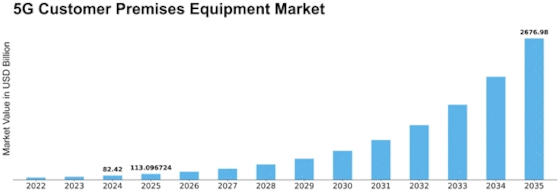
5G Customer Premises Equipment Market Size Graph
Author
Author Profile
Aarti Dhapte
AVP - Research

A consulting professional focused on helping businesses navigate complex markets through structured research and strategic insights. I partner with clients to solve high-impact business problems across market entry strategy, competitive intelligence, and opportunity assessment. Over the course of my experience, I have led and contributed to 100+ market research and consulting engagements, delivering insights across multiple industries and geographies, and supporting strategic decisions linked to $500M+ market opportunities. My core expertise lies in building robust market sizing, forecasting, and commercial models (top-down and bottom-up), alongside deep-dive competitive and industry analysis. I have played a key role in shaping go-to-market strategies, investment cases, and growth roadmaps, enabling clients to make confident, data-backed decisions in dynamic markets.

Leave a Comment

FAQs

What is the current valuation of the 5G Customer Premises Equipment Market?

<p>As of 2024, the market valuation was 82.42 USD Billion.</p>

What is the projected market size for the 5G Customer Premises Equipment Market by 2035?

<p>The market is projected to reach 2676.98 USD Billion by 2035.</p>

What is the expected CAGR for the 5G Customer Premises Equipment Market during the forecast period?

<p>The expected CAGR for the market from 2025 to 2035 is 37.22%.</p>

Which companies are considered key players in the 5G Customer Premises Equipment Market?

<p>Key players include Huawei, Ericsson, Nokia, ZTE, Cisco, Samsung, Qualcomm, Motorola Solutions, and Ciena.</p>

What are the main segments of the 5G Customer Premises Equipment Market?

<p>The main segments include Equipment Type, Application, and End-user.</p>

Which equipment type is projected to have the highest valuation in 2035?

The Fixed Wireless Access (FWA) Gateway is projected to reach 800.0 USD Billion by 2035.

What application segment is expected to generate the most revenue in the 5G Customer Premises Equipment Market?

High-Speed Internet Access is expected to generate 800.0 USD Billion by 2035.

How does the Industrial sector contribute to the 5G Customer Premises Equipment Market?

The Industrial sector is projected to contribute 534.4 USD Billion by 2035.

What is the valuation of the Mobile Hotspot segment in 2024?

The Mobile Hotspot segment was valued at 135.0 USD Billion in 2024.

What potential does the IoT Connectivity application hold in the market?

IoT Connectivity is projected to reach 500.0 USD Billion by 2035, indicating substantial growth potential.

Market Summary

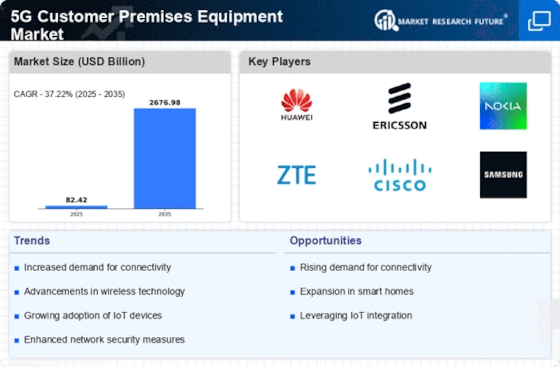
As per Market Research Future analysis, the 5G Customer Premises Equipment Market Size was estimated at 82.42 USD Billion in 2024. The 5G Customer Premises Equipment industry is projected to grow from USD 113.1 Billion in 2025 to USD 2676.98 Billion by 2035, exhibiting a compound annual growth rate (CAGR) of 37.22% during the forecast period 2025 - 2035

Key Market Trends & Highlights

The 5G Customer Premises Equipment Market is poised for substantial growth driven by technological advancements and evolving consumer needs.

  • North America remains the largest market for 5G customer premises equipment, reflecting a robust demand for high-speed connectivity. The Asia-Pacific region is emerging as the fastest-growing market, propelled by rapid urbanization and increasing investments in telecommunications infrastructure. Routers dominate the market as the largest segment, while Fixed Wireless Access gateways are gaining traction as the fastest-growing segment. Key market drivers include the rising adoption of IoT devices and government initiatives aimed at enhancing mobile broadband services.

Market Size & Forecast

2024 Market Size 82.42 (USD Billion)
2035 Market Size 2676.98 (USD Billion)
CAGR (2025 - 2035) 37.22%
Largest Regional Market Share in 2024 Asia Pacific

Major Players

Huawei (CN), Ericsson (SE), Nokia (FI), ZTE (CN), Cisco (US), Samsung (KR), Qualcomm (US), Motorola Solutions (US), Ciena (US)

Market Trends

The 5G Customer Premises Equipment Market is currently experiencing a transformative phase, driven by the increasing demand for high-speed internet and enhanced connectivity solutions. As businesses and consumers alike seek to leverage the capabilities of fifth-generation technology, the market is witnessing a surge in the adoption of various equipment types, including routers, gateways, and modems. This shift is not merely a trend but appears to be a fundamental change in how connectivity is perceived and utilized across different sectors. The integration of advanced features such as low latency and improved bandwidth is likely to redefine user experiences, making it essential for manufacturers to innovate continuously. Moreover, the competitive landscape of the 5G Customer Premises Equipment Market is evolving, with numerous players striving to establish their presence. Partnerships between technology providers and telecommunications companies seem to be a common strategy to enhance product offerings and expand market reach. Additionally, the growing emphasis on smart home devices and IoT applications indicates a potential for further growth in this sector. As the market matures, it may also face challenges related to regulatory compliance and the need for standardization, which could influence future developments. Overall, the 5G Customer Premises Equipment Market is poised for significant evolution, reflecting broader technological advancements and changing consumer preferences.

Increased Demand for High-Speed Connectivity

The ongoing shift towards remote work and digital services has led to a heightened need for reliable and fast internet connections. This trend is driving the adoption of 5G Customer Premises Equipment Market, as users seek solutions that can support their connectivity requirements.

Integration of Smart Technologies

The rise of smart home devices and IoT applications is influencing the 5G Customer Premises Equipment Market. Consumers are increasingly looking for equipment that can seamlessly integrate with their smart devices, enhancing overall user experience and convenience.

Focus on Sustainable Solutions

There is a growing awareness regarding environmental sustainability within the technology sector. Manufacturers in the 5G Customer Premises Equipment Market are likely to prioritize eco-friendly practices and materials, reflecting a broader commitment to reducing their carbon footprint.

5G Customer Premises Equipment Market Market Drivers

Emergence of Smart Cities

The emergence of smart cities represents a transformative trend that significantly influences the 5G Customer Premises Equipment Market. As urban areas increasingly adopt smart technologies to improve efficiency and quality of life, the demand for advanced connectivity solutions escalates. Smart city initiatives often rely on real-time data collection and analysis, which necessitates high-speed internet access. Market projections indicate that investments in smart city infrastructure could exceed 1 trillion dollars by 2030. This trend drives the need for robust 5G customer premises equipment to support the vast array of connected devices and applications within smart cities. Thus, the 5G Customer Premises Equipment Market is expected to thrive as cities evolve into more connected and intelligent environments.

Rising Adoption of IoT Devices

The proliferation of Internet of Things (IoT) devices is a pivotal driver for the 5G Customer Premises Equipment Market. As more devices become interconnected, the demand for high-speed, low-latency connectivity intensifies. According to recent data, the number of IoT devices is projected to reach 30 billion by 2030, necessitating robust infrastructure to support this growth. This surge in IoT adoption compels service providers to invest in advanced customer premises equipment that can handle increased data traffic and provide seamless connectivity. Consequently, the 5G Customer Premises Equipment Market is likely to experience substantial growth as businesses and consumers alike seek reliable solutions to accommodate their expanding IoT ecosystems.

Enhanced Mobile Broadband Services

The demand for enhanced mobile broadband services is a significant catalyst for the 5G Customer Premises Equipment Market. With consumers increasingly relying on mobile devices for streaming, gaming, and remote work, the need for faster and more reliable internet connections has never been more pressing. Market data indicates that mobile data traffic is expected to grow at a compound annual growth rate of 30% through 2025. This trend drives telecommunications companies to upgrade their infrastructure, leading to a surge in the deployment of 5G customer premises equipment. As a result, the 5G Customer Premises Equipment Market is poised for growth, as it supports the evolving needs of consumers and businesses in an increasingly digital world.

Government Initiatives and Investments

Government initiatives and investments in telecommunications infrastructure are crucial for the advancement of the 5G Customer Premises Equipment Market. Many governments are recognizing the strategic importance of 5G technology for economic growth and competitiveness. For instance, substantial funding has been allocated to enhance broadband access in underserved areas, which directly impacts the demand for 5G customer premises equipment. This proactive approach not only fosters innovation but also encourages private sector investment in 5G technologies. As a result, the 5G Customer Premises Equipment Market is likely to benefit from these initiatives, as they create a conducive environment for the deployment of advanced connectivity solutions.

Growing Demand for Remote Work Solutions

The increasing trend towards remote work is a notable driver for the 5G Customer Premises Equipment Market. As organizations adapt to flexible work arrangements, the need for reliable and high-speed internet connectivity becomes paramount. Data suggests that remote work has led to a 40% increase in demand for home broadband services. This shift compels service providers to enhance their offerings, leading to a rise in the deployment of 5G customer premises equipment. Consequently, the 5G Customer Premises Equipment Market is likely to expand as businesses seek to provide their employees with the necessary tools to maintain productivity and collaboration from remote locations.

Market Segment Insights

By Equipment Type: Router (Largest) vs. Fixed Wireless Access (FWA) Gateway (Fastest-Growing)

In the 5G Customer Premises Equipment Market, the Router segment holds the largest market share, driven by its critical role in establishing high-speed connectivity for residential and business applications. Following closely are Modems and Fixed Wireless Access (FWA) Gateways, which have gained significant traction as consumers seek alternatives to traditional broadband. Other segments, such as Mobile Hotspots and Integrated Access Devices, contribute to diversification but occupy a smaller slice of the overall market share.

Router (Dominant) vs. Fixed Wireless Access (FWA) Gateway (Emerging)

The Router segment remains dominant in the 5G Customer Premises Equipment Market due to its functionality in delivering high-speed internet across homes and enterprises. Routers are equipped with advanced features such as multi-band support and strong security protocols, making them essential for users looking to maximize their internet experience. In contrast, the Fixed Wireless Access (FWA) Gateway is emerging rapidly, appealing to users in rural and underserved areas who need reliable internet solutions without extensive infrastructure investment. FWA Gateways offer a flexible, high-speed solution, leveraging existing mobile networks, which positions them as a compelling alternative to traditional broadband.

By Application: High-Speed Internet Access (Largest) vs. Smart Homes (Fastest-Growing)

In the 5G Customer Premises Equipment Market, High-Speed Internet Access emerges as the largest segment, catering to the escalating demand for reliable and fast internet connectivity. The segment captures a significant share of the market, reflecting the growing reliance on internet-enabled devices and services. Conversely, Smart Homes represent the fastest-growing segment, gaining traction as consumers increasingly adopt smart devices that require robust connectivity. The growth of the Smart Homes segment is fueled by innovations in connected technologies and increasing consumer awareness about home automation. As more households integrate smart devices, the demand for 5G-enabled services is set to surge, playing a pivotal role in reshaping the market landscape. This shift towards enhanced connectivity aligns with trends in home entertainment, security, and convenience, driving significant investment in 5G infrastructure to support these applications.

High-Speed Internet Access (Dominant) vs. Smart Homes (Emerging)

High-Speed Internet Access stands as the dominant force in the 5G Customer Premises Equipment Market, reflecting the foundational need for fast and reliable internet as consumers continue to shift toward digital environments. This segment benefits from robust investments from service providers in infrastructure development to support extensive broadband capabilities. On the other hand, the Smart Homes segment is emerging rapidly due to the proliferation of IoT devices designed for homes. As the market evolves, the growing trend of home automation is expected to encourage significant advancements in connectivity solutions, leading to a synergistic relationship between these two segments. The convergence of high-speed internet and smart home technology promises to enhance consumer experiences, facilitating seamless interconnectivity among various smart devices.

By End-user: IT & Telecom (Largest) vs. Education (Fastest-Growing)

The 5G Customer Premises Equipment Market exhibits a varied distribution across its end-user segments, with IT &amp; Telecom leading the market due to its extensive reliance on advanced communication technologies. This segment captures a significant portion of the market, benefiting from the rapid deployment of 5G networks to enhance service delivery and connectivity. Following IT &amp; Telecom, the Education sector has been gaining traction, especially with the increased emphasis on digital learning environments propelled by recent global events.

Government: IT &amp; Telecom (Dominant) vs. Education (Emerging)

The Government sector has traditionally been conservative in adopting new technologies, yet with the push towards digitization, it plays a critical role in the adoption of 5G Customer Premises Equipment Market. Government initiatives often prioritize infrastructure enhancement, driving demand among various departments requiring advanced connectivity solutions. In contrast, the Education sector is emerging as a vital arena for 5G adoption, particularly with growth in remote learning and digital classrooms. The shift toward hybrid learning models is catalyzing investments in reliable high-speed internet, making education an increasingly attractive area for 5G technology deployment.

Get more detailed insights about 5G Customer Premises Equipment Market Research Report—Global Forecast till 2035

Regional Insights

North America : Technological Innovation Leader

North America is poised to dominate the 5G Customer Premises Equipment Market, holding approximately 40% of the global share. The region's growth is driven by rapid technological advancements, increasing demand for high-speed internet, and supportive regulatory frameworks. The U.S. and Canada are the largest markets, with significant investments in infrastructure and a strong push for digital transformation. Regulatory bodies are actively promoting 5G deployment, enhancing market dynamics. The competitive landscape in North America is robust, featuring key players like Cisco, Qualcomm, and Motorola Solutions. The presence of major telecommunications companies and technology firms fosters innovation and collaboration. The U.S. leads in 5G technology adoption, while Canada follows closely, focusing on expanding rural connectivity. This competitive environment encourages continuous advancements in 5G CPE technology, ensuring a dynamic market landscape.

Europe : Regulatory Framework Support

Europe is emerging as a significant player in the 5G Customer Premises Equipment Market, accounting for approximately 30% of the global share. The region's growth is fueled by stringent regulatory support, increasing investments in digital infrastructure, and a strong focus on sustainability. Countries like Germany and the UK are leading the charge, with ambitious plans to enhance connectivity and digital services across urban and rural areas. The competitive landscape in Europe is characterized by the presence of major players such as Ericsson and Nokia, who are at the forefront of 5G technology development. The European market is also witnessing collaborations between telecom operators and technology providers to accelerate 5G deployment. The European Commission emphasizes the importance of 5G in its Digital Compass initiative, aiming for a connected and digital Europe by 2030. This regulatory backing is crucial for market growth.

Asia-Pacific : Emerging Market Potential

Asia-Pacific is rapidly becoming a powerhouse in the 5G Customer Premises Equipment Market, holding around 25% of the global share. The region's growth is driven by increasing smartphone penetration, urbanization, and government initiatives promoting digital infrastructure. Countries like China and South Korea are leading the market, with aggressive 5G rollout plans and substantial investments in technology and infrastructure to support this transition. The competitive landscape in Asia-Pacific is vibrant, with key players like Huawei and ZTE dominating the market. The region is characterized by a mix of established telecom operators and emerging startups, fostering innovation and competition. China's focus on becoming a global leader in 5G technology is evident, while South Korea's advanced telecommunications infrastructure sets a benchmark for others. This dynamic environment is expected to propel further growth in the 5G CPE market.

Middle East and Africa : Untapped Market Opportunities

The Middle East and Africa region is on the cusp of significant growth in the 5G Customer Premises Equipment Market, currently holding about 5% of the global share. The growth is driven by increasing mobile connectivity, government initiatives to enhance digital infrastructure, and rising demand for high-speed internet services. Countries like the UAE and South Africa are leading the way, with ambitious plans to roll out 5G networks and improve connectivity across urban and rural areas. The competitive landscape in this region is evolving, with key players like Ericsson and Nokia establishing a presence to capitalize on emerging opportunities. The region's diverse market dynamics present both challenges and opportunities, as various countries adopt different strategies for 5G deployment. The focus on digital transformation and smart city initiatives is expected to drive further investments in 5G CPE technology, paving the way for future growth.

Key Players and Competitive Insights

Competition in the 5G CPE market is driven by technological advancements and innovation. Key players are constantly developing new features, improving performance, and enhancing user experiences. These advancements include faster data speeds, improved coverage, integration with advanced Wi-Fi standards, edge computing capabilities, and enhanced security features.
Companies in the 5G CPE market often form strategic partnerships and collaborations to expand their market reach and offer comprehensive solutions. This includes collaborations between network operators and device manufacturers to ensure compatibility and interoperability. Partnerships with software providers and IoT platform providers are also common to enable seamless integration with IoT devices and applications.
Price competition is a significant factor in the 5G CPE market, as companies strive to offer competitive pricing to attract customers. Price wars may occur, especially in regions with multiple network operators and device manufacturers vying for market share. Companies often balance competitive pricing with value-added features and services to differentiate their offerings.
Major market players are spending a lot of money on R&D to increase their product lines, which will help the 5G Customer Premises Equipment Market grow even more. Market participants are also taking a range of strategic initiatives to grow their worldwide footprint, including new product launches, contractual agreements, mergers and acquisitions, increased investments, and collaboration with other organizations. Competitors in the 5G Customer Premises Equipment industry must offer efficient technologies to expand and survive in an increasingly competitive and rising market environment.

Key Companies in the 5G Customer Premises Equipment Market include

Industry Developments

March 2021: Inseego Corp. announced that its Wavemaker PRO 5G indoor router FX2000e has been certified for use across a number of worldwide regions. This plug-and-play fixed wireless solution offers 5G/LTE internet with ethernet and Wi-Fi 6 support for up to 32 gadgets, which makes it suitable for small businesses and spread employees that require fast, dependable, and secure internet access.

April 2023: Four-Faith, introduced its latest product, the Four-Faith 5G ODU the technology is designed to offers high-speed connectivity with low latency to its consumers.

Intended Audience

  • Education Industry
  • Technology Investors
  • Government Bodies
  • Public Authorities
  • Industrial Sectors

Future Outlook

5G Customer Premises Equipment Market Future Outlook

The 5G Customer Premises Equipment Market is projected to grow at a 37.22% CAGR from 2025 to 2035, driven by increasing demand for high-speed connectivity and IoT applications.

New opportunities lie in:

  • Development of integrated smart home solutions
  • Expansion into rural broadband markets
  • Partnerships with telecom providers for bundled services

By 2035, the market is expected to be robust, driven by innovation and widespread adoption.

Market Segmentation

5G Customer Premises Equipment Market End-user Outlook

  • Education
  • Government
  • Industrial
  • IT & Telecom
  • Others

5G Customer Premises Equipment Market Application Outlook

  • High-Speed Internet Access
  • Smart Homes
  • Remote Work and Telecommuting
  • IoT Connectivity
  • VR and AR
  • Edge Computing
  • Security and Surveillance
  • Rural Broadband Connectivity
  • Others

5G Customer Premises Equipment Market Equipment Type Outlook

  • Modem
  • Router
  • Fixed Wireless Access (FWA) Gateway
  • Mobile Hotspot
  • Integrated Access Device
  • Extender/Repeater
  • Others

Report Scope

MARKET SIZE 2024 82.42(USD Billion)
MARKET SIZE 2025 113.1(USD Billion)
MARKET SIZE 2035 2676.98(USD Billion)
COMPOUND ANNUAL GROWTH RATE (CAGR) 37.22% (2025 - 2035)
REPORT COVERAGE Revenue Forecast, Competitive Landscape, Growth Factors, and Trends
BASE YEAR 2024
Market Forecast Period 2025 - 2035
Historical Data 2019 - 2024
Market Forecast Units USD Billion
Key Companies Profiled Huawei (CN), Ericsson (SE), Nokia (FI), ZTE (CN), Cisco (US), Samsung (KR), Qualcomm (US), Motorola Solutions (US), Ciena (US)
Segments Covered Equipment Type, Application, End-user Vertical
Key Market Opportunities Integration of advanced technologies enhances connectivity solutions in the 5G Customer Premises Equipment Market.
Key Market Dynamics Rising demand for high-speed connectivity drives innovation and competition in the 5G Customer Premises Equipment market.
Countries Covered North America, Europe, APAC, South America, MEA

FAQs

What is the current valuation of the 5G Customer Premises Equipment Market?

<p>As of 2024, the market valuation was 82.42 USD Billion.</p>

What is the projected market size for the 5G Customer Premises Equipment Market by 2035?

<p>The market is projected to reach 2676.98 USD Billion by 2035.</p>

What is the expected CAGR for the 5G Customer Premises Equipment Market during the forecast period?

<p>The expected CAGR for the market from 2025 to 2035 is 37.22%.</p>

Which companies are considered key players in the 5G Customer Premises Equipment Market?

<p>Key players include Huawei, Ericsson, Nokia, ZTE, Cisco, Samsung, Qualcomm, Motorola Solutions, and Ciena.</p>

What are the main segments of the 5G Customer Premises Equipment Market?

<p>The main segments include Equipment Type, Application, and End-user.</p>

Which equipment type is projected to have the highest valuation in 2035?

The Fixed Wireless Access (FWA) Gateway is projected to reach 800.0 USD Billion by 2035.

What application segment is expected to generate the most revenue in the 5G Customer Premises Equipment Market?

High-Speed Internet Access is expected to generate 800.0 USD Billion by 2035.

How does the Industrial sector contribute to the 5G Customer Premises Equipment Market?

The Industrial sector is projected to contribute 534.4 USD Billion by 2035.

What is the valuation of the Mobile Hotspot segment in 2024?

The Mobile Hotspot segment was valued at 135.0 USD Billion in 2024.

What potential does the IoT Connectivity application hold in the market?

IoT Connectivity is projected to reach 500.0 USD Billion by 2035, indicating substantial growth potential.

  1. SECTION I: EXECUTIVE SUMMARY AND KEY HIGHLIGHTS
    1. | 1.1 EXECUTIVE SUMMARY
    2. | | 1.1.1 Market Overview
    3. | | 1.1.2 Key Findings
    4. | | 1.1.3 Market Segmentation
    5. | | 1.1.4 Competitive Landscape
    6. | | 1.1.5 Challenges and Opportunities
    7. | | 1.1.6 Future Outlook
  2. SECTION II: SCOPING, METHODOLOGY AND MARKET STRUCTURE
    1. | 2.1 MARKET INTRODUCTION
    2. | | 2.1.1 Definition
    3. | | 2.1.2 Scope of the study
    4. | | | 2.1.2.1 Research Objective
    5. | | | 2.1.2.2 Assumption
    6. | | | 2.1.2.3 Limitations
    7. | 2.2 RESEARCH METHODOLOGY
    8. | | 2.2.1 Overview
    9. | | 2.2.2 Data Mining
    10. | | 2.2.3 Secondary Research
    11. | | 2.2.4 Primary Research
    12. | | | 2.2.4.1 Primary Interviews and Information Gathering Process
    13. | | | 2.2.4.2 Breakdown of Primary Respondents
    14. | | 2.2.5 Forecasting Model
    15. | | 2.2.6 Market Size Estimation
    16. | | | 2.2.6.1 Bottom-Up Approach
    17. | | | 2.2.6.2 Top-Down Approach
    18. | | 2.2.7 Data Triangulation
    19. | | 2.2.8 Validation
  3. SECTION III: QUALITATIVE ANALYSIS
    1. | 3.1 MARKET DYNAMICS
    2. | | 3.1.1 Overview
    3. | | 3.1.2 Drivers
    4. | | 3.1.3 Restraints
    5. | | 3.1.4 Opportunities
    6. | 3.2 MARKET FACTOR ANALYSIS
    7. | | 3.2.1 Value chain Analysis
    8. | | 3.2.2 Porter's Five Forces Analysis
    9. | | | 3.2.2.1 Bargaining Power of Suppliers
    10. | | | 3.2.2.2 Bargaining Power of Buyers
    11. | | | 3.2.2.3 Threat of New Entrants
    12. | | | 3.2.2.4 Threat of Substitutes
    13. | | | 3.2.2.5 Intensity of Rivalry
    14. | | 3.2.3 COVID-19 Impact Analysis
    15. | | | 3.2.3.1 Market Impact Analysis
    16. | | | 3.2.3.2 Regional Impact
    17. | | | 3.2.3.3 Opportunity and Threat Analysis
  4. SECTION IV: QUANTITATIVE ANALYSIS
    1. | 4.1 Semiconductor & Electronics, BY Equipment Type (USD Billion)
    2. | | 4.1.1 Modem
    3. | | 4.1.2 Router
    4. | | 4.1.3 Fixed Wireless Access (FWA) Gateway
    5. | | 4.1.4 Mobile Hotspot
    6. | | 4.1.5 Integrated Access Device
    7. | | 4.1.6 Extender/Repeater
    8. | | 4.1.7 Others
    9. | 4.2 Semiconductor & Electronics, BY Application (USD Billion)
    10. | | 4.2.1 High-Speed Internet Access
    11. | | 4.2.2 Smart Homes
    12. | | 4.2.3 Remote Work and Telecommuting
    13. | | 4.2.4 IoT Connectivity
    14. | | 4.2.5 VR and AR
    15. | | 4.2.6 Edge Computing
    16. | | 4.2.7 Security and Surveillance
    17. | | 4.2.8 Rural Broadband Connectivity
    18. | | 4.2.9 Others
    19. | 4.3 Semiconductor & Electronics, BY End-user (USD Billion)
    20. | | 4.3.1 Education
    21. | | 4.3.2 Government
    22. | | 4.3.3 Industrial
    23. | | 4.3.4 IT & Telecom
    24. | | 4.3.5 Others
    25. | 4.4 Semiconductor & Electronics, BY Region (USD Billion)
    26. | | 4.4.1 North America
    27. | | | 4.4.1.1 US
    28. | | | 4.4.1.2 Canada
    29. | | 4.4.2 Europe
    30. | | | 4.4.2.1 Germany
    31. | | | 4.4.2.2 UK
    32. | | | 4.4.2.3 France
    33. | | | 4.4.2.4 Russia
    34. | | | 4.4.2.5 Italy
    35. | | | 4.4.2.6 Spain
    36. | | | 4.4.2.7 Rest of Europe
    37. | | 4.4.3 APAC
    38. | | | 4.4.3.1 China
    39. | | | 4.4.3.2 India
    40. | | | 4.4.3.3 Japan
    41. | | | 4.4.3.4 South Korea
    42. | | | 4.4.3.5 Malaysia
    43. | | | 4.4.3.6 Thailand
    44. | | | 4.4.3.7 Indonesia
    45. | | | 4.4.3.8 Rest of APAC
    46. | | 4.4.4 South America
    47. | | | 4.4.4.1 Brazil
    48. | | | 4.4.4.2 Mexico
    49. | | | 4.4.4.3 Argentina
    50. | | | 4.4.4.4 Rest of South America
    51. | | 4.4.5 MEA
    52. | | | 4.4.5.1 GCC Countries
    53. | | | 4.4.5.2 South Africa
    54. | | | 4.4.5.3 Rest of MEA
  5. SECTION V: COMPETITIVE ANALYSIS
    1. | 5.1 Competitive Landscape
    2. | | 5.1.1 Overview
    3. | | 5.1.2 Competitive Analysis
    4. | | 5.1.3 Market share Analysis
    5. | | 5.1.4 Major Growth Strategy in the Semiconductor & Electronics
    6. | | 5.1.5 Competitive Benchmarking
    7. | | 5.1.6 Leading Players in Terms of Number of Developments in the Semiconductor & Electronics
    8. | | 5.1.7 Key developments and growth strategies
    9. | | | 5.1.7.1 New Product Launch/Service Deployment
    10. | | | 5.1.7.2 Merger & Acquisitions
    11. | | | 5.1.7.3 Joint Ventures
    12. | | 5.1.8 Major Players Financial Matrix
    13. | | | 5.1.8.1 Sales and Operating Income
    14. | | | 5.1.8.2 Major Players R&D Expenditure. 2023
    15. | 5.2 Company Profiles
    16. | | 5.2.1 Huawei (CN)
    17. | | | 5.2.1.1 Financial Overview
    18. | | | 5.2.1.2 Products Offered
    19. | | | 5.2.1.3 Key Developments
    20. | | | 5.2.1.4 SWOT Analysis
    21. | | | 5.2.1.5 Key Strategies
    22. | | 5.2.2 Ericsson (SE)
    23. | | | 5.2.2.1 Financial Overview
    24. | | | 5.2.2.2 Products Offered
    25. | | | 5.2.2.3 Key Developments
    26. | | | 5.2.2.4 SWOT Analysis
    27. | | | 5.2.2.5 Key Strategies
    28. | | 5.2.3 Nokia (FI)
    29. | | | 5.2.3.1 Financial Overview
    30. | | | 5.2.3.2 Products Offered
    31. | | | 5.2.3.3 Key Developments
    32. | | | 5.2.3.4 SWOT Analysis
    33. | | | 5.2.3.5 Key Strategies
    34. | | 5.2.4 ZTE (CN)
    35. | | | 5.2.4.1 Financial Overview
    36. | | | 5.2.4.2 Products Offered
    37. | | | 5.2.4.3 Key Developments
    38. | | | 5.2.4.4 SWOT Analysis
    39. | | | 5.2.4.5 Key Strategies
    40. | | 5.2.5 Cisco (US)
    41. | | | 5.2.5.1 Financial Overview
    42. | | | 5.2.5.2 Products Offered
    43. | | | 5.2.5.3 Key Developments
    44. | | | 5.2.5.4 SWOT Analysis
    45. | | | 5.2.5.5 Key Strategies
    46. | | 5.2.6 Samsung (KR)
    47. | | | 5.2.6.1 Financial Overview
    48. | | | 5.2.6.2 Products Offered
    49. | | | 5.2.6.3 Key Developments
    50. | | | 5.2.6.4 SWOT Analysis
    51. | | | 5.2.6.5 Key Strategies
    52. | | 5.2.7 Qualcomm (US)
    53. | | | 5.2.7.1 Financial Overview
    54. | | | 5.2.7.2 Products Offered
    55. | | | 5.2.7.3 Key Developments
    56. | | | 5.2.7.4 SWOT Analysis
    57. | | | 5.2.7.5 Key Strategies
    58. | | 5.2.8 Motorola Solutions (US)
    59. | | | 5.2.8.1 Financial Overview
    60. | | | 5.2.8.2 Products Offered
    61. | | | 5.2.8.3 Key Developments
    62. | | | 5.2.8.4 SWOT Analysis
    63. | | | 5.2.8.5 Key Strategies
    64. | | 5.2.9 Ciena (US)
    65. | | | 5.2.9.1 Financial Overview
    66. | | | 5.2.9.2 Products Offered
    67. | | | 5.2.9.3 Key Developments
    68. | | | 5.2.9.4 SWOT Analysis
    69. | | | 5.2.9.5 Key Strategies
    70. | 5.3 Appendix
    71. | | 5.3.1 References
    72. | | 5.3.2 Related Reports
  6. LIST OF FIGURES
    1. | 6.1 MARKET SYNOPSIS
    2. | 6.2 NORTH AMERICA MARKET ANALYSIS
    3. | 6.3 US MARKET ANALYSIS BY EQUIPMENT TYPE
    4. | 6.4 US MARKET ANALYSIS BY APPLICATION
    5. | 6.5 US MARKET ANALYSIS BY END-USER
    6. | 6.6 CANADA MARKET ANALYSIS BY EQUIPMENT TYPE
    7. | 6.7 CANADA MARKET ANALYSIS BY APPLICATION
    8. | 6.8 CANADA MARKET ANALYSIS BY END-USER
    9. | 6.9 EUROPE MARKET ANALYSIS
    10. | 6.10 GERMANY MARKET ANALYSIS BY EQUIPMENT TYPE
    11. | 6.11 GERMANY MARKET ANALYSIS BY APPLICATION
    12. | 6.12 GERMANY MARKET ANALYSIS BY END-USER
    13. | 6.13 UK MARKET ANALYSIS BY EQUIPMENT TYPE
    14. | 6.14 UK MARKET ANALYSIS BY APPLICATION
    15. | 6.15 UK MARKET ANALYSIS BY END-USER
    16. | 6.16 FRANCE MARKET ANALYSIS BY EQUIPMENT TYPE
    17. | 6.17 FRANCE MARKET ANALYSIS BY APPLICATION
    18. | 6.18 FRANCE MARKET ANALYSIS BY END-USER
    19. | 6.19 RUSSIA MARKET ANALYSIS BY EQUIPMENT TYPE
    20. | 6.20 RUSSIA MARKET ANALYSIS BY APPLICATION
    21. | 6.21 RUSSIA MARKET ANALYSIS BY END-USER
    22. | 6.22 ITALY MARKET ANALYSIS BY EQUIPMENT TYPE
    23. | 6.23 ITALY MARKET ANALYSIS BY APPLICATION
    24. | 6.24 ITALY MARKET ANALYSIS BY END-USER
    25. | 6.25 SPAIN MARKET ANALYSIS BY EQUIPMENT TYPE
    26. | 6.26 SPAIN MARKET ANALYSIS BY APPLICATION
    27. | 6.27 SPAIN MARKET ANALYSIS BY END-USER
    28. | 6.28 REST OF EUROPE MARKET ANALYSIS BY EQUIPMENT TYPE
    29. | 6.29 REST OF EUROPE MARKET ANALYSIS BY APPLICATION
    30. | 6.30 REST OF EUROPE MARKET ANALYSIS BY END-USER
    31. | 6.31 APAC MARKET ANALYSIS
    32. | 6.32 CHINA MARKET ANALYSIS BY EQUIPMENT TYPE
    33. | 6.33 CHINA MARKET ANALYSIS BY APPLICATION
    34. | 6.34 CHINA MARKET ANALYSIS BY END-USER
    35. | 6.35 INDIA MARKET ANALYSIS BY EQUIPMENT TYPE
    36. | 6.36 INDIA MARKET ANALYSIS BY APPLICATION
    37. | 6.37 INDIA MARKET ANALYSIS BY END-USER
    38. | 6.38 JAPAN MARKET ANALYSIS BY EQUIPMENT TYPE
    39. | 6.39 JAPAN MARKET ANALYSIS BY APPLICATION
    40. | 6.40 JAPAN MARKET ANALYSIS BY END-USER
    41. | 6.41 SOUTH KOREA MARKET ANALYSIS BY EQUIPMENT TYPE
    42. | 6.42 SOUTH KOREA MARKET ANALYSIS BY APPLICATION
    43. | 6.43 SOUTH KOREA MARKET ANALYSIS BY END-USER
    44. | 6.44 MALAYSIA MARKET ANALYSIS BY EQUIPMENT TYPE
    45. | 6.45 MALAYSIA MARKET ANALYSIS BY APPLICATION
    46. | 6.46 MALAYSIA MARKET ANALYSIS BY END-USER
    47. | 6.47 THAILAND MARKET ANALYSIS BY EQUIPMENT TYPE
    48. | 6.48 THAILAND MARKET ANALYSIS BY APPLICATION
    49. | 6.49 THAILAND MARKET ANALYSIS BY END-USER
    50. | 6.50 INDONESIA MARKET ANALYSIS BY EQUIPMENT TYPE
    51. | 6.51 INDONESIA MARKET ANALYSIS BY APPLICATION
    52. | 6.52 INDONESIA MARKET ANALYSIS BY END-USER
    53. | 6.53 REST OF APAC MARKET ANALYSIS BY EQUIPMENT TYPE
    54. | 6.54 REST OF APAC MARKET ANALYSIS BY APPLICATION
    55. | 6.55 REST OF APAC MARKET ANALYSIS BY END-USER
    56. | 6.56 SOUTH AMERICA MARKET ANALYSIS
    57. | 6.57 BRAZIL MARKET ANALYSIS BY EQUIPMENT TYPE
    58. | 6.58 BRAZIL MARKET ANALYSIS BY APPLICATION
    59. | 6.59 BRAZIL MARKET ANALYSIS BY END-USER
    60. | 6.60 MEXICO MARKET ANALYSIS BY EQUIPMENT TYPE
    61. | 6.61 MEXICO MARKET ANALYSIS BY APPLICATION
    62. | 6.62 MEXICO MARKET ANALYSIS BY END-USER
    63. | 6.63 ARGENTINA MARKET ANALYSIS BY EQUIPMENT TYPE
    64. | 6.64 ARGENTINA MARKET ANALYSIS BY APPLICATION
    65. | 6.65 ARGENTINA MARKET ANALYSIS BY END-USER
    66. | 6.66 REST OF SOUTH AMERICA MARKET ANALYSIS BY EQUIPMENT TYPE
    67. | 6.67 REST OF SOUTH AMERICA MARKET ANALYSIS BY APPLICATION
    68. | 6.68 REST OF SOUTH AMERICA MARKET ANALYSIS BY END-USER
    69. | 6.69 MEA MARKET ANALYSIS
    70. | 6.70 GCC COUNTRIES MARKET ANALYSIS BY EQUIPMENT TYPE
    71. | 6.71 GCC COUNTRIES MARKET ANALYSIS BY APPLICATION
    72. | 6.72 GCC COUNTRIES MARKET ANALYSIS BY END-USER
    73. | 6.73 SOUTH AFRICA MARKET ANALYSIS BY EQUIPMENT TYPE
    74. | 6.74 SOUTH AFRICA MARKET ANALYSIS BY APPLICATION
    75. | 6.75 SOUTH AFRICA MARKET ANALYSIS BY END-USER
    76. | 6.76 REST OF MEA MARKET ANALYSIS BY EQUIPMENT TYPE
    77. | 6.77 REST OF MEA MARKET ANALYSIS BY APPLICATION
    78. | 6.78 REST OF MEA MARKET ANALYSIS BY END-USER
    79. | 6.79 KEY BUYING CRITERIA OF SEMICONDUCTOR & ELECTRONICS
    80. | 6.80 RESEARCH PROCESS OF MRFR
    81. | 6.81 DRO ANALYSIS OF SEMICONDUCTOR & ELECTRONICS
    82. | 6.82 DRIVERS IMPACT ANALYSIS: SEMICONDUCTOR & ELECTRONICS
    83. | 6.83 RESTRAINTS IMPACT ANALYSIS: SEMICONDUCTOR & ELECTRONICS
    84. | 6.84 SUPPLY / VALUE CHAIN: SEMICONDUCTOR & ELECTRONICS
    85. | 6.85 SEMICONDUCTOR & ELECTRONICS, BY EQUIPMENT TYPE, 2024 (% SHARE)
    86. | 6.86 SEMICONDUCTOR & ELECTRONICS, BY EQUIPMENT TYPE, 2024 TO 2035 (USD Billion)
    87. | 6.87 SEMICONDUCTOR & ELECTRONICS, BY APPLICATION, 2024 (% SHARE)
    88. | 6.88 SEMICONDUCTOR & ELECTRONICS, BY APPLICATION, 2024 TO 2035 (USD Billion)
    89. | 6.89 SEMICONDUCTOR & ELECTRONICS, BY END-USER, 2024 (% SHARE)
    90. | 6.90 SEMICONDUCTOR & ELECTRONICS, BY END-USER, 2024 TO 2035 (USD Billion)
    91. | 6.91 BENCHMARKING OF MAJOR COMPETITORS
  7. LIST OF TABLES
    1. | 7.1 LIST OF ASSUMPTIONS
    2. | | 7.1.1
    3. | 7.2 North America MARKET SIZE ESTIMATES; FORECAST
    4. | | 7.2.1 BY EQUIPMENT TYPE, 2025-2035 (USD Billion)
    5. | | 7.2.2 BY APPLICATION, 2025-2035 (USD Billion)
    6. | | 7.2.3 BY END-USER, 2025-2035 (USD Billion)
    7. | 7.3 US MARKET SIZE ESTIMATES; FORECAST
    8. | | 7.3.1 BY EQUIPMENT TYPE, 2025-2035 (USD Billion)
    9. | | 7.3.2 BY APPLICATION, 2025-2035 (USD Billion)
    10. | | 7.3.3 BY END-USER, 2025-2035 (USD Billion)
    11. | 7.4 Canada MARKET SIZE ESTIMATES; FORECAST
    12. | | 7.4.1 BY EQUIPMENT TYPE, 2025-2035 (USD Billion)
    13. | | 7.4.2 BY APPLICATION, 2025-2035 (USD Billion)
    14. | | 7.4.3 BY END-USER, 2025-2035 (USD Billion)
    15. | 7.5 Europe MARKET SIZE ESTIMATES; FORECAST
    16. | | 7.5.1 BY EQUIPMENT TYPE, 2025-2035 (USD Billion)
    17. | | 7.5.2 BY APPLICATION, 2025-2035 (USD Billion)
    18. | | 7.5.3 BY END-USER, 2025-2035 (USD Billion)
    19. | 7.6 Germany MARKET SIZE ESTIMATES; FORECAST
    20. | | 7.6.1 BY EQUIPMENT TYPE, 2025-2035 (USD Billion)
    21. | | 7.6.2 BY APPLICATION, 2025-2035 (USD Billion)
    22. | | 7.6.3 BY END-USER, 2025-2035 (USD Billion)
    23. | 7.7 UK MARKET SIZE ESTIMATES; FORECAST
    24. | | 7.7.1 BY EQUIPMENT TYPE, 2025-2035 (USD Billion)
    25. | | 7.7.2 BY APPLICATION, 2025-2035 (USD Billion)
    26. | | 7.7.3 BY END-USER, 2025-2035 (USD Billion)
    27. | 7.8 France MARKET SIZE ESTIMATES; FORECAST
    28. | | 7.8.1 BY EQUIPMENT TYPE, 2025-2035 (USD Billion)
    29. | | 7.8.2 BY APPLICATION, 2025-2035 (USD Billion)
    30. | | 7.8.3 BY END-USER, 2025-2035 (USD Billion)
    31. | 7.9 Russia MARKET SIZE ESTIMATES; FORECAST
    32. | | 7.9.1 BY EQUIPMENT TYPE, 2025-2035 (USD Billion)
    33. | | 7.9.2 BY APPLICATION, 2025-2035 (USD Billion)
    34. | | 7.9.3 BY END-USER, 2025-2035 (USD Billion)
    35. | 7.10 Italy MARKET SIZE ESTIMATES; FORECAST
    36. | | 7.10.1 BY EQUIPMENT TYPE, 2025-2035 (USD Billion)
    37. | | 7.10.2 BY APPLICATION, 2025-2035 (USD Billion)
    38. | | 7.10.3 BY END-USER, 2025-2035 (USD Billion)
    39. | 7.11 Spain MARKET SIZE ESTIMATES; FORECAST
    40. | | 7.11.1 BY EQUIPMENT TYPE, 2025-2035 (USD Billion)
    41. | | 7.11.2 BY APPLICATION, 2025-2035 (USD Billion)
    42. | | 7.11.3 BY END-USER, 2025-2035 (USD Billion)
    43. | 7.12 Rest of Europe MARKET SIZE ESTIMATES; FORECAST
    44. | | 7.12.1 BY EQUIPMENT TYPE, 2025-2035 (USD Billion)
    45. | | 7.12.2 BY APPLICATION, 2025-2035 (USD Billion)
    46. | | 7.12.3 BY END-USER, 2025-2035 (USD Billion)
    47. | 7.13 APAC MARKET SIZE ESTIMATES; FORECAST
    48. | | 7.13.1 BY EQUIPMENT TYPE, 2025-2035 (USD Billion)
    49. | | 7.13.2 BY APPLICATION, 2025-2035 (USD Billion)
    50. | | 7.13.3 BY END-USER, 2025-2035 (USD Billion)
    51. | 7.14 China MARKET SIZE ESTIMATES; FORECAST
    52. | | 7.14.1 BY EQUIPMENT TYPE, 2025-2035 (USD Billion)
    53. | | 7.14.2 BY APPLICATION, 2025-2035 (USD Billion)
    54. | | 7.14.3 BY END-USER, 2025-2035 (USD Billion)
    55. | 7.15 India MARKET SIZE ESTIMATES; FORECAST
    56. | | 7.15.1 BY EQUIPMENT TYPE, 2025-2035 (USD Billion)
    57. | | 7.15.2 BY APPLICATION, 2025-2035 (USD Billion)
    58. | | 7.15.3 BY END-USER, 2025-2035 (USD Billion)
    59. | 7.16 Japan MARKET SIZE ESTIMATES; FORECAST
    60. | | 7.16.1 BY EQUIPMENT TYPE, 2025-2035 (USD Billion)
    61. | | 7.16.2 BY APPLICATION, 2025-2035 (USD Billion)
    62. | | 7.16.3 BY END-USER, 2025-2035 (USD Billion)
    63. | 7.17 South Korea MARKET SIZE ESTIMATES; FORECAST
    64. | | 7.17.1 BY EQUIPMENT TYPE, 2025-2035 (USD Billion)
    65. | | 7.17.2 BY APPLICATION, 2025-2035 (USD Billion)
    66. | | 7.17.3 BY END-USER, 2025-2035 (USD Billion)
    67. | 7.18 Malaysia MARKET SIZE ESTIMATES; FORECAST
    68. | | 7.18.1 BY EQUIPMENT TYPE, 2025-2035 (USD Billion)
    69. | | 7.18.2 BY APPLICATION, 2025-2035 (USD Billion)
    70. | | 7.18.3 BY END-USER, 2025-2035 (USD Billion)
    71. | 7.19 Thailand MARKET SIZE ESTIMATES; FORECAST
    72. | | 7.19.1 BY EQUIPMENT TYPE, 2025-2035 (USD Billion)
    73. | | 7.19.2 BY APPLICATION, 2025-2035 (USD Billion)
    74. | | 7.19.3 BY END-USER, 2025-2035 (USD Billion)
    75. | 7.20 Indonesia MARKET SIZE ESTIMATES; FORECAST
    76. | | 7.20.1 BY EQUIPMENT TYPE, 2025-2035 (USD Billion)
    77. | | 7.20.2 BY APPLICATION, 2025-2035 (USD Billion)
    78. | | 7.20.3 BY END-USER, 2025-2035 (USD Billion)
    79. | 7.21 Rest of APAC MARKET SIZE ESTIMATES; FORECAST
    80. | | 7.21.1 BY EQUIPMENT TYPE, 2025-2035 (USD Billion)
    81. | | 7.21.2 BY APPLICATION, 2025-2035 (USD Billion)
    82. | | 7.21.3 BY END-USER, 2025-2035 (USD Billion)
    83. | 7.22 South America MARKET SIZE ESTIMATES; FORECAST
    84. | | 7.22.1 BY EQUIPMENT TYPE, 2025-2035 (USD Billion)
    85. | | 7.22.2 BY APPLICATION, 2025-2035 (USD Billion)
    86. | | 7.22.3 BY END-USER, 2025-2035 (USD Billion)
    87. | 7.23 Brazil MARKET SIZE ESTIMATES; FORECAST
    88. | | 7.23.1 BY EQUIPMENT TYPE, 2025-2035 (USD Billion)
    89. | | 7.23.2 BY APPLICATION, 2025-2035 (USD Billion)
    90. | | 7.23.3 BY END-USER, 2025-2035 (USD Billion)
    91. | 7.24 Mexico MARKET SIZE ESTIMATES; FORECAST
    92. | | 7.24.1 BY EQUIPMENT TYPE, 2025-2035 (USD Billion)
    93. | | 7.24.2 BY APPLICATION, 2025-2035 (USD Billion)
    94. | | 7.24.3 BY END-USER, 2025-2035 (USD Billion)
    95. | 7.25 Argentina MARKET SIZE ESTIMATES; FORECAST
    96. | | 7.25.1 BY EQUIPMENT TYPE, 2025-2035 (USD Billion)
    97. | | 7.25.2 BY APPLICATION, 2025-2035 (USD Billion)
    98. | | 7.25.3 BY END-USER, 2025-2035 (USD Billion)
    99. | 7.26 Rest of South America MARKET SIZE ESTIMATES; FORECAST
    100. | | 7.26.1 BY EQUIPMENT TYPE, 2025-2035 (USD Billion)
    101. | | 7.26.2 BY APPLICATION, 2025-2035 (USD Billion)
    102. | | 7.26.3 BY END-USER, 2025-2035 (USD Billion)
    103. | 7.27 MEA MARKET SIZE ESTIMATES; FORECAST
    104. | | 7.27.1 BY EQUIPMENT TYPE, 2025-2035 (USD Billion)
    105. | | 7.27.2 BY APPLICATION, 2025-2035 (USD Billion)
    106. | | 7.27.3 BY END-USER, 2025-2035 (USD Billion)
    107. | 7.28 GCC Countries MARKET SIZE ESTIMATES; FORECAST
    108. | | 7.28.1 BY EQUIPMENT TYPE, 2025-2035 (USD Billion)
    109. | | 7.28.2 BY APPLICATION, 2025-2035 (USD Billion)
    110. | | 7.28.3 BY END-USER, 2025-2035 (USD Billion)
    111. | 7.29 South Africa MARKET SIZE ESTIMATES; FORECAST
    112. | | 7.29.1 BY EQUIPMENT TYPE, 2025-2035 (USD Billion)
    113. | | 7.29.2 BY APPLICATION, 2025-2035 (USD Billion)
    114. | | 7.29.3 BY END-USER, 2025-2035 (USD Billion)
    115. | 7.30 Rest of MEA MARKET SIZE ESTIMATES; FORECAST
    116. | | 7.30.1 BY EQUIPMENT TYPE, 2025-2035 (USD Billion)
    117. | | 7.30.2 BY APPLICATION, 2025-2035 (USD Billion)
    118. | | 7.30.3 BY END-USER, 2025-2035 (USD Billion)
    119. | 7.31 PRODUCT LAUNCH/PRODUCT DEVELOPMENT/APPROVAL
    120. | | 7.31.1
    121. | 7.32 ACQUISITION/PARTNERSHIP
    122. | | 7.32.1

Semiconductor & Electronics Market Segmentation

Semiconductor & Electronics By Equipment Type (USD Billion, 2025-2035)

  • Modem
  • Router
  • Fixed Wireless Access (FWA) Gateway
  • Mobile Hotspot
  • Integrated Access Device
  • Extender/Repeater
  • Others

Semiconductor & Electronics By Application (USD Billion, 2025-2035)

  • High-Speed Internet Access
  • Smart Homes
  • Remote Work and Telecommuting
  • IoT Connectivity
  • VR and AR
  • Edge Computing
  • Security and Surveillance
  • Rural Broadband Connectivity
  • Others

Semiconductor & Electronics By End-user (USD Billion, 2025-2035)

  • Education
  • Government
  • Industrial
  • IT & Telecom
  • Others
Infographic

Free Sample Request

Kindly complete the form below to receive a free sample of this Report

Get Free Sample

Customer Strories

Compare Licence

×
Features License Type
Single User Multiuser License Enterprise User
Price $4,950 $5,950 $7,250
Maximum User Access Limit 1 User Upto 10 Users Unrestricted Access Throughout the Organization
Free Customization
Direct Access to Analyst
Deliverable Format
Platform Access
Discount on Next Purchase 10% 15% 15%
Printable Versions
%>