Report Details:
15 Companies Covered
128 Pages
Market Research Future (MRFR) has published a cooked research report on the “Global Electric Vehicles Market” that contains information from 2019 to 2035.
The Electric Vehicles Market is estimated to register a CAGR of 17.27% during the forecast period of 2025 to 2035.
MRFR recognizes the following companies as the key players in the Global Electric Vehicles Market — BMW, Rivian, Audi, Hyundai, BYD, Porsche, Toyota, Tesla, Fisker, Mercedes-Benz, Volkswagen, Nissan, Ford, Lucid Motors, and General Motors.
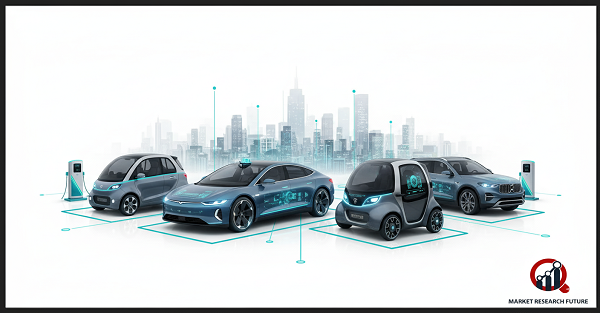
Electric Vehicles Market Highlights
The Electric Vehicles Market is accounted for to register a CAGR of 17.27% during the forecast period and is estimated to reach USD 3,338.87 billion by 2035, up from USD 578.71 billion in 2024.
The global market growth is driven by the increasing adoption of electric mobility, supportive government incentives, advancements in battery technology, and rising environmental awareness among consumers. The expanding range of electric vehicles—from passenger cars to commercial fleets—coupled with the rapid buildout of charging infrastructure, continues to strengthen global market penetration.
Manufacturers are diversifying their offerings to cater to different customer needs, improving range and affordability while investing in next-generation technologies such as solid-state batteries and autonomous systems. The expansion of global charging networks and the enforcement of low-emission regulations further encourage widespread EV adoption.
The U.S., Europe, and Asia-Pacific remain major contributors to overall market demand, supported by policy initiatives and innovation-focused investments. With electric vehicle sales projected to comprise an increasing portion of total automotive sales, the industry is set to play a pivotal role in achieving global carbon reduction goals.
Segment Analysis
The Global Electric Vehicles Market has been segmented based on Technology, Type, Charging Infrastructure, Battery Type, and Region.
Based on Technology, the market has been segmented into Battery Electric Vehicles (BEV), Plug-In Hybrid Electric Vehicles (PHEV), and Fuel-Cell Electric Vehicles (FCEV). Among these, the Battery Electric Vehicles (BEV) segment dominates, reaching USD 150.0 billion in 2024 and projected to achieve USD 600.0 billion by 2035, driven by advancements in lithium-ion batteries and growing environmental concerns.
Based on Type, the market includes Passenger Cars, Commercial Vehicles, and Two Wheelers. The Passenger Cars segment currently leads global market revenue, supported by rising consumer adoption and favorable purchase incentives, while Commercial Vehicles are gaining traction due to fleet electrification initiatives.
Based on Charging Infrastructure, the market has been segmented into Level 1 Charging, Level 2 Charging, DC Fast Charging, and Wireless Charging. Level 1 and Level 2 Charging remain the most widely used, while DC Fast Charging continues to expand rapidly, enhancing long-distance vehicle usability and reducing charge times. Wireless Charging is emerging as a future-forward solution enhancing convenience and user experience.
Based on Battery Type, the market includes Lithium-Ion Battery, Nickel-Metal Hydride Battery, and Solid-State Battery. The Lithium-Ion Battery segment holds a significant market share due to its superior energy density and efficiency, while Solid-State Batteries are expected to witness substantial growth driven by safety and longevity advantages.
Region Analysis
By Region, the Electric Vehicles Market is segmented into North America, Europe, Asia-Pacific, South America, and Middle East & Africa.
North America is anticipated to contribute significantly to the global market, with a 2024 valuation of USD 100.0 billion, driven by strong governmental support, tax incentives, and an expanding network of fast-charging stations.
Europe leads with an estimated USD 120.0 billion in 2024, propelled by stringent emission norms, the European Green Deal, and widespread EV adoption in countries like Germany, the UK, and Norway.
Asia-Pacific follows closely, holding a 2024 valuation of USD 125.0 billion and expected to grow fastest due to robust manufacturing capabilities, policy incentives, and urbanization in China, Japan, and South Korea.
South America shows growing potential with a valuation of USD 30.0 billion in 2024, while the Middle East & Africa, valued at USD 13.28 billion, are gradually transitioning toward sustainable transport solutions with infrastructure investments in the UAE and South Africa.
Key Findings of the Study
- The Global Electric Vehicles Market is expected to reach USD 3,338.87 billion by 2035, at a CAGR of 17.27% during the forecast period.
- Asia-Pacific accounted for the fastest-growing market.
- Based on Technology, the Battery Electric Vehicles (BEV) segment was attributed to holding the largest market share in 2024.
- Based on Type, the Passenger Cars segment was attributed to holding the largest market share in 2024.
- BMW, Rivian, Audi, Hyundai, BYD, Porsche, Toyota, Tesla, Fisker, Mercedes-Benz, Volkswagen, Nissan, Ford, Lucid Motors, and General Motors are the key market players.
