PMIC- Saving Power One Application at a Time
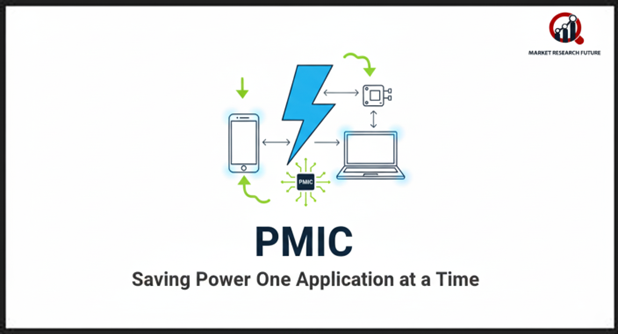
Power Management IC Market Overview
In an era defined by energy efficiency and sustainable innovation, Power Management Integrated Circuits (PMICs) have become essential components across modern electronic systems. Designed to manage, regulate, and optimize power usage, PMICs ensure that devices operate efficiently while extending battery life and reducing heat generation.
Initially prominent in consumer electronics—such as smartphones, tablets, and wearables—PMICs are now integral to automotive, industrial, healthcare, and data centre applications, driven by growing energy demands and stringent efficiency requirements. As industries grapple with rising electricity costs and the global energy crisis, the importance of power optimization has never been greater.
According to market insights, the global PMIC market is poised for robust growth through 2030, supported by increasing adoption of portable devices, advancements in semiconductor technology, and the expanding need for low-power, high-performance designs across industries.
What is a Power Management IC (PMIC)?
A PMIC is an integrated circuit responsible for controlling and distributing electrical power within a system. It performs crucial functions such as:
- Voltage Regulation
- Battery Management
- Power Sequencing
- Energy Conversion & Monitoring
By efficiently allocating power to different components, PMICs help extend battery life, reduce energy waste, and minimize heat dissipation. They are particularly critical in polymer and Li-ion battery-based applications, where precision and safety are paramount.
Key Applications
PMICs are widely used across:
- Consumer Electronics: Smartphones, laptops, tablets, Bluetooth devices, media players.
- Wearables & IoT Devices: Smartwatches, fitness trackers, and connected home devices.
- Healthcare Equipment: Portable medical monitors, imaging systems, and diagnostic tools.
- Automotive Systems: Electric vehicles (EVs), infotainment units, and ADAS modules.
- Industrial & Data Centers: Robotics, automation systems, and power-efficient computing.
The rising demand for portable, connected, and energy-efficient devices is fuelling continuous innovation in PMIC design and functionality.
Market Growth Drivers
1. Rising Adoption of Portable Devices
With smartphones, tablets, and laptops becoming indispensable, PMICs play a vital role in battery optimization and fast charging. Their integration ensures longer usage times and efficient power delivery—key expectations in today’s mobile-driven world.
2. Technological Advancements
Modern PMICs now offer multi-functionality, integrating voltage regulation, monitoring, and battery management into a single compact chip. The shift from discrete solutions to integrated power architectures has enabled smaller form factors and improved energy efficiency.
3. Energy Efficiency Mandates
As global industries face rising energy costs and stricter efficiency standards, PMICs provide a reliable path to reduce power consumption, especially in data centers and industrial automation.
4. Expanding Application Landscape
Beyond consumer electronics, PMICs are now essential in automotive electrification, wearables, medical devices, and building automation—driven by IoT adoption and smart energy systems.
5. Evolving Consumer Expectations
The demand for lightweight, ultra-mobile, and long-lasting devices is pushing OEMs to adopt advanced PMIC solutions that support extended battery life, compact designs, and sustainable performance.
Challenges
Despite strong growth, the PMIC market faces challenges such as:
- Design Complexity: Integrating multiple power functions without compromising size or performance.
- Thermal Management: Maintaining efficiency in high-density systems.
- Cost Pressures: Balancing performance with affordability for mass-market adoption.
- Rapid Innovation Cycles: Keeping pace with evolving semiconductor technologies and device architectures.
Addressing these challenges requires continuous R&D investment, collaborative partnerships, and advanced manufacturing techniques.
Regional Insights
- North America leads the PMIC market due to strong demand from consumer electronics, data centers, and automotive sectors, along with the presence of key semiconductor companies and advanced R&D infrastructure.
- Europe is witnessing steady growth, driven by energy efficiency mandates and adoption in EVs and industrial automation.
- Asia-Pacific dominates global production, with countries like China, Japan, South Korea, and Taiwan emerging as major hubs for electronics manufacturing and semiconductor design.
- Latin America and Middle East & Africa are growing steadily, driven by increasing consumer electronics penetration and smart infrastructure initiatives.
Future Outlook
The future of the PMIC market lies in integration, intelligence, and innovation. Emerging trends such as:
- AI-driven power management
- Energy harvesting systems
- Advanced semiconductor materials (GaN, SiC)
- Low-power IoT ecosystems will redefine how energy is managed across devices.
As consumer electronics, automotive electrification, and smart industry applications expand, PMICs will become indispensable in enabling sustainable, connected, and power-efficient ecosystems.
Conclusion
Power Management Integrated Circuits are revolutionizing energy usage across industries—saving power, enhancing efficiency, and enabling smarter design. With the global push toward sustainability and digital transformation, PMICs are set to remain at the forefront of modern electronics innovation.
As industries evolve toward low-power, high-performance systems, PMICs will continue to drive progress—one application at a time.
Related Report


Leave a Comment