Side Effects & Multiple Uses of hydrogen peroxide
The Hydrogen Peroxide Market Insights
Owing to the exceptional bleaching properties of H2O2, the demand for the chemical in the pulp and paper industry is proliferating. With this rising demand, the advancement of the global hydrogen peroxide market is likely to occur at an impressive CAGR of 11.9% to reach USD 166.55 billion by 2035, which was valued at USD 48.34 billion in 2024.
Hydrogen peroxide is a chemical compound and a mild antiseptic widely used to prevent skin infections such as scrapes, burns, and minor cuts. It is also used to soothe mucus or minor irritation in the mouth. This pale blue liquid is not only an antiseptic but also serves as an oxidizer and a bleaching agent.
Hydrogen peroxide works by releasing oxygen when applied to the affected area. This released oxygen generates foam that cleans the area by removing dead skin. Hydrogen peroxide should only be used to treat minor cuts or wounds and should not be applied to large wounds, serious burns, or severe animal bites.
After Effects of Hydrogen Peroxide
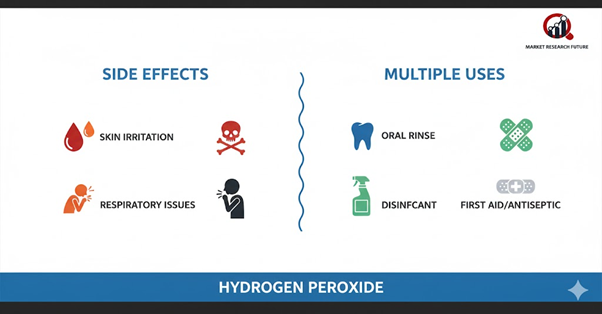
Hydrogen peroxide is commonly used for cleaning both the body and household surfaces. However, it may cause some side effects:
- Mild irritation, redness, or stinging may occur after application. If these symptoms worsen, consult a doctor immediately.
- If signs of skin infection, such as tenderness, pus, or heat, appear after the first few applications, stop using hydrogen peroxide immediately.
- In very rare cases, it can trigger an allergic reaction, including itching, swelling of the throat or tongue, difficulty breathing, or dizziness. In such cases, seek immediate medical help.
Multiple Uses of Hydrogen Peroxide
Hydrogen peroxide is effective against bacteria, viruses, yeast, fungi, and mold spores, making it useful for both household cleaning and body care. Some of its key uses include:
- Cleaning Cookware and Sinks: Hydrogen peroxide can restore the natural shine of sinks and cookware. Wet the sink with water and sprinkle baking soda, let it sit for 5 minutes, then add 3% hydrogen peroxide and let it sit a few more minutes before scrubbing and rinsing.
- Extending the Lifespan of Vegetables: Organic gardeners recommend adding hydrogen peroxide to water when applying it to vegetables to kill bacteria. For delicate vegetables like lettuce or spinach, soak them in a water and hydrogen peroxide solution.
- Whitening and Brightening Teeth: Hydrogen peroxide is widely used by dentists to brighten teeth. A 10% solution is effective and safe when used properly.
Regional Analysis
In North America, the United States and Canada are major users of hydrogen peroxide for household cleaning, healthcare, and industrial applications. High consumer awareness about hygiene drives consistent demand.
In Europe, Germany, France, and the UK have strong adoption in medical and cosmetic uses. Industrial applications in textiles and paper manufacturing also contribute to the market.
In the Asia-Pacific region, countries like China, India, and Japan are experiencing rapid growth due to expanding healthcare, agriculture, and industrial sectors. Household and personal care use is also rising.
Conclusion
Hydrogen peroxide can also be used for removing stains from clothes, cleaning mirrors and shiny surfaces, and disinfecting toilets. Additionally, it can be applied in gardens to clean algae from ponds and to treat plants affected by fungal infections.


Leave a Comment