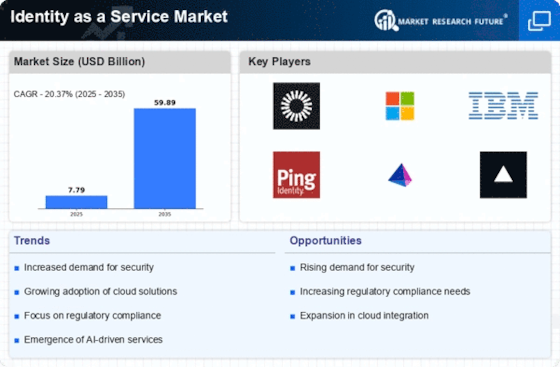
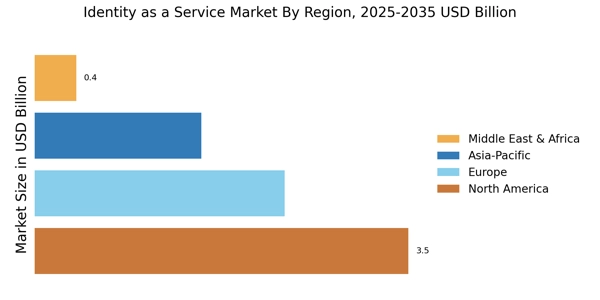
Research Methodology on Identity as a Service Market
Research methodology is the set of procedures, approaches, and strategies used by researchers to define and frame their research problem. These methods are used to identify, analyze, and synthesize data to generate authentic and credible solutions to the research problem. In this report, it presents a stage-wise research and analysis methodology for the global identity service market.
Research Objectives
The research objectives of this report are to identify the size, market dynamics, status, industry players, market segmentation, and trends across the different regions of the global identity service market and also comprehend the impact of COVID-19 on the market.
Secondary Research
To analyze the global identity service market and its big and small players, extensive secondary research was conducted using various industry sources and respective databases. The secondary research process included the study of popular books, journals, and paid databases such as Factiva, Hoovers, Tibet, Bloomberg, SEC Filings, and Trade magazines. Also, various corporate presentations, stock research reports, whitepapers, and investor presentations were studied.
Primary Research
To validate the outcome of the secondary research and to obtain further insights into the global identity service market, the primary research was conducted through a survey-based technique. To collect primary data, questionnaire surveys were conducted with stakeholders. The primary surveys were conducted telephonically and using other online communication methods such as emails, chats, and an online conferencing platform.
Market Segmentation
The global identity service market has been segmented based on type, application, and region.
Type
•Authentication
•Authorization
•Access Management
•Federation & SSO
Application
•BFSI
•Retail & eCommerce
•Healthcare
•Telecommunications
•Government & Defence
Region
•North America
•Europe
•Asia-Pacific
•Rest of the World
Data Triangulation
To analyze the global identity service market at a regional level, a top-down and bottom-up approach has been adopted. The top-down approach was used to study the data of the future market until the regional level was reached. After that, a bottom-up approach was used to arrive at the global identity service market size. The data used in the study was triangulated following the time-series analysis. The collected data was sourced from both the demand and supply sides.
Data Validation
After the data was collected and triangulated, a three-stage data validation was performed. In the first stage, the accuracy of the data was examined at the secondary level. In the second stage, the data was checked at the primary level. In the third stage, assessment and triangulation with the help of supplier or expert insights were performed in order to validate the data and analysis results.
Factor Analysis
In order to identify the various market drivers and their effect on the global identity service market, a factor analysis method was used. To identify the suppressing and accelerating factors, a regression analysis was performed by considering major factors such as macro and microeconomics, industry trends, government policies, and technological trends that are affecting the global identity service market.
Market Estimation
The market size of the global identity service market was estimated by studying the historical years of 2023-2030. The market size validation was performed through top-down and bottom-up approaches to arrive at the size of the global identity service market.
Data Analysis
The collected data from the secondary and primary research was analyzed from six perspectives and topics such as industry outlook, market dynamics, technology overview, market trends, competitive profiling, and market structure. The qualitative and quantitative analysis of data was done with the help of Porter's Five Forces Model.
Market Sizing
The market size was estimated and forecasted for the assessment period of 2023-2030, by considering the major drivers, restraints, regional analysis, industry trends, and competitive landscape. The data was validated by different market experts.
Market Forecasting
The data analysis was used to arrive at the market size for the global identity service market, and forecasting of the future market size was done by considering various trends such as supply chain, SWOT analysis, and technological development. The data was validated with different market experts to obtain an accurate and reliable market forecast from 2023 to 2030.
This research study utilized secondary and primary research methodologies to generate authentic data and insights on the global identity service market. With this data, the market size and forecast were obtained for the assessment period 2023-2030. Moreover, three-stage data validation and an extensive factor analysis were used to arrive at the accurate market size.