Research Methodology on B2B Telecommunication Market
1. Introduction
The purpose of this research methodology is to provide a guide to the conduct of research into the B2B Telecommunication Market. The research report identifies the research objectives and the research questions, research design, variables and their measurements, as well as sample selection and data collection.
Furthermore, it will go in-depth into the methods employed for data analysis, as well as address ethical principles and quality assurance. The overall methodology section enables the reader to have a clear overview of the entire research process.
2. Research Objective
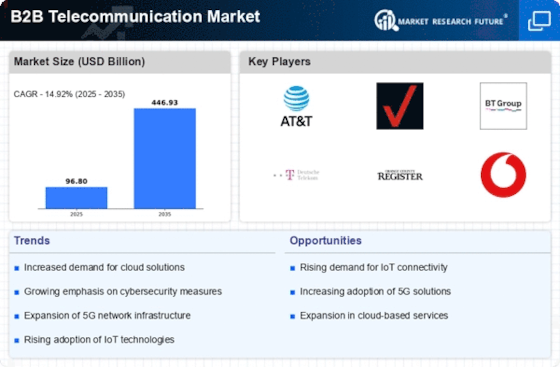
The objective of this research is to analyze the market trends and forecast of the global B2B Telecommunication market by assessing the performance of key market players within the B2B Telecommunication market. This analysis enables the reader to draw an estimate of the future market prospects of the global B2B Telecommunication market.
3. Research Questions
The following list of research questions guides the research throughout the duration of the study:
What is the current size and market share of the B2B Telecommunication market?
What are the factors influencing the growth of the B2B Telecommunication market?
What is the historical, current, and projected size of the market regarding revenue and volume, respectively?
Who are the leading players currently operating in the B2B Telecommunication market?
What are the strengths and weaknesses of the major players in terms of market share, global and regional presence, product portfolio, growth strategies, and recent innovations?
4. Research Design
The research design applied in this study is both a qualitative and quantitative approach. The qualitative approach helps understand the underlying market dynamics by assessing recent developments in the B2B Telecommunication market, including technological advances, product launches and modifications, customer feedback and opinion, and corporate strategies such as mergers, acquisitions and partnerships.
The quantitative approach helps to measure the data across different segments of the market in terms of value and volume, to assess the projected growth of the market, the impact of macro and micro factors on the growth of the global B2B Telecommunication market, and the size of each market segment.
5. Variables and Measurement
The following variables are included in this research:
Market size (in USD million): In order to understand the overall size of the B2B Telecommunication market, the research will assess the past and present values, as well as project the future market size in terms of revenue (in USD million).
Market share: The market share of each segment/sub-segment, as well as the overall market share of the major players in the B2B Telecommunication market, will be calculated.
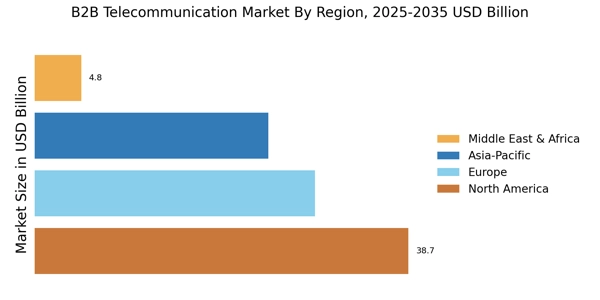
Market segmentation: The research will segment the B2B Telecommunication market by type, end-user, application, and geography in order to provide more in-depth market insights.
Growth drivers and market restraints: This research analyzes the various macro and micro factors (such as economic slowdown, technological advancements, etc.) that play an important role in driving, or restraining the growth of the B2B Telecommunication market, and assesses the current and future impact of these drivers and restraints on the global market.
Forecast: This research provides an in-depth assessment of the future market prospects of each segment by analyzing the historical performance and various growth drivers and restraints.
Profiles of key players: This research analyzes the corporate strategies (including product portfolio, recent innovations and partnerships), market share, global and regional presence, and financial performance of the major players operating in the B2B Telecommunication market.
6. Sample Selection and Data Collection
The data for this research is collected from a variety of primary and secondary sources. Primary sources include interviews with industry experts and surveys of major players in the B2B Telecommunication market. Secondary sources include company websites, annual reports and financial statements, press releases, published research papers and qualitative data from the proprietary database of Market Research Future.
7. Data Analysis
For analyzing the data collected from the primary and secondary sources, the research employs various market analytics methodologies such as Porter’s Five Forces Analysis, Value Chain Analysis, SWOT Analysis, and Strategic Analysis. These methodologies help assess the current and future market prospects of the major players operating in the B2B Telecommunication market and provide quantitative market predictions about revenue (in USD million).
8. Ethical Principles
This research adheres to the ethical principles outlined by the Market Research Society (MRS). This includes ensuring consumer and employee privacy, as well as respecting their feedback and opinion.
9. Quality Assurance
The research will employ strict quality assurance (QA) mechanisms throughout the course of the study. Throughout the data collection, analysis and report-writing process, all of the data is reconciled and cross-checked for inconsistency and incompleteness. Furthermore, all the analysis, research results and conclusions will be verified for accuracy before the generation of the final report.