Research Methodology on POS Software Market
1. Introduction
The purpose of this research study is to gain an understanding of the current state of the Point of Sale (POS) software market and the activities of the key players in the market. The report focuses on the various offerings by the market participants, both paid and free trials, the competitive dynamics in the market, the latest technological trends, the major key players and their product offerings, and their strategic moves to stay ahead.
POS software refers to software that helps manage and streamline sales and other related activities that occur in a retail setting. This software is often integrated with existing systems such as inventory management, customer relationship management (CRM), and payment systems. POS software helps store owners and management teams to gain visibility and analysis about their store operations and performance, engage with their customers better, and optimise their store activities.
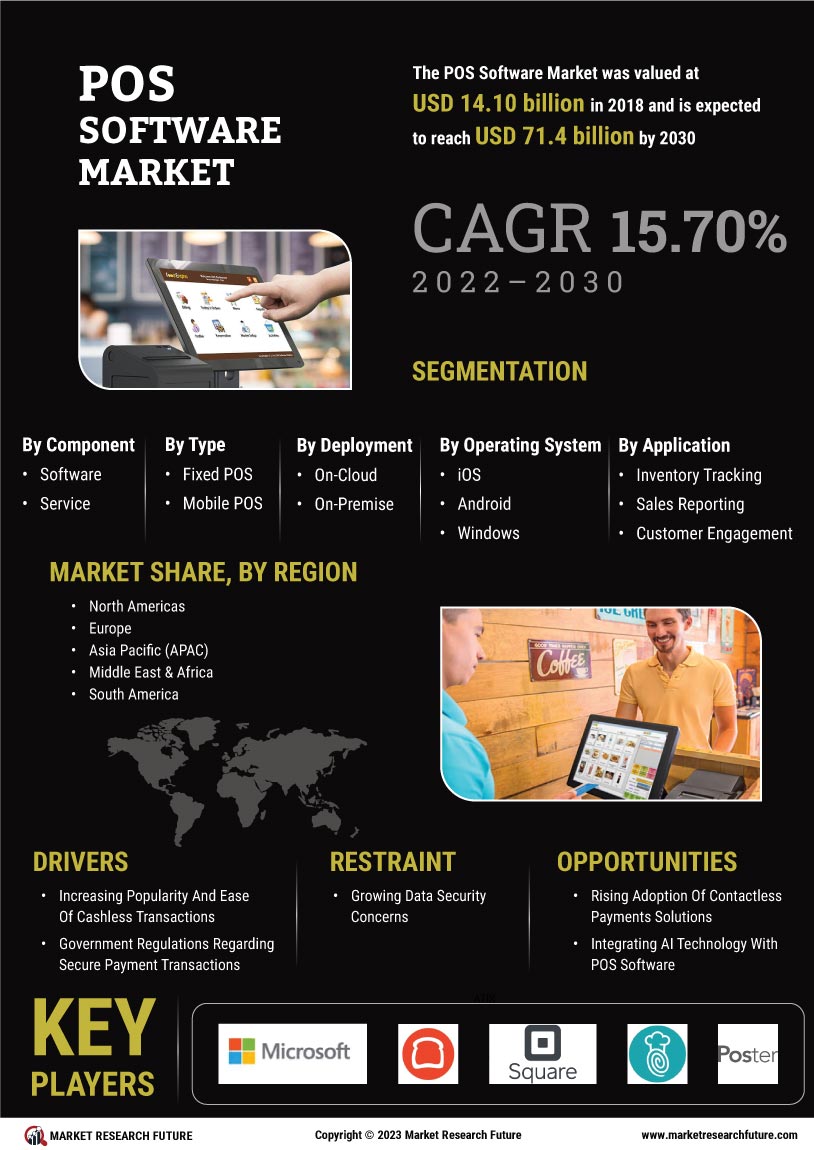
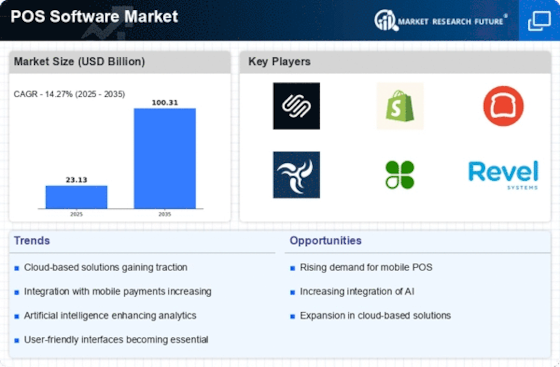
The POS software market is expected to grow at a staggering CAGR from 2023 to 2030. The increasing need to reduce costs and accelerate the checkout process has fuelled the rapid adoption of POS software solutions. The convenience and flexibility associated with POS software solutions are some of the other factors driving the growth of the market.
2. Research Objective
The primary objective of this research is to provide a comprehensive analysis of the global POS software market, highlighting the current market size, competitive dynamics, key players and their offerings, and the latest technological trends present in the market. The report would provide an in-depth understanding of the market and its segments, their dynamics, countries of operation, and their growth prospects. The research would provide an analysis of the various factors driving the market growth, along with restraining factors that can impede the market. The report would also focus on key trends in the market, such as partnerships, investments, mergers and acquisitions, and new product launches.
The research also aims to explore the current market offerings of the key players, their pricing and promotions, and any changes in their product portfolio. This would also include their most recent activities, such as any launch of new products, partnerships, or strategic moves. Also, the research would provide insight into the key players and their global reach and the marketing strategies adopted by them.
3. Research Design and Scope
The layout of the research study is based on qualitative and quantitative research designs. A combination of various analytical methods and tools has been used to gain an in-depth understanding of the POS software market. Primary and secondary research methods have been employed to obtain qualitative and quantitative insights into the market.
The scope of the research study covers the market size, key trends, competitive dynamics, market segmentation, regional markets, and the major competitive strategies of key players involved in the POS Software Market. The base year of this study is 2022 and the forecast period of the report is from 2023 to 2030.
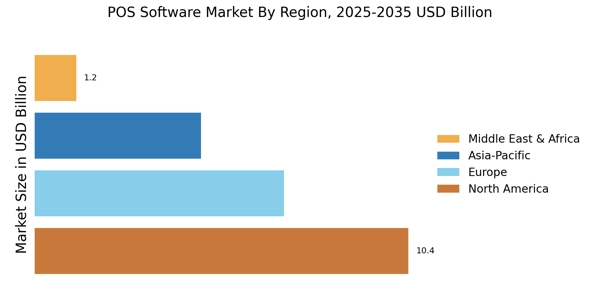
The research study covers the market and competitive analysis of some of the top players in the global POS software market. The countries or regions covered in the report are North America, Europe, Asia-Pacific, Latin America, and the Middle East and Africa.
4. Research Methodology
The research methodology employed for this report was a combination of primary and secondary research methods. Primary research was conducted in the form of interviews with industry experts, industry stakeholders, and key players involved in the global POS software market. The interviews were conducted in the form of both phone interviews, as well as face-to-face meetings.
Secondary research was conducted by researching published reports and articles from industry magazines, white papers, and other public sources. Data was collected from websites, press releases, and company presentations. Secondary research also included accessing databases, such as Factiva and OneSource.
4.1. Primary Research
Primary research is conducted in the form of interviews with industry experts, key players involved in the global POS software market, and industry stakeholders. The interviews were conducted in both phone interviews as well as face-to-face meetings, with representatives from different key organizations in the market.
The key players in the global POS software market that were interviewed included IBM, Microsoft, Oracle, SAP, NCR Corporation, and Xero. The questions covered topics such as the offering of their products, their pricing strategies and promotional activities, the latest trends and technological advancements, partnerships, and their global presence. In addition, the interviews also included questions about the product portfolio, customer feedback and reviews, and their current strategies and plans for the POS software market.
The interviews also focused on understanding the competitive landscape of the POS software market and the growth prospects of the market. Questions included in the interviews involved the competitive strategies of market players, strategic actions taken by them, and any new product launches or partnerships.
4.2. Secondary Research
Secondary research is conducted by researching published reports and articles from industry magazines, white papers, and other public sources. Data is collected from websites, press releases, and company presentations. Secondary research also includes accessing databases, such as Factiva and OneSource.
Data is also collected from various trade associations, such as the Association for Retail Technology Standards (ARTS), the National Retail Federation (NRF) and the American Retail Federation (ARF). Secondary research was conducted to gain insight into the key players in the market, their offerings, market share and size, and the dynamics of the market. The research also includes studying customer feedback and reviews about the offerings of the various market players.
Data is also collected from regional government organizations and industry associations such as industry reports, market reports, and financial filings. Market estimates and forecasts were obtained from various public sources, such as industry analysts, financial reports, and public filings.
5. Sampling and Data Collection
5.1. Sample Size
The sample size of the research study is based on a combination of both primary and secondary sources. Primary research is conducted by interviewing key players in the market such as IBM, Microsoft, Oracle, SAP, NCR Corporation, and Xero. Secondary research is conducted by researching published reports and articles from industry magazines, white papers, and other public sources.
5.2. Sampling Methodology
The sampling methodology used for the research study is based on both primary and secondary research methods. A combination of sampling techniques, such as convenience sampling and purposive sampling, is used to obtain the required data.
The sampling technique for primary research includes convenience sampling in which online surveys and interviews were conducted with key players in the market. The convenience sampling technique allowed for targeting stakeholders in the market who could provide the necessary insights into the market.
The purposive sampling technique was used for secondary research, in which the research focused on published reports and articles from industry magazines and other public sources relevant to the market.
5.3. Data Collection
Data collection methods used for the research study include primary and secondary research methods. Primary research was conducted by conducting interviews with key players in the market such as IBM, Microsoft, Oracle, SAP, NCR Corporation, and Xero. The interviews were conducted in the form of both phone interviews, as well as face-to-face meetings.
Secondary research is conducted by accessing published reports and articles from industry magazines, white papers, and other public sources. Data is collected from websites, press releases, and company presentations. Secondary research also includes accessing databases, such as Factiva and OneSource.
Data is also collected from various trade associations, such as the Association for Retail Technology Standards (ARTS), the National Retail Federation (NRF) and the American Retail Federation (ARF). Secondary research was conducted to gain insight into the key players in the market, their offerings, market share and size, and the dynamics of the market.
6. Analysis Methodology
Data from both primary and secondary sources is collected, reviewed and analyzed to obtain market insights. The data is analyzed using qualitative and quantitative methods. Qualitative analysis is used to understand the market trends and dynamics, while quantitative analysis was used to gain insights into the various market segments.
The analysis employed is a combination of both top-down and bottom-up approaches. The top-down approach is used to analyze the market and gain insights into the market size and competitive dynamics. The bottom-up approach is used to gain insights into the regional markets and their market sizes.
The analysis includes the use of descriptive and inferential statistics and graphical models such as linear regression and logistic regression. The performance of the market is studied by segmenting the market based on the type of offerings and end-users.