Research Methodology on Cloud Point of Sale Market
Introduction
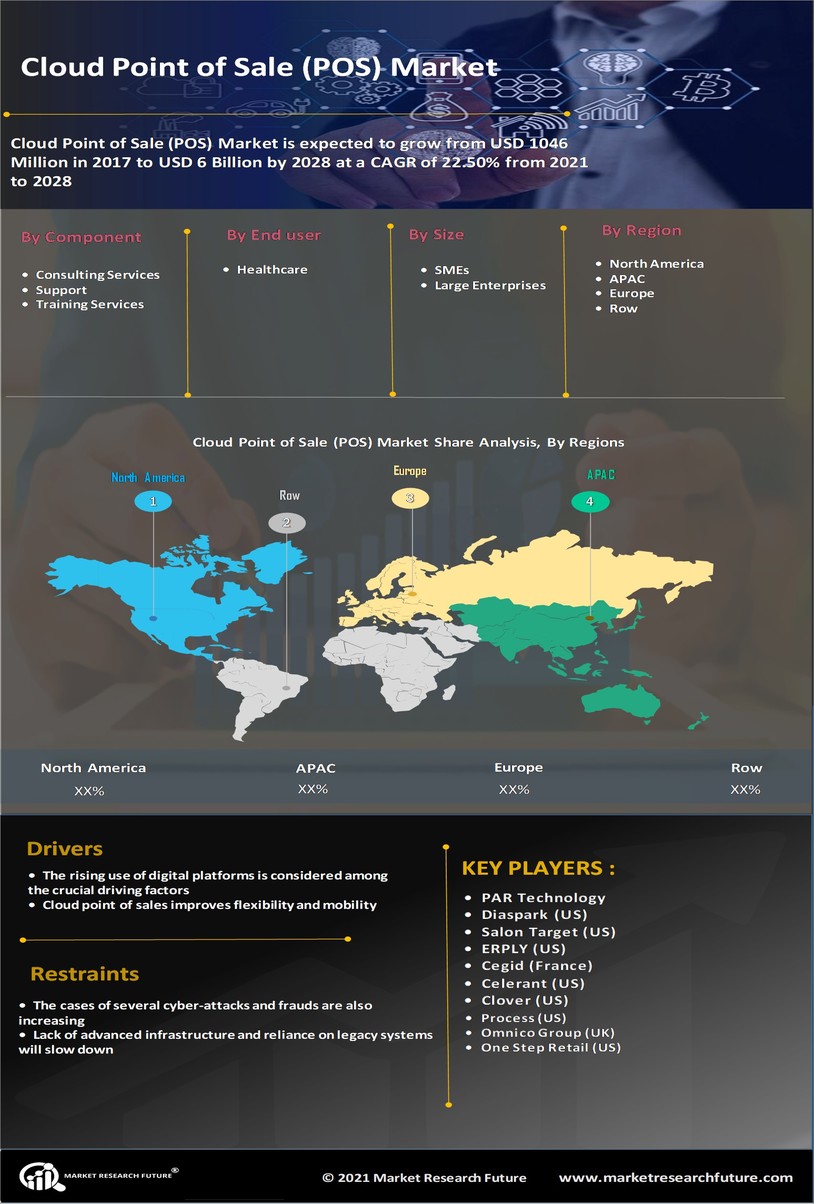
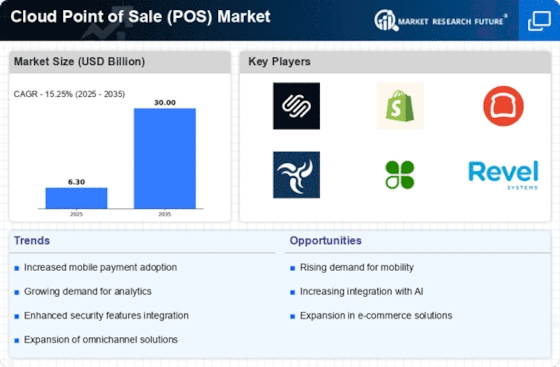
The use of cloud-based point of sale (POS) systems has grown exponentially over the last decade. With the increased adoption of cloud-based solutions, it is important to understand the impact of cloud-POA systems in a rapidly changing retail landscape. The purpose of this study is to understand the current and future trends of the cloud-POS market. The scope of the study focuses on the market analysis of existing cloud-POS systems, opportunities for the market, and potential challenges. The research provides an in-depth understanding of market trends and forecast data.
Research Problem
The research problem to be addressed is to understand the current and future trends of the cloud-POS market. It will look at market penetration and key market indicators such as competitors, user preferences, and pricing strategies. Additionally, it will look at opportunities for expansion and investment and the potential challenges associated with the adoption of cloud-POS systems.
Research Objectives
The primary objectives of the research are to:
Analyze the current and future trends of the cloud-POS market.
Examine industry participants and key market indicators.
Analyze user preferences, pricing strategies, and customer insights.
Identify potential opportunities for market expansion and investments.
Assess potential challenges and risks associated with implementing cloud-POS systems.
Research Methodology
This study utilizes a value chain evaluation Research design. The value chain evaluation enables a better understanding of the cloud-POS market, as well as market penetration, key indicators, and industry participants. Furthermore, the research design takes into account customer preferences and pricing strategies.
Secondary data sources such as industry reports, market research studies, and government websites will be used to analyze the current and future trends of the cloud-POS market. Primary data sources such as interviews with industry experts, surveys, and focus groups are used to obtain insights into user preferences and pricing strategies.
The research employs quantitative and qualitative research tools. Quantitative research tools such as surveys and interviews will be used to obtain customer insights into the demand for cloud-based POS systems and their preferences. Qualitative research tools such as focus groups, case studies, and field observations are used to gain a better understanding of potential challenges and risks associated with cloud-POS systems.
The research employs a non-probability sampling method where a convenience sample of the population is selected. The sample size is determined based on the scope of the research. The convenience sample size will be the number of respondents required to get a representative mix of participants.
The data is collected through both primary and secondary sources. Primary data is collected through surveys, interviews, and focus groups. Secondary data is sourced from industry reports, market research studies, and government sources.
The collected data is analyzed using a combination of quantitative and qualitative approaches. Data is analyzed using both descriptive and inferential statistics, such as frequency analysis, cross-tabulation, and correlation. Qualitative analysis methods, such as content analysis, are used to analyze user insights, potential challenges, and market opportunities.
Findings
The findings of the research provide insights into the current and future trends of the cloud-POS market. Additionally, the research identifies industry players, key market indicators, customer preferences, and pricing strategies. Further, it identifies potential opportunities for market expansion and investments, as well as potential challenges and risks associated with cloud-POS systems.
Conclusion
This study provides an in-depth understanding of the cloud-POS market. The research analyzes the current and future trends of the cloud-POS market, industry participants, key market indicators, user preferences, and pricing strategies. Additionally, it identifies potential opportunities for market expansion and investments, and potential challenges and risks associated with the adoption of cloud-POS technologies.