Research Methodology on Structural Heart Devices Market
1. Introduction
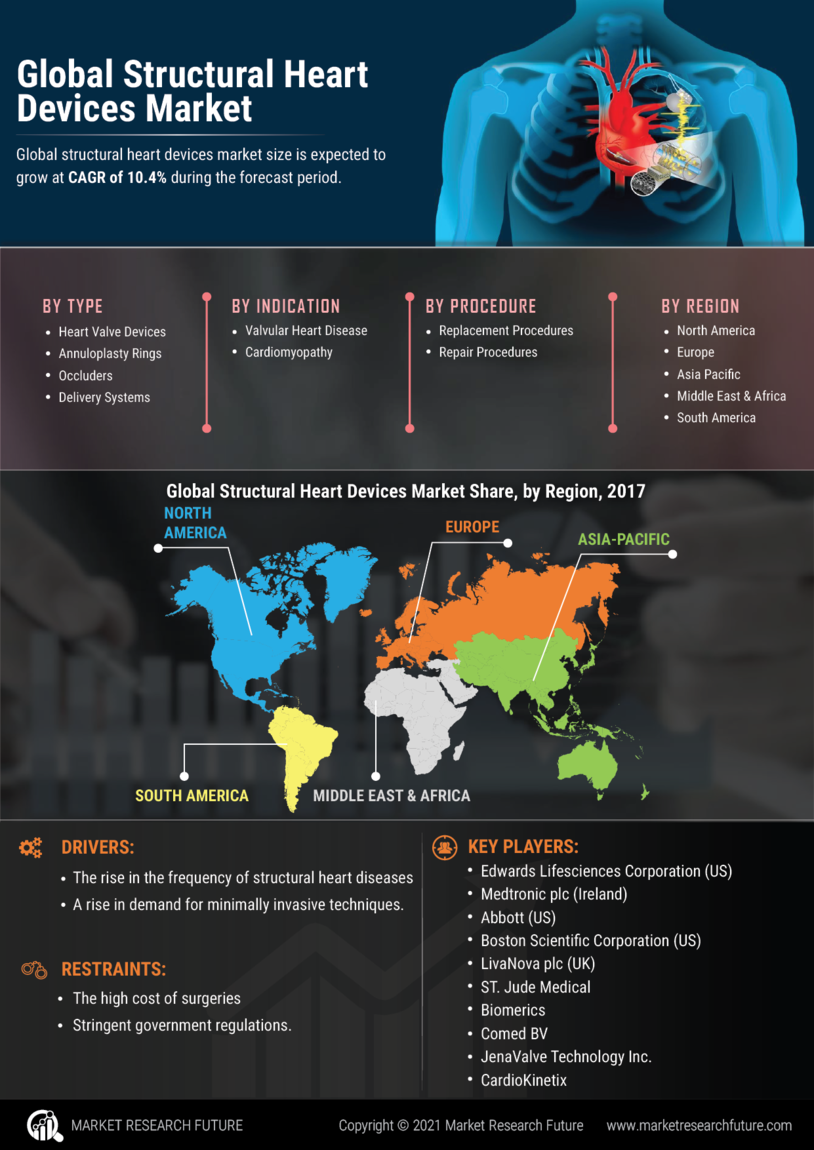
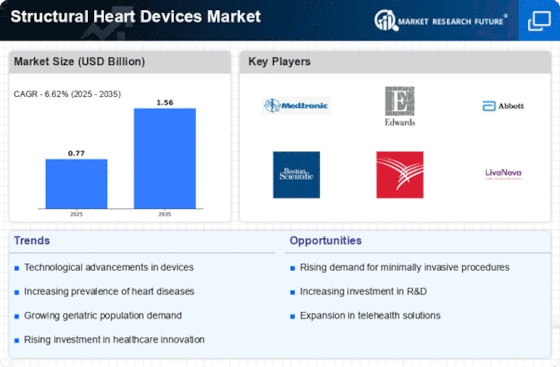
The purpose of this research is to assess the global market for structural heart devices, which include transcatheter aortic valve replacement (TAVR), transcatheter mitral valve replacement (TMVR), transcatheter tricuspid valve replacement (TTVR), and transcatheter repair (TMR) devices. The research report provides an objective overview of the current market status, competitors in the space, emerging trends and driving forces that are likely to affect market growth and the potential opportunities and threats in the future.
Structural heart disease is a widespread yet largely undiagnosed health issue globally. Although often overshadowed by less expensive and less complex medical procedures, its potential damage to the body should not be taken lightly. Structural heart devices are developed to overcome various disease-related heart problems like damaged valves, leaking heart chambers, blocked arteries, and abnormal communications between the chambers. Given the global prevalence of heart-related diseases, the market for these devices is forecasted to experience an impressive growth rate over the next several years.
In order to explore this potential properly and accurately, it is essential to formulate a research methodology that delivers the most relevant data effectively. This research methodology section includes a description of the research process, research design, data collection methods, data analysis methods, research limitations, and ethical considerations.
2. Research Process
This research project follows a two-stage process. The first stage of the research involves the literature review of existing documents, published data and analysis related to the global structural heart device market. The purpose of this initial stage is to gain an in-depth understanding of the existing structural heart device market and to identify the major market players. The secondary sources include published data from various trade publications, market reports, annual reports, conference proceedings, and white papers, as well as information from proprietary databases.
The second stage of this research focuses on the primary data collection methods which included conducting interviews with stakeholders, industry experts, medical personnel, and patients. These interviews were conducted in the form of unstructured and structured interviews and face-to-face interviews. The purpose of conducting these interviews is to understand their experiences, needs and preferences for structural heart devices and to assess their opinion about the factors impacting the market.
Moreover, surveys were conducted with structural heart device manufacturers, vendors, and distributors, so as to gain insights into their strategies, processes, and solutions. This data is collected using an online survey tool which collected responses from participants located in various countries.
3. Research Design
Research design is an essential part of a research project. This section describes the type of research design and the type of research method used in this project. In this study, a quantitative research design and an umbrella research approach were adopted. The quantitative research design makes use of numerical data acquired through primary and secondary data collection methods.
An umbrella research approach was adopted as it allows for multiple methods of data collection and analysis, making it more versatile. This approach includes both deductive and inductive methods of data collection, as well as both qualitative and quantitative methods of data analysis.
4. Data Collection Methods
The data collected from secondary sources include published data from various trade publications, market reports, annual reports, conference proceedings, and white papers, as well as information from proprietary databases. The data from the primary sources included interviews with stakeholders, industry experts, medical personnel and patients. Surveys were conducted with structural heart device manufacturers, vendors, and distributors.
5. Data Analysis Methods
The data collected from secondary and primary sources were then analyzed using both qualitative and quantitative methods. The qualitative data analysis approach involved open- and closed-ended analysis techniques. Open-ended techniques included content analysis, comparison analysis and discourse analysis. Closed-ended techniques included concept analysis, socio-demographic analysis, and cross-case analysis.
The quantitative data analysis approach included the use of descriptive and inferential statistics. Descriptive statistics such as percentages, mean, median, mode, standard deviation, correlation, and regression were used to summarily describe the numerical data. Inferential statistics were also used to test the results for statistical significance.
6. Ethical Considerations
All steps in the research process were taken with consideration to ethical concerns. All data collected through primary sources were kept confidential and used solely for the purpose of this research project. All participants were informed about the purpose of the study and were given the option to discontinue participation at any time. In addition, measures were taken to ensure the accuracy and validity of the results by triangulating the data.
In conclusion, the research process, research design, data collection methods, data analysis methods, research limitations, and ethical considerations were all taken into account in the research process to ensure that an objective and accurate overview of the current state of the global structural heart device market is gained.