Research Methodology on Running Gears Market
Introduction
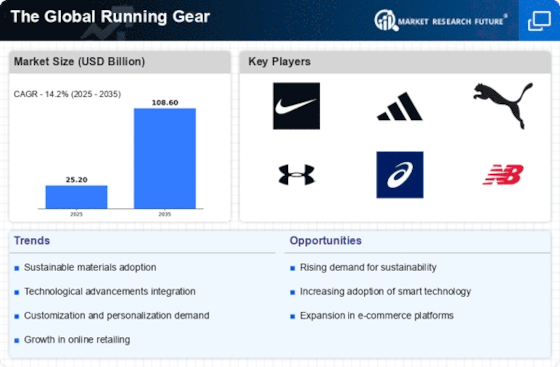
The modern sporting goods industry has shown tremendous growth in recent years driven by an increasing number of health and fitness-conscious people around the globe. Among the various categories of sporting goods and equipment, running gear exhibits a high degree of popularity and growth potential. The running gear market is projected to register an attractive CAGR over the review period of 2024 – 2032, according to Market Research Future (MRFR).
According to the report, the growing participation of people in different running events as well as health awareness campaigns by the government has been a primary growth driver for the running gear market across the world. Increased consumer awareness of the health benefits of running and other sports activities, along with the availability of multi-functional, lightweight and enhanced technology-driven running gear has also bolstered market growth.
The purpose of this study is to investigate and analyze the current state of the Global Running Gear market, understand the factors which are either driving or restraining its growth, identify consumer preferences and trends, and gauge the competitive landscape in the market. The research methodology is outlined below.
Research Methodology
A mixed-methods research, which includes a combination of qualitative (interview) and quantitative (survey) techniques, was utilized. Timely and up-to-date information on the running gear market was collected from various resources including, but not restricted to, books, trade journals, and other published materials, as well as from in-depth interviews with key market players. Data obtained through secondary research sources were verified for accuracy through primary data collection to ensure quality, including gathering insights from non-academic and academic experts about market trends and factors influencing the market. Secondary data regarding the running gear market was collected from market research reports, company statements & financial reports from market players, national statistics, and trade data.
Primary data collection
Primary data was collected through interviews with industry leaders and market players, such as manufacturers, distributors, retailers, organisations in the retail industry and members of the running gear production value chain. Additionally, several leading global organizations were also interviewed to gain insights into their current market standing, plans for expansion and growth, and strategies for maintaining competitive advantage in the market.
Data Analysis
Secondary data was used to identify solutions and opportunities, while primary data was used to build detailed insight into the running gear market. Data was further refined through triangulation, comparison, validation and verification. The data gathered was evaluated and analyzed to gain holistic insight into the market. Insights and perspectives obtained were mapped against existing baseline data and insights to create a comprehensive market report.
Conclusion
Based on the research conducted, the report provides an overview of the running gear market as well as an in-depth analysis of the market dynamics, segmentation, key trends and players. It also provides a comprehensive market forecast from 2024 to 2032 projected from the data collected from primary and secondary sources. Additionally, the study covers other aspects pertinent to the running gear market such as Porter’s five forces analysis, market share analysis, and categorization of value chain players.