Research Methodology on Level Sensor Market
1. Introduction
Level sensors are electronic devices which measure the level of a liquid or solid in a container or tank and trigger a warning signal when the level reaches a predetermined level. This helps avoid overflows or underflows of the fluid in a tank. Generally, level sensors are essentially used to ensure the overall safe and efficient operation of a variety of industrial processes.
Level sensors are extensively used in application industries like water & wastewater management, oil & gas, chemical, pharmaceutical, and food & beverage among others. They come in various sizes and types; these range from simple mechanical float level sensors to more sophisticated electronic levels sensors such as ultrasonic level sensors and magneto strictive level sensors.
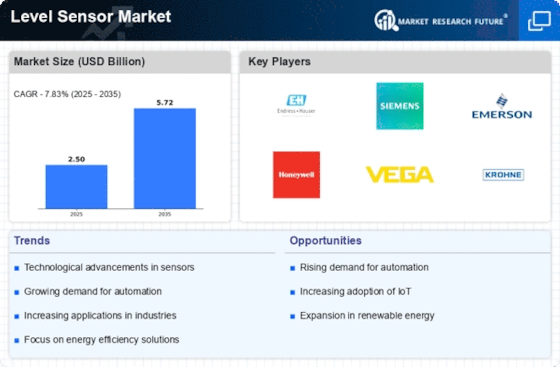
The level sensor market is likely to witness substantial growth due to the increasing use of level sensors in various industrial applications. Furthermore, the growing demand for level sensors in water and wastewater management, chemical and oil & gas industry is recognized as one of the key drivers for this market growth. The key trend observed in the market is the increasing demand for non-contact level sensors.
2. Research Aim and Objectives
This research aims to obtain a comprehensive overview of the level sensor market. Research objectives include:
- To identify the key drivers and restraints that influence the growth of the level sensor market
- To understand the key factors that have led to the increased adoption of level sensors in various application industries
- To gain an understanding of the dynamics of the level sensor market
- To analyse the competitive landscape of the level sensor market by focusing on the market share analysis and key strategies adopted by the major industry players.
3. Research Questions
- What are the key drivers and restraints influencing the growth of the level sensor market?
- How are level sensors being adopted in various application industries and what are the key factors driving the uptake?
- What are the dynamics of the level sensor market?
- What is the competitive landscape of the level sensor market and what strategies are being adopted by the major industry players?
4. Research Methodology
The research methodology adopted for this research project comprised both primary and secondary research. Primary research was conducted through an online survey to elicit the opinions of stakeholders in the level sensor industry. The online survey was distributed to a range of industry stakeholders in order to gain insight into the current dynamics of the level sensor market and the outlook for the industry over the next 7 years. The survey respondents included level sensor manufacturers, distributors and integrators, as well as users of level sensors in various industries such as water & wastewater management, oil & gas, chemical, pharmaceutical and food & beverage.
Secondary research was conducted by looking at industry reports, press releases, and other published material related to the level sensor market. The secondary research helped to gain an understanding of the competitive landscape and market share analysis of the level sensor industry. The research methodology also included interviews with key stakeholders in the level sensor industry in order to obtain an understanding of the current market dynamics, key drivers and restraints and strategies adopted by the major industry players.
To gain an understanding of the market size and growth prospects of the level sensor market, we conducted an analysis of the market data (both historical and forecasted) obtained through secondary research and expert opinions. Analysing the data obtained through secondary and primary research, we conducted a market analysis to understand the current market trends, identify the key drivers and restraints and gain an understanding of the market size and growth prospects of the level sensor market.
5. Data collection and Analysis
The data collected through primary and secondary sources were analysed to gain an understanding of the level sensor market. The data collected was analysed by using various statistical and graphical techniques such as market segmentation, market share analysis, and consumer behaviour analysis.
The market share analysis was conducted to understand the competitive landscape in the level sensor market and identify the key players operating in the level sensor market. The analysis was conducted by making use of the market share data obtained from industry reports, press releases and company websites.
The consumer behaviour analysis was conducted to understand the adoption trends of level sensors in various application industries such as water & wastewater management, oil & gas, chemical, pharmaceutical and food & beverage. This analysis was conducted by understanding user demographics, buying behaviour and user preferences.
6. Summary
The aim of this research is to obtain a comprehensive overview of the level sensor market by looking at the key driving and restraining factors, the competitive landscape and market size and growth prospects. Primary research was conducted through an online survey and a series of interviews with key industry stakeholders, while secondary research was conducted by looking at industry reports, press releases, and other publications related to the level sensor market. The data collected was analysed by using various statistical and graphical techniques such as market segmentation, market share analysis, and consumer behaviour analysis. This information will help to gain an understanding of the dynamics of the level sensor market and the outlook for the industry over the next 7 years.