North America : Leading Market for ASD Solutions
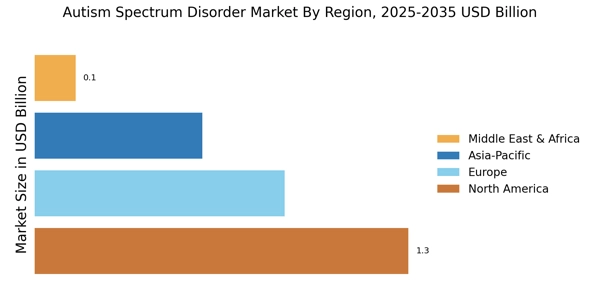
North America leads in Autism Spectrum Disorder Market Size, accounting for over 45.99% of the global revenue in 2024. The region benefits from advanced healthcare infrastructure, increasing awareness, and supportive government policies. Regulatory catalysts, such as the Individuals with Disabilities Education Act (IDEA), promote early intervention and access to services, driving demand for ASD-related products and services.
- The Centers for Disease Control and Prevention (CDC) reports that autism prevalence has reached 1 in 36 children in the U.S., reflecting increased awareness and screening. Early intervention programs supported by federal policies have improved developmental outcomes by up to 30%, driving demand for diagnostic and therapeutic ASD services across the region.
- The United States accounts for 82% share valued at USD 1.04 Billion driven by high diagnosis rates and strong healthcare infrastructure, while Canada holds 18% share valued at USD 0.23 Billion supported by increasing awareness programs.
The United States is the primary contributor, with significant investments from key players like Autism Speaks and Johnson & Johnson. Canada also plays a vital role, focusing on inclusive education and healthcare initiatives. The competitive landscape is characterized by a mix of established companies and innovative startups, ensuring a diverse range of solutions for ASD management.
Europe : Growing Awareness and Support
Europe Autism Spectrum Disorder Market size was valued at USD 0.85 billion in 2024, making it the second-largest regional market with a 30% share. The region's growth is driven by increasing awareness of ASD, enhanced diagnostic capabilities, and supportive policies from various governments. The European Union's initiatives, such as the European Autism Strategy, aim to improve the quality of life for individuals with autism, fostering demand for effective interventions and therapies.
- The World Health Organization (WHO) and European health agencies report that ASD affects approximately 1 in 100 children across Europe, with increasing diagnosis rates due to improved screening programs. Additionally, over 70% of European countries have implemented child health strategies, supporting early diagnosis and expanding access to ASD-related therapies and services.
- Europe represents 30% share, with Germany contributing 28% share valued at USD 0.24 Billion driven by advanced healthcare systems, while the UK holds 22% share valued at USD 0.19 Billion supported by growing autism support initiatives.
Leading countries include Germany, the UK, and France, each contributing significantly to the market. The competitive landscape features key players like Pearson and Medtronic, alongside numerous local organizations focused on autism support. Collaborative efforts among governments, NGOs, and private sectors are enhancing service delivery and accessibility for individuals with ASD.
Asia-Pacific : Emerging Market with Potential
The Asia-Pacific region is emerging as a significant Autism Spectrum Disorder Market solutions, accounting for about 20% of the global market share. The growth is fueled by increasing awareness, rising prevalence rates, and government initiatives aimed at improving autism services. Countries like China and India are witnessing a surge in demand for early diagnosis and intervention programs, supported by regulatory frameworks that promote mental health awareness.
China is leading the market, with substantial investments in healthcare infrastructure and educational programs for children with autism. India follows closely, with a growing number of NGOs and private organizations providing support services. The competitive landscape is evolving, with both international and local players striving to meet the increasing demand for effective ASD solutions.
Middle East and Africa : Untapped Potential in ASD Care
The Middle East and Africa region represents an untapped market for Autism Spectrum Disorder (ASD) solutions, holding approximately 5% of the global market share. The growth potential is significant, driven by increasing awareness of autism, rising prevalence rates, and the need for specialized services. Governments are beginning to implement policies to support individuals with autism, although challenges remain in terms of accessibility and funding for services.
Countries like South Africa and the UAE are taking steps to improve autism care, with initiatives aimed at enhancing educational and healthcare services. The competitive landscape is still developing, with a mix of local organizations and international players entering the market. Increased collaboration among stakeholders is essential to address the needs of individuals with ASD in this region.