Research Methodology on Medical Plastics Market
The research was conducted using both primary and secondary methods. The primary data included surveys and interviews of key industry players; and secondary data included books, industry journals, and online databases like Market Research Future (MRFR), Press Releases, and other statistical data from commercial databases.
For this research, a comprehensive approach including top-down and bottom-up approaches, triangulation of data, factor analysis, and time series analysis were implemented. This method was applied to attain detailed findings of the medical plastics market.
Top-Down and Bottom-Up Approach
The top-down approach was used to estimate and validate the size of the Medical Plastics market. It is based on the estimation of parent market trends and advantages and disadvantages from segment-level datasets.
For the purpose of this study, the bottom-up approach was used to assess the market size of the different sub-segments of the Medical Plastics market based on end-user demand for the products, types of products, and end-user consumption behaviour.
Triangulation of Data
For the purpose of this study, data triangulation was used by summarizing data from both primary and secondary sources. This approach was used to validate the market estimates and sizing of the different segments and to generate accurate and consistent market estimates.
Factor Analysis
Factor analysis is a widely used technique that weighs the influential factors which affect the Medical Plastics market based on target-group-specific characteristics. Demographic and economic factors across all the regions were considered.
Time Series Analysis
Time series analysis was used to unearth the historical trends to project the future trends for the Medical Plastics market. This method was employed by analyzing the historical data and data-based solutions which generated the market size estimates and forecasts.
Data Sources
For the purpose of this report, Market Research Future (MRFR) was the primary data source. Additionally, other sources such as trade journals, industry reports, company annual reports, online databases, and numerous other sources were used to collect information.
Secondary Research
A broad review of the relevant publications such as company websites, press releases, white papers, investment reports, annual reports, SEC filings, financial reports, and market research databases were studied to assess the market conditions. The industry publications and periodic reports collected were used to collect data and information related to the Medical Plastics Market. The primary research sources included the survey and interviews of potential industries.
Primary Research
MRFR conducted surveys and interviews with industry experts, such as CEOs, CFOs, COOs, key executives, marketing & product managers, sales personnel, and industry analysts. The collected information was analyzed and validated through triangulation techniques and used to further refine the market estimates.
Interview Protocol
An interview protocol, a closely designed questionnaire, was developed to gain insights into the demand and supply side of the Medical Plastics market. The questions revolved around the following parameters:
- Awareness of the Medical Plastics
- End users of Medical Plastics
- Type of Medical Plastics
- Applications of Medical Plastics
- Industry’s internal and external challenges
- Captive market versus replacement demand
- Cross-segment business investments
- Latest trends in the Medical Plastics market
The survey covered both high-level commercial judgments and detailed technical information. The survey was conducted in collaboration with key industry stakeholders and market experts. The survey participant segment included potential competitors, industry experts, and key opinion leaders.
Objective
The objective of the research was to gain insights into the market size, competition structure, the competitive landscape, and the dynamics of the Medical Plastics market. The specific objectives of the research include:
- To provide a detailed analysis of the Medical Plastics market and its different segments
- To identify the key drivers and challenges of the Medical Plastics market
- To assess the industry’s internal and external challenges
- To perform an in-depth analysis of the market dynamics
- To analyze the entry barriers and opportunities in the Medical Plastics market
- To examine the impact of market segmentation on the Medical Plastics market
- To identify the market trends and device growth strategies
- To provide a comprehensive analysis of the competitive landscape of the Medical Plastics market
- To identify the key stakeholders in the Medical Plastics market
- To assess the latest trends in the Medical Plastics market
- To provide a detailed analysis of the competitive strategies adopted by the industry players
- To assess the impact of changing economic conditions on the Medical Plastics market
Data Collection
For the study, MRFR used qualitative and quantitative research data from both primary and secondary resources. The qualitative research data was collected from interviews with key players, industry experts, and experienced professionals. The interviewees included analysts, competitors, distributors, dealers, and industry stakeholders.
The secondary research data was collected from books, trade journals, financial reports, and online databases such as Bloomberg, Hoovers, Factiva, and OneSource. The research data was analyzed and validated with the help of triangulation methods and used to gain an in-depth understanding of the Medical Plastics market.
Market Estimation
The data and information collected through primary and secondary research sources were verified using various statistical analysis tools such as time series analysis and analytical software tools such as MIS and E-views. The market data was analyzed using appropriate statistical tools and the market size was estimated using the top-down and bottom-up approaches.
Market Structure and Dynamics
The market structure and dynamics of the Medical Plastics market were studied in detail using Porter’s Five Forces Analysis. This analysis was used to identify the key driving forces of the market and to assess the competitive intensity of the market players. The bargaining power of suppliers and buyers, the threat of substitutes, and the threat of new entrants were considered for the analysis.
Market Segmentation
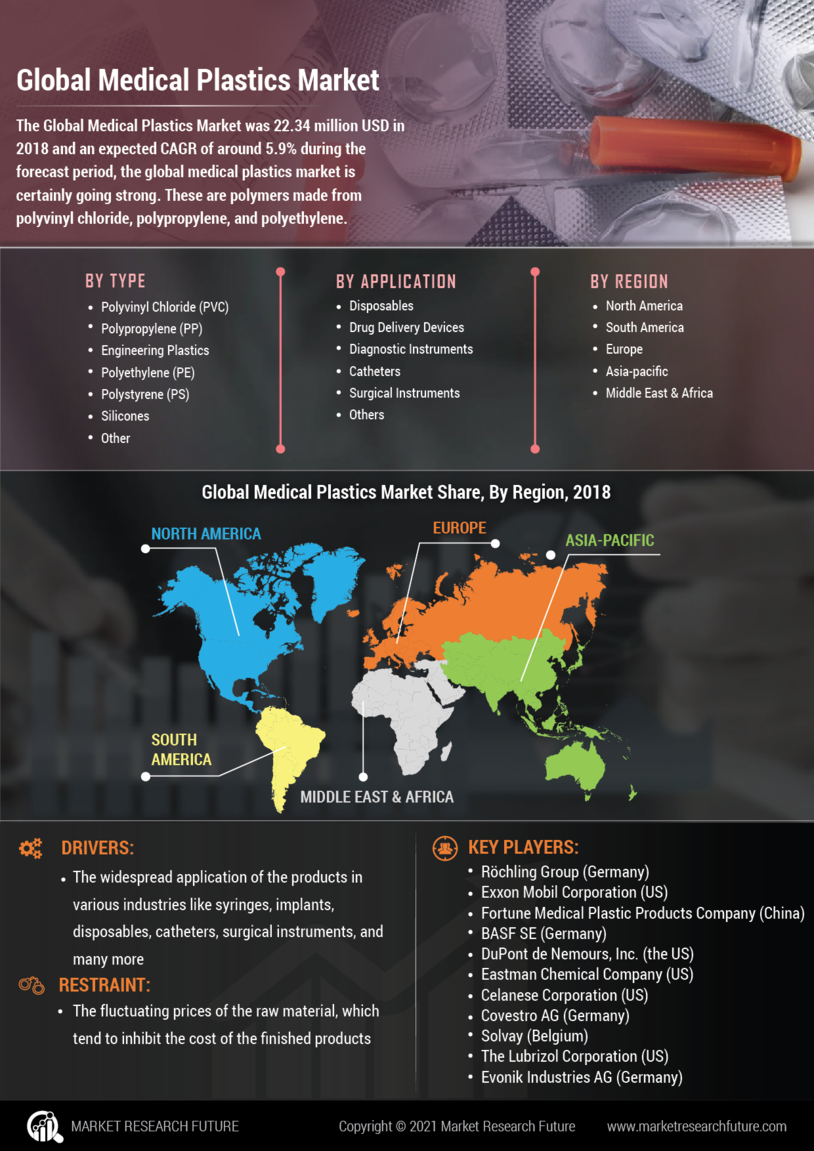
Based on type, the Medical Plastics market is segmented into PMMA, Polyethylene, Polypropylene, Poly polyvinyl chloride (PVC), and others. On the basis of application, the market is divided into medical disposables, medical consumables, and others. On the basis of end users, the market is segmented into healthcare, medical device manufacturers, and others.
Regional Analysis
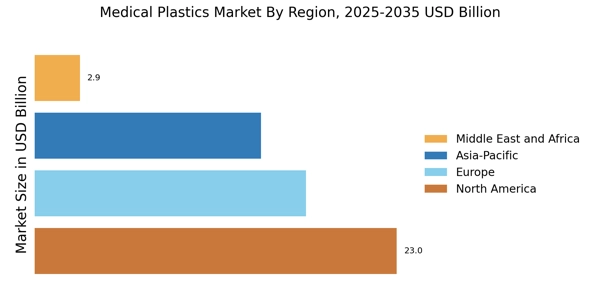
The regional analysis of the market includes Asia-Pacific, North America, Europe, Latin America, and the Middle East & Africa. The regional analysis is based on the market size and market potential of the region.
Competitive Analysis
The competitive analysis of the market was done to assess the competitive intensity and the competitive landscape of the industry. The profiles of the prominent companies operating in the Medical Plastics market were studied in detail. The key strategies adopted by the industry players to gain a competitive edge in the market were studied. The company financials and recent developments were studied in detail.
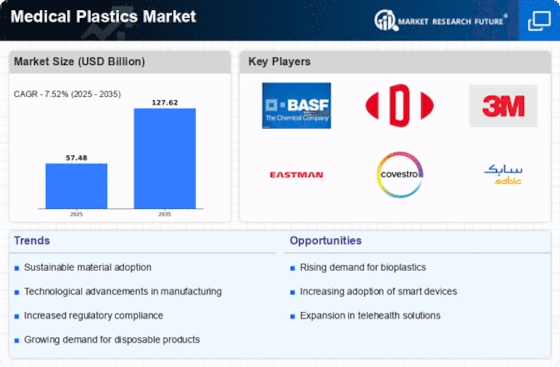
The key players in the Medical Plastics market are Kuraray Co., Ltd., BASF SE, Covesto, Polyone Corporation, Arkema SA, Solvay SA, Celanese Corporation, LG Chem Ltd., Evonik Industries AG, and Eastman Chemical Company.
Conclusion
This research study concluded that the Medical Plastics market is expected to register a healthy CAGR of 6.8% during the forecast period. The growing demand for medical plastics in the healthcare and medical device manufacturing industry is the major driver of the market. The Asia-Pacific region is the largest market for medical plastics and is anticipated to continue its lead. The major players in the market are focusing on developing new technologies and introducing new products in the market to gain a competitive edge.