Research Methodology on LED Lighting Market
INTRODUCTION
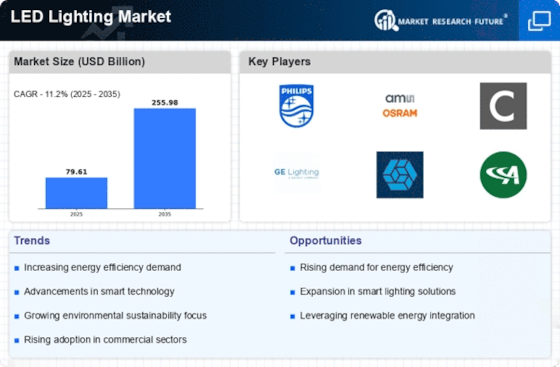
Light Emitting Diode (LED) lighting market is expected to grow rapidly in the near future due to its high efficiency, low power consumption, and cost-effectiveness. The market report by Market Research Future (MRFR) estimates the LED lighting market to expand at a rapid pace from 2023 to 2030 (forecast period).
The LED industry has a high chance of growth due to several factors such as government initiatives to promote LED lighting, standards and environmental regulations to reduce electricity consumption and harmful emissions, technological advancements, and the increasing demand for energy-efficient lighting solutions. The high adoption of LED lighting systems can be attributed to their features such as long lifespan and low energy consumption.
RESEARCH METHODOLOGY
The research methodology adopted for this research study focuses on primary and secondary sources of data. The purpose of the research is to gain insight into the market for LED lighting market based on an analysis of these sources.
Primary Research
Primary research involves the collection of both direct and indirect data from primary sources. The primary sources include surveys, interviews, questionnaires, and focus groups. An in-depth understanding of the market is obtained with the help of primary research.
Survey
A structured survey with a set of predetermined questions is conducted among a sample of users of LED lighting in order to better understand their usage patterns and preferences.
Interviews
Interviews are conducted with sales representatives of LED lighting companies to gain a better understanding of the company's strategies and market positions.
Focus Group
A focus group with LED lighting experts is conducted in order to gain a deeper understanding of the LED lighting market and the current trends and developments in this space.
Secondary Research
Secondary research is also used for this research in order to gain data from secondary sources such as published reports, journals, whitepapers, and websites. These sources provide an in-depth study of the LED lighting market along with a detailed analysis of the market dynamics including drivers, restraints, threats, and opportunities.
Various sources, including top media outlets, experts, government sources, publications and academic sources, are used for the collection of data. The secondary sources include the report by Market Research Future (MRFR) “LED Lighting Market: Global Market Analysis, Size, Share, Growth, Trends and Forecast, 2023-2030”.
Data Analysis
The collected data is analyzed using various analytical tools and techniques. The analytical tools include charts, tables, and graphs. The primary and secondary data are collated and analyzed to conclude the LED lighting market.
The qualitative and quantitative data are analyzed using qualitative tools such as SWOT Analysis, Porter's Five Forces Model, and Market Attractiveness Model. These tools are used to identify areas of strength and weakness of the LED lighting market, the threat of new entrants and substitutes, current trends, customer segments, and other market opportunities.
The quantitative data is analyzed using quantitative tools such as regression analysis and time series analysis to gain insight into the market dynamics over a period of time. This is done in order to identify the trend of the market, customer segments, and customer preferences.
CONCLUSION
In conclusion, the data collected from primary and secondary sources are analyzed with the help of qualitative and quantitative tools and techniques. The research utilized a combination of primary and secondary research methods to gain a better understanding of the LED lighting market. The results of the research provide an in-depth analysis of the LED lighting market and the current trends and developments in this space. Additionally, the research also provides an overview of the factors influencing the market such as government initiatives and regulations, technological advancements, and customer preferences. The research further predicts the future of LED lighting in terms of market size, growth, and opportunities.