Research Methodology on Laminated Veneer Lumber Market
Introduction
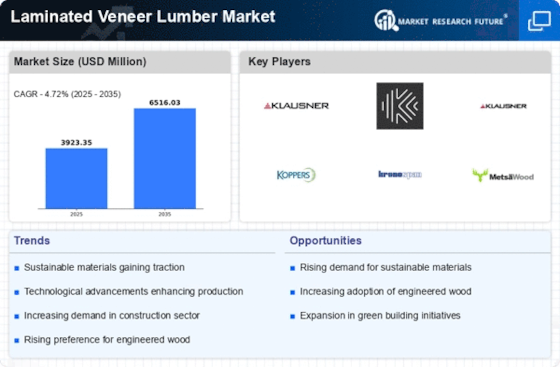
The published report on the global laminated veneer lumber market by Market Research future focuses on the essential information which enables business persons and marketers to get crucial insights about the future market dynamics and make indispensable decisions for their businesses. This research report analyses the Global Laminated Veneer Lumber Market from 2023 to 2030 and is intended to provide an extensive overview of the market.
Objective
This research report aims to provide an extensive assessment of the Laminated Veneer Lumber Market concerning the market size and possible growth prospects. Specifically, the objectives of this research are to:
Investigate and analyze the current market trends.
Analyze the competitive landscape of the Laminated Veneer Lumber market.
Identify the existing gap in the market.
Forecast the market size over the next seven years.
Assess the opportunities present in the market and make strategic recommendations.
Research Methodology
This research study is based on both primary and secondary sources of data. TMRFR's research methodology follows a well-structured framework involving several tools and techniques, such as statistical analysis and market size estimates. The primary data used in this study is obtained through interviews conducted with Laminated Veneer Lumber market players and experts. Secondary data for this study is collected through various sources such as market reports, journals and other online sources.
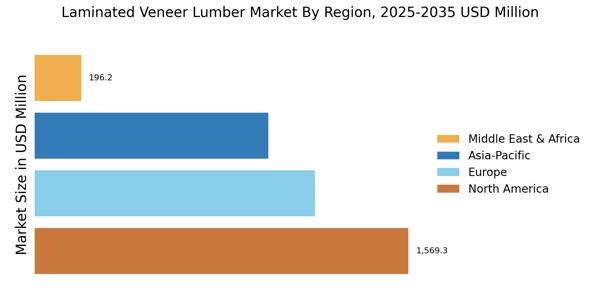
The market segmentation utilized in this study is extensively based on geographical regions, product types and various application areas.
This research report mainly covers the global market size of Laminated Veneer Lumber and its associated sub-segments and analysis.
The data collection process involves primary and secondary research techniques. Qualified and experienced analysts have conducted a comprehensive primary interview with key industry experts to obtain accurate market size estimation for the global Laminated Veneer Lumber market. The secondary research process has made use of various data sources, such as sources from public databases, company presentations, industry journals and surveys as reference points for estimating and forecasting the market size.
The collected data from primary and secondary sources are validated using advanced analytics and statistical tools. Various research methods were employed to ensure the accuracy and consistency of the collected information.
The data collected from the primary and secondary research processes are further analyzed and validated to come up with a reliable industry overview. Various methods, such as data triangulation and market breakdown, have been used to accurately derive market figures and revenue based on the estimated size and anticipated growth trends.
The assumptions used in the revenue calculations are based on a study of the existing market trends, customer behaviour, supplier data and the projected demand for Laminated Veneer Lumber. However, market developments may change or alter these assumptions during the course of the study.
Conclusion
The research methodology adopted in this study is exhaustive and well-structured. Statistical data, industry knowledge and consumer behaviour trends derived from primary and secondary sources were used to size the market accurately. This effort has helped to develop a reliable understanding of the Laminated Veneer Lumber market and is expected to enable market players to make informed decisions for their businesses.