Research Methodology on Data Catalog Market
INTRODUCTION
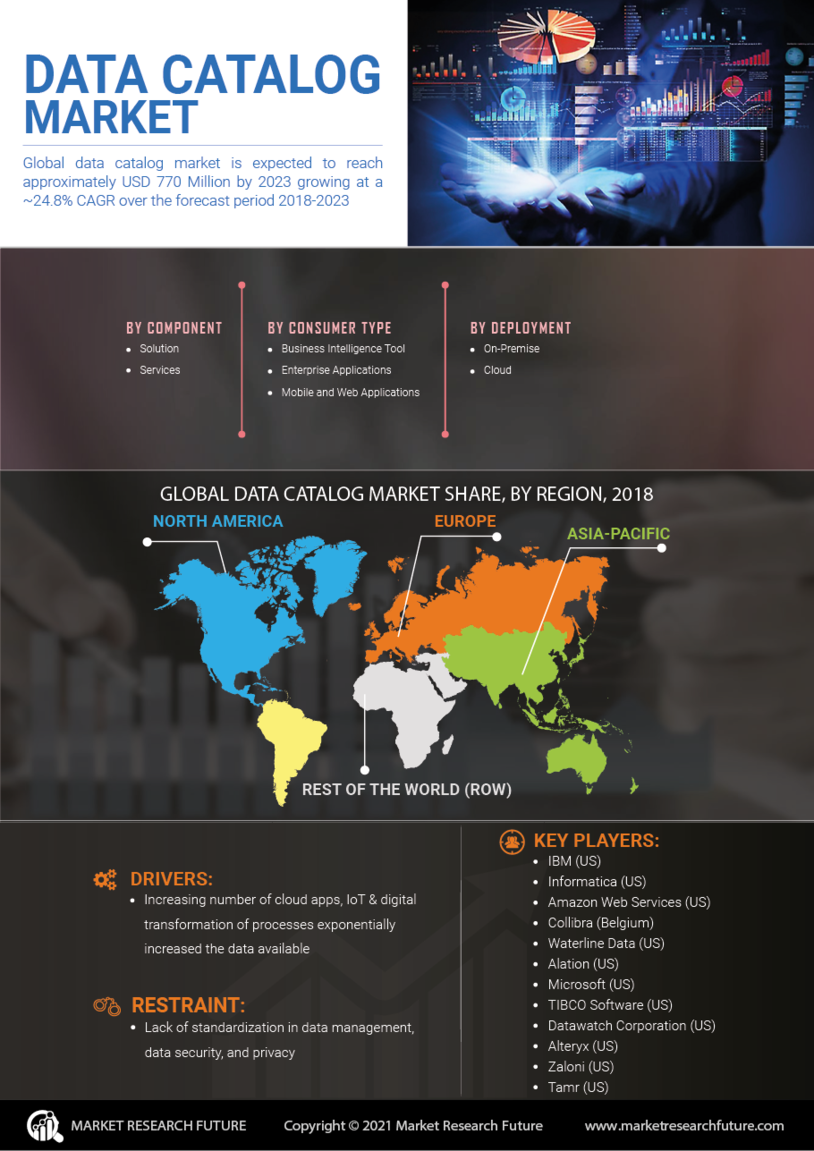
A data catalog is a metadata repository which is used to organize meta-data from various IT systems and databases, making it easier to locate and recover data. This can be used as a tool to automate the discovery of enterprise data and provide users with search and discovery capabilities.
Research Objective
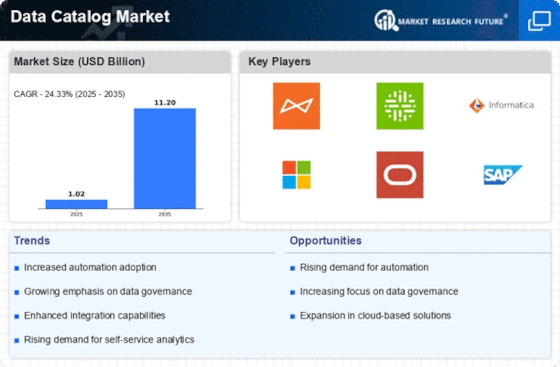
The main objective of this research is to analyze the market for data catalogs and to identify the opportunities present in the industry. Additionally, this research shall also analyze the various factors that are driving the growth of the data catalog market, identify major players and their market strategies, and assess the impact of different trends and developments on the market.
Research Methodology
This research project employs a data-driven market research approach to analyze the data catalog market. The research methodology adopted for this project consists of two stages: primary and secondary research. Primary research involves interviews with key industry participants including executives, CEOs, and market practitioners. Through these interviews, the researcher seeks to gain insights regarding the market dynamics, opportunities, competitive dynamics, and other aspects of the market.
In addition to conducting primary research, secondary research is also conducted to obtain data and information relevant to the topic. A wide range of sources such as industry journals, databases, financial directories, market reports, and press releases are referred to during the research process. Furthermore, the research report includes a statistical analysis of the market data available, such as market sizing, market segmentation, market trends, and other related components.
Moreover, the market sizing and forecasting of the data catalog market will be based on a combination of top-down and bottom-up approaches. To ensure accuracy and precision, the primary data gathered from key industry participants are combined with secondary market data. This data is analyzed and validated by market experts to present an accurate interpretation of the current market conditions, trends, and future prospects.
RESEARCH SOLUTION
Data Collection and Analysis
The data collection and analysis for this research project involve both primary and secondary sources.
Primary data: To obtain primary data, interviews are conducted with key executives and market practitioners including CEOs, venture capitalists, and executives from data catalog companies. Through these interviews, insights into the growth potential, challenges, and opportunities in the data catalog market will be acquired. The interviews are conducted using the semi-structured interview method and cover topics such as market trends, competitive dynamics, major players, and policy landscape.
Secondary data: For secondary data, the research report makes use of a wide range of sources such as industry journals, financial directories, databases, market reports, and press releases. The secondary data gathered from these sources is used to gain insights into the current market conditions, size and forecast, market trends, and players in the market.
Data Analysis:
The collected data from both primary and secondary sources are analysed using qualitative and quantitative research methods. For the quantitative analysis, the research team makes use of descriptive, predictive, and prescriptive analytics to understand the current and historical trends in the market. The qualitative data is analysed using the SWOT and PEST frameworks to identify the strengths, weaknesses, opportunities, and threats in the market. Furthermore, the data analysis also involves market segmentation, forecasting, and estimation of the market size and growth rate.
The research team also use statistical tools such as regression analysis, correlation analysis, and testing of hypotheses to draw actionable insights from the collected data.
Research Outcome
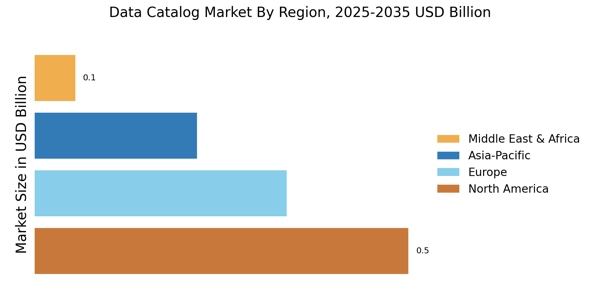
The research report includes a comprehensive analysis of the data catalog market. The report covers topics such as market dynamics, opportunities, competitive landscape, major players, industry trends, and impact analysis. Furthermore, the report also includes market sizing, segmentation, and forecasting of the data catalog market. The report also includes a detailed analysis of the impact of different trends and developments on the market as well as actionable insights.