Q3 2026: IBM Corporation (US): Established a quantum innovation hub at ETH Zurich with Lockheed Martin, deploying Switzerland's first IBM Quantum System Two powered by the Nighthawk processor by end of 2026.
Q3 2026: Quantinuum (US): Introduced QUOPS benchmarking methodology for measuring enterprise-scale fault-tolerant quantum computing capability, comparing Quantinuum, Google, and IBM processors on system-level performance metrics.
Q3 2026: Google Quantum AI (US): Highlighted Willow 105-qubit processor and announced REPLIQA research program applying quantum computing to life sciences with Harvard, MIT, and UC institutions.
Q3 2026: Rigetti Computing (US): Signed definitive agreement for $100 million CHIPS Act funding to accelerate superconducting quantum computing R&D across readout electronics, cryostat architecture, and high-connectivity chip fabrication.
There have been some big changes in the Quantum Computing Market lately among the biggest companies. In August 2023, Google said that qubit coherence and error correction had gotten a lot better on the way to making quantum systems that can handle faults. IBM set up a Quantum System One at its campus in Bromont, Quebec, on September 22, 2023. Since June 2022, Microsoft has added IonQ's trapped-ion systems to Azure Quantum, which has made its hardware collection bigger.
Instead of merging with an analytics company, D-Wave has focused on corporate resilience by raising money through equity and installing its first Advantage quantum system on-site.
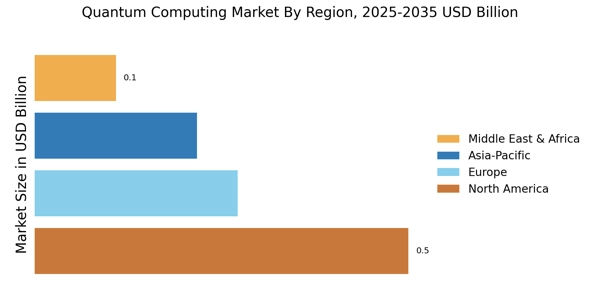
Different estimates put the quantum computing market at USD 65 billion by 2027, but other estimates, which include quantum sensing and communications, put it at USD 97 billion by 2035. Overall, the industry is growing quickly, thanks to breakthroughs in error correction, hardware deployments, and more businesses getting involved. This is a transformative time for quantum technology.







 Noah Malgeri
Co-Founder

 Peter Groot koerkamp
Account and Business Manager

 Younghwan Choi
Senior Retail Manager

 Mark Irwin
Management Consultant

 Akif Moroglu
Strategy & Business Development Director

 Guilherme Gomes Martins
Product Management Director

 Joseph Aguayo
Sales Operations & Pricing Manager

 La Terria Dodd
Program Support Specialist

 Rob Kooiker
Group Product Manager HVAC & Fire Protection GMA


