粉红喜马拉雅盐市场 摘要
主要市场趋势和亮点
市场规模与预测
| CAGR (2025 - 2035) | 10.29% |
The Pink Himalayan Salt Market is currently experiencing a notable evolution, driven by a growing consumer awareness regarding health and wellness. This mineral-rich salt, harvested from ancient sea salt deposits, is increasingly recognized for its potential health benefits, which include promoting hydration, balancing electrolytes, and providing essential minerals. As consumers become more health-conscious, the demand for natural and unrefined products rises, positioning Pink Himalayan salt as a preferred choice over conventional table salt. Furthermore, the culinary sector is embracing this product, with chefs and home cooks alike appreciating its unique flavor profile and aesthetic appeal. In addition to culinary applications, the Pink Himalayan Salt Market is witnessing a surge in popularity within the wellness industry. Products such as salt lamps, bath salts, and spa treatments are gaining traction, appealing to consumers seeking relaxation and therapeutic benefits. This diversification of product offerings suggests a robust market potential, as businesses explore innovative ways to incorporate Pink Himalayan salt into various lifestyle products. Overall, the Pink Himalayan Salt Market appears poised for continued growth, driven by evolving consumer preferences and an increasing inclination towards natural and holistic health solutions.
The Pink Himalayan Salt Market is increasingly influenced by a heightened focus on health and wellness. Consumers are gravitating towards natural products that are perceived to offer health benefits, leading to a rise in demand for mineral-rich salts. This trend reflects a broader shift towards healthier eating habits and lifestyle choices.
Culinary innovation plays a pivotal role in the Pink Himalayan Salt Market, as chefs and food enthusiasts explore its unique flavor and presentation. The salt's versatility in various dishes enhances its appeal, encouraging its use in gourmet cooking and everyday meals alike.
The integration of Pink Himalayan salt into wellness and lifestyle products is becoming increasingly prevalent. From salt lamps to bath products, consumers are seeking holistic experiences that promote relaxation and well-being, thereby expanding the market's reach beyond traditional culinary uses.
消费者对健康和保健的日益关注似乎是喜马拉雅粉盐市场的主要驱动力。随着个人寻求天然替代品以取代传统食盐,喜马拉雅粉盐的需求激增,该盐以其矿物质含量和声称的健康益处而闻名。报告显示,天然盐市场预计在未来几年将以约5.5%的复合年增长率增长。这一趋势表明,消费者正趋向于与其健康目标相一致的产品,从而增强了喜马拉雅粉盐的市场潜力。此外,作为美食成分的盐的吸引力也可能促成其日益普及,表明喜马拉雅粉盐市场的增长轨迹是多方面的。
粉红喜马拉雅盐市场也受益于替代疗法和整体健康实践日益增长的受欢迎程度。盐疗法或称卤疗法,作为一种自然疗法,已逐渐被认可为治疗各种呼吸系统疾病和皮肤病的有效方法。这一趋势导致了对粉红喜马拉雅盐的兴趣增加,该盐常用于盐疗室和健康中心。行业专家建议,健康产业正处于上升轨道,消费者正在寻求促进放松和健康的替代治疗。随着越来越多的健康机构将粉红喜马拉雅盐纳入其产品中,该产品的市场可能会扩大。健康与消费者行为的交汇表明,粉红喜马拉雅盐市场的未来前景光明。
粉红喜马拉雅盐市场正在经历对天然和有机产品的显著需求增长。随着消费者对食品成分的要求越来越高,市场上出现了向被视为纯净和未加工产品的明显转变。粉红喜马拉雅盐常被宣传为精制盐的天然替代品,与这种消费者偏好非常契合。市场分析表明,有机食品行业正在扩展,自然盐是这一增长的重要组成部分。这一趋势表明,随着消费者在购买决策中优先考虑健康和可持续性,粉红喜马拉雅盐市场可能会看到销售的提升。对天然产品的重视也可能导致生产者加大市场营销力度,进一步巩固粉红喜马拉雅盐在市场中的地位。
粉红喜马拉雅盐市场受到不断变化的烹饪趋势的显著影响,这些趋势强调美食烹饪和天然成分。厨师和家庭厨师越来越多地将粉红喜马拉雅盐融入他们的菜肴中,不仅因为其独特的风味特征,还因为其美学吸引力。这种盐的鲜艳粉红色调为各种菜肴的呈现增添了视觉元素。市场数据显示,烹饪盐细分市场预计将见证显著增长,粉红喜马拉雅盐将成为关键参与者。这一趋势表明,市场正在向手工艺和高质量成分转变,这可能会提升粉红喜马拉雅盐在专业厨房和家庭烹饪环境中的地位。随着烹饪创新的持续蓬勃发展,粉红喜马拉雅盐市场可能会受益于对美食成分日益增长的欣赏。
粉红喜马拉雅盐市场因电子商务和在线零售平台的兴起而有望增长。随着消费者越来越多地转向在线购物以寻求便利和多样性,粉红喜马拉雅盐的可获得性显著提高。数据显示,包括美食盐在内的特色食品产品的在线销售正在上升,预计电子商务将在未来几年占据市场更大份额。这种向数字零售的转变使消费者能够探索更广泛的粉红喜马拉雅盐产品,从细盐到大块盐,增强了他们的购买选择。电子商务的增长不仅便利了消费者的获取,还使生产商能够接触更广泛的受众,可能推动销售并扩大粉红喜马拉雅盐市场。
The Pink Himalayan Salt Market displays a distinct market share distribution, with food grade salt commanding the largest segment. It is primarily utilized for culinary purposes, favorably positioned due to its widespread adoption among consumers seeking natural and healthier alternatives to regular table salt. Following closely is the Cosmetic Grade salt, which is gaining traction among beauty and wellness enthusiasts. This segment is increasingly recognized for its therapeutic properties, leading to growing market interests and exploring new applications in skincare products.
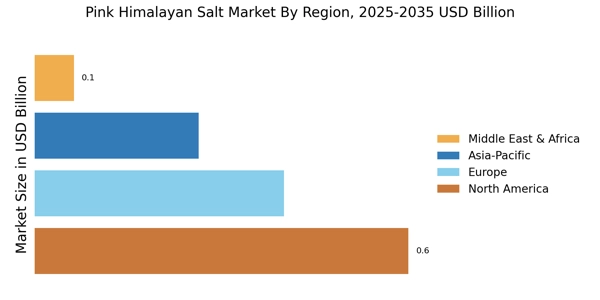
North America is the largest market for Pink Himalayan Salt Market, accounting for approximately 45% of global consumption. The region's growth is driven by increasing health consciousness among consumers, rising demand for natural and organic products, and a growing culinary trend that emphasizes gourmet cooking. Regulatory support for food safety and quality standards further catalyzes market expansion, ensuring that products meet consumer expectations for purity and authenticity. The United States is the leading country in this market, with key players such as Himalayan Chef, SaltWorks, and The Spice Lab dominating the landscape. The competitive environment is characterized by a mix of established brands and emerging players, all vying for market share. The presence of these companies, along with a robust distribution network, ensures that Pink Himalayan Salt Market is widely available across various retail channels, including supermarkets and online platforms.
Europe is witnessing a significant rise in the demand for Pink Himalayan Salt Market, holding approximately 30% of the global market share. This growth is fueled by increasing consumer awareness regarding health benefits, as well as a shift towards natural and organic food products. Regulatory frameworks in the EU promote food safety and quality, which enhances consumer trust and drives market growth. Countries like Germany and the UK are leading this trend, contributing significantly to the overall market expansion. Germany stands out as a key player in the European market, with a growing number of retailers and gourmet food stores offering Pink Himalayan Salt Market. The competitive landscape includes both local and international brands, with companies focusing on product differentiation and quality assurance. The presence of established players, along with innovative marketing strategies, is expected to further boost the market in this region.
Asia-Pacific is emerging as a significant player in the Pink Himalayan Salt Market, accounting for about 20% of global consumption. The region's growth is driven by increasing exports, particularly from Pakistan, which is the primary source of Pink Himalayan Salt Market. Rising health awareness and the popularity of natural food products are also contributing to demand. Regulatory measures in countries like India and Pakistan are evolving to ensure quality control and safety in salt production, further supporting market growth. Pakistan is the leading country in this region, with several key players involved in the production and export of Pink Himalayan Salt Market. The competitive landscape is characterized by a mix of traditional producers and modern enterprises focusing on quality and branding. As the market expands, the presence of local companies is expected to grow, enhancing the region's role in the global Pink Himalayan Salt Market supply chain.
The Middle East and Africa region is gradually emerging in the Pink Himalayan Salt Market, holding approximately 5% of the global share. The growth is primarily driven by increasing health trends and the rising popularity of natural food products. Countries in this region are beginning to recognize the potential of Pink Himalayan Salt Market, with regulatory bodies starting to implement standards for quality and safety, which is crucial for market development. South Africa and the UAE are leading the way in this market, with a growing number of retailers beginning to stock Pink Himalayan Salt Market. The competitive landscape is still developing, with opportunities for both local and international brands to establish a presence. As awareness of the health benefits of Pink Himalayan Salt Market increases, the market is expected to expand, attracting new players and investment.
The Pink Himalayan Salt Market is currently characterized by a dynamic competitive landscape, driven by increasing consumer awareness regarding health benefits and the rising demand for natural and organic products. Key players such as Himalayan Chef (US), SaltWorks (US), and The Spice Lab (US) are strategically positioned to leverage these trends. Himalayan Chef (US) focuses on product diversification and has recently expanded its product line to include flavored salts, which may attract a broader consumer base. SaltWorks (US), on the other hand, emphasizes quality and sourcing, ensuring that its products are harvested from the pristine regions of the Himalayas, thereby appealing to health-conscious consumers. The Spice Lab (US) has adopted a digital-first approach, enhancing its e-commerce capabilities to reach a wider audience, which reflects a growing trend towards online shopping in the food sector.The business tactics employed by these companies include localizing manufacturing and optimizing supply chains to enhance efficiency and reduce costs. The market appears moderately fragmented, with several players competing for market share. However, the collective influence of these key players is significant, as they set quality standards and consumer expectations, thereby shaping the overall market structure.
In August Himalayan Chef (US) launched a new line of organic Pink Himalayan Salt Market products, which is expected to cater to the increasing demand for organic food options. This strategic move not only aligns with consumer preferences but also positions the company as a leader in the organic segment of the market. The introduction of these products may enhance brand loyalty and attract health-conscious consumers seeking natural alternatives.
In September SaltWorks (US) announced a partnership with a leading health food retailer to expand its distribution channels. This collaboration is likely to enhance SaltWorks' market presence and accessibility, allowing it to reach a broader audience. Such strategic partnerships are crucial in a competitive market, as they enable companies to leverage each other's strengths and resources.
In July The Spice Lab (US) unveiled a new sustainability initiative aimed at reducing its carbon footprint through eco-friendly packaging solutions. This initiative not only addresses growing consumer concerns regarding environmental impact but also positions The Spice Lab as a responsible brand in the eyes of environmentally conscious consumers. The emphasis on sustainability is becoming increasingly important in the food industry, and this move may enhance the company's competitive edge.
As of October current competitive trends in the Pink Himalayan Salt Market include a strong focus on digitalization, sustainability, and the integration of technology in operations. Strategic alliances are shaping the landscape, allowing companies to enhance their capabilities and market reach. Looking ahead, competitive differentiation is likely to evolve from traditional price-based competition to a focus on innovation, technology, and supply chain reliability, as companies strive to meet the changing demands of consumers.

Q3 2026: Global Import Volume Reaches 2,434 Shipments Driven by U.S. and Asian Markets Global trade data from Volza recorded 2,434 Himalayan pink salt import shipments between July 2024 and June 2025, with the U.S. (~45%), Malaysia, and Vietnam together driving 68% of total global imports.
Q3 2026: Pakistani Suppliers Expand Private-Label Opportunities at Fine Food Australia Ten Pakistani salt suppliers showcased export and private-label products at the Pakistan Pavilion during Fine Food Australia 2026 in Melbourne (31 August – 3 September 2026), expanding international commercial reach.
粉红喜马拉雅盐市场预计将在2024年至2035年间以10.29%的年均增长率增长,推动因素包括健康意识的提高、烹饪趋势以及对天然产品的需求。
新机遇在于:
到2035年,喜马拉雅粉盐市场预计将实现强劲增长和市场渗透率的提高。
| MARKET SIZE 2024 | 1.261(USD Billion) |
| MARKET SIZE 2025 | 1.391(USD Billion) |
| MARKET SIZE 2035 | 3.705(USD Billion) |
| COMPOUND ANNUAL GROWTH RATE (CAGR) | 10.29% (2025 - 2035) |
| REPORT COVERAGE | Revenue Forecast, Competitive Landscape, Growth Factors, and Trends |
| BASE YEAR | 2024 |
| Market Forecast Period | 2025 - 2035 |
| Historical Data | 2019 - 2024 |
| Market Forecast Units | USD Billion |
| Key Companies Profiled | Himalayan Chef (US), SaltWorks (US), The Spice Lab (US), Himalayan Pink Salt Co (US), Sherpa Pink (US), Himalayan Salt Company (US), Pure Himalayan Salt (US), Himalayan Pink Salt (PK) |
| Segments Covered | Product Type, Application, Grade, Distribution Channel, Regional |
| Key Market Opportunities | Growing consumer preference for natural and organic products enhances opportunities in the Pink Himalayan Salt Market. |
| Key Market Dynamics | Rising consumer preference for natural products drives demand for Pink Himalayan Salt across various culinary applications. |
| Countries Covered | North America, Europe, APAC, South America, MEA |
 Varsha More

The secondary research process involved comprehensive analysis of regulatory databases, food safety standards, peer-reviewed nutritional journals, cosmetic ingredient publications, and authoritative health and wellness organizations. Key sources included the US Food & Drug Administration (FDA), European Food Safety Authority (EFSA), Food Standards Agency (UK), Pakistan Mineral Development Corporation (PMDC), United States Department of Agriculture (USDA), National Institutes of Health (NIH), World Health Organization (WHO) Global Health Observatory, International Trade Centre (ITC) Trade Map, UN Comtrade Database, Codex Alimentarius Commission, International Organization for Standardization (ISO) for food-grade and cosmetic-grade standards, Cosmetic Ingredient Review (CIR) Expert Panel, Pakistan Bureau of Statistics, US Geological Survey (USGS) Mineral Commodity Summaries, and national food safety authorities from key markets including Pakistan, India, US, Germany, and UAE. These sources were used to collect import/export statistics, regulatory compliance data, mineral composition studies, consumer trend analysis, and competitive landscape mapping for food-grade, cosmetic-grade, pharmaceutical-grade, and commercial-grade Himalayan salt products across culinary, wellness, spa therapy, and skincare applications.
Qualitative and quantitative insights were obtained by interviewing supply-side and demand-side stakeholders during the primary research process. CEOs, VPs of Operations, export managers, quality control leaders, and commercial directors from Himalayan salt mining companies, processors, OEMs, and private label manufacturers comprised the supply-side sources. Demand-side sources included procurement managers from food and beverage manufacturers, cosmetic formulators, spa and wellness center directors, retail purchasers from natural health stores, and e-commerce category managers. Primary research verified market segmentation across product forms (fine granules, coarse granules, crystal pieces, salt blocks), verified quality certification timelines, and collected insights on consumer adoption patterns, premium pricing strategies, and distribution channel dynamics.
Primary Respondent Breakdown:
By Designation: C-level Primaries (30%), Director Level (32%), Others (38%)
By Region: North America (32%), Europe (30%), Asia-Pacific (28%), Rest of World (10%)
Global market valuation was derived through revenue mapping and trade volume analysis. The methodology included:
Identification of 50+ key manufacturers and exporters across Pakistan (primary source region), North America, Europe, and Asia-Pacific
Product mapping across fine granules, coarse granules, crystal chunks, and Himalayan salt blocks
Grade-wise analysis covering commercial grade, food grade, cosmetic grade, and pharmaceutical grade certifications
Distribution channel analysis spanning online retailers, hypermarkets/supermarkets, natural & health food stores, and independent retailers
Analysis of reported and modeled annual revenues specific to Pink Himalayan salt portfolios
Coverage of manufacturers and exporters representing 65-70% of global market share in 2024
Extrapolation using bottom-up (trade volume × ASP by country/grade) and top-down (manufacturer revenue validation) approaches to derive segment-specific valuations across food cooking, skincare/cosmetics, therapy/wellness, and bath salt applications
请填写以下表格以获取本报告的免费样本


“This is really good guys. Excellent work on a tight deadline. I will continue to use you going forward and recommend you to others. Nice job”
 Noah Malgeri
Co-Founder

“Thanks for sending the report it gives us a good global view of the Betaïne market.”
 Peter Groot koerkamp
Account and Business Manager

“We found the report very insightful! we found your research firm very helpful. I'm sending this email to secure our future business.”
 Younghwan Choi
Senior Retail Manager

“I am very pleased with how market segments have been defined in a relevant way for my purposes (such as "Portable Freezers & refrigerators" and "last-mile"). In general the report is well structured. Thanks very much for your efforts.”
 Mark Irwin
Management Consultant

“We got the report in time, we really thank you for your support in this process. I also thank to all of your team as they did a great job.”
 Akif Moroglu
Strategy & Business Development Director

“The Automotive 48V ECU Components Procurement Intelligence Study” was a complex project, but the Market Research Future (MRFR) team handled it with quality, agility, and customer-centricity. They delivered all requested data on time and within the agreed scope. The team, including Shubhendra Anand and Rahul Gotadki, was always readily available to clarify questions and swiftly implement necessary adjustments, driving the project to a successful conclusion within a very demanding timeframe.
I would also like to specifically commend Akshay Agarwal for his responsiveness and support at every stage—from our initial inquiry on May 6th through to final delivery on June 18th. His dedication made the entire process seamless.”
 Guilherme Gomes Martins
Product Management Director

“Thanks. It’s been a pleasure working with you, please use me as reference with any other Intel employees.”
 Joseph Aguayo
Sales Operations & Pricing Manager

“Thank you, this will be very helpful for OQS.”
 La Terria Dodd
Program Support Specialist

“I have been reading the first document or the study, ,the Global HVAC and FP market report 2021 till 2026. Must say, good info! I have not gone in depth at all parts, but got a good indication of the data inside!”
 Rob Kooiker
Group Product Manager HVAC & Fire Protection GMA



