Syringe Pump Market (2026 - 2035)

Syringe Pump Market Research Report By Type (Continuous Syringe Pumps, Intermittent Syringe Pumps, Large Syringe Pumps, Patient-Controlled Syringe Pumps, Smart Syringe Pumps), By Application (Drug Delivery, Blood Transfusion, Nutritional Support, Endocrine Therapy, Anesthesia), By End-User (Hospitals, Clinics, Ambulatory Surgical Centers, Home Healthcare, Veterinary), By Drive Mechanism (Stepping Motor, Lead Screw, Pneumatic, Linear Actuator, Piezoelectric), By Syringe Capacity (= 10 mL, 10-50 mL, 50-100 mL, > 100 mL) and By Regional (North America, Europe, South America, Asia Pacific, Middle East and Africa) - Growth & Industry Forecast 2025 To 2035
ID: MRFR/HC/28479-HCR 128 Pages Rahul Gotadki, Nidhi Mandole Last Updated: November 07, 2026
Syringe Pump Market
Market Size
Forecast Period2026-2035
CAGR (2026-2035)4.55%
2025 Market SizeUSD 5.01 Billion
2035 Market SizeUSD 7.82 Billion
Key Players
B. Braun Melsungen AG
Fresenius Kabi
Baxter International
ICU Medical
Terumo Corporation
Shenzhen Mindray Bio-Medical Electronics
Opportunities
  • Purpose-Built Veterinary Syringe Pumps
  • Value-Tier Smart Pumps for Emerging Markets
  • Pump Data Monetization and Subscription Models

Syringe Pump Market Summary

The global Syringe Pump Market was valued at USD 5.01 Billion in 2025 and is projected to reach USD 5.24 Billion in 2026. It is expected to reach USD 7.82 Billion by 2035, growing at a CAGR of 4.55% over 2026–2035. Two catalysts anchor this outlook. The first is the WHO Global Patient Safety Action Plan 2021–2030, which puts medication-error reduction at the center of hospital accreditation. The second is the cybersecurity requirement under Section 524B of the U.S. Federal Food, Drug, and Cosmetic Act, in force since March 2023, which is pushing hospitals to retire legacy fleets [11].

Hospitals are replacing standalone, manually programmed pumps with connected devices that carry dose-error reduction software, wireless drug libraries, and electronic health record (EHR) auto-programming. The case for this shift rests on safety and cost. The WHO estimates that medication errors cost about USD 42 billion a year globally. The FDA documented roughly 56,000 infusion-pump adverse event reports in a single five-year window, which led to its Infusion Pump Improvement Initiative [11]. Procurement teams now judge a pump by its software and data as much as by its mechanics.

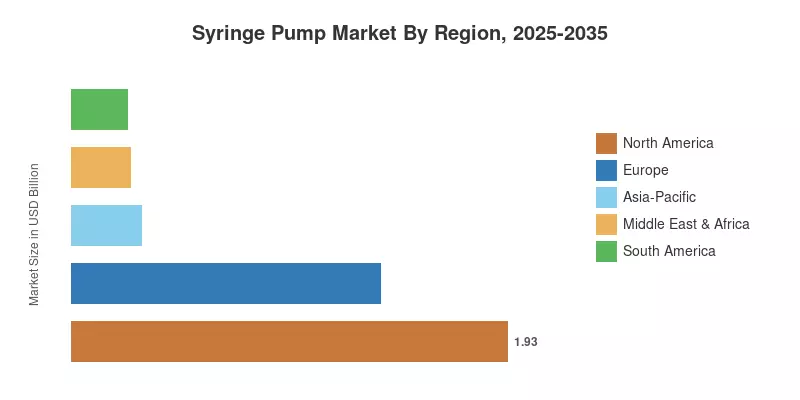
North America leads with a 38.6% share in 2025, supported by Joint Commission safety standards and high ICU bed density. Asia-Pacific is the fastest-growing region at a 6.1% CAGR, driven by tertiary hospital construction in China and India. Europe ranks second with a 27.4% share, where Medical Device Regulation (MDR) recertification is reshaping supplier portfolios. Through 2035, growth will favor vendors that pair compliant hardware with recurring software revenue.

Key Report Takeaways

• By Type

  • Infusion Syringe Pumps held a 59.8% share of the Syringe Pump Market in 2025, reflecting their routine use in anesthesia and neonatal units
  • Programmable / Smart Syringe Pumps are the fastest-growing type at an 8.8% CAGR through 2035

• By Channel

  • Single-Channel devices accounted for 42.4% of 2025 revenue, driven by outpatient and veterinary demand
  • Multi-Channel (≥3) systems are expanding at a 7.6% CAGR as ICUs consolidate co-infusions onto one platform

• By Application

  • Oncology & Chemotherapy captured 40.6% of the Syringe Pump Market in 2025
  • Veterinary Medicine leads application growth with a 6.8% CAGR

• By End-user

  • Hospitals represented 66.4% of 2025 end-user demand
  • Homecare Settings are growing at a 7.3% CAGR, supported by reimbursement for ambulatory infusion

• By Region

  • North America held a 38.6% share in 2025
  • Asia-Pacific is the fastest-growing region at a 6.1% CAGR in the Syringe Pump Market

Market Size and Forecast (2021–2035)

Historical values for 2021–2024 come from manufacturer segment disclosures, regulatory clearance databases, hospital procurement records, and primary interviews with biomedical engineering and pharmacy leaders. Forecast values for 2026–2035 come from a bottom-up model built on installed-base replacement cycles, new-bed additions, and smart-pump penetration by region. These estimates were cross-checked against company annual reports and published benchmarks for the Syringe Pump Market [19–24].
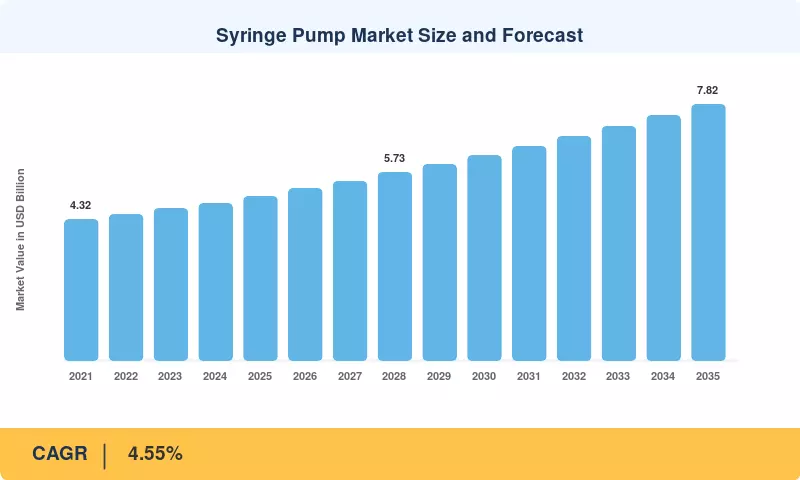
Syringe Pump Market Size and Forecast
Our Impact

Enabled $4.3B Revenue Impact for Fortune 500 and Leading Multinationals

Partnering with 2000+ Global Organizations Each Year

30K+ Citations by Top-Tier Firms in the Industry

Driver Impact Analysis

Driver ~% Impact on CAGR Geographic Relevance Impact Timeline
Smart pump safety mandates and dose-error reduction +1.1% Global, strongest in North America and Europe Medium-term (2–4 yr)
Rising oncology and chemotherapy volumes +0.9% North America, Europe, Asia-Pacific Long-term (≥4 yr)
Critical care capacity expansion +0.7% Global Medium-term (2–4 yr)
Homecare infusion reimbursement +0.6% North America, Europe Short-term (≤2 yr)
Neonatal and pediatric care investment +0.5% Asia-Pacific, Middle East & Africa Long-term (≥4 yr)
Emerging-market manufacturing incentives +0.5% India, China Medium-term (2–4 yr)
Veterinary critical care adoption +0.3% North America, Europe Long-term (≥4 yr)

Smart Pump Safety Mandates and Dose-Error Reduction

The Institute for Safe Medication Practices (ISMP) suggests bidirectional EHR integration, wireless library updates, and complete drug-library compliance in its smart infusion pump guidelines [8]. During accreditation surveys, these procedures are reinforced by the Joint Commission's National Patient Safety Goals [10]. Consequently, hospital IV syringe pumps without dose-error reduction software are being retired by health systems. This requirement cycle increases both unit volumes and average selling prices throughout the syringe pump market because smart-capable units are significantly more expensive than basic devices.

Rising Oncology and Chemotherapy Volumes

In 2022, the International Agency for Research on Cancer projected 20 million new cases of cancer; by 2050, that number is expected to rise to approximately 35 million, a roughly 77% increase [12]. Syringe pumps are superior to gravity systems for the closely controlled, low-volume delivery of cytotoxic drugs, targeted biologics, and continuous infusional regimens. In Europe and Asia-Pacific, oncology daycare centers are increasing their pump capacity to accommodate outpatient chemotherapy chairs.

Critical Care Capacity Expansion

The UN projects that the global population aged 65 and over will grow from about 771 million in 2022 to 1.6 billion by 2050, which will raise ICU admissions for sepsis, cardiac events, and respiratory failure [17]. A typical ventilated ICU patient receives several continuous infusions at once, including vasopressors, sedatives, and analgesics. Hospitals planning new critical care beds budget for multiple syringe channels per bed, which links bed construction directly to pump demand .

Homecare Infusion Reimbursement

The Centers for Medicare & Medicaid Services covers external infusion pumps under National Coverage Determination 280.14 for defined therapies, including certain chemotherapy, pain management, and parenteral regimens . Payers are steering stable patients out of inpatient beds to reduce costs, and home infusion providers are expanding fleets of compact, battery-powered syringe drivers. This driver has the shortest lead time because coverage rules already exist and only provider capacity needs to scale.

Neonatal and Pediatric Care Investment

The WHO estimates that 13.4 million babies were born preterm in 2020, about one in ten births worldwide [13]. Neonatal ICUs need ultra-low flow rates, often below 0.1 mL/h, that only precision syringe pumps can deliver reliably. National newborn-care programs in India, the GCC, and Southeast Asia are funding NICU expansion, which creates sustained demand for specialized pumps with fine flow-rate resolution and occlusion-pressure alarms.

Emerging-Market Manufacturing Incentives

India's Production Linked Incentive scheme for medical devices committed INR 3,420 crore to domestic manufacturing, and critical care equipment is among the eligible categories . China's Healthy China 2030 plan prioritizes tertiary hospital quality and local device procurement [15]. These policies lower landed costs, encourage multinational vendors to localize production, and bring mid-tier smart pumps within reach of district hospital budgets.

Veterinary Critical Care Adoption

The American Pet Products Association reported U.S. pet industry spending of about USD 147 billion in 2023, and veterinary services are one of its fastest-rising components [18]. Specialty and emergency animal hospitals now offer ICU-level care, including continuous anesthesia and analgesia infusions. Most clinics still use refurbished human-grade pumps, which leaves room for purpose-built veterinary designs.

Restraints Impact Analysis

Restraint ~% Impact on CAGR Geographic Relevance Impact Timeline
Product recalls and software-related adverse events −0.6% Global Short-term (≤2 yr)
Hospital capital constraints and IT integration costs −0.5% Global, acute in public systems Medium-term (2–4 yr)
Cybersecurity compliance burden −0.4% North America, Europe Short-term (≤2 yr)
EU MDR recertification costs −0.4% Europe Medium-term (2–4 yr)
Substitution by alternative infusion formats −0.3% North America, Europe Long-term (≥4 yr)

Product Recalls and Software-Related Adverse Events

Infusion pump recalls are frequently caused by software flaws, alarm malfunctions, and user interface confusion, according to the FDA . Hospitals may be forced to use expensive workarounds if a Class I recall freezes purchases for the whole fleet. Replacement cycles in the syringe pump market are occasionally slowed by buyers delaying tenders until a vendor takes corrective action.

Hospital Capital Constraints and IT Integration Costs

Alarm management and infusion-system integration are ranked as recurrent health technology dangers by ECRI [9]. Wireless infrastructure, EHR interface engines, and pharmacist time to create drug libraries are all necessary for a complete smart-fleet conversion. Mid-size hospitals frequently discover that these indirect costs outweigh the cost of the technology, so they spread out purchases across a number of budgetary years.

Cybersecurity Compliance Burden

Since October 2023, the FDA can refuse premarket submissions that lack a software bill of materials, a vulnerability management plan, and patch capability . Smaller manufacturers face higher engineering and documentation costs, which delay launches and push some legacy models off the market before successors are ready.

EU MDR Recertification Costs

Regulation (EU) 2017/745 requires stronger clinical evidence and notified-body review for Class IIb devices such as syringe pumps [6]. Regulation (EU) 2023/607 extended transition deadlines to 2027–2028, but notified-body capacity remains tight [7]. Some vendors are discontinuing low-volume European variants rather than funding recertification.

Substitution by Alternative Infusion Formats

Large-volume pumps with syringe-like low-flow modes, disposable elastomeric devices for home antibiotics, and patch pumps for specific biologics all compete for selected applications. Price-sensitive outpatient settings are choosing disposables where clinical precision requirements allow.

Syringe Pump Market Opportunities

Purpose-Built Veterinary Syringe Pumps

Veterinary clinicians often adapt human pumps that are poorly suited to small patients and animal-specific drug protocols. Vendors that offer species-specific drug libraries, rugged housings, and lower price points could capture a segment growing at a 6.8% CAGR. Distribution through veterinary group practices and animal-health distributors creates a channel with little overlap with hospital tenders [18].

Value-Tier Smart Pumps for Emerging Markets

District hospitals in India, Brazil, South Africa, and Southeast Asia need dose-error reduction software but cannot pay premium prices. Pumps manufactured locally under incentive schemes, with offline drug libraries and long battery life for unstable power grids, can serve this gap . Asia-Pacific's 6.1% CAGR makes it the largest addressable pool.

Pump Data Monetization and Subscription Models

Connected pumps generate continuous data on drug-library compliance, alarm overrides, and infusion interruptions. Vendors can sell analytics subscriptions, benchmarking dashboards, and fleet-as-a-service contracts that bundle hardware, software updates, and cybersecurity patching into one annual fee [8]. This approach turns one-time capital sales into recurring revenue and lowers upfront costs for hospitals.

EHR Auto-Programming and Closed-Loop Medication Administration

ISMP guidance names bidirectional EHR–pump interoperability as a top safety objective, yet many hospitals worldwide have not implemented it [8]. Vendors with validated integrations to major EHR platforms can set themselves apart in tenders, especially in North America and Northern Europe.

Research and Microfluidics Applications

Research Laboratories use high-precision, pulse-free syringe pumps for microfluidics, organ-on-chip models, and analytical chemistry. Growth in cell and gene therapy process development is creating demand for programmable multi-syringe units with laboratory automation interfaces.

Syringe Pump Market Future Outlook

AI-Assisted Dosing and Predictive Safety

Over the next decade, software will drive differentiation in the Syringe Pump Market. Predictive occlusion detection, anomaly alerts based on patient-specific infusion patterns, and decision support for titrated drugs will move from pilots into standard specifications. The WHO estimates USD 42 billion in annual medication-error costs, which gives hospitals a clear financial reason to fund these capabilities [11].

Interoperability as a Procurement Gate

EHR auto-programming and automatic documentation will shift from a differentiating feature to a minimum tender requirement in North America and Western Europe [8]. Programmable drug syringe pumps that cannot exchange orders and infusion data bidirectionally will increasingly be excluded from enterprise contracts.

Decentralization of Infusion Care

With 1.6 billion people expected to be aged 65 or older by 2050, payers will keep moving stable infusion therapy into ambulatory and home settings [17]. This will raise demand for lightweight, battery-efficient pumps with remote monitoring and tamper resistance. It will also require new service models for device logistics and recovery .

Sustainability and Lifecycle Economics

Hospitals are adding Scope 3 emissions to procurement scoring. Refurbishment programs, modular repairable designs, and longer software support windows will influence vendor selection, particularly in European public tenders that weigh total lifecycle cost alongside clinical performance [6].

Regional Market Share Analysis

Region Key Metric (2025) Primary Investment Themes
North America 38.6% share Smart fleet replacement, EHR interoperability, cybersecurity upgrades
Europe 27.4% share MDR-compliant portfolios, oncology day units, tender consolidation
Asia-Pacific 6.1% CAGR (2026–2035) Tertiary hospital construction, local manufacturing, NICU expansion
Middle East & Africa 5.1% share GCC hospital megaprojects, public-sector procurement
South America USD 0.25 Billion Public health system modernization, private hospital growth
Total USD 5.01 Billion —

Regional demand in the Syringe Pump Market follows hospital capital budgets, regulatory maturity, and critical care bed growth. North America and Europe compete on software sophistication. Asia-Pacific, the Middle East & Africa, and South America are driven by capacity expansion.

North America

Country Key Metric (2025) Key Driver
United States 84.5% of regional share Joint Commission safety standards and EHR-integrated smart pumps
Canada 4.9% CAGR (2026–2035) Provincial capital programs for ICU modernization
Mexico USD 0.12 Billion Private hospital expansion and IMSS procurement

The United States dominates regional demand because large integrated delivery networks standardize on single-vendor smart platforms and renew them on seven-to-ten-year cycles. The return of the BD Alaris system after its 2023 FDA clearance reopened competitive tenders that had been frozen for several years [19]. Canada's growth depends on provincial budgets for critical care renewal. Mexico benefits from private hospital chains in Monterrey and Mexico City that purchase mid-tier imported pumps.

Europe

Country Key Metric (2025) Key Driver
Germany 24.8% of regional share High ICU bed density and hospital structure-fund investment
France USD 0.21 Billion Centralized purchasing groups and oncology day-care growth
United Kingdom 4.6% CAGR (2026–2035) NHS medication-safety programs and fleet standardization
Italy 12.1% of regional share Regional health authority tenders for critical care
Spain USD 0.11 Billion Public hospital modernization and homecare pilots
Rest of Europe 21.5% of regional share Nordic and Benelux interoperability projects

Germany remains Europe's anchor, with domestic manufacturers B. Braun and Fresenius Kabi shaping specifications [21][22]. Across the region, MDR recertification is narrowing product choice, and tenders increasingly require vendor-supported cybersecurity patching [6][7]. The United Kingdom is consolidating pump models within NHS trusts to reduce training errors. France and Spain are adding oncology chairs that need syringe-based chemotherapy delivery.

Asia-Pacific

Country Key Metric (2025) Key Driver
China 34.2% of regional share Healthy China 2030 tertiary hospital quality mandates
Japan USD 0.31 Billion Aging population and replacement of mature fleets
India 8.1% CAGR (2026–2035) PLI manufacturing incentives and private hospital growth
South Korea 7.6% of regional share Smart hospital programs and high surgical volumes
Australia USD 0.09 Billion State health system fleet standardization
Rest of Asia-Pacific 6.4% CAGR (2026–2035) NICU and ICU expansion in Southeast Asia

China leads regional volume as tertiary hospitals adopt dose-error reduction under national quality reviews and domestic manufacturers such as Mindray gain share in public tenders [15]. India is the fastest-growing country, supported by INR 3,420 crore in PLI funding and corporate hospital chains opening critical care capacity in Tier-2 cities . Japan's demand is mostly replacement-driven, with buyers preferring compact, high-precision domestic designs.

Middle East & Africa

Country Key Metric (2025) Key Driver
GCC 46.5% of regional share Saudi Vision 2030 and UAE hospital construction
South Africa 5.2% CAGR (2026–2035) Private hospital groups and oncology capacity
Rest of Middle East & Africa USD 0.08 Billion Donor-funded neonatal programs

GCC demand comes from new medical cities and specialty hospitals that specify smart, interoperable pumps from launch. South Africa's private hospital groups lead adoption while public facilities face budget limits. Across the rest of the region, neonatal care programs supported by international agencies fund basic syringe drivers [13].

South America

Country Key Metric (2025) Key Driver
Brazil 55.8% of regional share SUS modernization and private hospital investment
Argentina USD 0.04 Billion Critical care equipment renewal
Rest of South America 4.4% CAGR (2026–2035) Public tenders in Colombia, Chile, and Peru

Brazil accounts for most regional revenue, with ANVISA registration timelines and import tariffs shaping vendor pricing. Private hospital networks in São Paulo are early adopters of connected pumps. Argentina's purchasing tracks currency stability, so procurement comes in bursts rather than steady cycles.

Syringe Pump Market By Region, 2025-2035

Syringe Pump Market Segmentation

By Type

Segment Key Metric (2025) Primary Demand Driver
Infusion Syringe Pumps 59.8% share Routine anesthesia, ICU, and NICU drug delivery
Withdrawal Syringe Pumps USD 0.32 Billion Laboratory sampling and dialysis-adjacent research
Push-Pull / Dual Syringe Pumps 4.9% share Contrast delivery and continuous-flow research setups
Programmable / Smart Syringe Pumps 8.8% CAGR (2026–2035) Dose-error reduction mandates and EHR integration

Infusion Syringe Pumps anchor the Syringe Pump Market by type because every anesthesia workstation and neonatal bed needs reliable low-volume delivery. Programmable / Smart Syringe Pumps are growing fastest as hospitals replace basic units with devices that enforce drug-library limits and log infusion data. Withdrawal Syringe Pumps face competition from automated laboratory platforms, while Push-Pull / Dual Syringe Pumps remain specialist tools for radiology and microfluidics.

By Channel

Segment Key Metric (2025) Primary Demand Driver
Single-Channel 42.4% share Outpatient clinics, veterinary practices, and homecare
Dual-Channel USD 1.58 Billion Pediatric units needing isolated lines
Multi-Channel (≥3) 7.6% CAGR (2026–2035) ICU co-infusion of vasopressors, sedatives, and analgesics

Within the Syringe Pump Market, Single-Channel devices lead because they are inexpensive, portable, and suitable for most non-critical settings. Multi-Channel (≥3) systems are gaining ground in ICUs, where consolidating several infusions on one platform reduces line clutter, simplifies cumulative-dose tracking, and shortens nursing administration time. Dual-Channel pumps remain the standard in pediatric wards that require separate antibiotic and fluid lines.

By Application

Segment Key Metric (2025) Primary Demand Driver
Oncology & Chemotherapy 40.6% share Controlled cytotoxic and biologic delivery
Anesthesia 18.2% share Rising surgical volumes and TIVA protocols
Neonatal & Pediatric Care USD 0.46 Billion Ultra-low flow requirements in NICUs
Pain Management 5.1% CAGR (2026–2035) Shift of PCA therapy to outpatient settings
Critical Care & ICU 15.4% share Multi-drug titration for ventilated patients
Veterinary Medicine 6.8% CAGR (2026–2035) Growth of ICU-level animal care

Oncology & Chemotherapy is the largest application in the Syringe Pump Market because cytotoxic drugs require precise, auditable dosing with little tolerance for error. Veterinary Medicine is growing fastest as specialty animal hospitals adopt continuous anesthesia and analgesia. Anesthesia and Critical Care & ICU provide steady volume, while Neonatal & Pediatric Care depends on a limited number of models certified for ultra-low flow rates.

By End-user

Segment Key Metric (2025) Primary Demand Driver
Hospitals 66.4% share High patient acuity and accreditation requirements
Ambulatory Surgical Centers USD 0.58 Billion Same-day surgical anesthesia
Clinics 9.3% share Outpatient infusion and specialty procedures
Homecare Settings 7.3% CAGR (2026–2035) Reimbursed ambulatory infusion therapy
Research Laboratories 4.9% CAGR (2026–2035) Microfluidics and bioprocess development

Hospitals account for most end-user demand in the Syringe Pump Market because acute care concentrates the highest-risk infusions and the strictest compliance rules. Homecare Settings are expanding fastest as Medicare and European payers reimburse ambulatory pumps for pain, chemotherapy, and parenteral nutrition. Ambulatory Surgical Centers use pumps for same-day cases, and Research Laboratories buy high-stability programmable units for experimental work.

Competitive Benchmarking

Competition is moderately concentrated. The top five vendors hold an estimated 55–62% of revenue, and the Herfindahl-Hirschman Index is estimated at 950–1,150. Global incumbents dominate hospital enterprise contracts through integrated software ecosystems. Regional manufacturers in China, Japan, and India compete on price in public tenders, and laboratory-focused specialists serve research buyers.

Company Est. Revenue Share Range Key Offerings for Syringe Pump Market Strategic Positioning
Becton, Dickinson and Company (BD) ~14–18% BD Alaris syringe module, Alaris guardrails software Re-entering U.S. tenders with an interoperable platform
B. Braun Melsungen AG ~11–14% Perfusor Space syringe pump, Space infusion system Strong European installed base and modular systems
Fresenius Kabi ~9–12% Agilia SP syringe pumps, Vigilant software suite Integrated drug and device portfolio for oncology and ICU
Baxter International ~8–11% Novum IQ syringe infusion pump, Dose IQ safety software Unified syringe and large-volume platform
ICU Medical ~8–11% Medfusion syringe pumps, CADD ambulatory systems Broad infusion portfolio after the Smiths Medical acquisition
Terumo Corporation ~5–8% TE-series syringe pumps Precision designs for Japan and Asia-Pacific
Shenzhen Mindray Bio-Medical Electronics ~4–7% BeneFusion syringe pumps Value-tier smart pumps for emerging markets
Nipro Corporation ~2–4% Hospital syringe pumps and disposables Bundled device and consumable offering
Eitan Medical ~1–3% Sapphire ambulatory infusion platform Homecare and ambulatory focus
Harvard Bioscience ~1–3% Pump 11 Elite and PHD Ultra research pumps Leader in laboratory and microfluidics pumps

Recent News & Developments

  • FDA (March 2023): Section 524B cybersecurity requirements took effect for new device submissions, requiring software bills of materials and patch plans for connected pumps
  • European Parliament and Council (March 2023): Regulation (EU) 2023/607 extended MDR transition deadlines to 2027–2028, giving pump vendors more time to recertify legacy models [7]
  • BD (July 2023): Received FDA 510(k) clearance for the updated BD Alaris Infusion System, including its syringe module, reopening U.S. fleet replacement contracts [19]
  • FDA (September 2023): Issued final premarket cybersecurity guidance that raised design expectations for networked infusion devices
  • IARC/WHO (February 2024): Projected global new cancer cases rising to about 35 million by 2050, signaling sustained chemotherapy infusion demand [12]
  • Baxter (April 2024): Received FDA clearance for the Novum IQ large-volume pump, completing a unified platform with its Novum IQ syringe pump [20]
  • Baxter (January 2025): Completed the sale of its kidney care business, sharpening its focus on medical products, including infusion systems [20]

Syringe Pump Market Report Scope

Parameter Details
Market Scope Syringe pumps by type, channel, application, and end-user, including associated safety software sold to hospitals, surgical centers, clinics, homecare providers, and laboratories
Study Period 2021–2035
Base Year 2025
Historical Data 2021–2024
Forecast Period 2026–2035
Market Size in 2025 USD 5.01 Billion
Market Size in 2035 USD 7.82 Billion
CAGR (2026–2035) 4.55%
Fastest Growing Segments Programmable / Smart Syringe Pumps (8.8% CAGR); Multi-Channel (≥3) (7.6% CAGR); Homecare Settings (7.3% CAGR); Veterinary Medicine (6.8% CAGR)
Regions Covered North America, Europe, South America, Asia Pacific, Middle East and Africa and ROW
Companies Profiled Becton Dickinson and Company, B. Braun Melsungen AG, Fresenius Kabi, Baxter International, ICU Medical, Terumo Corporation, Shenzhen Mindray Bio-Medical Electronics, Nipro Corporation, Eitan Medical, Harvard Bioscience
Valuation Currency USD Billion
Methodology 350+ primary expert interviews; bottom-up market sizing; top-down validation; data triangulation; scenario-based forecasting; real-time project tracking

FAQs

What should hospitals check first when selecting vendors in the Syringe Pump Market?
Validated EHR integration and drug-library management should come first, ahead of hardware specifications. Without them, smart-pump safety benefits stay largely unrealized [8].
How do cybersecurity rules affect the resale value of older pumps?
Pumps that cannot receive security patches are becoming difficult to network or resell. Many hospitals now retire them early rather than isolate them on segregated networks .
Which emerging use case could reshape the Syringe Pump Market?
Organ-on-chip and cell therapy process development need pulse-free flow at microliter precision. Laboratory pump suppliers with automation interfaces are best placed to capture this demand .
Is leasing a viable alternative to buying a pump fleet?
Fleet-as-a-service contracts bundle hardware, software updates, and patching into an annual fee. This converts capital spending into operating expense and protects buyers from early obsolescence [8].
Why do neonatal units struggle to source suitable devices?
Few models are validated for very low flow rates with tight start-up accuracy. Limited supply gives certified vendors pricing power in NICU tenders [5].
How does EU MDR change competition in the Syringe Pump Market?
Recertification costs push smaller suppliers to drop low-volume European models. This consolidates tenders around large vendors with established notified-body relationships [7].
What drives long-term service revenue for pump manufacturers?
Preventive maintenance, battery replacement, and software subscriptions generate recurring income across ten-year device lifespans. Service contracts often exceed the original hardware margin [19].
Author
Author Author Profile Rahul Gotadki LinkedIn Research Manager
He holds an experience of about 9+ years in Market Research and Business Consulting, working under the spectrum of Life Sciences and Healthcare domains. Rahul conceptualizes and implements a scalable business strategy and provides strategic leadership to the clients. His expertise lies in market estimation, competitive intelligence, pipeline analysis, customer assessment, etc.
Co-Author Co-Author Profile Nidhi Mandole LinkedIn Senior Research Analyst
She is an extremely curious individual currently working in Healthcare and Medical Devices Domain. Nidhi is comfortably versed in data centric research backed by healthcare educational background. She leverages extensive data mining and analytics tools such as Primary and Secondary Research, Statistical Analysis, Machine Learning, Data Modelling. Her key role also involves Technical Sales Support, Client Interaction and Project management within the Healthcare team. Lastly, she showcases extensive affinity towards learning new skills and remain fascinated in implementing them.
Download Free Sample

Kindly complete the form below to receive a free sample of this Report

Download PDF ×

We do not share your information with anyone. However, we may send you emails based on your report interest from time to time. You may contact us at any time to opt-out.


















