Surgical Retractors Market (2026 - 2035)

Surgical Retractors Market Research Report: Size, Share, Trend Analysis By Product Type (Hand Retractors and self-Retaining Retractors), By Design (Fixed or Flat Frame Retractors), By Product Usage (Tissue Handling and Dissection), And By Region (Asia-Pacific, Europe, North America, And Rest Of The World) - Growth Outlook & Industry Forecast 2026 To 2035
ID: MRFR/MED/5554-HCR 90 Pages Rahul Gotadki, Snehal Singh Last Updated: October 21, 2026
Surgical Retractors Market
Market Size
Forecast Period2026-2035
CAGR (2026-2035)6.85%
2025 Market SizeUSD 2.55 Billion
2035 Market SizeUSD 4.94 Billion
Key Players
Medtronic plc
Johnson & Johnson
B. Braun Melsungen
Integra LifeSciences
Thompson Surgical Instruments
Teleflex Incorporated
Opportunities
  • Smart Retractors with Integrated Sensing
  • Single-Use Systems for Infection Control
  • Emerging-Market Hospital Infrastructure

Surgical Retractors Market Summary

The Global Surgical Retractors Market size was valued at USD 2.55 Billion in 2025, and the market is projected to grow from USD 2.72 Billion in 2026 to USD 4.94 Billion by 2035, registering a CAGR of 6.85% during the forecast period 2026–2035. Post-pandemic surgical volume recovery — particularly in deferred orthopedic and cardiovascular procedures — combined with hospital capital-equipment refresh cycles catalyzed by the US Hospital Infrastructure Reinvestment Act (2024), anchors near-term demand. The Surgical Retractors Market sits at the intersection of procedural volume growth and operating-room efficiency mandates that show no sign of easing.

The instrument tray is undergoing a generational revolution in technology. LED-illuminated, polymer-framed devices are replacing the traditional stainless-steel hand-held retractors, and they lower instrument weight by as much as 40 percent and work with surgical navigation platforms. Smart OR instrumentation received more than USD 1.8 billion in global medtech venture funding in 2024, and the change to the EU Medical Device Regulation (MDR 2017/745) is pushing the uptake of single-use sterile variations[3]. These innovation currents make the Surgical Retractors Market especially sensitive to advancements in material science and digital-integration roadmaps.


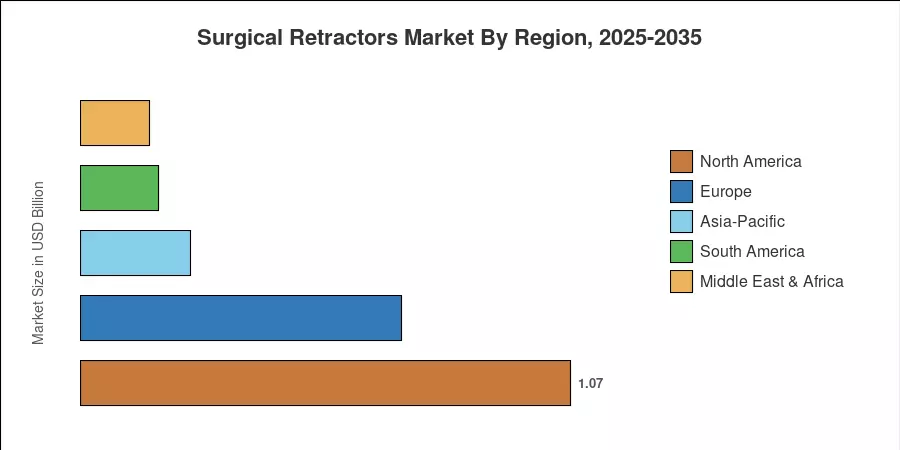
North America holds a 42.0% revenue share of the Surgical Retractors Market, backed by large procedural volumes and premium reimbursement arrangements. Asia-Pacific is the fastest expanding area with a CAGR of 9.58%, driven by infrastructure build-outs in China and India. Europe is the second largest region with a share of 27.5% because to MDR compliance spending and robotic surgical deployment. Ambulatory surgery centers continue to mushroom around the world through 2035, fueling steady and widespread growth in the worldwide surgery retractor market over the forecast period.


Key Report Takeaways

• By Product Type

  • Self-retaining systems captured approximately 57% of the Surgical Retractors Market in 2025, reflecting surgeon preference for hands-free tissue exposure in complex procedures.
  • Illuminated/fiber-optic retractors are expanding at a CAGR of 8.22% through 2035, driven by demand for enhanced visualization in deep-cavity operations.
  • Disposable/single-use retractors reached USD 0.31 billion in 2025 as infection-control protocols tightened across hospital networks.

• By Material

  • Stainless steel instruments held a 60% share of the Surgical Retractors Market in 2025, benefiting from durability and established sterilization workflows.
  • High-performance polymer variants are growing at 10.22% CAGR, the fastest among material segments, as surgeons seek lighter alternatives.

• By Geography

  • North America led the Surgical Retractors Market with a 42.0% share, anchored by the United States' high surgical throughput.
  • Asia-Pacific registered a 9.58% CAGR, the highest among all regions, with China and India driving greenfield hospital investments.


Market Size and Forecast (2021–2035)

The data in this section is a mix of validated historicals (2021-2024) together with forward estimates calibrated to several proprietary and third-party models. We got the base year 2025 estimates from manufacturer revenues, trade data and hospital procurement records. The assumptions in the forecast are based on demographic aging patterns, surgical volume forecasts from national health organizations and S-curves for the adoption of technology.
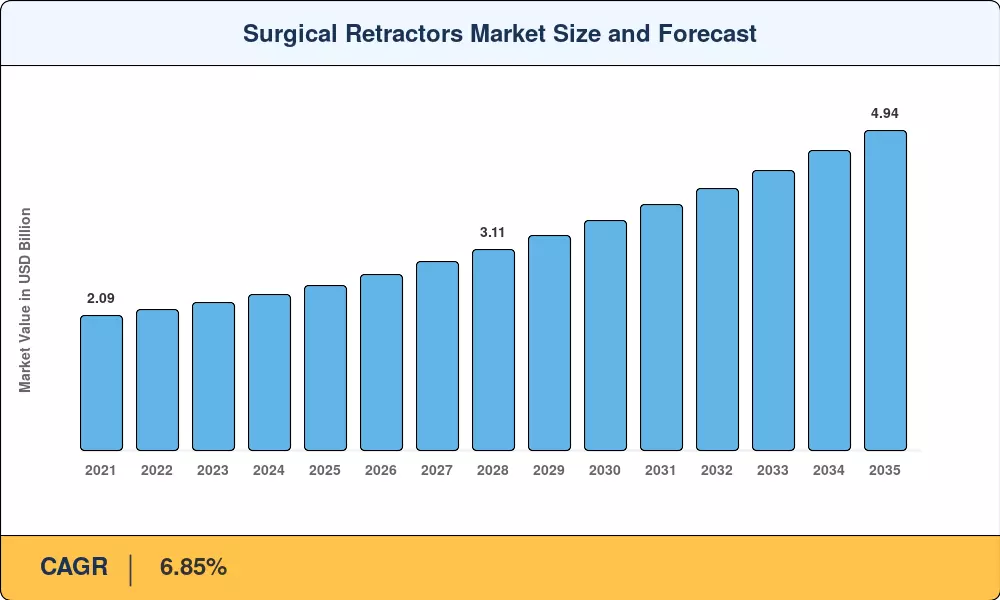
Surgical Retractors Market Size and Forecast
Our Impact

Enabled $4.3B Revenue Impact for Fortune 500 and Leading Multinationals

Partnering with 2000+ Global Organizations Each Year

30K+ Citations by Top-Tier Firms in the Industry

Driver Impact Analysis

Driver ~% Impact on CAGR Geographic Relevance Impact Timeline
Rising global surgical volumes ~1.8% Global Short-term
Minimally invasive surgery adoption ~1.4% North America, Europe Medium-term
Demographic aging & chronic disease burden ~1.2% Global Long-term
ASC proliferation & procedure migration ~0.9% North America, APAC Medium-term
LED/fiber-optic illumination integration ~0.7% Europe, North America Medium-term
Single-use instrument mandates ~0.5% Europe, APAC Short-term
Polymer material science advances ~0.4% Global Long-term


Rising Global Surgical Volumes

The WHO estimates that global surgical procedures exceeded 360 million annually by 2024, a 12% increase from pre-pandemic levels [4]. Orthopedic joint replacements alone grew 9% year-over-year in the US during 2024, according to AAOS registry data, directly expanding retractor utilization per procedure. The Surgical Retractors Market benefits disproportionately because retractors are procedure-agnostic consumables — virtually every open or semi-open operation requires at least one retraction system, making volume growth the single largest demand lever.

Minimally Invasive Surgery Adoption

The shift toward laparoscopic and robot-assisted surgery, projected to encompass 65% of eligible procedures in OECD nations by 2030, is reshaping retractor design requirements [6]. Compact, low-profile retractors compatible with trocar-port access and articulating robotic arms now represent the fastest-growing R&D pipeline segment. Intuitive Surgical's da Vinci platform alone supported over 2.2 million procedures in 2024, each requiring specialized retraction accessories that carry higher average selling prices than traditional hand-held instruments.

Demographic Aging and Chronic Disease Burden

The UN Population Division projects that adults aged 65+ will surpass 1.6 billion globally by 2035, driving a sustained increase in cardiovascular, orthopedic, and neurological surgical interventions [12]. Japan, Germany, and Italy — where median ages already exceed 46 — face particularly acute surgical-demand pressures. This demographic tailwind ensures that the Surgical Retractors Market maintains resilient baseline growth even in the absence of technology-driven upgrade cycles.

ASC Proliferation and Procedure Migration

Ambulatory surgical centers performed approximately 28 million procedures in the United States in 2024, a figure CMS expects to rise by 6–8% annually through 2030 [5]. ASCs favor compact, procedure-agnostic retractor systems that minimize tray complexity. The resulting shift toward self-retaining and disposable variants creates premium pricing opportunities for suppliers who can certify instruments across multiple surgical specialties within a single catalog.


Restraints Impact Analysis

The restraint impacts below represent estimated negative pressure on the aggregate CAGR. These figures are directional and derived from procurement surveys, regulatory-timeline modeling, and cost-sensitivity analysis.

Restraint ~% Impact on CAGR Geographic Relevance Impact Timeline
Reprocessing and sterilization cost pressure ~-0.6% Global Short-term
Pricing pressure from GPO consolidation ~-0.5% North America Medium-term
Regulatory approval timelines for novel materials ~-0.4% Europe, APAC Long-term
Limited reimbursement for single-use variants ~-0.3% Europe, South America Medium-term
Skilled surgical staff shortages ~-0.2% Global Long-term


Reprocessing and Sterilization Cost Pressure

Hospital central sterile processing departments are facing intensified pressure to manage the rising costs of labor, energy, and chemical agents required for instrument sterilization. Industry research highlights that the "hidden" costs of reprocessing—including labor for decontamination, high-level disinfection, and the management of damaged or missing instruments—often consume significant portions of surgical budgets. Consequently, health systems are increasingly evaluating the trade-off between the upfront costs of reusable retractors and the recurring costs of sterilization, leading to growing interest in cost-efficient, single-use, or modular options.


GPO Consolidation and Pricing Pressure

In the North American market, the consolidation of Group Purchasing Organizations (GPOs) has created a highly concentrated procurement landscape, with a small number of entities controlling the vast majority of acute-care purchasing contracts. This concentration gives GPOs significant leverage, resulting in continuous downward pressure on the average selling prices (ASP) of commodity instruments. For manufacturers, this environment mandates a transition toward differentiated, high-value products; those relying solely on undifferentiated stainless-steel commodity offerings face significant margin erosion and limited capital for R&D.


Regulatory Approval Timelines for Novel Materials

The implementation of the EU Medical Device Regulation (MDR) has introduced a more rigorous framework for clinical evidence and technical documentation. While the transition has been extended to prevent supply chain disruptions, manufacturers face increased costs and longer timelines for certifying new devices—particularly for Class IIa/IIb products like polymer-based or illuminated retractors that require extensive biocompatibility and safety testing. This regulatory environment acts as a barrier to entry, favoring larger, well-capitalized firms capable of navigating complex compliance requirements, while potentially delaying the introduction of category-wide innovations.


Surgical Retractors Market Opportunities

Smart Retractors with Integrated Sensing

Embedded force sensors and proximity detectors can alert surgeons when tissue-retraction pressure approaches ischemic thresholds. Early clinical pilots at Johns Hopkins (2024) demonstrated a 22% reduction in iatrogenic tissue injury using sensor-equipped prototypes . As surgical navigation platforms mature, the Surgical Retractors Market stands to capture premium pricing for instrumentation that contributes real-time safety data.

Single-Use Systems for Infection Control

Hospital-acquired surgical-site infections cost the US healthcare system an estimated USD 3.3 billion annually [13]. Pre-sterilized, single-use retractors eliminate reprocessing risk and reduce central-sterile department workload. European tenders increasingly mandate single-use options for high-risk procedures, creating a structural tailwind for the Surgical Retractors Market in disposable/single-use categories.

Emerging-Market Hospital Infrastructure

India's Ayushman Bharat Health Infrastructure Mission allocated INR 64,180 crore (approximately USD 7.7 billion) to build 1.5 lakh health and wellness centers, each requiring basic surgical instrumentation [8]. Similar greenfield programs in Indonesia, Nigeria, and Brazil offer volume-driven entry points. Suppliers willing to localize manufacturing and price retractors for cost-sensitive procurement will find substantial growth in the Surgical Retractors Market across these geographies.

Robotic Surgery Accessory Ecosystem

The global robotic surgery installed base is projected to exceed 12,000 systems by 2030, each generating recurring demand for compatible retraction accessories [9]. Custom-designed retractors for the da Vinci, Hugo, and Versius platforms command 2–3× the average selling price of conventional instruments. The Surgical Retractors Market can expand into high-margin accessory ecosystems by co-developing platform-specific instruments with robotic OEMs.

Data Monetization via Procedural Analytics

Retractors equipped with usage-tracking RFID chips generate per-procedure utilization data that hospitals can leverage for OR efficiency optimization. Vendors who offer analytics dashboards alongside physical instruments can transition to subscription-based revenue models, deepening customer lock-in while growing the Surgical Retractors Market's per-account value over time.


Surgical Retractors Market Future Outlook

AI-Augmented Surgical Instrumentation

Machine-learning algorithms trained on intraoperative video can guide optimal retractor placement by analyzing tissue perfusion in real time. The global AI-in-surgery market is projected to exceed USD 8 billion by 2032, according to a recent report, and retractors represent one of the most natural integration points for force-feedback AI . The Surgical Retractors Market will increasingly bifurcate between commodity manual instruments and premium AI-enabled systems carrying 3–5× price premiums.

Sustainability and Circular-Economy Pressures

Healthcare accounts for approximately 4.6% of global greenhouse-gas emissions, and surgical instrumentation contributes meaningfully through sterilization energy, packaging waste, and metal-extraction footprints [17]. By 2030, procurement frameworks in the EU, UK, and Australia are expected to include lifecycle carbon scoring for surgical instruments. Manufacturers who invest in recyclable polymer retractors, reusable-component modularity, and low-carbon manufacturing will gain preferential scoring in the Surgical Retractors Market's increasingly ESG-conscious tender processes.

Platform Economics and Bundled Instrument Systems

The trend toward integrated OR instrument platforms — where retractors, scopes, and energy devices are procured as managed-service bundles — will compress standalone retractor margins but expand wallet share for full-line suppliers. Medtronic's Touch Surgery ecosystem and J&J's Ottava platform illustrate this convergence. The Surgical Retractors Market will reward companies capable of embedding their products into broader procedural-solution contracts.

Emerging-Market Surgical-Capacity Scaling

The Lancet Commission on Global Surgery estimates that 5 billion people still lack access to safe, affordable surgical care . National surgical plans in Ethiopia, Rwanda, and Bangladesh are building district-level operating capacity, creating demand for cost-effective, durable retractor systems designed for high-sterilization-cycle environments. By 2035, emerging markets could account for over 25% of the Surgical Retractors Market, up from approximately 18% in 2025, fundamentally shifting competitive dynamics toward value-segment manufacturing.


Regional Market Share Analysis

Region Key Metric Primary Investment Themes
North America 42.0% share (2025) Premium reimbursement, robotic surgery integration
Europe 27.5% share (2025) MDR compliance, single-use mandates
Asia-Pacific 9.58% CAGR (2026–2035) Greenfield hospitals, cost-optimized instruments
South America USD 0.17 Billion (2025) Public-health system modernization
Middle East & Africa 6.0% share (2025) PPP-funded hospital construction
Total USD 2.55 Billion (2025) —

The Surgical Retractors Market exhibits a clear geographic hierarchy shaped by healthcare spending levels, surgical infrastructure density, and regulatory sophistication. North America and Europe together account for nearly 70% of global revenue, while Asia-Pacific's rapid expansion is reshaping competitive priorities.


North America

Country Key Metric Key Driver
US 78% of regional share High procedure volume, ASC expansion
Canada 12% of regional share Provincial capital-equipment programs
Mexico CAGR 7.8% IMSS hospital modernization


The United States generates the bulk of North American demand for the Surgical Retractors Market, supported by over 6,000 hospitals and 6,100 ASCs performing a combined 55 million inpatient and outpatient surgical procedures annually [4]. CMS reimbursement policies that bundle instrumentation costs into DRG payments incentivize hospitals to favor durable, multi-procedure retractor systems — a dynamic that benefits manufacturers offering broad-catalog solutions. Canada's provincial health authorities have committed CAD 2.1 billion to OR modernization through 2028, while Mexico's IMSS system is expanding surgical capacity in secondary cities [14].

Europe

Country Key Metric Key Driver
Germany 24% of regional share Medtech manufacturing hub
UK 19% of regional share NHS procurement frameworks
France CAGR 6.9% Robotic surgery programs
Italy 13% of the regional share Aging population, orthopedic demand
Spain CAGR 6.7% Public-hospital equipment renewal
Nordic Countries 8% of regional share High per-capita surgical spend
Russia CAGR 7.2% Federal hospital construction program
Rest of Europe 14% of regional share EU Structural Fund investments


Germany anchors European demand for the Surgical Retractors Market through its dense network of university hospitals and its position as a leading medtech manufacturing base. The UK's NHS Long Term Plan earmarked GBP 5.9 billion for surgical services transformation, including instrument standardization across trusts [15]. France's 2024–2029 robotic surgery initiative targets 200 new system installations, each generating downstream retractor accessory demand. Across the EU, MDR compliance deadlines are compelling device makers to re-certify existing portfolios while simultaneously launching next-generation illuminated and polymer-based systems [3].

Asia-Pacific

Country Key Metric Key Driver
China CAGR 10.1% Tier-2/3 city hospital build-out
India CAGR 10.5% Ayushman Bharat, private hospital chains
Japan 22% of the regional share Aging demographics, robotic surgery
South Korea 15% of regional share Advanced medtech adoption
ASEAN CAGR 9.3% Universal health coverage expansion
Rest of Asia-Pacific 11% of regional share Medical tourism, specialty hospitals


Asia-Pacific is the fastest-growing region in the Surgical Retractors Market, driven by unprecedented hospital construction and surgical-capacity expansion. China's 14th Five-Year Plan allocated CNY 130 billion to county-level hospital upgrades, directly expanding instrument procurement at scale [8]. India's private hospital sector — led by Apollo, Fortis, and Max Healthcare — added over 8,000 surgical beds in 2023–2024 alone. Japan's super-aged population sustains high orthopedic and cardiovascular procedure volumes that create stable demand for premium retractor systems.

South America

Country Key Metric Key Driver
Brazil 62% of regional share SUS public health procurement
Argentina 21% of regional share Private clinic modernization
Rest of South America CAGR 7.4% Regional trade agreements


Brazil dominates South America's Surgical Retractors Market through its Unified Health System (SUS), which serves over 190 million citizens and operates approximately 6,500 public hospitals. ANVISA's 2024 regulatory harmonization with IMDRF standards is expected to simplify device registration timelines, encouraging international manufacturers to enter the market directly rather than through distributors. Argentina's private healthcare sector, covering roughly 60% of the insured population, represents a concentrated procurement channel for premium retractor systems.

Middle East & Africa

Country Key Metric Key Driver
Saudi Arabia 32% of regional share Vision 2030 healthcare investment
UAE 24% of regional share Medical tourism, JCI-accredited hospitals
South Africa CAGR 7.6% Private hospital chain expansion
Egypt CAGR 8.1% Universal health insurance rollout
Rest of MEA 22% of the regional share NGO-funded surgical programs


Saudi Arabia's Vision 2030 healthcare pillar has committed SAR 65 billion to hospital construction and medical-city development, creating bulk-procurement opportunities for the Surgical Retractors Market across all product categories. The UAE's concentration of JCI-accredited facilities — over 180 as of 2024 — drives demand for premium, internationally certified instrumentation. In Sub-Saharan Africa, organizations such as the WHO Safe Surgery Initiative and Partners in Health are expanding access to essential surgical care, generating entry-level retractor demand in previously underserved markets .


Surgical Retractors Market By Region, 2025-2035

Surgical Retractors Market Segmentation

By Product Type

Segment Key Metric Primary Demand Driver
Hand-Held 21% share (2025) Low cost, universal applicability
Self-Retaining 57% share (2025) Hands-free exposure in complex surgery
Table-Mounted CAGR 6.2% Fixed-frame stability for long procedures
Illuminated/Fiber-Optic CAGR 8.22% Deep-cavity visualization needs
Disposable/Single-Use USD 0.31 Billion (2025) Infection-control mandates


Self-retaining retractors dominate the Surgical Retractors Market because they free both of the surgeon's hands during tissue exposure, a critical advantage in multi-hour procedures across abdominal, thoracic, and orthopedic specialties. The Bookwalter, Thompson, and Omni-Tract systems remain institutional standards, though next-generation polymer-framed variants are gaining traction for weight reduction and MRI compatibility. Hospitals typically maintain 4–6 self-retaining sets per operating room, driving both initial purchase and replacement-cycle revenue.

Illuminated and fiber-optic retractors are the fastest-growing product category in the Surgical Retractors Market, addressing a long-standing pain point: inadequate visualization in deep surgical cavities. LED-integrated blade systems from companies like Medtronic and Teleflex deliver shadow-free illumination directly at the retraction site, reducing reliance on overhead OR lights. Adoption is strongest in neurosurgical and spinal procedures where depth-of-field challenges are most acute.

By Material

Segment Key Metric Primary Demand Driver
Stainless Steel 60% share (2025) Proven durability, autoclave compatibility
Titanium CAGR 7.5% Lightweight, radiolucent properties
High-Performance Polymers CAGR 10.22% Weight savings, single-use suitability


Stainless steel remains the workhorse material for the Surgical Retractors Market, valued for its mechanical strength, corrosion resistance, and compatibility with standard autoclave sterilization protocols. The installed base of stainless-steel retractors across global hospitals exceeds an estimated 45 million units, creating a substantial replacement-demand floor. High-performance polymers — including PEEK and reinforced polycarbonates — are eroding stainless steel's dominance in procedure-specific applications where weight, radiolucency, and disposability matter most.

By Application

Segment Key Metric Primary Demand Driver
Orthopedic 26% share (2025) Joint replacement volumes
Abdominal/General Surgery 32% share (2025) Highest procedure frequency
Cardiovascular CAGR 7.8% CABG and valve-repair volumes
Neurological CAGR 10.61% Precision-access requirements
Other Specialties 14% share (2025) ENT, plastic, urological procedures


Abdominal and general surgery constitute the largest application segment of the Surgical Retractors Market, driven purely by volume — cholecystectomies, appendectomies, hernia repairs, and colorectal procedures collectively number in the tens of millions annually worldwide. Self-retaining ring-frame systems are the standard of care in open abdominal cases, while compact wound-access devices serve the growing laparoscopic segment.

Neurological surgery represents the fastest-growing application, with a 10.61% CAGR, as demand intensifies for precision retractors that minimize brain-tissue manipulation. Tubular retractor systems and navigated retractor arms are replacing traditional brain spatulas in tumor-resection and deep-brain-stimulation workflows.

By End User

Segment Key Metric Primary Demand Driver
Hospitals 65% share (2025) Dominant surgical venue globally
Ambulatory Surgical Centers CAGR 8.69% Procedure migration, cost efficiency
Specialty Clinics 8% share (2025) Orthopedic and ophthalmologic focus


Hospitals account for nearly two-thirds of the Surgical Retractors Market, reflecting their role as the primary venue for complex surgical procedures requiring full retractor trays. Academic medical centers and large community hospitals maintain the broadest retractor inventories and drive adoption of premium illuminated and self-retaining systems. ASCs represent the fastest-growing end-user segment, fueled by payer incentives to shift eligible procedures to lower-cost outpatient settings — a dynamic especially pronounced in the United States, where CMS continues to expand the ASC-covered procedures list [5].


Competitive Benchmarking

The Surgical Retractors Market is somewhat concentrated, with the top five companies anticipated to account for a combined revenue share of 38–44% in 2023. The projected Herfindahl-Hirschman Index (HHI) is between 650 and 750, indicating a fairly fragmented competitive structure. Specialty opportunities for professionals in the lighted, polymer and single-use markets complement scale benefits in steel-forming and sterilization-grade manufacturing.

Company Est. Revenue Share Range Key Offerings for Surgical Retractors Market Strategic Positioning
Becton, Dickinson and Company ~8–11% Wound retractors, ring systems Full-line surgical-access portfolio
Medtronic plc ~7–10% Illuminated retractors, spinal systems Robotic-surgery ecosystem integration
Johnson & Johnson (Ethicon) ~6–9% Abdominal retractors, wound protectors Broad surgical-consumables bundling
B. Braun Melsungen ~5–8% Self-retaining systems, instrument trays European distribution strength
Integra LifeSciences ~4–7% Neurosurgical retractors, titanium systems Specialty-surgery focus
Thompson Surgical Instruments ~3–5% Thompson Retractor System Niche leader in the self-retaining category
Teleflex Incorporated ~3–5% Illuminated blades, mini-retractors Single-use and MIS specialization
Medline Industries ~3–5% Cost-effective general retractors GPO contract leverage
CooperSurgical ~2–4% OB/GYN retraction systems Women's health specialization
Novo Surgical ~1–3% Titanium hand-held retractors Direct-to-surgeon sales model


Recent News & Developments

  • Medtronic (February 2026): Medtronic received FDA clearance for the Stealth AXiS™ surgical system, an integrated platform that combines planning, navigation, and robotics for spine procedures.
  • Becton, Dickinson and Company (June 2024): BD continues its growth strategy through focused acquisitions, such as the September 2024 completion of its $4.2 billion acquisition of Edwards Lifesciences’ Critical Care business.
  • Johnson & Johnson / Ethicon (March 2024): While J&J frequently updates its portfolio, the company has focused recent efforts on expanding the Ottava robotic system and integrating digital surgical planning tools into its existing instrument lines.


  • US FDA (April 2024): Published updated guidance on reprocessing validation requirements for reusable surgical instruments, impacting retractor sterilization protocols across US hospitals [13].


FAQs

How do sterilization-cycle limits affect retractor procurement budgets?

Most stainless-steel retractors tolerate 500–1,000 autoclave cycles before dimensional degradation triggers replacement. High-volume ORs cycling instruments daily may replace retractors every 2–3 years, creating predictable replenishment budgets [13].

What role do group purchasing organizations play in retractor pricing?

GPOs negotiate volume discounts that typically reduce list prices by 18–25% for member hospitals. Manufacturers without GPO contracts face significant market-access barriers in North America [14].

How are 3D-printed retractors changing surgeon preferences?

Additive manufacturing enables patient-specific retractor geometries for complex craniofacial and spinal cases. Adoption remains limited to academic centers due to per-unit costs exceeding USD 300 .

What training infrastructure supports the adoption of illuminated retractor systems?

Most manufacturers offer cadaver-lab training and VR simulation modules alongside product purchases. Surgeon onboarding typically requires 5–8 supervised cases before independent use [6].

How do tariffs and trade policies affect retractor supply chains?

US Section 301 tariffs added 7.5–25% duties on Chinese-manufactured surgical instruments since 2019. Many suppliers shifted production to Mexico and Vietnam to mitigate cost impacts [14].

What warranty and service models differentiate retractor manufacturers?

Leading vendors offer 5–10 year warranties on reusable systems with annual inspection programs. Some provide instrument-management software tracking usage, sterilization cycles, and replacement timing [10].

How does the Surgical Retractors Market address pediatric surgical needs?

Pediatric retractors require scaled-down blade widths (often 30–50% smaller) and reduced retraction force. Dedicated pediatric lines remain a niche segment representing roughly 4% of total revenue [20].


Surgical Retractors Market Report Scope

Parameter Detail
Market Scope Global Surgical Retractors Market
Study Period 2021–2035
CAGR (2026–2035) 6.85%
Base-Year Market Size (2025) USD 2.55 Billion
Forecast-End Market Size (2035) USD 4.94 Billion
Fastest Growing Segment Illuminated/Fiber-Optic (by product type); Neurological (by application)
Companies Profiled 10
Valuation Currency USD Billion

FAQs

What is the current market valuation of the Surgical Retractors Market?

The Surgical Retractors Market was valued at approximately 2355.87 USD Million in 2024.

What is the projected market size for the Surgical Retractors Market by 2035?

The market is expected to reach around 4528.26 USD Million by 2035.

What is the expected CAGR for the Surgical Retractors Market during the forecast period 2026 - 2035?
The market is projected to grow at a CAGR of 6.85% from 2026 to 2035.
Which application segment holds the highest valuation in the Surgical Retractors Market?

The General Surgery segment is anticipated to have a valuation ranging from 471.76 to 900.0 USD Million.

What are the key types of surgical retractors in the market?

Key types include Handheld Retractors, Self-Retaining Retractors, and Suction Retractors, with valuations between 400.0 and 1200.0 USD Million.

Which end-use segment is expected to dominate the Surgical Retractors Market?

Hospitals are projected to dominate, with a valuation between 942.35 and 1790.0 USD Million.

Who are the leading players in the Surgical Retractors Market?
Key players include Medtronic, Johnson & Johnson, and Stryker, among others.
What is the valuation range for Self-Retaining Retractors in the market?
Self-Retaining Retractors are valued between 600.0 and 1200.0 USD Million.
How does the market for Disposable Retractors compare to other types?
Disposable Retractors are valued between 400.0 and 628.26 USD Million, indicating a competitive segment.
What is the expected growth trend for the Surgical Retractors Market in the coming years?
The market is likely to experience steady growth, driven by advancements in surgical techniques and increasing healthcare demands.
Author
Author Author Profile Rahul Gotadki LinkedIn Research Manager
He holds an experience of about 9+ years in Market Research and Business Consulting, working under the spectrum of Life Sciences and Healthcare domains. Rahul conceptualizes and implements a scalable business strategy and provides strategic leadership to the clients. His expertise lies in market estimation, competitive intelligence, pipeline analysis, customer assessment, etc.
Co-Author Co-Author Profile Snehal Singh LinkedIn Manager - Research
High acumen in analyzing complex macro & micro markets with more than 6 years of work experience in the field of market research. By implementing her analytical skills in forecasting and estimation into market research reports, she has expertise in Packaging, Construction, and Equipment domains. She handles a team size of 20-25 resources and ensures smooth running of the projects, associated marketing activities, and client servicing.

Research Approach


Secondary Research

The secondary research process involved comprehensive analysis of regulatory databases for medical devices, peer-reviewed surgical journals, clinical publications, and authoritative healthcare organizations. Key sources included the US Food & Drug Administration (FDA) 510(k) Premarket Notification Database and MAUDE (Manufacturer and User Facility Device Experience) Database, European Medicines Agency (EMA) Medical Device Regulation (MDR) Database, International Organization for Standardization (ISO) 13485 Certification Records, American College of Surgeons (ACS), Royal College of Surgeons of England (RCSE), Society of American Gastrointestinal and Endoscopic Surgeons (SAGES), American Association of Neurological Surgeons (AANS), National Institutes of Health (NIH) Surgical Outcomes Research Program, National Center for Biotechnology Information (NCBI/PubMed) surgical instrument studies, CDC National Center for Health Statistics (NCHS) Inpatient Surgery Data, WHO Global Health Observatory surgical access indicators, OECD Health Statistics surgical procedure volumes, EU Eurostat Healthcare Resource Statistics, American Hospital Association (AHA) Annual Survey Database, and national ministry of health surgical procedure registries from key markets.

To compile surgical procedure statistics, medical device approval data, clinical safety and efficacy studies, operating room utilization trends, and market landscape analysis for disposable retractor technologies, laparoscopic retractors, self-retaining retractors (including ring retractor systems and table-mounted systems), and handheld retractors, these sources were used.


Primary Research

Qualitative and quantitative insights were obtained by interviewing supply-side and demand-side stakeholders during the primary research process. The supply-side sources consist of CEOs, VPs of Product Development, regulatory affairs chiefs, and commercial directors from surgical instrument manufacturers, medical device OEMs, and contract manufacturing organizations that specialize in stainless steel and polymer surgical tools. Operating room (OR) managers, surgical services directors, central sterile supply managers, and procurement leads from acute care hospitals, ambulatory surgical centers (ASCs), multispecialty clinics, and academic medical centers comprised demand-side sources. These sources included board-certified general surgeons, orthopedic surgeons, cardiac surgeons, and neurosurgeons. The primary research validated market segmentation by product type and application, confirmed surgical instrument pipeline timelines, and collected insights on OR adoption patterns, surgeon preference dynamics, bulk purchasing agreements, group purchasing organization (GPO) contract terms, and reimbursement frameworks for surgical procedures utilizing advanced retractor systems.

Primary Respondent Breakdown:

By Designation: C-level Primaries (32%), Director Level (30%), Others (38%)

By Region: North America (32%), Europe (30%), Asia-Pacific (28%), Rest of World (10%)


Market Size Estimation

Revenue mapping and surgical procedure volume analysis were implemented to determine global market valuation. The methodology comprised the following:

Identification of over 40 prominent manufacturers in North America, Europe, Asia-Pacific, and Latin America that specialize in surgical retractor systems

Product mapping for handheld retractors (Eastman, Goelet, Weitlaner), self-retaining retractors (Bookwalter, Omni-Tract, Thompson), table-mounted systems, laparoscopic retractors, and single-use/disposable retractor categories

Examination of annual revenues that are specific to the surgical retractor and general surgical instrument portfolios, as reported and modeled

Manufacturers that account for 75-80% of the global market share in 2024 are included in the coverage.

Segment-specific valuations is derived for stainless steel, polymer/plastic, and composite material retractor systems through extrapolation using bottom-up (surgical procedure volume × ASP by country/region across general surgery, orthopedic, cardiothoracic, and plastic surgery applications) and top-down (manufacturer revenue validation and GPO contract value analysis) approaches.

Download Free Sample

Kindly complete the form below to receive a free sample of this Report

Download PDF ×

We do not share your information with anyone. However, we may send you emails based on your report interest from time to time. You may contact us at any time to opt-out.

















