×
Request Free Sample ×

Kindly complete the form below to receive a free sample of this Report

Leading companies partner with us for data-driven Insights

clients tt-cursor
Hero Background

South America Lymphedema Treatment Market

ID: MRFR/HC/49237-HCR
200 Pages
Rahul Gotadki
October 2025

South America Lymphedema Treatment Market Research Report By Type (Primary Lymphedema, Secondary Lymphedema), By Affected Area (Lower Extremity, Upper Extremity, Genitalia), By Treatment (Compression Devices and amp Bandaging, Laser Therapy, Drug Therapy and amp; Surgery), By End-User (Hospitals and Clinics, Clinical Research Organizations, Research & Academic Institutes) and By Regional (Brazil, Mexico, Argentina, Rest of South America)- Forecast to 2035

Share:
Download PDF ×

We do not share your information with anyone. However, we may send you emails based on your report interest from time to time. You may contact us at any time to opt-out.

South America Lymphedema Treatment Market Infographic
Purchase Options

South America Lymphedema Treatment Market Summary

As per MRFR analysis, the South America lymphedema treatment market size was estimated at 58.75 USD Million in 2024. The South America lymphedema treatment market is projected to grow from 62.21 USD Million in 2025 to 110.16 USD Million by 2035, exhibiting a compound annual growth rate (CAGR) of 5.88% during the forecast period 2025 - 2035.

Key Market Trends & Highlights

The South America lymphedema treatment market is experiencing notable growth driven by increased awareness and technological advancements.

  • Brazil remains the largest market for lymphedema treatment, reflecting a strong demand for effective therapies.
  • Mexico is emerging as the fastest-growing region, indicating a rising need for innovative treatment solutions.
  • There is a marked increase in collaboration among stakeholders, enhancing the overall treatment landscape.
  • The growing incidence of lymphedema and rising demand for compression therapy are key drivers propelling market expansion.

Market Size & Forecast

2024 Market Size 58.75 (USD Million)
2035 Market Size 110.16 (USD Million)

Major Players

Medi USA (US), BSN Medical (DE), Tactile Medical (US), Lympha Press (US), Sigvaris (CH), Juzo (DE), Essity (SE), MediCom (DE)

South America Lymphedema Treatment Market Trends

The lymphedema treatment market in South America is currently experiencing notable developments, driven by a combination of increasing awareness and advancements in treatment options. Healthcare providers are increasingly recognizing the importance of early diagnosis and intervention, which has led to a rise in demand for effective therapies. This shift is further supported by educational initiatives aimed at both healthcare professionals and patients, fostering a better understanding of lymphedema and its management. As a result, the market is witnessing a gradual expansion of treatment facilities and resources dedicated to this condition. Moreover, the landscape of the lymphedema treatment market is evolving with the introduction of innovative technologies and products. Compression garments, manual lymphatic drainage techniques, and advanced surgical options are becoming more accessible to patients across the region. This trend is likely to enhance the quality of care provided to individuals suffering from lymphedema. Additionally, collaboration between healthcare stakeholders, including government bodies and non-profit organizations, appears to be strengthening, which may further facilitate the growth of this market. Overall, the lymphedema treatment market is poised for continued development as awareness and treatment options expand in South America.

Rising Awareness and Education

There is a growing emphasis on educating both healthcare professionals and patients about lymphedema. This trend is likely to lead to earlier diagnosis and improved treatment outcomes, as more individuals become aware of the condition and its management.

Technological Advancements in Treatment

Innovations in treatment modalities, such as advanced compression therapy and surgical techniques, are becoming more prevalent. These advancements may enhance the effectiveness of lymphedema management, providing patients with better options.

Increased Collaboration Among Stakeholders

Collaboration between government entities, healthcare providers, and non-profit organizations is strengthening. This trend could facilitate resource sharing and improve access to treatment, ultimately benefiting patients in the region.

South America Lymphedema Treatment Market Drivers

Growing Incidence of Lymphedema

The rising incidence of lymphedema in South America is a crucial driver for the lymphedema treatment market. Factors such as an increase in cancer cases, particularly breast cancer, contribute to this trend. According to health statistics, approximately 30% of breast cancer survivors may develop lymphedema, leading to a growing patient population requiring treatment. This surge in cases necessitates enhanced treatment options and healthcare services, thereby expanding the market. Furthermore, the aging population in South America, which is projected to reach 15% by 2030, is likely to exacerbate the prevalence of lymphedema, further driving demand for effective treatment solutions.

Government Initiatives and Funding

Government initiatives aimed at improving healthcare access and funding for lymphedema treatment are pivotal for the lymphedema treatment market. In South America, various governments are increasingly recognizing the need for comprehensive healthcare policies that include lymphedema management. For instance, funding programs for medical supplies and therapies are being established, which could potentially increase market growth by 20% over the next five years. These initiatives not only enhance patient access to necessary treatments but also encourage research and development in the field, fostering innovation and improving treatment outcomes.

Advancements in Diagnostic Techniques

Advancements in diagnostic techniques are transforming the lymphedema treatment market. Enhanced imaging technologies, such as lymphoscintigraphy and MRI, allow for earlier and more accurate diagnosis of lymphedema. This is particularly relevant in South America, where timely diagnosis can significantly impact treatment efficacy. The introduction of these advanced diagnostic tools is expected to increase the number of diagnosed cases, thereby expanding the patient base for treatment providers. As diagnostic capabilities improve, the market may witness a corresponding rise in demand for effective treatment options, potentially increasing market revenues by 15% over the next few years.

Rising Demand for Compression Therapy

The demand for compression therapy products is on the rise within the lymphedema treatment market. Compression garments, bandages, and devices are essential for managing lymphedema symptoms effectively. Market analysis indicates that the compression therapy segment is expected to grow at a CAGR of 8% from 2025 to 2030. This growth is driven by increased awareness among healthcare professionals and patients regarding the benefits of compression therapy. Additionally, the availability of advanced materials and technologies in compression products enhances their effectiveness, further propelling market expansion in South America.

Increased Focus on Patient-Centric Care

The shift towards patient-centric care models is influencing the lymphedema treatment market significantly. Healthcare providers in South America are increasingly prioritizing personalized treatment plans that cater to individual patient needs. This approach not only improves patient satisfaction but also enhances treatment adherence and outcomes. As a result, healthcare facilities are investing in training programs for staff to better understand lymphedema management. This focus on tailored care is likely to drive market growth, as patients are more likely to seek treatment options that align with their specific conditions and preferences.
Market Segment Insights

By Type: Primary Lymphedema (Largest) vs. Secondary Lymphedema (Fastest-Growing)

In the South America lymphedema treatment market, Primary Lymphedema holds the largest share, driven by its hereditary nature which leads to a stable patient population seeking treatment options. This condition remains prevalent in various demographics, ensuring a consistent demand for therapeutic solutions. Meanwhile, Secondary Lymphedema has been gaining traction due to factors such as increasing cases of cancer and obesity, which are significant contributors to the development of this condition. As awareness regarding treatment options expands, a growing number of patients are seeking interventions. The growth trends for these segment values exhibit notable divergence. While Primary Lymphedema benefits from established treatment protocols and consistent market presence, Secondary Lymphedema is positioned as the fastest-growing segment fueled by rising incidences associated with lifestyle changes. The healthcare community's emphasis on early intervention and patient education is further accelerating the growth of Secondary Lymphedema treatments, as new therapies and innovations become available.

Lymphedema Type: Primary (Dominant) vs. Secondary (Emerging)

Primary Lymphedema is recognized as the dominant segment due to its hereditary component, contributing to a stable and established treatment market. This type is often characterized by a consistent need for long-term therapeutic interventions to manage symptoms effectively. In contrast, Secondary Lymphedema, an emerging segment, is rapidly gaining momentum, largely driven by rising rates of comorbid conditions such as cancer, which lead to lymphatic damage. Patients with Secondary Lymphedema often face varying treatment options that adapt to the underlying causes of their condition, thereby allowing for personalized treatment plans. The evolving landscape suggests that Secondary Lymphedema will become increasingly significant as the healthcare industry responds to changing patient demographics and health trends.

By Affected Area: Lower Extremity (Largest) vs. Upper Extremity (Fastest-Growing)

In the South America lymphedema treatment market, the distribution of market share among the affected areas is notably skewed. The lower extremity segment commands the largest share, reflecting the high prevalence of conditions affecting the legs and feet in this region. Conversely, the upper extremity segment is rapidly gaining traction due to increasing awareness and diagnosis of lymphedema affecting arms and hands. The genitalia segment, while significant, occupies a smaller portion of the market, indicating a niche focus within treatment avenues. Growth trends for the affected area segment are influenced by a combination of factors. The increasing incidence of lymphedema due to surgical interventions, obesity, and trauma is propelling the demand for treatments targeting lower and upper extremities. Additionally, rising healthcare investments and advancements in treatment modalities are expected to further drive market expansion. As awareness grows, especially concerning upper extremity lymphedema, we anticipate accelerated growth in this segment, highlighting the need for tailored treatment solutions.

Lower Extremity (Dominant) vs. Upper Extremity (Emerging)

The lower extremity segment is recognized as the dominant force in the lymphedema treatment landscape, characterized by a wide array of treatments designed for conditions affecting the legs and feet. Its dominance stems from the high incidence of conditions leading to lower extremity lymphedema, often associated with surgical procedures or chronic venous insufficiency. In contrast, the upper extremity segment is emerging as a focal point for growth, driven by rising awareness regarding the condition's impacts on quality of life and functionality. Innovations in treatments, coupled with improved diagnostic protocols, have elevated the visibility of upper extremity lymphedema treatment options, enabling significant advancements and increasing market participation.

By Treatment: Compression Devices & Bandaging (Largest) vs. Laser Therapy (Fastest-Growing)

The treatment segment exhibits a diverse distribution with Compression Devices and Bandaging holding the largest market share due to their longstanding efficacy in managing lymphedema. Laser Therapy, while a smaller segment, is rapidly gaining traction owing to its non-invasive nature and increased awareness among healthcare providers and patients alike. Drug Therapy and Surgery follow, contributing to market dynamics with specialized applications and targeted use cases. Current growth trends in the treatment segment are largely driven by advancements in medical technology and an increasing prevalence of lymphedema across various demographics. The rise in awareness campaigns about lymphedema symptoms, coupled with improved healthcare access, has led to higher adoption rates of effective treatments. Innovations like portable compression devices and advanced laser therapy techniques are further propelling the market, suggesting robust future growth potential.

Compression Devices & Bandaging (Dominant) vs. Laser Therapy (Emerging)

Compression Devices and Bandaging are considered dominant in the treatment landscape, providing effective management for lymphedema. They have a significant influence on improving patient quality of life through sustained pressure application. These devices are widely recommended due to their affordability and proven effectiveness. On the other hand, Laser Therapy is an emerging trend characterized by innovative non-invasive procedures, appealing to patients seeking less discomfort. Its rapid growth can be attributed to advancements in laser technology, which enhance treatment efficacy while reducing recovery times. The increasing preference for non-invasive options among patients is likely to drive the growth of Laser Therapy in the coming years.

By End-User: Hospitals (Largest) vs. Clinical Research Organizations (Fastest-Growing)

In the South America lymphedema treatment market, the distribution of market share among end-users reveals that hospitals and clinics dominate the landscape due to their extensive network and resources. This segment accounts for a significant share as they are equipped with essential infrastructure to treat lymphedema effectively. Clinical research organizations, on the other hand, are emerging as key players with a growing share, particularly as more innovative treatment options are developed through advanced therapeutic research. The growth trends in this segment indicate a rising demand for lymphedema treatments facilitated by increasing patient awareness and improved healthcare practices. The emphasis on research and development has attracted clinical research organizations, making them the fastest-growing segment. Factors such as government initiatives, increased funding for lymphedema research, and the collaboration between hospitals and research entities are driving this growth, creating a dynamic environment for all end-users involved.

Hospitals (Dominant) vs. Clinical Research Organizations (Emerging)

Hospitals play a crucial role as the dominant end-user in the lymphedema treatment segment, offering comprehensive services that cater to a large patient base. Their ability to provide a wide range of treatment options, from surgical interventions to physiotherapy, positions them at the forefront of lymphedema management. In contrast, clinical research organizations represent an emerging segment, focusing on innovative treatment methodologies and clinical trials. They contribute significantly to advancements in lymphedema therapies, foster collaboration with academic institutes, and provide valuable insights that enhance treatment protocols. Both segments exhibit unique characteristics that influence their market presence and growth trajectories.

Get more detailed insights about South America Lymphedema Treatment Market

Regional Insights

Brazil : Strong Demand and Growth Drivers

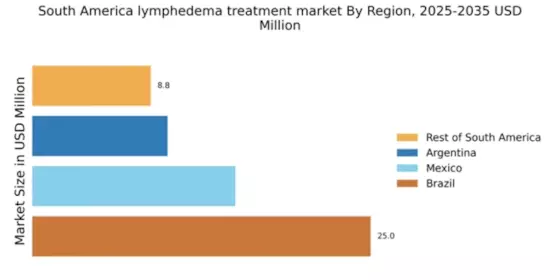
Brazil holds a dominant 25.0% market share in the South American lymphedema treatment sector, driven by increasing awareness and healthcare access. Key growth drivers include government initiatives promoting early diagnosis and treatment, alongside rising disposable incomes. The demand for advanced compression garments and therapies is on the rise, supported by regulatory policies that favor innovative medical solutions. Infrastructure improvements in healthcare facilities further bolster market growth.

Mexico : Increasing Awareness and Accessibility

Mexico accounts for a 15.0% share of the lymphedema treatment market in South America, with significant growth potential. The rise in healthcare awareness and the establishment of specialized clinics are key drivers. Demand for lymphedema management products is increasing, particularly in urban areas. Government initiatives aimed at improving healthcare infrastructure and access to treatment are also contributing to market expansion.

Argentina : Focus on Patient-Centric Care

Argentina holds a 10.0% market share in the lymphedema treatment sector, characterized by a growing emphasis on patient-centric care. The market is driven by increasing healthcare investments and a rise in chronic disease prevalence. Demand for effective treatment options is growing, supported by local regulations that encourage the adoption of advanced therapies. The government is also promoting awareness campaigns to educate the public about lymphedema.

Rest of South America : Varied Demand Across Regions

The Rest of South America represents an 8.75% share in the lymphedema treatment market, with diverse demand patterns across countries. Key growth drivers include increasing healthcare investments and the establishment of local manufacturing facilities. Regulatory frameworks vary, impacting market dynamics. Countries like Chile and Colombia are emerging as significant markets, with local players gaining traction alongside international brands.

South America Lymphedema Treatment Market Regional Image

Key Players and Competitive Insights

The lymphedema treatment market exhibits a dynamic competitive landscape characterized by a blend of established players and emerging innovators. Key growth drivers include an increasing prevalence of lymphedema, heightened awareness of treatment options, and advancements in therapeutic technologies. Major companies such as Medi USA (US), BSN Medical (DE), and Tactile Medical (US) are strategically positioned to leverage these trends. Medi USA (US) focuses on innovation in compression therapy products, while BSN Medical (DE) emphasizes a comprehensive portfolio that includes both traditional and advanced treatment modalities. Tactile Medical (US) is enhancing its market presence through digital health solutions, indicating a shift towards integrated care models. Collectively, these strategies shape a competitive environment that is increasingly focused on patient-centric solutions and technological advancements.

Key business tactics within this market include localizing manufacturing to reduce costs and optimize supply chains, which is particularly relevant in the context of South America’s diverse economic landscape. The market structure appears moderately fragmented, with several key players holding substantial market shares while also facing competition from smaller, niche companies. This fragmentation allows for a variety of treatment options, catering to different patient needs and preferences, thereby enhancing overall market resilience.

In October 2025, MediCom (DE) announced a strategic partnership with a local healthcare provider to enhance distribution channels for its lymphedema treatment products in Brazil. This move is significant as it not only expands MediCom's reach but also aligns with the growing trend of localized healthcare solutions, which are crucial in addressing regional disparities in treatment access. The partnership is expected to bolster MediCom's market share in a rapidly growing segment of the South American market.

In September 2025, Sigvaris (CH) launched a new line of sustainable compression garments designed specifically for lymphedema patients. This initiative reflects a broader industry trend towards sustainability and eco-friendly practices, which are becoming increasingly important to consumers. By prioritizing sustainability, Sigvaris (CH) positions itself as a forward-thinking leader in the market, potentially attracting environmentally conscious consumers and healthcare providers alike.

In August 2025, Tactile Medical (US) introduced an innovative telehealth platform aimed at improving patient engagement and monitoring for lymphedema treatment. This strategic move underscores the growing importance of digital health solutions in enhancing patient outcomes and streamlining care processes. By integrating technology into its treatment offerings, Tactile Medical (US) not only enhances its competitive edge but also aligns with the increasing demand for remote healthcare solutions.

As of November 2025, current competitive trends in the lymphedema treatment market are heavily influenced by digitalization, sustainability, and the integration of artificial intelligence (AI) into treatment protocols. Strategic alliances are becoming more prevalent, as companies recognize the value of collaboration in enhancing product offerings and expanding market reach. Looking ahead, competitive differentiation is likely to evolve from traditional price-based competition towards a focus on innovation, technological advancements, and supply chain reliability. This shift suggests that companies that prioritize these areas will be better positioned to thrive in an increasingly complex and competitive landscape.

Key Companies in the South America Lymphedema Treatment Market market include

Industry Developments

The South America Lymphedema Treatment Market has seen notable developments recently. Arjo has introduced innovative solutions aimed at improving patient care and expanding its market presence, while Kanglu has made strides in enhancing its product offerings. Tactile Medical has been actively involved in raising awareness about lymphedema, which has positive implications for market growth. In terms of mergers and acquisitions, no recent public information regarding such activities involving companies like Smith and Nephew, Medi, or ConvaTec has emerged as of October 2023.

Market valuation growth for companies including Essity and 3M has been bolstered by increasing healthcare expenditure across South American nations, alongside a rising awareness about chronic conditions such as lymphedema. In the past couple of years, fundamental changes have occurred, particularly in August 2022, when the region observed an increase in local patient support initiatives spearheaded by major players such as BSN Medical and Cardinal Health. This uptick in initiatives aims to improve the quality of care and accessibility to treatment, fueling the overall Lymphedema Treatment Market growth in South America.

Future Outlook

South America Lymphedema Treatment Market Future Outlook

The Lymphedema Treatment Market is projected to grow at a 5.88% CAGR from 2024 to 2035, driven by increasing awareness and advancements in treatment technologies.

New opportunities lie in:

  • Development of telehealth platforms for remote patient monitoring.
  • Expansion of specialized lymphedema clinics in urban areas.
  • Introduction of innovative compression garments with smart technology.

By 2035, the market is expected to achieve substantial growth, driven by innovative treatment solutions.

Market Segmentation

South America Lymphedema Treatment Market Type Outlook

  • Primary Lymphedema
  • Secondary Lymphedema

South America Lymphedema Treatment Market End-User Outlook

  • Hospitals and Clinics
  • Clinical Research Organizations
  • Research & Academic Institutes

South America Lymphedema Treatment Market Treatment Outlook

  • Compression Devices & Bandaging
  • Laser Therapy
  • Drug Therapy
  • Surgery

South America Lymphedema Treatment Market Affected Area Outlook

  • Lower Extremity
  • Upper Extremity
  • Genitalia

Report Scope

MARKET SIZE 2024 58.75(USD Million)
MARKET SIZE 2025 62.21(USD Million)
MARKET SIZE 2035 110.16(USD Million)
COMPOUND ANNUAL GROWTH RATE (CAGR) 5.88% (2024 - 2035)
REPORT COVERAGE Revenue Forecast, Competitive Landscape, Growth Factors, and Trends
BASE YEAR 2024
Market Forecast Period 2025 - 2035
Historical Data 2019 - 2024
Market Forecast Units USD Million
Key Companies Profiled ["Medi USA (US)", "BSN Medical (DE)", "Tactile Medical (US)", "Lympha Press (US)", "Sigvaris (CH)", "Juzo (DE)", "Essity (SE)", "MediCom (DE)"]
Segments Covered Type, Affected Area, Treatment, End-User
Key Market Opportunities Emerging technologies in lymphedema treatment enhance patient outcomes and drive market growth opportunities.
Key Market Dynamics Rising demand for innovative lymphedema therapies drives competitive dynamics and regulatory adaptations in South America.
Countries Covered Brazil, Mexico, Argentina, Rest of South America

Leave a Comment

FAQs

What is the expected market size of the South America Lymphedema Treatment Market in 2024?

The South America Lymphedema Treatment Market is expected to be valued at 58.75 million USD in 2024.

What is the projected market value for the South America Lymphedema Treatment Market by 2035?

By 2035, the overall market value is expected to reach 132.27 million USD.

What is the expected compound annual growth rate (CAGR) for the South America Lymphedema Treatment Market from 2025 to 2035?

The expected CAGR for the South America Lymphedema Treatment Market is 7.657% during the period from 2025 to 2035.

Which countries are the largest markets for lymphedema treatment in South America?

Brazil, Mexico, and Argentina represent some of the largest markets in South America for lymphedema treatment.

What is the market value of Primary Lymphedema in 2024?

Primary Lymphedema is valued at 25.0 million USD in 2024.

What is the market size of Secondary Lymphedema in 2025?

The market size for Secondary Lymphedema in 2024 is 33.75 million USD.

How much is the lymphedema treatment market in Brazil expected to grow by 2035?

The lymphedema treatment market in Brazil is expected to grow to 39.15 million USD by 2035.

Who are the major players in the South America Lymphedema Treatment Market?

Key players in the market include Arjo, Kanglu, Hollister, Tactile Medical, and Smith & Nephew.

What market size is anticipated for the Rest of South America by 2035?

The Rest of South America is expected to reach a market size of 35.06 million USD by 2035.

What will be the market value for Argentina by 2035?

The lymphedema treatment market in Argentina is projected to be valued at 25.08 million USD by 2035.

Download Free Sample

Kindly complete the form below to receive a free sample of this Report

Compare Licence

×
Features License Type
Single User Multiuser License Enterprise User
Price $4,950 $5,950 $7,250
Maximum User Access Limit 1 User Upto 10 Users Unrestricted Access Throughout the Organization
Free Customization
Direct Access to Analyst
Deliverable Format
Platform Access
Discount on Next Purchase 10% 15% 15%
Printable Versions