Pharmacy Market (2025 - 2035)

Pharmacy Market Research Report: Size, Share, Trend Analysis By Product Type (Prescription Drugs, Over-The-Counter Drugs, Vaccines, Homeopathic Medicine), By Distribution Channel (Retail Pharmacy, Hospital Pharmacy, Online Pharmacy, Specialty Pharmacy), By Therapeutic Area (Cardiovascular, Oncology, Diabetes, Neurology, Infectious Diseases), By Formulation (Tablets, Injectables, Topicals, Liquids) and By Regional (North America, Europe, South America, Asia Pacific, Middle East and Africa) - Growth Outlook & Industry Forecast 2025 To 2035
ID: MRFR/HC/10482-HCR 200 Pages Rahul Gotadki, Kinjoll Dey Last Updated: September 15, 2026
Pharmacy Market
Market Size
Forecast Period2025-2035
CAGR (2025-2035)6.1%
2025 Market SizeUSD 1,595,000 Million
2035 Market SizeUSD 2,882,600 Million
Key Players
CVS Health
Walgreens Boots Alliance
McKesson Corporation
Cencora
Cardinal Health
UnitedHealth Group
Opportunities
  • Telepharmacy Expansion into Rural and Underserved Communities
  • Clinical Service Diversification
  • Emerging Market Insurance Expansion

Pharmacy Market Summary

The Pharmacy Market size was valued at USD 1,595,000 Million in 2025, and the market is projected to grow from USD 1,692,300 Million in 2026 to USD 2,882,600 Million by 2035, registering a CAGR of 6.1% during the forecast period 2026–2035. This expansion is anchored by aging populations in mature economies, rising chronic disease prevalence, and government-led initiatives to broaden pharmaceutical access — including the U.S. Inflation Reduction Act's drug pricing provisions, which have reshaped prescription volume dynamics since 2023 [1]. Universal health coverage mandates across Southeast Asia and sub-Saharan Africa are pulling tens of millions of new consumers into formal pharmacy channels for the first time.

Digital transformation is redefining how pharmacies operate. Legacy manual dispensing workflows are giving way to AI-driven inventory management, robotic prescription fulfillment, and telepharmacy platforms that extend clinical reach into rural areas. Venture investment underscores the momentum: online pharmacy startup PharmEasy secured approximately USD 216 million in funding in April 2024, while Rx Save Card raised USD 1.7 million in pre-seed capital to expand discount prescription services . Cloud-based platforms now manage end-to-end medication therapy across hospital and community settings, compressing fulfillment cycles and reducing dispensing errors by up to 85% in early adopter networks .

North America commands the largest share of the Pharmacy Market at roughly 38% of global revenue, driven by high per-capita drug spend and a concentrated payer ecosystem. Asia-Pacific is the fastest-growing region with a projected CAGR of 7.8%, fueled by expanding insurance pools in India and China. Europe holds the second-largest position at approximately 27%, where cross-border e-prescription frameworks under the European Health Data Space initiative continue to unlock new dispensing volumes [4]. The decade ahead will be shaped by how quickly traditional brick-and-mortar operators can integrate digital-first service models without sacrificing the trust-based patient relationships that define pharmacy care.


Key Report Takeaways

• By Pharmacy Type

  • Retail Pharmacy accounts for an estimated 58% of the Pharmacy Market in 2025, supported by dense store networks and expanding clinical service mandates in the U.S. and Europe
  • e-Pharmacy is the fastest-growing pharmacy type, projected to expand at a CAGR of 9.4% through 2035 as digital prescription platforms gain regulatory acceptance across the Asia-Pacific
  • Hospital Pharmacy represents roughly USD 447,000 Million in 2025, reflecting increased inpatient drug utilization and specialty infusion demand

• By Drug Type

  • Branded/Patented Drugs hold approximately 55% of the Pharmacy Market, sustained by high-cost biologics and oncology therapeutics entering formularies.
  • Generic Drugs are expanding at a CAGR of 7.2%, driven by patent cliffs affecting blockbuster molecules through 2030.

• By Region

  • North America leads the Pharmacy Market with USD 606,100 Million in 2025, reflecting the world's highest prescription drug expenditure per capita.
  • Asia-Pacific is growing at the fastest regional CAGR of 7.8%, as national health insurance expansions in India, Indonesia, and Vietnam bring pharmacy services to previously underserved populations.


Pharmacy Market Size and Forecast (2021–2035)

The market sizing methodology blends top-down revenue analysis from public company filings, national health expenditure databases, and IMS Health/IQVIA prescription audit data with bottom-up estimates from pharmacy chain store counts, average revenue per outlet, and regional drug pricing indices. Historical figures (2021–2024) draw from WHO Global Health Expenditure data [5] and OECD pharmaceutical spending reports [6], while the forecast trajectory (2026–2035) applies the calibrated 6.1% CAGR adjusted for patent cliff timing and regulatory pipeline inputs.
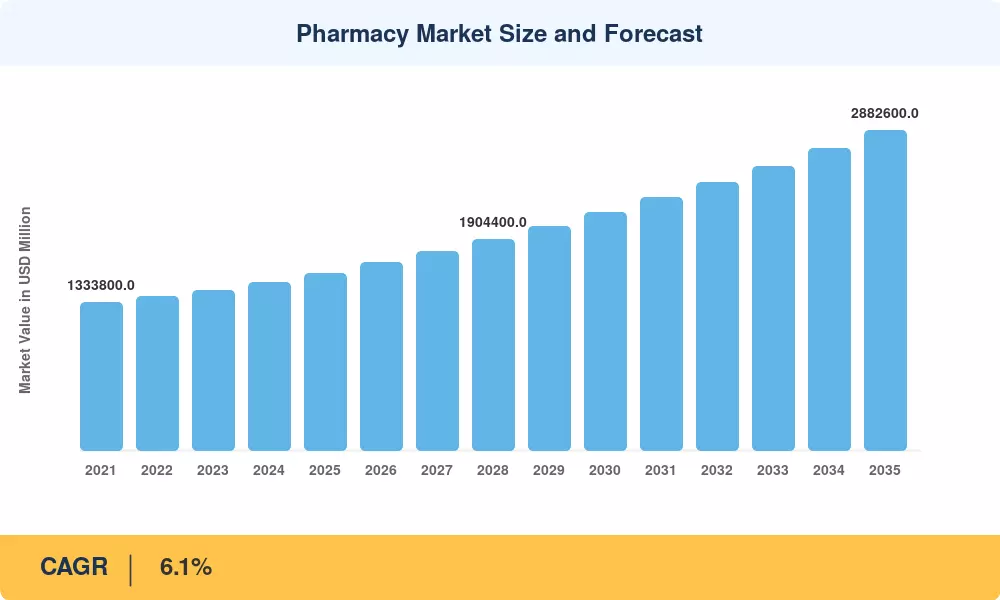
Pharmacy Market Size and Forecast
Our Impact

Enabled $4.3B Revenue Impact for Fortune 500 and Leading Multinationals

Partnering with 2000+ Global Organizations Each Year

30K+ Citations by Top-Tier Firms in the Industry

Driver Impact Analysis

Driver ~% Impact on CAGR Geographic Relevance Impact Timeline
Rising chronic disease burden ~1.4% Global Long-term (≥4 yr)
E-pharmacy adoption & digital Rx ~1.1% Asia-Pacific, North America Medium-term (2–4 yr)
Biosimilar & generic substitution ~0.9% Europe, Asia-Pacific Short-term (≤2 yr)
Aging population demographics ~0.8% Europe, Japan, North America Long-term (≥4 yr)
Government UHC mandates ~0.7% Asia-Pacific, MEA, South America Medium-term (2–4 yr)
Pharmacy automation & AI ~0.6% North America, Europe Medium-term (2–4 yr)
Specialty & high-cost drug pipeline ~0.5% North America Long-term (≥4 yr)


Rising Chronic Disease Burden

Non-communicable diseases now account for 74% of global deaths annually, according to WHO 2024 data, and patients with conditions like diabetes, hypertension, and respiratory disease generate recurring prescription demand that forms the revenue backbone of the Pharmacy Market [1]. The IDF Diabetes Atlas projects 783 million adults will have diabetes by 2045, up from 537 million in 2021, creating sustained refill volume growth that compounds at roughly twice the rate of acute-care prescriptions . This structural demand shift is particularly pronounced in low- and middle-income countries where pharmacy networks serve as the primary medication access point.

E-Pharmacy Adoption and Digital Prescriptions

Regulatory green lights for online prescription fulfillment — including India's draft e-pharmacy rules and the EU's cross-border e-prescription framework — are unlocking double-digit growth in digital dispensing channels. PharmEasy's USD 216 million funding round in 2024 illustrates investor confidence in platforms that aggregate prescription demand across fragmented retail networks . In the U.S., Amazon Pharmacy's same-day delivery program now covers over 3,800 cities, compressing the convenience gap between digital and traditional channels [7].

Biosimilar and Generic Substitution Waves

The period 2025–2030 will see patent expirations on biologics generating over USD 100 billion in current annual sales, including adalimumab, pembrolizumab, and ustekinumab [8]. The resulting biosimilar substitution is expanding volume through pharmacy channels while compressing per-unit prices by 40–70%, a dynamic that simultaneously grows script counts and pressures revenue per prescription. European markets lead adoption with biosimilar penetration rates exceeding 80% in Scandinavian countries [12].

Aging Population Demographics

Adults over 65 consume three to five times more prescription medications than younger cohorts, and this demographic is growing faster than total population in every G7 economy. Japan — where 29% of the population is already over 65 — provides a preview of how pharmacy service models must adapt, with polypharmacy management and medication therapy reviews becoming standard reimbursable services .


Restraints Impact Analysis

Restraint ~% Impact on CAGR Geographic Relevance Impact Timeline
Drug pricing regulation & margin compression –0.7% North America, Europe Short-term (≤2 yr)
Pharmacist workforce shortages –0.5% North America, Europe Medium-term (2–4 yr)
Counterfeit drug supply chain risks –0.4% Asia-Pacific, Africa Long-term (≥4 yr)
Reimbursement & PBM consolidation pressure –0.3% North America Medium-term (2–4 yr)
Regulatory fragmentation for e-pharmacies –0.3% Asia-Pacific, South America Short-term (≤2 yr)


Drug Pricing Regulation and Margin Compression

The U.S. Inflation Reduction Act’s Medicare prescription price negotiating provisions are predicted to cut pharmacy gross margins on specified high-cost drugs by 25-40% by 2028 . European reference pricing mechanisms are becoming even more restrictive as Germany’s AMNOG framework broadens its coverage across therapeutic areas. These pricing pressures threaten survival of independent pharmacies working on already razor-thin 2-3% net margins unless offset by enhanced clinical service reimbursement.


Pharmacist Workforce Shortages

Applications to PharmD programs fell 14% from 2019 to 2024 [14], according to the American Association of Colleges of Pharmacy, but demand for pharmacist-provided clinical services, like vaccines, diagnostics, and prescribing under collaborative practice agreements, has grown. The ensuing labor bottleneck constrains operating hours, hinders service expansion and promotes pay inflation across the Pharmacy Market, especially in rural and impoverished locations where recruitment issues are most acute.


Counterfeit Drug Supply Chain Risks

The WHO estimates that 10% of medicinal items in circulation in low- and middle-income countries are substandard or fraudulent, weakening consumer trust in pharmacy channels and posing patient safety risks [15]. Smaller players in the Pharmacy Market may face higher compliance expenses as serialization rules such as the EU Falsified Medicines Directive and India’s track-and-trace obligations come into place.


Pharmacy Market Opportunities

Telepharmacy Expansion into Rural and Underserved Communities

According to the National Association of Boards of Pharmacy , more than 60 million Americans are living in pharmacy deserts, which are places with no practical access to a pharmacy. Telepharmacy platforms that connect a licensed pharmacist to remote dispensing kiosks through video consultation is a fast-growing channel for the Pharmacy Market. Currently, 38 U.S. states allow some type of telepharmacy practice.


Clinical Service Diversification

Pharmacies are evolving from dispensing-centric businesses into primary care access points. Point-of-care testing, chronic disease monitoring, and pharmacogenomic consultation generate higher margins than traditional prescription fill-and-dispense. CVS Health's MinuteClinic network, with over 1,100 locations, demonstrates the scalable integration of clinical services into pharmacy retail footprints.

Emerging Market Insurance Expansion

India's Ayushman Bharat program covers 500 million beneficiaries, while Indonesia's JKN universal health program now enrolls over 260 million citizens [9]. These national insurance schemes are channeling prescription demand through formal pharmacy networks for the first time, creating greenfield growth for the Pharmacy Market across South and Southeast Asia.

Data Monetization and Pharmacy Analytics Platforms

Pharmacy chains sit on vast longitudinal datasets covering prescription patterns, adherence rates, and therapeutic outcomes. Monetizing these datasets through anonymized real-world evidence platforms — while maintaining HIPAA and GDPR compliance — creates a high-margin revenue stream. IQVIA's partnerships with major pharmacy retailers illustrate how prescription data powers pharmaceutical R&D and payer negotiations.

Specialty Pharmacy Growth for High-Cost Biologics

The specialty drug pipeline — encompassing cell and gene therapies, GLP-1 agonists, and targeted oncology agents — demands cold-chain logistics, patient support programs, and payer navigation that traditional retail pharmacies cannot easily replicate. Elevance Health's acquisition of Kroger's specialty pharmacy business in March 2024 signals how specialty pharmacy services are being consolidated under managed care organizations seeking end-to-end control of high-cost medication management [10].


Pharmacy Market Future Outlook

AI-Powered Pharmacy Operations

Artificial intelligence will move from pilot programs to standard operating infrastructure within the Pharmacy Market by 2030. Predictive demand forecasting, automated drug interaction screening, and natural language processing for prescription interpretation are reducing pharmacist cognitive burden while improving patient safety. estimates that AI-enabled workflow optimization could reduce pharmacy operating costs by 15–20% by 2032 .

Platform Economics and Pharmacy Aggregation

The aggregator model — where digital platforms consolidate prescription demand across independent pharmacies — is replicating the disruption seen in food delivery and ride-hailing. In India, platforms like PharmEasy and 1mg process millions of monthly orders, while Amazon Pharmacy's RxPass subscription model in the U.S. signals a shift toward recurring revenue structures in the Pharmacy Market [7].

Cell and Gene Therapy Dispensing

The next generation of curative therapies — including CAR-T, gene editing, and RNA-based treatments — demands pharmacy infrastructure capable of managing ultra-cold storage, patient-specific manufacturing logistics, and six-figure per-dose reimbursement workflows. By 2030, the FDA is expected to approve 10–20 new cell and gene therapies annually, each requiring specialized pharmacy dispensing protocols [10].

Sustainability and Green Pharmacy Initiatives

Pharmaceutical waste management and sustainable packaging are emerging as regulatory and reputational priorities for the Pharmacy Market. The EU Pharmaceutical Strategy mandates environmental risk assessments for all new drug approvals, while pharmacy chains including Boots and CVS Health have committed to carbon-neutral operations by 2040 [20]. Medication take-back programs and refillable packaging systems present both compliance obligations and brand differentiation opportunities.


Regional Market Share Analysis

Region Metric Primary Investment Themes
North America 38% share (2025) PBM restructuring, clinical service expansion
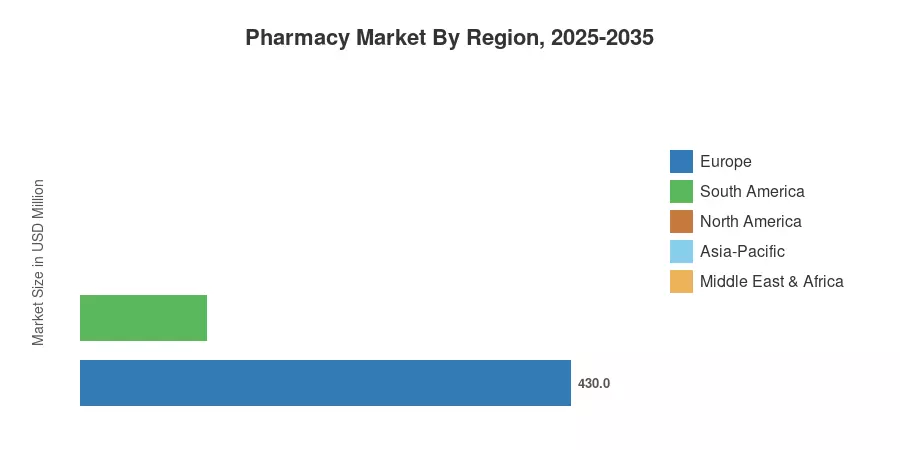
Europe USD 430,700 Million (2025) Cross-border e-prescriptions, biosimilar adoption
Asia-Pacific 7.8% CAGR (2026–2035) Universal health coverage, e-pharmacy platforms
South America USD 111,700 Million (2025) Public pharmacy network expansion
Middle East & Africa 6.5% CAGR (2026–2035) Hospital pharmacy buildout, import diversification
Total USD 1,595,000 Million (2025) —

The Pharmacy Market exhibits significant regional variation in maturity, regulatory structure, and channel mix. North America and Europe account for the majority of global pharmacy revenue, while Asia-Pacific delivers the fastest growth rates as healthcare infrastructure investments accelerate.


North America

Country Metric Key Driver
US 82% of regional share Medicare Part D volume, PBM restructuring
Canada CAGR 5.8% Provincial formulary expansion
Mexico USD 18,200 Million (2025) INSABI to IMSS-Bienestar transition


The U.S. dominates the North American Pharmacy Market, with prescription drug spending exceeding USD 400 billion annually and a retail pharmacy density of approximately 1 pharmacy per 3,200 residents [1]. Canada's publicly funded drug programs are expanding coverage for rare disease therapies, while Mexico's ongoing health system restructuring is gradually formalizing pharmaceutical distribution through hospital and community pharmacy networks.

Europe

Country Metric Key Driver
Germany 24% of regional share Reference pricing, hospital pharmacy automation
UK USD 52,800 Million (2025) NHS digital prescription mandate
France CAGR 5.4% Pharmacist vaccination authority expansion
Italy 12% of regional share Generic substitution policies
Spain USD 28,500 Million (2025) Regional health system procurement
Nordic Countries CAGR 5.9% E-pharmacy leadership, biosimilar adoption
Russia 7% of regional share Import substitution for generics
Rest of Europe USD 44,600 Million (2025) EU Health Data Space implementation


European pharmacy regulation is among the most prescriptive globally, with dispensing margins, opening hours, and ownership structures governed at the national level. The European Health Data Space regulation, finalized in 2024, will enable cross-border electronic prescriptions across all 27 member states by 2029, creating a unified digital dispensing infrastructure that benefits large pharmacy chains with multi-country footprints [4].

Asia-Pacific

Country Metric Key Driver
China 41% of regional share Hospital pharmacy reform, DTP pharmacy growth
India CAGR 9.2% Ayushman Bharat, e-pharmacy regulation
Japan USD 78,500 Million (2025) Aging demographics, polypharmacy management
South Korea CAGR 6.8% Digital health integration
ASEAN 16% of regional share UHC expansion across member states
Rest of Asia-Pacific CAGR 7.1% Healthcare infrastructure investment


China's ongoing hospital pharmacy reform — separating drug sales revenue from hospital income — is redirecting prescription volumes toward retail and direct-to-patient (DTP) pharmacies, fundamentally reshaping the Pharmacy Market structure in the world's second-largest pharmaceutical economy [9]. India's pharmacy landscape remains highly fragmented, with over 900,000 retail outlets, but e-pharmacy consolidation by players such as PharmEasy and Tata 1mg is driving formalization.

South America

Country Metric Key Driver
Brazil 62% of regional share Farmácia Popular program
Argentina CAGR 5.6% Generic drug policy expansion
Rest of South America USD 22,400 Million (2025) Public health system procurement


Brazil's Farmácia Popular program subsidizes essential medications for over 40 million citizens, making government-backed pharmacy channels the primary dispensing infrastructure for the Pharmacy Market across the country's 5,500+ municipalities [18].

Middle East & Africa

Country Metric Key Driver
Saudi Arabia 31% of regional share Vision 2030 healthcare investment
UAE CAGR 7.4% Medical tourism, private pharmacy chains
South Africa USD 11,800 Million (2025) National Health Insurance bill
Egypt CAGR 6.9% Population growth, UHC rollout
Rest of MEA 28% of regional share Donor-funded pharmaceutical programs


Saudi Arabia's Vision 2030 healthcare privatization drive is attracting international pharmacy chains and hospital pharmacy management operators, with Nahdi Medical Company and Al Dawaa Pharmacies expanding store counts at double-digit annual rates [19].


Pharmacy Market By Region, 2025-2035

Pharmacy Market Segmentation

By Pharmacy Type

Segment Metric Primary Demand Driver
Retail Pharmacy 58% share (2025) Store density, OTC and Rx dispensing volume
Hospital Pharmacy USD 447,000 Million (2025) Inpatient drug utilization, specialty infusions
e-Pharmacy CAGR 9.4% (2026–2035) Digital convenience, chronic disease refills


Retail Pharmacy remains the dominant channel within the Pharmacy Market, anchored by CVS Health's 9,000+ U.S. locations and Walgreens Boots Alliance's global footprint of over 12,500 stores. These chains are layering clinical services — immunizations, health screenings, and chronic care management — atop traditional dispensing to defend against e-pharmacy disintermediation. The high-touch consultation model that retail pharmacies provide continues to resonate with older patients managing complex medication regimens.

The e-Pharmacy segment is attracting disproportionate investor attention, with digital prescription platforms expanding rapidly in India, China, and Brazil. Regulatory clarity around online drug sales — India's pending e-pharmacy regulations and China's revised Drug Administration Law — will determine how quickly this segment can scale from its current 14% share of the Pharmacy Market toward projected penetration rates of 22–25% by 2035 [7].

By Prescription Type

Segment Metric Primary Demand Driver
Prescription Drugs 72% share (2025) Chronic disease management, specialty pipeline
Over-The-Counter (OTC) Drugs CAGR 5.3% (2026–2035) Self-care trend, Rx-to-OTC switches


Prescription drugs dominate the Pharmacy Market revenue base, driven by the rising volume of maintenance medications for cardiovascular, metabolic, and autoimmune conditions. OTC drugs, while a smaller share, benefit from a secular self-care trend as consumers increasingly manage minor ailments independently and regulatory agencies approve Rx-to-OTC switches for categories including contraceptives and allergy treatments [6].

By Drug Type

Segment Metric Primary Demand Driver
Branded/Patented Drugs 55% share (2025) Biologic launches, oncology spend
Generic Drugs CAGR 7.2% (2026–2035) Patent expirations, government substitution mandates


Branded drugs command the largest revenue share due to premium pricing on biologics and specialty medications, though generic drugs are gaining ground as blockbuster patent cliffs between 2025 and 2032 accelerate volume substitution. Government formulary policies in Europe and Asia-Pacific that mandate generic substitution wherever bioequivalent alternatives exist are the primary catalyst for this shift within the Pharmacy Market [8].

By Indication Type

Segment Metric Primary Demand Driver
Cardiovascular Disorders 22% share (2025) Hypertension prevalence, statin volume
Autoimmune / Inflammatory Disorders CAGR 8.1% (2026–2035) Biologic pipeline, JAK inhibitors
Antibiotics USD 218,000 Million (2025) Infectious disease burden, AMR stewardship
Dermatology 12% share (2025) Psoriasis biologics, cosmeceutical crossover
Others CAGR 5.8% (2026–2035) Respiratory, CNS, metabolic conditions


Competitive Benchmarking

The Pharmacy Market exhibits low market concentration, with the top five players accounting for an estimated 28–34% of global revenue. The competitive field spans pharmacy retail giants, pharmaceutical distributors, health insurers with integrated pharmacy operations, and emerging digital-first platforms. The Herfindahl-Hirschman Index (HHI) for the sector is estimated below 500, indicating a highly fragmented landscape where regional and local operators command significant collective share.

Company Est. Revenue Share Range Key Offerings Strategic Positioning
CVS Health ~8–11% Retail pharmacy, MinuteClinic, Aetna integration, PBM (Caremark) Vertically integrated health services conglomerate
Walgreens Boots Alliance ~6–9% Retail pharmacy, VillageMD clinics, international operations Clinical care integration, global retail footprint
McKesson Corporation ~5–8% Pharmaceutical distribution, pharmacy technology, oncology network Wholesale distribution and technology backbone
Cencora (AmerisourceBergen) ~5–7% Drug distribution, specialty logistics, global sourcing Specialty distribution and manufacturer services
Cardinal Health ~4–6% Pharmaceutical distribution, nuclear pharmacy, analytics Supply chain optimization, hospital focus
UnitedHealth Group (Optum Rx) ~4–6% PBM services, home delivery pharmacy, specialty Rx Payer-integrated pharmacy management
Cigna Group (Express Scripts) ~3–5% PBM, home delivery, formulary management Cost management and clinical pathway design
Amazon Pharmacy ~1–3% Online Rx fulfillment, RxPass subscription, Prime integration Digital-first disruption, consumer convenience
Rite Aid ~1–2% Retail pharmacy, Elixir PBM services Regional U.S. presence, restructuring underway
Kroger Health ~1–2% In-store pharmacy, The Little Clinic, specialty Rx Grocery-pharmacy integration model


Recent News & Developments

  • Elevance Health / CarelonRx (March 2024): Acquired Kroger's specialty pharmacy business to expand chronic disease medication management capabilities under its managed care infrastructure [10]
  • PharmEasy (April 2024): Secured approximately USD 216 million in venture funding to scale its online prescription fulfillment platform across India's fragmented retail pharmacy landscape
  • Walgreens Boots Alliance / Boehringer Ingelheim (May 2024): Formed a clinical trial partnership to improve diversity in medical research by leveraging Walgreens' community pharmacy patient base [21]
  • Rx Save Card (August 2024): Raised USD 1.7 million in pre-seed funding to expand its prescription discount platform targeting uninsured and underinsured U.S. consumers


  • European Commission (March 2025): Published implementing rules for cross-border e-prescriptions under the European Health Data Space regulation, with mandatory compliance by 2029 [4]


Pharmacy Market Report Scope

Parameter Detail
Market Scope Global Pharmacy Market covering retail, hospital, and e-pharmacy channels across prescription, OTC, branded, and generic drug types
Study Period 2021–2035
CAGR (2026–2035) 6.1%
Base Year Market Size (2025) USD 1,595,000 Million
Forecast Endpoint (2035) USD 2,882,600 Million
Fastest Growing Segment e-Pharmacy (by pharmacy type); Generic Drugs (by drug type)
Companies Profiled CVS Health, Walgreens Boots Alliance, McKesson, Cencora, Cardinal Health, UnitedHealth Group, Cigna Group, Amazon Pharmacy, Rite Aid, Kroger Health
Valuation Currency USD Million

FAQs

How does PBM consolidation affect independent pharmacy viability in the Pharmacy Market?
Three PBMs control over 80% of U.S. prescription adjudication, enabling them to set reimbursement rates below acquisition cost for many independent operators. Pharmacies lacking scale are increasingly reliant on clinical service revenue to offset dispensing margin erosion [16].
What role does pharmacogenomics play in differentiating pharmacy offerings?
Pharmacogenomic testing allows pharmacists to tailor medication selection to a patient's genetic profile, reducing adverse drug reactions. Early adopters report 15–20% improvements in therapeutic outcomes for cardiovascular and psychiatric medications [22].
How are cold-chain logistics reshaping pharmacy infrastructure requirements?
Biologic and cell therapy drugs require unbroken temperature-controlled storage from manufacturer to patient. Pharmacies investing in validated cold-chain systems gain preferred network status with specialty drug manufacturers [10].
What cybersecurity risks do pharmacies face as digital prescription platforms scale?
Pharmacy systems store protected health information targeted by ransomware operators. The U.S. HHS reported a 93% increase in healthcare data breaches between 2018 and 2023, making cybersecurity investment essential for digital pharmacy operations .
How do Rx-to-OTC switches impact Pharmacy Market revenue dynamics?
Switches expand OTC category volume but typically reduce per-unit revenue as drugs move from insured to consumer-pay pricing. Net effect depends on volume elasticity — high-frequency categories like allergy medications often see net revenue gains [6].
What workforce models are pharmacies adopting to address staffing shortages?
Pharmacy technician scope expansion, centralized prescription verification hubs, and telepharmacy staffing models allow licensed pharmacists to operate at top-of-license. Several U.S. states now permit technicians to administer immunizations under pharmacist oversight [14].
How does China's hospital pharmacy reform create new market entry points?
China's separation of drug sales from hospital revenue is pushing outpatient prescriptions to retail and DTP pharmacies. This structural policy shift is expected to redirect over USD 150 billion in annual drug spending toward community pharmacy channels by 2030 [9].    
What is the current size of the pharmacy market?
The pharmacy market reached USD 1,162.21 billion in 2025 and is projected to reach USD 1,822.58 billion by 2035.
What is the CAGR of the pharmacy market?
The pharmacy market is projected to grow at a CAGR of 4.6% during the forecast period 2025–2035.
Which region leads the pharmacy market?
North America holds the largest share at 45.0%, while Asia-Pacific accounts for approximately 20% of the global share and is the fastest-growing region.
Author
Author Author Profile Rahul Gotadki LinkedIn Research Manager
He holds an experience of about 9+ years in Market Research and Business Consulting, working under the spectrum of Life Sciences and Healthcare domains. Rahul conceptualizes and implements a scalable business strategy and provides strategic leadership to the clients. His expertise lies in market estimation, competitive intelligence, pipeline analysis, customer assessment, etc.
Co-Author Co-Author Profile Kinjoll Dey LinkedIn Senior Research Analyst
He is an extremely curious individual currently working in Healthcare and Medical Devices Domain. Kinjoll is comfortably versed in data centric research backed by healthcare educational background. He leverages extensive data mining and analytics tools such as Primary and Secondary Research, Statistical Analysis, Machine Learning, Data Modelling. His key role also involves Technical Sales Support, Client Interaction and Project management within the Healthcare team. Lastly, he showcases extensive affinity towards learning new skills and remain fascinated in implementing them.
Download Free Sample

Kindly complete the form below to receive a free sample of this Report

Download PDF ×

We do not share your information with anyone. However, we may send you emails based on your report interest from time to time. You may contact us at any time to opt-out.

















