North America : Market Leader in Hydration
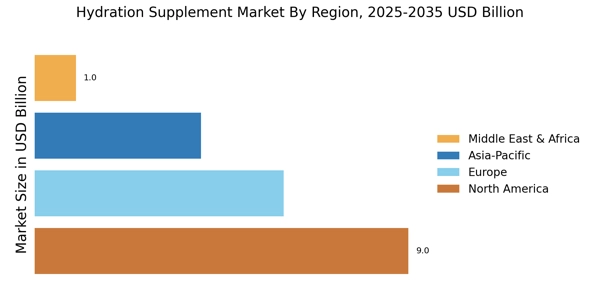
North America is the largest market for hydration supplements, accounting for approximately 45% of the global market share. The region's growth is driven by increasing health consciousness, rising participation in sports, and a growing trend towards fitness and wellness. Regulatory support for health supplements and a robust distribution network further catalyze market expansion. The demand for natural and organic hydration products is also on the rise, reflecting changing consumer preferences. The United States is the leading country in this market, with key players like Gatorade, Powerade, and Nuun dominating the landscape. The competitive environment is characterized by innovation in product formulations and marketing strategies aimed at health-conscious consumers. Canada follows as the second-largest market, with a growing interest in electrolyte-rich beverages and natural hydration solutions. The presence of established brands and new entrants enhances market dynamics.
Europe : Emerging Market Potential
Europe is witnessing a significant rise in the hydration supplement market, holding approximately 30% of the global share. The growth is fueled by increasing awareness of health benefits associated with hydration, coupled with a rise in sports activities and fitness trends. Regulatory frameworks in the EU promote the consumption of functional beverages, which further supports market growth. The demand for plant-based and organic hydration products is also gaining traction among European consumers. Leading countries in this region include Germany, the UK, and France, where brands like Nuun and BodyArmor are making their mark. The competitive landscape is evolving, with a mix of established players and innovative startups focusing on unique formulations. The presence of health-conscious consumers drives brands to enhance product offerings, catering to diverse preferences and dietary needs. The market is expected to continue expanding as consumer trends shift towards healthier lifestyles.
Asia-Pacific : Rapid Growth and Innovation
Asia-Pacific is emerging as a significant player in the hydration supplement market, accounting for about 20% of the global share. The region's growth is driven by increasing urbanization, rising disposable incomes, and a growing awareness of health and wellness. Regulatory initiatives promoting healthy living and the consumption of functional beverages are also contributing to market expansion. The demand for hydration products is particularly high among younger demographics engaged in sports and fitness activities. Countries like China, Japan, and Australia are leading the market, with a surge in local brands and international players entering the space. The competitive landscape is marked by innovation in flavors and formulations, catering to diverse consumer preferences. Key players are focusing on marketing strategies that highlight the benefits of hydration, further driving market growth. The region is poised for continued expansion as consumer interest in health supplements rises.
Middle East and Africa : Untapped Market Opportunities
The Middle East and Africa region is gradually emerging in the hydration supplement market, holding approximately 5% of the global share. The growth is primarily driven by increasing health awareness, rising temperatures, and a growing population engaged in sports and outdoor activities. Regulatory bodies are beginning to recognize the importance of hydration, leading to supportive policies that encourage the consumption of health supplements. The market is expected to grow as consumers become more aware of the benefits of hydration. Leading countries in this region include South Africa and the UAE, where the demand for hydration products is on the rise. The competitive landscape is characterized by a mix of local and international brands, with key players focusing on product innovation and marketing strategies tailored to regional preferences. As the market matures, opportunities for growth are expected to expand, particularly in urban areas where health trends are gaining momentum.




 Noah Malgeri
Co-Founder

 Peter Groot koerkamp
Account and Business Manager

 Younghwan Choi
Senior Retail Manager

 Mark Irwin
Management Consultant

 Akif Moroglu
Strategy & Business Development Director

 Guilherme Gomes Martins
Product Management Director

 Joseph Aguayo
Sales Operations & Pricing Manager

 La Terria Dodd
Program Support Specialist

 Rob Kooiker
Group Product Manager HVAC & Fire Protection GMA



