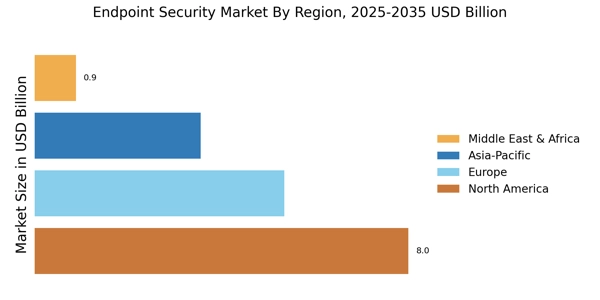
The Endpoint Security Market is currently experiencing a transformative phase, driven by the increasing complexity of cyber threats and the growing reliance on remote work environments. Organizations are prioritizing the protection of endpoints, which include devices such as laptops, smartphones, and tablets, as these are often the primary targets for cybercriminals. The rise of sophisticated malware and ransomware attacks has prompted businesses to invest heavily in advanced security solutions that offer real-time threat detection and response capabilities. Furthermore, the integration of artificial intelligence and machine learning technologies into endpoint security solutions is enhancing the ability to predict and mitigate potential risks, thereby fostering a more proactive security posture.
In addition to technological advancements, regulatory compliance is becoming a critical factor influencing the Endpoint Security Market. As data protection regulations evolve, organizations are compelled to adopt robust security measures to safeguard sensitive information. This trend is further amplified by the increasing awareness of data privacy among consumers, which is driving businesses to prioritize security in their operational strategies. Consequently, the Endpoint Security Market is poised for sustained growth, as companies seek to fortify their defenses against an ever-evolving threat landscape while ensuring compliance with regulatory standards.
Current endpoint security trends emphasize automation, cloud integration, and AI-powered threat detection. Within the broader cybersecurity industry overview, endpoint protection remains a critical investment area for enterprises. Sustained software industry growth is supporting innovation in endpoint protection technologies. A comprehensive endpoint analysis highlights the growing need for proactive device-level security strategies. Emerging firms such as Adapt Forward and other niche security specialists illustrate the diversity of innovation in the endpoint ecosystem.
Integration of AI and Machine Learning
The incorporation of artificial intelligence and machine learning into endpoint security solutions is revolutionizing threat detection and response. These technologies enable systems to analyze vast amounts of data, identify patterns, and predict potential threats, thereby enhancing overall security effectiveness.
Shift Towards Cloud-Based Solutions
There is a noticeable shift towards cloud-based endpoint security solutions, as organizations seek flexibility and scalability. Cloud offerings allow for centralized management and real-time updates, which are essential for addressing the dynamic nature of cyber threats.
Emphasis on Regulatory Compliance
As data protection regulations become more stringent, organizations are increasingly focusing on compliance as a key driver for their endpoint security strategies. This trend underscores the necessity for robust security measures to protect sensitive information and avoid potential penalties.










 Noah Malgeri
Co-Founder

 Peter Groot koerkamp
Account and Business Manager

 Younghwan Choi
Senior Retail Manager

 Mark Irwin
Management Consultant

 Akif Moroglu
Strategy & Business Development Director

 Guilherme Gomes Martins
Product Management Director

 Joseph Aguayo
Sales Operations & Pricing Manager

 La Terria Dodd
Program Support Specialist

 Rob Kooiker
Group Product Manager HVAC & Fire Protection GMA



