North America : Technological Innovation Leader
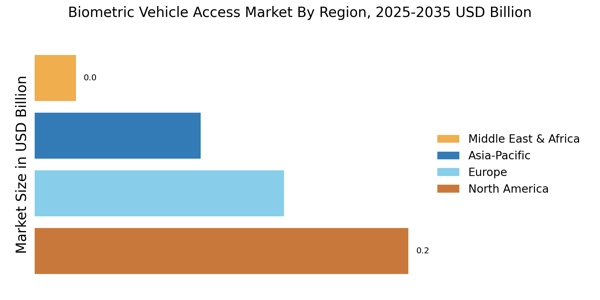
North America is the largest market for biometric vehicle access, holding approximately 45% of the global share. The region's growth is driven by increasing consumer demand for enhanced security features and advancements in biometric technology. Regulatory support for vehicle safety standards and data protection laws further catalyze market expansion. The U.S. leads this market, followed closely by Canada, which contributes around 15% to the overall market share. The competitive landscape in North America is robust, featuring key players such as Bosch, Continental, and Viper. These companies are at the forefront of innovation, developing cutting-edge biometric solutions that cater to consumer preferences. The presence of established automotive manufacturers and technology firms fosters a collaborative environment, enhancing the region's market dynamics. As the demand for secure vehicle access continues to rise, North America remains a pivotal player in the biometric vehicle access market.
Europe : Regulatory Framework Support
Europe is the second-largest market for biometric vehicle access, accounting for approximately 30% of the global market share. The region's growth is propelled by stringent regulations aimed at enhancing vehicle security and consumer safety. Countries like Germany and France are leading the charge, with a combined market share of around 20%. The European Union's focus on data protection and privacy laws also plays a crucial role in shaping market dynamics, encouraging the adoption of biometric technologies. Leading countries in Europe include Germany, France, and the Netherlands, where key players such as Denso and Hella are actively innovating. The competitive landscape is characterized by a mix of established automotive suppliers and emerging tech firms, all vying for market share. The presence of regulatory bodies ensures that products meet high safety and security standards, fostering consumer trust and driving market growth. As the region embraces advanced technologies, the biometric vehicle access market is set for significant expansion.
Asia-Pacific : Rapid Adoption of Technology
Asia-Pacific is witnessing rapid growth in the biometric vehicle access market, holding approximately 20% of the global share. The region's expansion is driven by increasing urbanization, rising disposable incomes, and a growing demand for advanced security features in vehicles. Countries like Japan and China are at the forefront, with Japan contributing around 10% to the market. Government initiatives promoting smart transportation solutions further catalyze market growth in this region. The competitive landscape in Asia-Pacific is diverse, featuring key players such as Denso and NXP Semiconductors. Japan leads in technological advancements, while China is rapidly adopting biometric solutions in its automotive sector. The presence of numerous automotive manufacturers and technology firms fosters innovation and collaboration, enhancing the region's market dynamics. As consumer awareness of security features increases, the demand for biometric vehicle access is expected to rise significantly in the coming years.
Middle East and Africa : Emerging Market Opportunities
The Middle East and Africa region is gradually emerging in the biometric vehicle access market, holding about 5% of the global share. The growth is primarily driven by increasing investments in smart city initiatives and a rising focus on vehicle security. Countries like the UAE and South Africa are leading this market, with the UAE contributing approximately 3% to the overall share. Government regulations promoting advanced security measures in vehicles are also fostering market growth in this region. The competitive landscape in the Middle East and Africa is still developing, with key players like Safran and HID Global making significant inroads. The presence of local automotive manufacturers and international firms is enhancing the market's competitive dynamics. As the region continues to invest in technology and infrastructure, the demand for biometric vehicle access solutions is expected to grow, presenting new opportunities for market players.









 Noah Malgeri
Co-Founder

 Peter Groot koerkamp
Account and Business Manager

 Younghwan Choi
Senior Retail Manager

 Mark Irwin
Management Consultant

 Akif Moroglu
Strategy & Business Development Director

 Guilherme Gomes Martins
Product Management Director

 Joseph Aguayo
Sales Operations & Pricing Manager

 La Terria Dodd
Program Support Specialist

 Rob Kooiker
Group Product Manager HVAC & Fire Protection GMA


