Atopic Dermatitis Market

Atopic Dermatitis Market Research Report: Size, Share, Trend Analysis By Types (Chronic Atopic Dermatitis, Acute Atopic Dermatitis, Adult Atopic Dermatitis, Pediatric Atopic Dermatitis), By Treatment Type (Topical Corticosteroids, Topical Calcineurin Inhibitors, Biologics, Antihistamines), By Route of Administration (Topical, Systemic, Injectable), By Severity (Mild, Moderate, Severe) - Growth Outlook & Industry Forecast Till 2035
ID: MRFR/Pharma/1079-HCR
200 Pages
Nidhi Mandole, Rahul Gotadki
Last Updated: June 18, 2026
Atopic Dermatitis Market

Market Size

Forecast Period2025 - 2035
CAGR (2025 - 2035)7.72%
2024 Market Size$ 6.09 Billion
2025 Market Size$ 6.56 Billion
2035 Market Size$ 13.8 Billion

Key Players

Companies such as AbbVie
Sanofi
Eli Lilly
Boehringer Ingelheim
Novartis
Regeneron Pharmaceuticals
Opportunities
  • Rising Awareness and Education
  • Advancements in Treatment Modalities
  • Growing Investment in Dermatology Research

Atopic Dermatitis Market Summary

Global Atopic Dermatitis Market Size was valued at USD 6.09 Billion in 2024 & the market is projected to grow from USD 6.56 Billion in 2025 to USD 13.8 Billion by 2035, registering a CAGR of 7.70% during the forecast period 2025–2035. North America led the market with over 45% share, generating around USD 2.74 Billion in revenue.
 
The increasing prevalence of atopic dermatitis across both pediatric and adult populations is a major growth factor driving the Atopic Dermatitis Market. Rising disease awareness, improved diagnosis rates, and growing demand for advanced therapies such as biologics are accelerating treatment adoption and market expansion globally.
 
According to WHO estimates, skin diseases remain among the most common health conditions worldwide, affecting billions annually. Growing healthcare access and dermatology-focused initiatives are enabling earlier diagnosis and treatment, supporting increased demand for atopic dermatitis therapies across both developed and emerging healthcare markets.

Key Market Trends & Highlights

The Atopic Dermatitis Market is experiencing transformative growth driven by innovative treatment modalities and increasing patient engagement.

  • North America generated over 45% of global Atopic Dermatitis Market revenue in 2024, maintaining regional market leadership.
  • Europe recorded USD 1.83 billion in revenue during 2024, accounting for approximately 30% of the global market.
  • Chronic Atopic Dermatitis dominated the market with approximately 61% share in 2024, reflecting substantial long-term treatment demand.
  • Topical Corticosteroids accounted for nearly 54% of market revenue in 2024, remaining the leading therapeutic option globally.
  • Topical administration captured approximately 66% market share in 2024, supported by convenience, accessibility, and strong patient adherence.
  • Moderate severity cases represented about 48% of market demand in 2024, driving continuous utilization of dermatology treatments.

Market Size & Forecast

2024 Market Size 6.09 (USD Billion)
2035 Market Size 13.8 (USD Billion)
CAGR (2025 - 2035) 7.72%

Major Players

Companies such as AbbVie (US), Sanofi (FR), Eli Lilly (US), Boehringer Ingelheim (DE), Novartis (CH), Regeneron Pharmaceuticals (US), Galderma (CH), Amgen (US), Pfizer (US) are some of the major participants in the global market.

Our Impact
Enabled $4.3B Revenue Impact for Fortune 500 and Leading Multinationals
Partnering with 2000+ Global Organizations Each Year
30K+ Citations by Top-Tier Firms in the Industry

Atopic Dermatitis Market Drivers

Rising Awareness and Education

The growing awareness and education surrounding atopic dermatitis are crucial factors influencing the Atopic Dermatitis Market. Increased efforts by healthcare organizations and advocacy groups to educate patients and caregivers about the condition are leading to earlier diagnosis and treatment. This heightened awareness is likely to result in a surge in patient consultations and treatment-seeking behavior.
 
Furthermore, educational campaigns are emphasizing the importance of managing atopic dermatitis effectively, which may lead to improved adherence to treatment regimens. As patients become more informed about their condition, they are more likely to explore various treatment options, thereby expanding the market. The emphasis on education is expected to play a significant role in shaping the future landscape of the market.

  • PubMed studies have reported that structured patient education programs can improve treatment adherence by more than 20%, supporting earlier intervention, better disease control, and increased utilization of atopic dermatitis therapies.


Advancements in Treatment Modalities

Innovations in treatment modalities are transforming the Atopic Dermatitis Market. The introduction of novel therapies, including biologics and targeted treatments, has revolutionized the management of atopic dermatitis. For instance, biologics such as dupilumab have shown promising results in clinical trials, leading to increased adoption among healthcare providers.
 
Additionally, the development of topical corticosteroids and non-steroidal anti-inflammatory drugs continues to evolve, providing patients with a broader range of options. These advancements not only improve patient outcomes but also drive competition among pharmaceutical companies, further stimulating the market.

  • Clinical studies published through PubMed have demonstrated that advanced biologic therapies achieved EASI-75 response rates exceeding 50% among moderate-to-severe atopic dermatitis patients, highlighting substantial improvements in treatment outcomes.

Growing Investment in Dermatology Research

The surge in investment in dermatology research is a notable driver of the Atopic Dermatitis Market. Pharmaceutical companies and research institutions are increasingly allocating resources to explore new treatment options and understand the underlying mechanisms of atopic dermatitis. This focus on research is likely to yield innovative therapies that address the diverse needs of patients.
 
Recent funding trends indicate a significant increase in clinical trials aimed at developing novel treatments, which could reshape the market landscape. Additionally, collaborations between academia and industry are fostering a more robust research environment, potentially accelerating the development of effective therapies. As investment in dermatological research continues to grow, it is expected to have a lasting impact on the market.

  • World Bank data show that global spending on research and development exceeds 2.6% of global GDP, supporting continuous investment in dermatology innovation, clinical trials, and development of next-generation atopic dermatitis treatments.

Increasing Prevalence of Atopic Dermatitis

This increasing prevalence is likely to escalate the demand for effective treatment options, thereby propelling market growth. As awareness of atopic dermatitis expands, more individuals are seeking medical advice and treatment, which further stimulates the market.
 
The growing recognition of the condition's impact on quality of life is also contributing to heightened demand for innovative therapies. Consequently, pharmaceutical companies are investing in research and development to address this unmet need, which is expected to enhance the market significantly.

  • According to IHME estimates, atopic dermatitis affects more than 220 million people globally, creating substantial demand for innovative therapies, long-term disease management solutions, and expanded dermatological healthcare services.

Telehealth Adoption for Dermatological Care

The integration of telehealth services into dermatological care is emerging as a significant driver in the Atopic Dermatitis Market. Telemedicine offers patients convenient access to healthcare professionals, enabling timely consultations and follow-ups without the need for in-person visits. This trend is particularly beneficial for individuals with atopic dermatitis, as it allows for continuous monitoring and management of their condition.
 
The convenience of telehealth is likely to encourage more patients to seek treatment, thereby increasing the overall market size. Moreover, the ability to provide remote care can enhance patient engagement and satisfaction, which may lead to better treatment outcomes. As telehealth continues to gain traction, its impact on the market is expected to be profound.

  • World Bank digital development indicators show internet access now exceeds 67% of the global population, supporting broader adoption of teledermatology services and improving access to specialist care for atopic dermatitis patients.

Market Segment Insights

By Type: Chronic Atopic Dermatitis (Largest) vs. Pediatric Atopic Dermatitis (Fastest-Growing)

Chronic Atopic Dermatitis holds the largest Atopic Dermatitis market share at 61%, reflecting a significant demand due to the long-term nature of the condition. This segment is characterized by continuous management and treatment options that cater to patients needing ongoing care. Conversely, Pediatric Atopic Dermatitis is emerging as the fastest-growing segment, driven by increased awareness and diagnosis rates among younger populations, leading to a rise in effective therapeutic options tailored for children.

AbbVie’s continued expansion in immunology research supports therapies for chronic inflammatory diseases. Chronic Atopic Dermatitis accounted for approximately 61% of market revenue in 2024, reflecting sustained treatment demand, long disease duration, and increasing utilization of advanced biologic therapies.

By Treatment Type: Topical Corticosteroids (Largest) vs. Biologics (Fastest-Growing)

Topical corticosteroids currently dominate the Atopic Dermatitis Market, accounting for the largest share of 54% among treatment types. These treatments are widely preferred due to their effectiveness in managing inflammation and are often first-line therapies recommended by healthcare providers. In contrast, biologics have emerged as a potent alternative, gaining traction as more patients seek novel treatments that target specific pathways involved in the pathophysiology of atopic dermatitis. This shift is prompting healthcare professionals to adopt biologics more frequently, indicating a trend towards personalized medicine in dermatology. Growth trends in the market treatment segment reveal a significant uptick in the adoption of biologics, fueled by increasing clinical trials and approvals in recent years. As awareness of atopic dermatitis rises along with the prevalence of the condition, more patients are looking for effective long-term solutions. Factors such as the growing incidence of atopic diseases and advancements in medical technology are contributing to this gradual change in treatment paradigms, with biologics expected to play a crucial role in the future landscape of atopic dermatitis management.

Sanofi continues supporting dermatology innovation through expanding treatment portfolios and clinical development programs. Topical Corticosteroids represented approximately 54% of the market in 2024, driven by widespread physician adoption, affordability, and established effectiveness as first-line therapy.

By Route of Administration: Topical (Largest) vs. Injectable (Fastest-Growing)

In the Atopic Dermatitis Market, the ‘Route of Administration’ segment is characterized by three distinct categories: Topical, Systemic, and Injectable treatments. The Topical category holds the largest share at 66%, offering effective localized treatment options for patients, while injectable treatments are emerging rapidly due to their convenience and efficacy in systemic disease management. The growth in this segment is primarily attributed to the increasing prevalence of atopic dermatitis and a rising patient preference for effective treatment options.

Topical (Dominant) vs. Injectable (Emerging)

Topical treatments remain the dominant route of administration for atopic dermatitis, as they are direct, easy to apply, and specifically target the affected areas, leading to quicker relief. On the other hand, Injectable treatments are gaining traction as an emerging segment, appealing to patients requiring systemic intervention. This shift reflects a growing emphasis on personalized medicine and enhanced patient adherence due to fewer administration burdens. As healthcare evolves, both segments demonstrate unique characteristics that cater to diverse patient needs.

By Severity: Moderate (Largest) vs. Severe (Fastest-Growing)

The severity of the condition significantly influences treatment options and market dynamics. Among the three segments, Moderate severity holds the largest Atopic Dermatitis Market share at 48%, driven by the substantial patient population and ongoing treatment needs. The Mild segment follows, but it constitutes a smaller share of the total market as patients often seek effective management before progressing to Moderate or Severe stages. Meanwhile, the Severe segment has gained attention due to a growing awareness of its challenges, leading to increased investment in innovative therapies.

Moderate (Dominant) vs. Severe (Emerging)

The Moderate severity segment remains dominant in the market due to a larger cohort of patients requiring consistent management and a variety of treatment options, including topical agents and systemic therapies. This segment is characterized by its well-established treatment protocols and a significant number of clinical studies supporting product development. In contrast, the Severe severity segment is emerging as a crucial focus area, fueled by advances in biologic therapies and the urgent need for effective solutions for patients facing debilitating symptoms. This segment is attracting pharmaceutical investments, leading to rapid growth and innovation, essential for meeting the needs of affected individuals.

Get more detailed insights about Atopic Dermatitis Market

Regional Insights

North America : Leading Market for Innovation

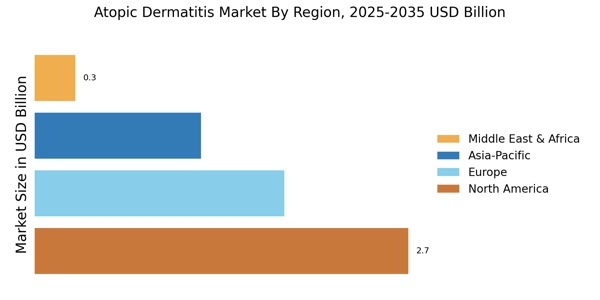
North America leads in the Atopic Dermatitis Market size, accounting for over 45% of the global revenue in 2024. The region's growth is driven by increasing prevalence rates, heightened awareness, and advancements in treatment options. Regulatory support from agencies like the FDA has accelerated the approval of new therapies, enhancing market dynamics. The demand for innovative biologics and targeted therapies is also on the rise, contributing to market expansion.

  • CDC estimates indicate that approximately 10.8% of children in the United States have been diagnosed with eczema, reinforcing strong demand for innovative atopic dermatitis treatments and specialized dermatology care services across the region.

The United States is the primary contributor to this market, with significant investments from key players such as AbbVie, Eli Lilly, and Regeneron Pharmaceuticals. Canada follows as the second-largest market, driven by a growing healthcare infrastructure and increasing patient awareness. The competitive landscape is characterized by a mix of established pharmaceutical companies and emerging biotech firms, all vying for market share in this lucrative sector.

  • GE HealthCare continues expanding digital healthcare technologies and AI-enabled clinical solutions. The company invested over USD 1 billion annually in research and development, supporting precision diagnostics and advanced healthcare delivery across North America.

Europe : Emerging Regulatory Frameworks

Europe Atopic Dermatitis Market size was valued at USD 1.83 billion in 2024, making it the second-largest regional market with a 30% share. The region benefits from a robust regulatory framework that supports the development and approval of new therapies. Countries like Germany and France are leading the market, driven by increasing healthcare expenditure and a rising prevalence of atopic dermatitis. The European Medicines Agency (EMA) has been instrumental in facilitating timely approvals for innovative treatments, further propelling market growth.

  • The EMA has approved numerous innovative biologic and immunology therapies in recent years, accelerating patient access to advanced treatments. Regulatory support for innovative medicines continues strengthening Europe's position as a leading market for atopic dermatitis therapies and dermatology innovation.

Germany stands out as the largest market in Europe, followed closely by France and the UK. The competitive landscape is marked by the presence of major players such as Sanofi, Boehringer Ingelheim, and Novartis, who are actively investing in research and development. The increasing focus on personalized medicine and biologics is shaping the future of the market, with companies striving to meet the diverse needs of patients across the region.

Asia-Pacific : Rapidly Expanding Market Potential

The Asia-Pacific region is emerging as a significant player in the atopic dermatitis market, accounting for approximately 20% of the global share. The growth is fueled by rising awareness, increasing healthcare access, and a growing population affected by skin conditions. Countries like Japan and China are at the forefront, with supportive government initiatives aimed at improving healthcare infrastructure and access to treatments.

The region is also witnessing a surge in demand for advanced therapies, including biologics. Japan is the largest market in Asia-Pacific, with a well-established healthcare system and a high prevalence of atopic dermatitis. China follows closely, driven by rapid urbanization and increasing disposable incomes. The competitive landscape features both local and international players, including Galderma and Amgen, who are focusing on expanding their product offerings to cater to the diverse needs of patients in this dynamic market.

Middle East and Africa : Untapped Market Opportunities

The Middle East and Africa region is gradually emerging in the atopic dermatitis market, holding about 5% of the global share. The growth is primarily driven by increasing awareness of skin conditions and the rising prevalence of atopic dermatitis, particularly in urban areas. Regulatory bodies are beginning to recognize the need for improved healthcare access, which is expected to catalyze market growth. Countries like South Africa and the UAE are leading the way in adopting new treatment options and improving healthcare infrastructure.

South Africa is the largest market in this region, with a growing number of healthcare facilities and increasing patient awareness. The UAE is also witnessing a rise in demand for advanced therapies, supported by government initiatives aimed at enhancing healthcare services. The competitive landscape is characterized by a mix of local and international players, with a focus on expanding access to effective treatments for patients across the region.

Atopic Dermatitis Market Regional Image

Key Players and Competitive Insights

The Atopic Dermatitis Market is characterized by a burgeoning landscape fueled by increasing prevalence of the condition, awareness amongst healthcare providers and patients alike, as well as advancements in treatment modalities.As more individuals seek effective management of the chronic inflammatory skin disease, companies operating in this market are continually innovating to meet the diverse requirements of patients.
 
The competitive environment is characterized by a mix of large multinational corporations and specialized biopharmaceutical firms that are actively engaged in research and development to produce innovative therapies, thereby driving growth and fostering fierce competition.Market dynamics are further influenced by regulatory pathways and the introduction of both biologics and small molecules targeting various pathways involved in atopic dermatitis, enhancing the overall treatment landscape for patients around the globe.
 
Novartis has established a strong foothold in the Atopic Dermatitis Market with a robust portfolio of innovative treatment options. The company is recognized for its commitment to research and development, having introduced several groundbreaking therapies that have transformed the management of atopic dermatitis. Novartis leverages its substantial financial resources and a wide-reaching global presence to drive awareness and access to its products. Its strengths lie in the ability to quickly adapt to market demands, promptly bringing to market age-appropriate formulations and harnessing the latest advancements in biotechnology. 
 
Additionally, Novartis emphasizes partnerships with research institutions and advocacy organizations, which enrich their insights into unmet needs in the atopic dermatitis community, ultimately enhancing their competitive edge.Regeneron Pharmaceuticals has carved out a significant presence in the Atopic Dermatitis Market, distinguished by its innovative product offerings and a deep commitment to improving patient outcomes. The company’s flagship product has become a cornerstone in the management of moderate to severe atopic dermatitis, showcasing Regeneron's prowess in developing targeted therapies. 
 
Its strengths include a robust research pipeline, strategic collaborations, and a history of successful clinical trials that underscore its dedication to science-driven advancements. Regeneron frequently engages in mergers and acquisitions to strengthen its market position, expand its product offerings, and leverage synergies with other companies.This approach allows Regeneron to continually enhance its service capabilities, ensuring that it remains at the forefront of addressing the evolving needs of patients within the global landscape of atopic dermatitis treatment.

Key Companies in the Atopic Dermatitis Market include

Industry Developments

After Part A recruitment was completed, Apogee Therapeutics started treating patients in Part B of their Phase II APEX study for APG 777, which targets moderate-to-severe atopic dermatitis, in February 2025. Nektar Therapeutics' rezpegaldesleukin was given Fast Track designation by the FDA in February 2025 for patients 12 years of age and older who had moderate-to-severe illness that was not improving with topical treatments.Nektar confirmed goal enrollment in its 393-patient REZOLVE-AD Phase IIb study of the T-regulatory cell-activating biologic rezpegaldesleukin in January 2025.

Following U.S. approval in August 2024 and EU clearance in February 2025, Galderma acquired FDA approval in December 2024 for Nemluvio (nemolizumab), the first IL-31 receptor–targeted monoclonal antibody, for patients with moderate-to-severe atopic dermatitis aged 12 and above.Celldex Therapeutics started a Phase II trial of barzolvolimab in the same patient category in December 2024, while Corvus Pharmaceuticals released interim Phase I results on soquelitinib in moderate-to-severe atopic dermatitis.

The five-year safety and effectiveness findings from LEO Pharma's ECZTEND extension trial of Adbry (tralokinumab) in patients 12 years of age and older were released in October 2024. Lebrikizumab (Ebglyss) was authorized by the FDA in September 2024 for the treatment of moderate-to-severe atopic dermatitis in adults and adolescents.The FDA approved Arcutis' additional NDA for ZORYVE cream 0.05% for kids ages 2 to 5 in February 2025, establishing a PDUFA action date of October 13, 2025. These advancements show a strong pipeline of topical medications, small compounds, and biologics making their way through regulatory review and clinical trials.

Future Outlook

Atopic Dermatitis Market Future Outlook

The Atopic Dermatitis Market size is projected to reach USD 13.8 Billion by 2035, growing at a CAGR of 7.7%, driven by increasing prevalence, innovative therapies, and heightened awareness.

New opportunities lie in:

  • Development of personalized biologic therapies for targeted treatment. Expansion of telehealth services for remote patient management. Investment in AI-driven diagnostic tools for early detection.

By 2035, the Atopic Dermatitis Market forecast declares that the global market share is expected to achieve substantial growth, reflecting evolving treatment paradigms.

Market Segmentation

Atopic Dermatitis Market Type Outlook

  • Chronic Atopic Dermatitis
  • Acute Atopic Dermatitis
  • Adult Atopic Dermatitis
  • Pediatric Atopic Dermatitis

Atopic Dermatitis Market Severity Outlook

  • Mild
  • Moderate
  • Severe

Atopic Dermatitis Market Treatment Type Outlook

  • Topical Corticosteroids
  • Topical Calcineurin Inhibitors
  • Biologics
  • Antihistamines

Atopic Dermatitis Market Route of Administration Outlook

  • Topical
  • Systemic
  • Injectable

Report Scope

MARKET SIZE 2024 6.09(USD Billion)
MARKET SIZE 2025 6.56(USD Billion)
MARKET SIZE 2035 13.8(USD Billion)
COMPOUND ANNUAL GROWTH RATE (CAGR) 7.72% (2025 - 2035)
REPORT COVERAGE Revenue Forecast, Competitive Landscape, Growth Factors, and Trends
BASE YEAR 2024
Market Forecast Period 2026 - 2035
Historical Data 2019 - 2024
Market Forecast Units USD Billion
Key Companies Profiled AbbVie (US), Sanofi (FR), Eli Lilly (US), Boehringer Ingelheim (DE), Novartis (CH), Regeneron Pharmaceuticals (US), Galderma (CH), Amgen (US), Pfizer (US)
Segments Covered Types, Treatment Type, Route of Administration, Severity
Key Market Opportunities Advancements in biologics and personalized therapies are reshaping the market landscape.
Key Market Dynamics Rising demand for innovative therapies drives competition and regulatory scrutiny in the market.
Countries Covered North America, Europe, APAC, South America, MEA

FAQs

What is the current valuation of the Atopic Dermatitis Market?

As of 2024, the Atopic Dermatitis Market was valued at 6.09 USD Billion.

What is the projected market size for Atopic Dermatitis by 2035?

The market is projected to reach 13.8 USD Billion by 2035.

What is the expected CAGR for the Atopic Dermatitis Market during the forecast period 2025 - 2035?

The expected CAGR for the Atopic Dermatitis Market from 2025 to 2035 is 7.72%.

Which companies are the key players in the market?

Key players in the market include AbbVie, Sanofi, Eli Lilly, and Novartis.

What are the market segments for Atopic Dermatitis based on type?

The market segments for Atopic Dermatitis by type include Chronic, Acute, Adult, and Pediatric Atopic Dermatitis.

What was the valuation of Chronic Atopic Dermatitis in 2024?

In 2024, the valuation of Chronic Atopic Dermatitis was 1.5 USD Billion.

How much is the market for Topical Corticosteroids expected to grow by 2035?

The market for Topical Corticosteroids is projected to grow from 2.5 USD Billion in 2024 to 5.5 USD Billion by 2035.

What is the expected market size for Biologics in 2035?

The market size for Biologics is expected to reach 4.5 USD Billion by 2035.

What are the projected valuations for the severity segments of Atopic Dermatitis by 2035?

By 2035, the projected valuations for severity segments are Mild at 4.1 USD Billion, Moderate at 5.5 USD Billion, and Severe at 4.2 USD Billion.

What is the anticipated growth for the Injectable route of administration by 2035?

The Injectable route of administration is anticipated to grow from 1.59 USD Billion in 2024 to 3.8 USD Billion by 2035.

Author
Author
Author Profile
Nidhi Mandole LinkedIn
Senior Research Analyst
She is an extremely curious individual currently working in Healthcare and Medical Devices Domain. Nidhi is comfortably versed in data centric research backed by healthcare educational background. She leverages extensive data mining and analytics tools such as Primary and Secondary Research, Statistical Analysis, Machine Learning, Data Modelling. Her key role also involves Technical Sales Support, Client Interaction and Project management within the Healthcare team. Lastly, she showcases extensive affinity towards learning new skills and remain fascinated in implementing them.
Co-Author
Co-Author Profile
Rahul Gotadki LinkedIn
Research Manager
He holds an experience of about 9+ years in Market Research and Business Consulting, working under the spectrum of Life Sciences and Healthcare domains. Rahul conceptualizes and implements a scalable business strategy and provides strategic leadership to the clients. His expertise lies in market estimation, competitive intelligence, pipeline analysis, customer assessment, etc.
Leave a Comment

Research Approach


Secondary Research

The secondary research process involved comprehensive analysis of regulatory databases, peer-reviewed medical journals, clinical trial repositories, and authoritative health organizations. Key sources included the US Food & Drug Administration (FDA), European Medicines Agency (EMA), Pharmaceuticals and Medical Devices Agency (PMDA) of Japan, and National Medical Products Administration (NMPA) of China. Clinical and epidemiological data were gathered from the National Institute of Allergy and Infectious Diseases (NIAID) Atopic Dermatitis Research Network (ADRN), Centers for Disease Control and Prevention (CDC), World Health Organization (WHO) Global Health Observatory, and National Institutes of Health (NIH) PubMed/MEDLINE database.

Professional dermatology and allergy organizations provided clinical guidelines and treatment protocols, including the American Academy of Dermatology (AAD), European Academy of Dermatology and Venereology (EADV), International Eczema Council (IEC), European Dermatology Forum (EDF), and European Task Force on Atopic Dermatitis (ETFAD). Real-world evidence and post-marketing surveillance data were extracted from the TREAT Registry Taskforce (Treatment of ATopic Eczema Registry), CorEvitas Atopic Dermatitis Registry, SECURE-AD global registry, and ClinicalTrials.gov. Epidemiological statistics were validated through the International Study of Asthma and Allergies in Childhood (ISAAC), National Eczema Association (NEA) databases, and peer-reviewed journals including the Journal of Allergy and Clinical Immunology, Journal of Investigative Dermatology, and British Journal of Dermatology. These sources were used to collect prescription data, drug safety profiles, regulatory approval timelines, epidemiological trends, and competitive landscape analysis for biologics (IL-4/IL-13 inhibitors, IL-31 inhibitors), topical corticosteroids, calcineurin inhibitors, phosphodiesterase-4 (PDE4) inhibitors, and emerging Janus kinase (JAK) inhibitors.


Primary Research

Qualitative and quantitative insights were obtained by interviewing supply-side and demand-side stakeholders during the primary research process. From pharmaceutical and biotechnology manufacturers, supply-side sources encompassed CEOs, Chief Medical Officers, Global chiefs of Immunology/Dermatology, Presidents of Specialty Care units, Heads of Clinical Development, regulatory affairs chiefs, and market access directors. Atopic dermatitis clinical trial principal investigators, medical directors of specialty pharmacy benefit managers, formulary decision-makers, specialty pharmacists from academic medical centers, dermatology clinics, and managed care organizations, allergists/immunologists, and board-certified dermatologists (pediatric and adult) comprised demand-side sources. Market segmentation was validated across drug classes (biologics vs. small molecules), product pipeline timelines for late-stage assets were confirmed, and insights on clinical adoption patterns of systemic therapies, pricing and reimbursement strategies, patient access programs, and treatment pathway dynamics in moderate-to-severe versus mild disease were gathered through primary research.

Primary Respondent Breakdown:

• By Designation: C-level Executives (38%), Director Level (30%), Others (32%)

• By Region: North America (38%), Europe (25%), Asia-Pacific (32%), Rest of World (5%)


Market Size Estimation

Global market valuation was derived through revenue mapping and prescription volume analysis. The methodology included:

• Identification of 35+ key manufacturers across North America, Europe, Asia-Pacific, and Latin America specializing in immunology and dermatology therapeutics

• Product mapping across biologics (IL-4/IL-13 inhibitors, IL-31 inhibitors), topical corticosteroids, topical calcineurin inhibitors, PDE4 inhibitors, and oral JAK inhibitors

• Analysis of reported and modeled annual revenues specific to atopic dermatitis portfolios, including both branded and biosimilar franchises

• Coverage of manufacturers representing 75-80% of global market share in 2024

• Extrapolation using bottom-up (prescription volume × average selling price by country/region) and top-down (manufacturer revenue validation) approaches to derive segment-specific valuations across drug classes, routes of administration (topical, oral, injectable), and severity grades (mild, moderate, severe)

Download Free Sample

Kindly complete the form below to receive a free sample of this Report

Download PDF ×

We do not share your information with anyone. However, we may send you emails based on your report interest from time to time. You may contact us at any time to opt-out.