×
Request Free Sample ×

Kindly complete the form below to receive a free sample of this Report

Leading companies partner with us for data-driven Insights

clients tt-cursor
Hero Background

Acanthocheilonemiasis Treatment Market

ID: MRFR/HC/32878-HCR
128 Pages
Rahul Gotadki
October 2025

Acanthocheilonemiasis Treatment Market Research Report By Treatment Type (Antiparasitic Drugs, Supportive Care, Combination Therapy), By Route of Administration (Oral, Intravenous, Topical), By Patient Population (Adults, Children, Immunocompromised Patients), By Distribution Channel (Hospital Pharmacies, Retail Pharmacies, Online Pharmacies) and By Regional (North America, Europe, South America, Asia Pacific, Middle East and Africa) - Forecast to 2035

Share:
Download PDF ×

We do not share your information with anyone. However, we may send you emails based on your report interest from time to time. You may contact us at any time to opt-out.

Acanthocheilonemiasis Treatment Market Infographic
Purchase Options

Acanthocheilonemiasis Treatment Market Summary

As per MRFR analysis, the Acanthocheilonemiasis Treatment Market Size was estimated at 271.94 USD Million in 2024. The Acanthocheilonemiasis Treatment industry is projected to grow from 291.84 USD Million in 2025 to 591.51 USD Million by 2035, exhibiting a compound annual growth rate (CAGR) of 7.32 during the forecast period 2025 - 2035.

Key Market Trends & Highlights

The Acanthocheilonemiasis Treatment Market is poised for growth driven by innovative treatment approaches and rising disease incidence.

  • North America remains the largest market for Acanthocheilonemiasis treatment, reflecting a robust healthcare infrastructure.
  • The Asia-Pacific region is emerging as the fastest-growing market, fueled by increasing healthcare investments and awareness.
  • Antiparasitic drugs dominate the market, while combination therapy is gaining traction as the fastest-growing segment.
  • Rising incidence of Acanthocheilonemiasis and advancements in pharmaceutical research are key drivers propelling market expansion.

Market Size & Forecast

2024 Market Size 271.94 (USD Million)
2035 Market Size 591.51 (USD Million)
CAGR (2025 - 2035) 7.32%

Major Players

Bristol Myers Squibb (US), Novartis (CH), Sanofi (FR), Merck & Co (US), Pfizer (US), GSK (GB), AstraZeneca (GB), Bayer (DE), AbbVie (US)

Acanthocheilonemiasis Treatment Market Trends

The Acanthocheilonemiasis Treatment Market is currently experiencing a notable evolution, driven by a combination of factors including increased awareness of the disease and advancements in treatment methodologies. As healthcare systems globally enhance their focus on neglected tropical diseases diagnosis, the demand for effective treatment options appears to be on the rise. This shift is likely influenced by a growing recognition of the health impacts associated with Acanthocheilonemiasis, which may lead to increased funding and research initiatives aimed at developing innovative therapies. Furthermore, the collaboration between public health organizations and pharmaceutical companies seems to be fostering a more robust pipeline of potential treatments, which could significantly alter the landscape of this market in the near future. In addition, the Acanthocheilonemiasis Treatment Market is witnessing a gradual shift towards personalized medicine, where treatment regimens are tailored to individual patient profiles. This trend suggests a move away from one-size-fits-all approaches, potentially improving patient outcomes and satisfaction. Moreover, the integration of technology in treatment delivery, such as telemedicine and mobile health applications, is likely to enhance accessibility and adherence to treatment protocols. As these trends continue to unfold, the market may see a transformation that not only addresses the medical needs of patients but also aligns with broader healthcare objectives of efficiency and effectiveness.

Increased Research and Development

The Acanthocheilonemiasis Treatment Market is likely benefiting from heightened research and development efforts. This trend indicates a commitment to discovering new therapeutic options and improving existing treatments, which may lead to more effective management of the disease.

Personalized Treatment Approaches

There appears to be a growing emphasis on personalized treatment strategies within the Acanthocheilonemiasis Treatment Market. Tailoring therapies to individual patient needs could enhance treatment efficacy and patient satisfaction, marking a shift towards more patient-centered care.

Technological Integration in Treatment Delivery

The integration of technology into treatment delivery mechanisms is becoming increasingly prevalent. Innovations such as telemedicine and mobile health applications may improve access to care and adherence to treatment protocols, potentially transforming patient experiences in the Acanthocheilonemiasis Treatment Market.

Acanthocheilonemiasis Treatment Market Drivers

Increased Awareness and Education

Increased awareness and education regarding Acanthocheilonemiasis are driving the Acanthocheilonemiasis Treatment Market. Public health campaigns aimed at educating communities about the transmission and prevention of this disease are gaining momentum. As awareness grows, individuals are more likely to seek medical attention, leading to higher diagnosis rates. This, in turn, stimulates demand for effective treatment options. Healthcare providers are also becoming more informed about the disease, which enhances their ability to diagnose and treat affected patients. The emphasis on education is likely to result in a more proactive approach to managing Acanthocheilonemiasis, ultimately benefiting the treatment market.

Government Initiatives and Funding

Government initiatives and funding play a crucial role in shaping the Acanthocheilonemiasis Treatment Market. Various governments are recognizing the need to address neglected tropical diseases, including Acanthocheilonemiasis, and are allocating resources to combat these health issues. Increased funding for research, public health initiatives, and treatment programs is expected to enhance the availability of effective therapies. Additionally, partnerships between governments and non-governmental organizations are fostering collaborative efforts to improve disease management. These initiatives not only support the development of new treatments but also aim to improve healthcare infrastructure, thereby facilitating better access to care for affected populations.

Advancements in Pharmaceutical Research

Advancements in pharmaceutical research are significantly influencing the Acanthocheilonemiasis Treatment Market. The ongoing exploration of novel drug compounds and treatment methodologies is fostering a more robust pipeline of therapeutic options. Recent studies have highlighted the potential of new anti-parasitic agents that could enhance treatment efficacy and reduce side effects. Furthermore, the integration of biotechnology in drug development is paving the way for targeted therapies that may offer improved outcomes for patients. As research institutions and pharmaceutical companies collaborate, the influx of innovative treatments is expected to reshape the market landscape, providing healthcare professionals with more effective tools to combat Acanthocheilonemiasis.

Rising Incidence of Acanthocheilonemiasis

The increasing incidence of Acanthocheilonemiasis is a primary driver for the Acanthocheilonemiasis Treatment Market. Reports indicate that the prevalence of this parasitic infection is on the rise, particularly in tropical and subtropical regions. This surge in cases necessitates the development and availability of effective treatment options. As more individuals are diagnosed, healthcare systems are compelled to allocate resources towards research and treatment solutions. The World Health Organization has noted a concerning trend in the spread of vector-borne diseases, which includes Acanthocheilonemiasis. Consequently, pharmaceutical companies are likely to invest in innovative therapies to address this growing health challenge.

Technological Innovations in Treatment Delivery

Technological innovations in treatment delivery are emerging as a significant driver for the Acanthocheilonemiasis Treatment Market. The integration of digital health solutions, such as telemedicine and mobile health applications, is transforming how patients access treatment and follow-up care. These technologies enable healthcare providers to reach underserved populations, ensuring that individuals affected by Acanthocheilonemiasis receive timely interventions. Moreover, advancements in diagnostic tools are enhancing the accuracy of disease detection, which is critical for effective treatment. As technology continues to evolve, it is likely to play an increasingly vital role in improving treatment outcomes and patient adherence in the Acanthocheilonemiasis Treatment Market.

Market Segment Insights

By Type: Antiparasitic Drugs (Largest) vs. Combination Therapy (Fastest-Growing)

The Acanthocheilonemiasis Treatment Market reveals a diverse landscape within its type segment, showcasing Antiparasitic Drugs as the largest player. This sector accounts for the majority of market share, driven by their effectiveness in combating parasitic infections. On the other hand, Combination Therapy is becoming increasingly significant, catering to patients who require multi-faceted treatment options. This shift indicates a change in treatment preferences as healthcare professionals seek comprehensive approaches for better patient outcomes.

Antiparasitic Drugs (Dominant) vs. Supportive Care (Emerging)

Antiparasitic Drugs stand out as the dominant force in the Acanthocheilonemiasis Treatment Market, recognized for their efficacy and reliability in eliminating parasitic infections. These drugs form the backbone of treatment regimens, ensuring high success rates and patient compliance. In contrast, Supportive Care serves as an emerging segment, providing essential adjunctive therapies aimed at alleviating symptoms and enhancing patient recovery. While not the frontline treatment, Supportive Care is gaining traction among caregivers and practitioners who recognize its role in improving overall health outcomes. As awareness about the importance of holistic care grows, Supportive Care is expected to see increased adoption, complementing the established dominance of Antiparasitic Drugs.

By Route of Administration: Oral (Largest) vs. Intravenous (Fastest-Growing)

In the Acanthocheilonemiasis Treatment Market, the Route of Administration segment displays a diverse distribution among three primary methods: Oral, Intravenous, and Topical. Oral administration holds the largest market share, favored for its ease of use, patient compliance, and convenience, making it a preferred choice among healthcare providers and patients alike. Intravenous administration, while smaller in share, is rapidly gaining traction due to its ability to provide immediate therapeutic effects and is projected to become the fastest-growing segment in the coming years. This dynamic highlights a significant shift in treatment preferences as healthcare systems evolve. Growth trends indicate an increasing reliance on Intravenous administration due to advancements in drug formulations and the growing emphasis on rapid treatment outcomes. The rising prevalence of Acanthocheilonemiasis is prompting healthcare professionals to seek more efficient delivery methods, with Intravenous treatment emerging as a suitable option for severe cases. Additionally, the ongoing research into new oral formulations aims to enhance patient experience further, reinforcing the dominance of Oral administration while setting the stage for Intravenous methods to expand their market presence.

Oral (Dominant) vs. Intravenous (Emerging)

The Oral administration of Acanthocheilonemiasis treatments remains the dominant method in the market, primarily due to its user-friendly nature and ability to ensure higher patient compliance. Patients prefer Oral treatments for their non-invasive nature and the convenience they offer, which significantly influences prescribing habits among doctors. On the other hand, Intravenous administration is an emerging method that is gaining attention, especially in clinical settings where immediate action is required. This method caters effectively to patients experiencing severe disease expressions, ensuring rapid drug delivery and efficacy. As research continues to evolve, both segments are likely to see improvements in formulations and application procedures, contributing to a more comprehensive treatment approach.

By Patient Population: Adults (Largest) vs. Immunocompromised Patients (Fastest-Growing)

In the Acanthocheilonemiasis Treatment Market, the patient population segment is primarily dominated by adults, who represent the largest share of the market due to the prevalence of the disease in this demographic. Adults often present more severe cases, requiring extensive treatment options that drive demand for various therapeutic interventions. Meanwhile, immunocompromised patients are emerging as a significant focus area, given their increased susceptibility to infections and the need for specialized care. This subset is witnessing a notable shift in market dynamics as healthcare providers adapt treatment strategies to address their unique needs.

Adults (Dominant) vs. Immunocompromised Patients (Emerging)

Adults dominate the Acanthocheilonemiasis Treatment Market, largely due to a higher incidence rate of the disease within this group. They typically exhibit a greater severity of symptoms, which leads to increased healthcare resource utilization for diagnostic and treatment purposes. On the other hand, immunocompromised patients are an emerging segment with rapidly growing needs. This population, including those with HIV/AIDS, cancer, or organ transplants, faces amplified risks for severe infections and complications related to Acanthocheilonemiasis. Consequently, advancements in tailored treatment regimens for immunocompromised individuals present significant opportunities for market growth.

By Distribution Channel: Hospital Pharmacies (Largest) vs. Online Pharmacies (Fastest-Growing)

In the Acanthocheilonemiasis treatment market, hospital pharmacies hold the largest market share due to their crucial role in managing severe cases and providing immediate access to necessary medications. This segment benefits from strong relationships with healthcare professionals and the ability to offer patient-centric services such as consultations and monitoring. Retail pharmacies also contribute significantly but do not match the extensive reach and resources of hospital pharmacies. Online pharmacies, while currently smaller in market share, are emerging as the fastest-growing distribution channel. The increased adoption of telehealth services and the convenience of online shopping are propelling this segment's growth. Patients are increasingly seeking an easy and discreet way to obtain their medications, driving demand for online pharmacies in the Acanthocheilonemiasis treatment market.

Hospital Pharmacies: Dominant vs. Online Pharmacies: Emerging

Hospital pharmacies play a dominant role in the Acanthocheilonemiasis treatment market due to their established position within healthcare systems and their ability to provide comprehensive care to patients with acute needs. They are equipped to handle a wider array of cases and often have specialized staff to manage treatment protocols. The personalized service they offer enhances patient adherence to treatment plans and outcomes. On the other hand, online pharmacies represent an emerging segment that caters to the growing trend of digital health solutions. They provide patients with the convenience of ordering medications from home, often accompanied by home delivery services. This segment appeals particularly to younger, tech-savvy consumers and those in remote areas, making medications more accessible.

Get more detailed insights about Acanthocheilonemiasis Treatment Market

Regional Insights

North America : Leading Market for Treatments

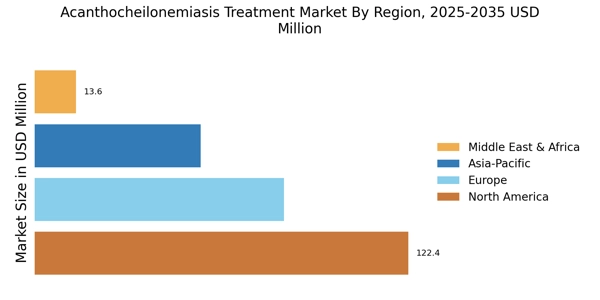
North America is the largest market for Acanthocheilonemiasis treatment, holding approximately 45% of the global market share. The region benefits from advanced healthcare infrastructure, high R&D investments, and a growing awareness of tropical diseases. Regulatory support from agencies like the FDA further catalyzes market growth, ensuring rapid approval of new therapies and treatments. The increasing prevalence of Acanthocheilonemiasis in certain areas also drives demand for effective treatment options. The United States is the primary contributor to this market, with significant investments from key players such as Bristol Myers Squibb, Merck & Co, and Pfizer. Canada follows as the second-largest market, focusing on innovative treatment solutions and public health initiatives. The competitive landscape is characterized by collaborations between pharmaceutical companies and research institutions, enhancing the development of new therapies to combat this disease effectively.

Europe : Emerging Market with Potential

Europe is witnessing a growing interest in Acanthocheilonemiasis treatment, accounting for approximately 30% of the global market share. The region's growth is driven by increasing awareness of neglected tropical diseases and supportive regulatory frameworks. Countries like France and Germany are leading the charge, with initiatives aimed at improving healthcare access and treatment options. The European Medicines Agency (EMA) plays a crucial role in facilitating the approval of new therapies, which is vital for market expansion. France is at the forefront, with significant contributions from companies like Sanofi and GSK. Germany follows closely, focusing on research and development of innovative treatments. The competitive landscape is marked by collaborations between pharmaceutical giants and local biotech firms, enhancing the availability of effective therapies. The presence of key players and a robust healthcare system further bolster the market's potential for growth.

Asia-Pacific : Rapidly Expanding Treatment Options

Asia-Pacific is emerging as a significant player in the Acanthocheilonemiasis treatment market, holding around 20% of the global market share. The region's growth is fueled by increasing healthcare investments, rising disease awareness, and government initiatives aimed at combating tropical diseases. Countries like India and Australia are leading the market, with a focus on improving healthcare access and treatment availability. Regulatory bodies are also enhancing their frameworks to support the introduction of new therapies, further driving market growth. India is particularly noteworthy, with a growing pharmaceutical sector that includes key players like Novartis and AstraZeneca. Australia is also making strides in research and development, focusing on innovative treatment solutions. The competitive landscape is characterized by partnerships between local firms and multinational corporations, enhancing the development and distribution of effective therapies for Acanthocheilonemiasis.

Middle East and Africa : Challenging Market Conditions

The Middle East and Africa region faces unique challenges in the Acanthocheilonemiasis treatment market, holding approximately 5% of the global market share. The growth is hindered by limited healthcare infrastructure, economic constraints, and a lack of awareness regarding tropical diseases. However, initiatives by governments and NGOs are gradually improving access to treatments. Countries like South Africa and Nigeria are making efforts to enhance healthcare systems and promote awareness of Acanthocheilonemiasis, which could lead to future market growth. South Africa is the leading market in this region, with efforts from local pharmaceutical companies and international collaborations to improve treatment options. Nigeria follows, focusing on public health campaigns to educate the population about the disease. The competitive landscape is still developing, with a need for more investment in healthcare infrastructure and treatment availability to meet the growing demand for effective therapies.

Acanthocheilonemiasis Treatment Market Regional Image

Key Players and Competitive Insights

The Acanthocheilonemiasis Treatment Market is characterized by a complex interplay of competitive dynamics, driven by the increasing prevalence of the disease and the urgent need for effective therapeutic solutions. Key players such as Bristol Myers Squibb (US), Novartis (CH), and Sanofi (FR) are actively shaping the landscape through strategic initiatives focused on innovation and regional expansion. Bristol Myers Squibb (US) emphasizes its commitment to research and development, particularly in novel drug formulations, while Novartis (CH) is enhancing its market presence through strategic partnerships aimed at improving access to treatments in underserved regions. Sanofi (FR) is also investing in digital transformation to streamline its operations and enhance patient engagement, collectively contributing to a competitive environment that prioritizes innovation and accessibility.

The market structure appears moderately fragmented, with several players vying for market share through various business tactics. Companies are increasingly localizing manufacturing to reduce costs and optimize supply chains, which is crucial in a market where timely access to treatments can significantly impact patient outcomes. The collective influence of these key players fosters a competitive atmosphere that encourages continuous improvement and adaptation to market demands.

In August 2025, Merck & Co (US) announced a collaboration with a leading biotechnology firm to develop a new therapeutic agent specifically targeting Acanthocheilonemiasis. This strategic move is significant as it not only enhances Merck's portfolio but also reflects a broader trend of leveraging biotechnology to address complex diseases. The partnership is expected to accelerate the development timeline, potentially bringing innovative solutions to market more swiftly.

In September 2025, Pfizer (US) launched a comprehensive awareness campaign aimed at educating healthcare professionals and patients about Acanthocheilonemiasis. This initiative underscores Pfizer's strategic focus on enhancing disease awareness and improving treatment adherence, which is critical in a market where patient education can directly influence treatment outcomes. The campaign is likely to bolster Pfizer's reputation as a leader in infectious disease management.

In October 2025, GSK (GB) revealed its plans to invest in sustainable manufacturing practices for its Acanthocheilonemiasis treatments. This decision aligns with the growing emphasis on sustainability within the pharmaceutical industry and positions GSK as a forward-thinking player committed to environmental responsibility. Such initiatives may enhance GSK's competitive edge as stakeholders increasingly prioritize sustainability in their decision-making processes.

As of October 2025, current trends in the Acanthocheilonemiasis Treatment Market indicate a shift towards digitalization, sustainability, and the integration of artificial intelligence in drug development. Strategic alliances are becoming increasingly pivotal, as companies recognize the value of collaboration in navigating complex regulatory environments and enhancing innovation. Looking ahead, competitive differentiation is likely to evolve from traditional price-based competition to a focus on technological advancements, innovative treatment solutions, and reliable supply chains, reflecting the changing priorities of both healthcare providers and patients.

Key Companies in the Acanthocheilonemiasis Treatment Market market include

Industry Developments

Recent developments in the Acanthocheilonemiasis Treatment Market have focused on advancements in drug development and collaborative research efforts among leading pharmaceutical companies. AstraZeneca and Bristol Myers Squibb have been actively pursuing innovative treatment options to combat the disease more effectively. Current affairs highlight an increase in public health initiatives aimed at raising awareness about Acanthocheilonemiasis, fostering partnerships between NGOs and companies like Merck and GSK to enhance research into better therapeutic solutions.

Additionally, growth in market valuation has been observed, particularly for companies such as AbbVie and Roche, which are investing in research and clinical trials, leading to elevated interest from investors. Furthermore, merger and acquisition activity has remained minimal in this niche market, although companies like Pfizer and Johnson & Johnson continuously explore strategic partnerships to expand their product pipelines. As the market evolves, Teva Pharmaceutical Industries and Bayer are also focusing on developing generics aimed at making treatments more accessible.

This collective effort among key players underscores the industry's dedication to addressing the challenges posed by Acanthocheilonemiasis and the ongoing need for innovative therapies.

Future Outlook

Acanthocheilonemiasis Treatment Market Future Outlook

The Acanthocheilonemiasis Treatment Market is projected to grow at a 7.32% CAGR from 2024 to 2035, driven by increasing awareness and advancements in treatment options.

New opportunities lie in:

  • Development of targeted therapies for specific patient demographics.
  • Expansion of telemedicine platforms for remote consultations.
  • Investment in educational campaigns to enhance public awareness and prevention.

By 2035, the market is expected to achieve substantial growth, reflecting evolving treatment paradigms.

Market Segmentation

Acanthocheilonemiasis Treatment Market Type Outlook

  • Antiparasitic Drugs
  • Supportive Care
  • Combination Therapy

Acanthocheilonemiasis Treatment Market Patient Population Outlook

  • Adults
  • Children
  • Immunocompromised Patients

Acanthocheilonemiasis Treatment Market Distribution Channel Outlook

  • Hospital Pharmacies
  • Retail Pharmacies
  • Online Pharmacies

Acanthocheilonemiasis Treatment Market Route of Administration Outlook

  • Oral
  • Intravenous
  • Topical

Report Scope

MARKET SIZE 2024271.94(USD Million)
MARKET SIZE 2025291.84(USD Million)
MARKET SIZE 2035591.51(USD Million)
COMPOUND ANNUAL GROWTH RATE (CAGR)7.32% (2024 - 2035)
REPORT COVERAGERevenue Forecast, Competitive Landscape, Growth Factors, and Trends
BASE YEAR2024
Market Forecast Period2025 - 2035
Historical Data2019 - 2024
Market Forecast UnitsUSD Million
Key Companies ProfiledMarket analysis in progress
Segments CoveredMarket segmentation analysis in progress
Key Market OpportunitiesEmerging therapies and regulatory support enhance growth potential in the Acanthocheilonemiasis Treatment Market.

Key Market DynamicsRising demand for effective therapies drives innovation and competition in the Acanthocheilonemiasis Treatment Market.

Countries CoveredNorth America, Europe, APAC, South America, MEA

Leave a Comment

FAQs

What is the projected market valuation for the Acanthocheilonemiasis Treatment Market in 2035?

The projected market valuation for the Acanthocheilonemiasis Treatment Market in 2035 is 591.51 USD Million.

What was the market valuation for the Acanthocheilonemiasis Treatment Market in 2024?

The market valuation for the Acanthocheilonemiasis Treatment Market in 2024 was 271.94 USD Million.

What is the expected CAGR for the Acanthocheilonemiasis Treatment Market from 2025 to 2035?

The expected CAGR for the Acanthocheilonemiasis Treatment Market during the forecast period 2025 - 2035 is 7.32%.

Which companies are considered key players in the Acanthocheilonemiasis Treatment Market?

Key players in the Acanthocheilonemiasis Treatment Market include Bristol Myers Squibb, Novartis, Sanofi, Merck & Co, Pfizer, GSK, AstraZeneca, Bayer, and AbbVie.

What are the main segments of the Acanthocheilonemiasis Treatment Market?

The main segments of the Acanthocheilonemiasis Treatment Market include Type, Route of Administration, Patient Population, and Distribution Channel.

How did the Antiparasitic Drugs segment perform in 2024?

In 2024, the Antiparasitic Drugs segment was valued at 100.0 USD Million and is projected to reach 220.0 USD Million.

What is the projected value of the Oral route of administration segment by 2035?

The projected value of the Oral route of administration segment is expected to reach 180.0 USD Million by 2035.

How does the market for Acanthocheilonemiasis treatment differ between adults and children?

In 2024, the market for adults was valued at 108.77 USD Million, while the market for children was valued at 54.39 USD Million, indicating a notable difference.

What distribution channels are utilized in the Acanthocheilonemiasis Treatment Market?

Distribution channels in the Acanthocheilonemiasis Treatment Market include Hospital Pharmacies, Retail Pharmacies, and Online Pharmacies.

What is the projected growth for the Combination Therapy segment by 2035?

The Combination Therapy segment is projected to grow from 91.94 USD Million in 2024 to 221.51 USD Million by 2035.

Download Free Sample

Kindly complete the form below to receive a free sample of this Report

Compare Licence

×
Features License Type
Single User Multiuser License Enterprise User
Price $4,950 $5,950 $7,250
Maximum User Access Limit 1 User Upto 10 Users Unrestricted Access Throughout the Organization
Free Customization
Direct Access to Analyst
Deliverable Format
Platform Access
Discount on Next Purchase 10% 15% 15%
Printable Versions