밀 단백질 성분 시장 요약
주요 시장 동향 및 하이라이트
시장 규모 및 예측
| CAGR (2025 - 2035) | 4.11% |
The Wheat Protein Ingredient Market is currently experiencing a notable transformation, driven by evolving consumer preferences and an increasing focus on health and nutrition. As individuals become more conscious of their dietary choices, the demand for plant-based protein sources has surged. Wheat protein, recognized for its functional properties and versatility, is gaining traction across various sectors, including food and beverages, dietary supplements, and personal care products. This shift towards healthier alternatives appears to be influencing product formulations, with manufacturers increasingly incorporating wheat protein to enhance nutritional profiles and appeal to health-conscious consumers. Moreover, the Wheat Protein Ingredient Market is likely to benefit from the growing trend of clean label products. Consumers are seeking transparency in ingredient sourcing and processing, prompting brands to adopt simpler formulations. This trend may lead to an increased emphasis on natural and minimally processed wheat protein ingredients. Additionally, the rise of veganism and vegetarianism is further propelling the market, as wheat protein serves as an effective substitute for animal-based proteins. Overall, the Wheat Protein Ingredient Market seems poised for continued growth, driven by these dynamic trends and the ongoing evolution of consumer preferences.
The increasing adoption of plant-based diets is significantly influencing the Wheat Protein Ingredient Market. As more consumers seek alternatives to animal proteins, wheat protein emerges as a favorable option due to its nutritional benefits and functional versatility.
There is a growing consumer demand for clean label products, which emphasizes transparency and simplicity in ingredient lists. This trend is likely to encourage manufacturers to utilize wheat protein ingredients that are natural and minimally processed.
The Wheat Protein Ingredient Market is witnessing an expansion in its applications within the food sector. As food manufacturers explore innovative formulations, wheat protein is being integrated into a variety of products, enhancing both texture and nutritional value.
식품 기술의 혁신은 밀 단백질 성분 시장의 중요한 촉매 역할을 하고 있습니다. 가공 기술과 제형 전략의 발전은 제조업체들이 밀 단백질의 기능성과 감각적 특성을 향상시킬 수 있도록 하고 있습니다. 예를 들어, 밀 단백질을 분리하고 농축하는 새로운 방법은 그 용해도와 유화 특성을 개선하여 다양한 응용 분야에서 사용하기에 더 매력적으로 만들고 있습니다. 시장 데이터는 기술 발전이 진화하는 소비자 요구를 충족하는 새로운 제품 개발로 이어지고 있음을 시사합니다. 식품 기술이 계속 발전함에 따라 밀 단백질 성분 시장은 증가하는 제품 혁신의 혜택을 받을 가능성이 높으며, 이는 더 넓은 소비자 기반을 유치하고 시장 성장을 촉진할 수 있습니다.
밀 단백질의 다양한 식품 제품에서의 다재다능성은 밀 단백질 성분 시장의 주요 동인입니다. 밀 단백질은 제과, 스낵, 육류 대체품 등 다양한 응용 분야에서 활용될 수 있습니다. 이러한 적응력은 제조업체가 혁신하고 다양한 소비자 선호에 맞춘 제품을 창출할 수 있게 합니다. 예를 들어, 육류 대체품에 밀 단백질을 포함하는 것이 주목받고 있으며, 식물 기반 육류 대체품 시장은 향후 몇 년 내에 상당한 수치에 도달할 것으로 예상됩니다. 이 추세는 밀 단백질이 질감과 영양 가치를 향상시키는 기능성 성분으로서 점점 더 수용되고 있음을 나타냅니다. 따라서 밀 단백질 성분 시장은 식품 제조업체들이 제품 매력을 높이는 데 있어 밀 단백질의 잠재력을 점점 더 인식함에 따라 확장할 준비가 되어 있습니다.
밀 단백질 성분 시장은 밀 단백질의 영양적 이점이 인식됨에 따라 수요가 급증하고 있습니다. 밀 단백질은 필수 아미노산이 풍부하여 건강을 중시하는 소비자에게 귀중한 성분입니다. 특히 근육 회복과 성장을 향상시키고자 하는 운동선수와 피트니스 애호가들에게 매력적입니다. 시장 데이터에 따르면 밀의 단백질 함량은 최대 30%에 이를 수 있으며, 이는 많은 다른 식물성 단백질보다 상당히 높은 수치입니다. 이 높은 단백질 함량과 유리한 아미노산 프로필이 결합되어 밀 단백질은 다양한 식품 조제에서 선호되는 선택으로 자리 잡고 있습니다. 소비자들이 건강과 웰빙을 점점 더 우선시함에 따라 밀 단백질 성분 시장은 이러한 영양적 이점에 의해 지속적인 성장을 이룰 것으로 보입니다.
지속 가능성은 소비자에게 중요한 관심사가 되고 있으며, 이는 그들의 구매 결정에 영향을 미치고 있습니다. 밀 단백질 성분 시장은 이 추세로부터 혜택을 보고 있으며, 밀은 동물성 단백질에 비해 더 지속 가능한 단백질 공급원으로 간주됩니다. 밀 재배와 관련된 낮은 탄소 발자국과 효율적인 토지 사용은 밀 단백질을 환경 친화적인 대안으로 자리매김하게 합니다. 시장 데이터에 따르면 소비자들은 지속 가능성과 관련된 가치에 부합하는 제품을 점점 더 많이 찾고 있습니다. 이러한 변화는 제조업체들이 지속 가능한 조달에 대한 소비자 선호에 대응함에 따라 밀 단백질 성분에 대한 수요를 증가시킬 가능성이 높습니다. 환경 영향에 대한 관심이 높아짐에 따라 밀 단백질 성분 시장은 지속 가능한 단백질 옵션의 매력에 의해 상당한 성장을 경험할 수 있습니다.
기능성 식품에 대한 관심이 높아짐에 따라 밀 단백질 성분 시장이 주목받고 있습니다. 소비자들은 기본적인 영양을 넘어 소화 건강 개선 및 면역력 강화와 같은 건강 혜택을 제공하는 식품을 점점 더 찾고 있습니다. 잠재적인 건강 혜택을 가진 밀 단백질은 이러한 트렌드에 잘 부합합니다. 시장 데이터에 따르면 기능성 식품 부문은 빠르게 성장하고 있으며, 소비자들은 부가 가치를 제공하는 제품에 대해 프리미엄을 지불할 의향이 있습니다. 이러한 트렌드는 식품 제조업체들이 밀 단백질을 자사 제품의 조제에 포함하도록 장려할 가능성이 높아, 제품의 영양 프로필을 향상시킬 것입니다. 기능성 식품에 대한 수요가 계속 증가함에 따라 밀 단백질 성분 시장은 건강 지향적인 식품 제공에 밀 단백질이 통합됨에 따라 번창할 것으로 예상됩니다.
In the Wheat Protein Ingredient Market, Textured Wheat Protein holds the largest market share among various forms, largely due to its increasing application in meat substitutes and plant-based foods. Hydrolyzed Wheat Protein and Wheat Protein Concentrate also contribute significantly; however, they cater to specific niches, like dietary supplements and functional foods. In terms of volume, Wheat Protein Isolate is rapidly gaining traction as consumers shift towards higher protein content in their diets, making it a prominent choice for health-focused applications.
In the Wheat Protein Ingredient Market, the source segment is characterized by a diverse range of products, with Wheat Gluten commanding the largest share. It is predominantly used in food applications, particularly in bakery products, due to its exceptional elasticity and water retention capabilities. Wheat Starch follows as a critical component, serving various industries such as food, pharmaceuticals, and textiles, contributing significantly to the sector's overall dynamics.
In the Wheat Protein Ingredient Market, bakery products dominate the end-use segment, capturing the largest share due to their widespread application in various baked goods such as bread, pastries, and cakes. The demand for protein-enriched baked goods continues to rise as consumers increasingly seek healthier options, leading to a substantial consumption of wheat protein ingredients in this category. In contrast, meat alternatives are rapidly gaining traction, appealing to a growing number of health-conscious consumers and those adopting plant-based diets. This rapid rise translates to a significant share as companies innovate to create appealing meat substitutes using wheat protein.
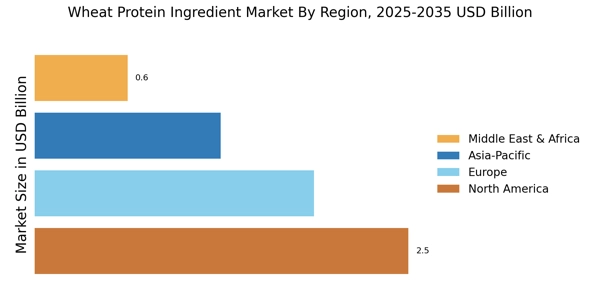
North America is the largest market for wheat protein ingredients, holding approximately 40% of the global share. The region benefits from a robust agricultural sector, advanced food processing technologies, and increasing consumer demand for plant-based proteins. Regulatory support for sustainable agricultural practices further drives growth, with initiatives aimed at enhancing food security and nutrition. The United States and Canada are the leading countries in this market, with major players like Cargill, Archer Daniels Midland, and Bunge dominating the landscape. The competitive environment is characterized by innovation in product development and strategic partnerships. The presence of established companies ensures a steady supply of high-quality wheat protein ingredients, catering to diverse applications in food and beverage sectors.
Europe is witnessing significant growth in the wheat protein ingredient market, accounting for approximately 30% of the global share. The increasing trend towards health and wellness, along with the rise in vegetarian and vegan diets, is driving demand. Regulatory frameworks in the EU promote sustainable agriculture and food safety, which are crucial for market expansion. Germany, France, and the UK are the leading countries in this region, with a competitive landscape featuring key players like Tate & Lyle and Emsland Group. The market is characterized by innovation in product offerings and a focus on quality. The presence of various food manufacturers and a growing interest in plant-based proteins further enhance the market dynamics.
Asia-Pacific is emerging as a significant player in the wheat protein ingredient market, holding around 20% of the global share. The region's growth is driven by increasing urbanization, rising disposable incomes, and a shift towards healthier food options. Regulatory support for food safety and quality standards is also a catalyst for market growth, encouraging local production and consumption of wheat protein ingredients. China and India are the leading countries in this market, with a competitive landscape that includes both local and international players. Companies like Kerry Group and Roquette Freres are expanding their presence in the region. The demand for wheat protein in various applications, including snacks and meat alternatives, is on the rise, reflecting changing consumer preferences.
The Middle East and Africa region is gradually developing in the wheat protein ingredient market, holding about 10% of the global share. The growth is driven by increasing health awareness and a shift towards plant-based diets. However, challenges such as limited agricultural infrastructure and varying regulatory environments can hinder market expansion. Efforts to improve food security and nutrition are essential for future growth. Countries like South Africa and Egypt are at the forefront of this market, with a competitive landscape that includes both local and international companies. The presence of key players is growing, and there is a rising interest in wheat protein for various applications, including bakery and snack products. The market is poised for growth as consumer preferences evolve towards healthier options.
The Wheat Protein Ingredient Market is currently characterized by a dynamic competitive landscape, driven by increasing consumer demand for plant-based proteins and the growing trend towards healthier food options. Major players such as Cargill (US), Archer Daniels Midland (US), and Kerry Group (IE) are strategically positioning themselves through innovation and regional expansion. Cargill (US) has focused on enhancing its product portfolio with sustainable wheat protein solutions, while Archer Daniels Midland (US) emphasizes its commitment to supply chain optimization and digital transformation. These strategies collectively shape a moderately fragmented market, where the interplay of established companies and emerging players fosters a competitive environment that prioritizes quality and sustainability.In terms of business tactics, companies are increasingly localizing manufacturing to reduce transportation costs and enhance supply chain efficiency. This approach not only mitigates risks associated with The Wheat Protein Ingredient Market demands. The competitive structure of the Wheat Protein Ingredient Market appears to be moderately fragmented, with key players exerting considerable influence over market trends and consumer preferences. The collective actions of these companies indicate a shift towards more sustainable practices and innovative product offerings, which are becoming essential for maintaining competitive advantage.
In August Cargill (US) announced the launch of a new line of organic wheat protein products aimed at the health-conscious consumer segment. This strategic move is significant as it aligns with the growing trend towards organic and clean-label products, potentially capturing a larger market share in the health food sector. By investing in organic offerings, Cargill (US) not only enhances its product diversity but also reinforces its commitment to sustainability, which is increasingly valued by consumers.
In September Kerry Group (IE) expanded its production capabilities by investing in a state-of-the-art facility in Ireland dedicated to wheat protein extraction. This investment is crucial as it allows Kerry Group (IE) to meet the rising demand for plant-based protein ingredients in Europe. The facility is expected to enhance operational efficiency and reduce lead times, thereby strengthening Kerry Group's competitive position in the market. This expansion reflects a broader trend of companies investing in local production to better serve regional markets.
In July Archer Daniels Midland (US) entered into a strategic partnership with a leading technology firm to integrate AI-driven analytics into its supply chain operations. This collaboration aims to optimize inventory management and improve forecasting accuracy, which are vital for maintaining competitiveness in a rapidly evolving market. The integration of AI technologies signifies a shift towards data-driven decision-making, enabling Archer Daniels Midland (US) to respond more effectively to market fluctuations and consumer demands.
As of October the Wheat Protein Ingredient Market is witnessing trends that emphasize digitalization, sustainability, and technological integration. Strategic alliances among key players are shaping the competitive landscape, fostering innovation and enhancing supply chain reliability. The focus appears to be shifting from traditional price-based competition to a more nuanced approach that prioritizes innovation and technological advancements. Companies that can effectively leverage these trends are likely to differentiate themselves in an increasingly competitive market.


Q2 2025 (Roquette NUTRALYS T WHEAT 600L): Roquette officially introduced NUTRALYS T WHEAT 600L—its inaugural textured wheat protein line—designed to mimic fibrous meat texture in plant-based meat alternatives.
Q2 2026 (GoodMills VITATEX): GoodMills Innovation showcased its VITATEX wheat protein texturates/flakes, focusing on water binding and juicy texture retention in alternative meat and fish.
Q2 2026 (ADM Plant-Protein Expansion): ADM expanded its non-GMO soy and pea protein portfolio with eight new additions across Europe and North America (properly categorized as an adjacent plant-protein market event).
Q2 2025 (Roquette NUTRALYS T PEA 700XC): Launched alongside their textured wheat solution, Roquette expanded its alternative protein line with NUTRALYS T PEA 700XC for extra-chunk and fibrous plant-protein formulations.
밀 단백질 성분 시장은 2024년부터 2035년까지 연평균 4.11% 성장할 것으로 예상되며, 이는 식물 기반 단백질에 대한 수요 증가와 건강을 중시하는 소비자 트렌드에 의해 촉진됩니다.
새로운 기회는 다음에 있습니다:
2035년까지 시장은 단백질 성분 분야에서 리더로서의 입지를 확고히 할 것으로 예상됩니다.
| MARKET SIZE 2024 | 6.116(USD Billion) |
| MARKET SIZE 2025 | 6.368(USD Billion) |
| MARKET SIZE 2035 | 9.528(USD Billion) |
| COMPOUND ANNUAL GROWTH RATE (CAGR) | 4.11% (2025 - 2035) |
| REPORT COVERAGE | Revenue Forecast, Competitive Landscape, Growth Factors, and Trends |
| BASE YEAR | 2024 |
| Market Forecast Period | 2025 - 2035 |
| Historical Data | 2019 - 2024 |
| Market Forecast Units | USD Billion |
| Key Companies Profiled | Cargill (US), Archer Daniels Midland (US), Bunge (US), Tate & Lyle (GB), Kerry Group (IE), Emsland Group (DE), Roquette Freres (FR), Glanbia (IE), MGP Ingredients (US) |
| Segments Covered | Application, Form, Source, End Use, Regional |
| Key Market Opportunities | Growing demand for plant-based proteins drives innovation in the Wheat Protein Ingredient Market. |
| Key Market Dynamics | Rising demand for plant-based proteins drives innovation and competition in the wheat protein ingredient market. |
| Countries Covered | North America, Europe, APAC, South America, MEA |
 Harshita Gorde

이 보고서의 무료 샘플을 받으려면 아래 양식을 작성하십시오


“This is really good guys. Excellent work on a tight deadline. I will continue to use you going forward and recommend you to others. Nice job”
 Noah Malgeri
Co-Founder

“Thanks for sending the report it gives us a good global view of the Betaïne market.”
 Peter Groot koerkamp
Account and Business Manager

“We found the report very insightful! we found your research firm very helpful. I'm sending this email to secure our future business.”
 Younghwan Choi
Senior Retail Manager

“I am very pleased with how market segments have been defined in a relevant way for my purposes (such as "Portable Freezers & refrigerators" and "last-mile"). In general the report is well structured. Thanks very much for your efforts.”
 Mark Irwin
Management Consultant

“We got the report in time, we really thank you for your support in this process. I also thank to all of your team as they did a great job.”
 Akif Moroglu
Strategy & Business Development Director

“The Automotive 48V ECU Components Procurement Intelligence Study” was a complex project, but the Market Research Future (MRFR) team handled it with quality, agility, and customer-centricity. They delivered all requested data on time and within the agreed scope. The team, including Shubhendra Anand and Rahul Gotadki, was always readily available to clarify questions and swiftly implement necessary adjustments, driving the project to a successful conclusion within a very demanding timeframe.
I would also like to specifically commend Akshay Agarwal for his responsiveness and support at every stage—from our initial inquiry on May 6th through to final delivery on June 18th. His dedication made the entire process seamless.”
 Guilherme Gomes Martins
Product Management Director

“Thanks. It’s been a pleasure working with you, please use me as reference with any other Intel employees.”
 Joseph Aguayo
Sales Operations & Pricing Manager

“Thank you, this will be very helpful for OQS.”
 La Terria Dodd
Program Support Specialist

“I have been reading the first document or the study, ,the Global HVAC and FP market report 2021 till 2026. Must say, good info! I have not gone in depth at all parts, but got a good indication of the data inside!”
 Rob Kooiker
Group Product Manager HVAC & Fire Protection GMA



