化学ピーリング市場 概要
主要な市場動向とハイライト
市場規模と予測
| CAGR (2025 - 2035) | 5.32% |
| CAGR (2025 - 2035) | 5.32% |
The Chemical Peel Market is currently experiencing a notable evolution, driven by increasing consumer awareness regarding skin health and aesthetic enhancement. This market encompasses a variety of chemical solutions applied to the skin to improve its appearance, texture, and overall quality. As individuals seek non-invasive treatments to address issues such as acne scars, pigmentation, and signs of aging, the demand for chemical peels appears to be on the rise. Furthermore, advancements in formulation technology and the introduction of innovative products are likely to enhance the efficacy and safety of these treatments, thereby attracting a broader clientele.
In addition, the growing influence of social media and beauty influencers seems to play a pivotal role in shaping consumer preferences. As more individuals share their experiences and results from chemical peel treatments online, potential customers may feel encouraged to explore these options. The market is also witnessing an increase in the availability of at-home chemical peel kits, which could potentially democratize access to these treatments. Overall, the Chemical Peel Market appears poised for continued growth, driven by evolving consumer trends and advancements in product offerings.
The Chemical Peel Market is witnessing a surge in interest for non-invasive cosmetic procedures. Consumers increasingly prefer treatments that offer visible results without the need for surgical intervention. This trend is likely to continue as individuals seek effective solutions for skin rejuvenation.
Social media platforms are significantly impacting consumer behavior in the Chemical Peel Market. The proliferation of beauty influencers and user-generated content appears to drive awareness and interest in chemical peels, encouraging more individuals to consider these treatments.
The availability of at-home chemical peel kits is expanding within the market. These products provide consumers with the convenience of performing treatments in their own space, potentially increasing the overall market size as more individuals opt for DIY solutions.
The growing awareness of skin health and aesthetics among consumers appears to be a driving force in the Chemical Peel Market. As individuals become more informed about skincare options, the demand for effective treatments like chemical peels is likely to rise. Reports indicate that the skincare market is projected to reach substantial figures, with chemical peels constituting a significant segment.
This trend suggests that consumers are increasingly seeking professional treatments to address skin concerns such as acne scars, pigmentation, and aging signs. Consequently, the Chemical Peel Market is expected to benefit from this heightened focus on skin health, as more individuals opt for chemical peels as a viable solution.
The rising popularity of aesthetic procedures is likely to propel the Chemical Peel Market forward. As societal norms shift towards valuing appearance and self-care, more individuals are seeking cosmetic treatments to enhance their looks. Chemical peels, known for their ability to rejuvenate skin and improve texture, are becoming increasingly favored among consumers.
Market analysis indicates that the aesthetic treatment sector is experiencing robust growth, with chemical peels being a key component. This trend suggests that the Chemical Peel Market could see a significant uptick in demand as more people prioritize aesthetic enhancements in their beauty regimens.
The expansion of online retail and e-commerce platforms seems to be transforming the Chemical Peel Market. With the rise of digital shopping, consumers now have easier access to a variety of chemical peel products, including at-home kits. This accessibility may encourage more individuals to try chemical peels, thereby increasing market penetration.
Data suggests that e-commerce sales in the beauty and skincare sector are on the rise, indicating a shift in consumer purchasing behavior. As online platforms continue to grow, the Chemical Peel Market could benefit from enhanced visibility and availability of products, catering to a wider audience.
The influence of dermatologists and skincare professionals appears to play a crucial role in shaping the Chemical Peel Market. As experts in skin health, these professionals often recommend chemical peels as effective treatments for various skin issues. Their endorsements can significantly impact consumer choices, leading to increased adoption of chemical peels.
Furthermore, educational initiatives by skincare professionals about the benefits and safety of chemical peels may enhance consumer confidence. This trend indicates that the Chemical Peel Market could experience growth driven by professional recommendations and the establishment of trust in these treatments.
Technological advancements in chemical peel formulations seem to be reshaping the Chemical Peel Market. Innovations in ingredients and application techniques have led to the development of more effective and safer chemical peels. For instance, the introduction of new acids and compounds has enhanced the efficacy of peels while minimizing side effects.
Market data suggests that the demand for advanced formulations is on the rise, as consumers seek tailored solutions for their specific skin types. This evolution in product offerings may attract a broader audience, thereby expanding the Chemical Peel Market and encouraging more practitioners to incorporate these advanced treatments into their services.
In the Chemical Peel Market, Alpha Hydroxy Acids (AHAs) hold the largest share, primarily due to their popularity in skin rejuvenation and anti-aging treatments. AHAs are widely utilized for their effectiveness in enhancing skin texture and appearance, and they continue to dominate the market. Beta Hydroxy Acids (BHAs), while currently smaller in market share, are the fastest-growing segment. Their ability to penetrate oily skin and treat acne-related issues appeals particularly to younger consumers, driving significant growth in this category.
Alpha Hydroxy Acids (AHAs) are characterized by their water-soluble properties and effectiveness in exfoliating the skin's surface, making them a go-to choice for many dermatologists and consumers. They are primarily derived from natural sources like fruits, which adds to their market appeal. In contrast, Beta Hydroxy Acids (BHAs), especially Salicylic Acid, are oil-soluble and excel in treating clogged pores and acne-prone skin. This distinctive benefit has positioned BHAs as an emerging alternative, particularly among younger audiences seeking effective acne treatments and overall skin health.
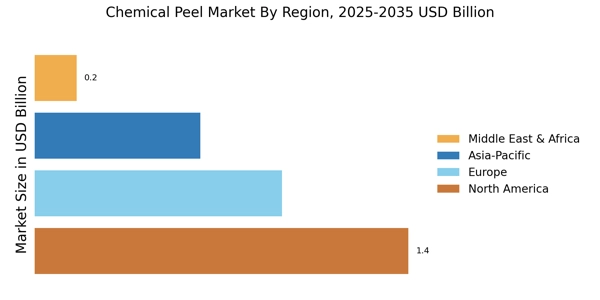
North America is the largest market for chemical peels, accounting for approximately 45% of the global share. The region's growth is driven by increasing consumer awareness of skincare, rising disposable incomes, and a growing trend towards minimally invasive cosmetic procedures. Regulatory support from agencies like the FDA further catalyzes market expansion, ensuring safety and efficacy in chemical peel products.
The United States leads the North American market, with significant contributions from Canada. Key players such as Allergan, Revance Therapeutics, and SkinCeuticals are prominent in this region, offering a diverse range of products. The competitive landscape is characterized by continuous innovation and strategic partnerships, enhancing product offerings and market reach.
Europe is witnessing a growing demand for chemical peels, holding approximately 30% of the global market share. Factors such as an increasing focus on skincare, rising aesthetic consciousness, and the popularity of non-surgical cosmetic treatments are driving this growth. Regulatory frameworks in countries like Germany and France are evolving to support the safe use of chemical peels, further boosting market confidence.
Leading countries in Europe include Germany, France, and the UK, where the presence of key players like Galderma and Dermalogica is strong. The competitive landscape is marked by a mix of established brands and emerging companies, all vying for market share. The region's diverse consumer base and regulatory support create a favorable environment for innovation and product development.
Asia-Pacific is rapidly emerging as a significant player in the chemical peel market, accounting for about 20% of the global share. The region's growth is fueled by increasing disposable incomes, a rising middle class, and a growing interest in skincare and beauty treatments. Countries like South Korea and Japan are at the forefront, with regulatory bodies promoting safe practices in cosmetic procedures, enhancing consumer trust. The market of chemical peeling in India is also emerging.
South Korea is a leading market within the region, known for its innovative skincare solutions and high demand for chemical peels. Key players such as Medytox and Hugel are actively expanding their product lines through chemical peel marketing to cater to this growing demand. The competitive landscape is vibrant, with both local and international brands competing to capture market share, driven by trends in beauty and wellness.
The Middle East and Africa region is gradually developing its chemical peel market, holding approximately 5% of the global share. The growth is driven by increasing urbanization, rising disposable incomes, and a growing interest in aesthetic treatments. However, regulatory challenges and varying consumer awareness levels across countries pose hurdles to market expansion. Countries like the UAE and South Africa are leading the way in adopting chemical peels, supported by evolving regulations.
In the UAE, the market is characterized by a mix of luxury and affordable skincare options, with key players like Prollenium Medical Technologies gaining traction. The competitive landscape is diverse, with both local and international brands vying for consumer attention. As awareness of skincare benefits grows, the market is expected to expand, albeit at a slower pace compared to other regions.
The Chemical Peel Market is currently characterized by a dynamic competitive landscape, driven by increasing consumer demand for aesthetic procedures and advancements in dermatological technologies. Key players such as Allergan (US), Galderma (CH), and Revance Therapeutics (US) are strategically positioned to leverage their innovative product offerings and extensive distribution networks. Allergan (US) focuses on enhancing its portfolio through continuous research and development, while Galderma (CH) emphasizes its commitment to sustainability and eco-friendly formulations. Revance Therapeutics (US) appears to be concentrating on expanding its market presence through strategic partnerships and collaborations, which collectively shape a competitive environment that is increasingly focused on innovation and consumer-centric solutions.In terms of business tactics, companies are localizing manufacturing to reduce costs and improve supply chain efficiency. The Chemical Peel Market is moderately fragmented, with a mix of established players and emerging brands vying for market share. The collective influence of these key players fosters a competitive structure that encourages innovation and responsiveness to consumer preferences, thereby enhancing overall market growth.
In August Allergan (US) announced the launch of a new line of chemical peels designed specifically for sensitive skin types. This strategic move not only diversifies their product range but also addresses a growing consumer segment that seeks gentler yet effective skincare solutions. By catering to this niche market, Allergan (US) strengthens its competitive position and enhances brand loyalty among consumers who prioritize skin health.
In September Galderma (CH) unveiled a partnership with a leading technology firm to integrate AI-driven analytics into their product development processes. This collaboration aims to streamline the formulation of chemical peels, ensuring that products are tailored to meet specific skin concerns. The integration of AI signifies a forward-thinking approach that could potentially revolutionize product development in the chemical peel sector, positioning Galderma (CH) as a leader in innovation.
In July Revance Therapeutics (US) expanded its distribution network by entering into a strategic alliance with a prominent skincare retailer in North America. This partnership is expected to enhance product accessibility and visibility, allowing Revance Therapeutics (US) to capture a larger share of the market. The strategic importance of this move lies in its potential to increase brand awareness and drive sales through enhanced consumer engagement.
As of October current trends in the Chemical Peel Market indicate a significant shift towards digitalization, sustainability, and the integration of advanced technologies such as AI. Strategic alliances are increasingly shaping the competitive landscape, enabling companies to pool resources and expertise for enhanced innovation. Looking ahead, competitive differentiation is likely to evolve from traditional price-based competition to a focus on technological advancements, product innovation, and supply chain reliability, thereby fostering a more resilient and responsive market environment.

In September 2026 (press release dated September 1), Allergan Aesthetics, an AbbVie company, launched SkinMedica® Barrier Calming Cream and a hydrating facial mist. Allergan reports that clinical testing showed the cream improved skin barrier support and reduced dryness by 30% after two weeks. It is sold through SkinMedica.com and licensed physicians and medically supervised spas. This extends the physician-channel skincare line that sits alongside in-office treatments. The release doesn’t mention peels, so the link to the peel market is my inference: barrier repair complements exfoliating treatments. (Source: prnewswire.com)
In July 2026 (press release dated July 20), Galderma launched its Alastin regenerative skincare brand across Japan and Asia Pacific, covering Japan, Singapore, South Korea and Taiwan. Nine products are available, following earlier launches in China and Australia. Galderma positions Alastin as peri-procedural skincare that supports skin preparation and recovery around energy-based treatments and injectables. It matters because it shows a major player scaling post-procedure skincare in a region the release calls one of the fastest-growing for medical aesthetics. Trade coverage says Taiwan has launched, Japan is next, and Singapore and South Korea are planned for September and November. (Source: galderma.com)
In April 2026 (press release dated April 28), Dermalogica launched its PRO Pen Microneedling System, its first FDA-cleared device. It is cleared to improve the appearance of facial acne scars in adults aged 22 and older and is sold to licensed skin health professionals. The release says the 14-pin PRO Pen received its 510(k) clearance in fall 2025. It matters because a professional skincare brand known for peels is moving into cleared devices, which points to peels and device-based resurfacing converging in the same treatment menus. (Source: prnewswire.com)
化学ピーリング市場は、2024年から2035年までの間に5.32%のCAGRで成長することが予測されており、美容手術の需要の増加とピーリング製剤の進歩によって推進されています。
新しい機会は以下にあります:
2035年までに、市場は進化する消費者の好みと革新的な製品の提供を反映して、堅調な成長を遂げると予想されています。
| 市場規模 2024 | 3.143(億米ドル) |
| 市場規模 2025 | 3.31(億米ドル) |
| 市場規模 2035 | 5.558(億米ドル) |
| 年平均成長率 (CAGR) | 5.32% (2024 - 2035) |
| レポートの範囲 | 収益予測、競争環境、成長要因、トレンド |
| 基準年 | 2024 |
| 市場予測期間 | 2025 - 2035 |
| 過去データ | 2019 - 2024 |
| 市場予測単位 | 億米ドル |
| 主要企業のプロファイル | 市場分析進行中 |
| カバーされるセグメント | 市場セグメンテーション分析進行中 |
| 主要市場機会 | 最小侵襲的な美容処置に対する需要の高まりが、化学ピーリング市場における革新を促進しています。 |
| 主要市場ダイナミクス | 非侵襲的な皮膚治療に対する消費者の需要の高まりが、化学ピーリング市場における革新と競争を促進しています。 |
| カバーされる国 | 北米、ヨーロッパ、アジア太平洋、南米、中東・アフリカ |
 Rahul Gotadki

このレポートの無料サンプルを受け取るには、以下のフォームにご記入ください


“This is really good guys. Excellent work on a tight deadline. I will continue to use you going forward and recommend you to others. Nice job”
 Noah Malgeri
Co-Founder

“Thanks for sending the report it gives us a good global view of the Betaïne market.”
 Peter Groot koerkamp
Account and Business Manager

“We found the report very insightful! we found your research firm very helpful. I'm sending this email to secure our future business.”
 Younghwan Choi
Senior Retail Manager

“I am very pleased with how market segments have been defined in a relevant way for my purposes (such as "Portable Freezers & refrigerators" and "last-mile"). In general the report is well structured. Thanks very much for your efforts.”
 Mark Irwin
Management Consultant

“We got the report in time, we really thank you for your support in this process. I also thank to all of your team as they did a great job.”
 Akif Moroglu
Strategy & Business Development Director

“The Automotive 48V ECU Components Procurement Intelligence Study” was a complex project, but the Market Research Future (MRFR) team handled it with quality, agility, and customer-centricity. They delivered all requested data on time and within the agreed scope. The team, including Shubhendra Anand and Rahul Gotadki, was always readily available to clarify questions and swiftly implement necessary adjustments, driving the project to a successful conclusion within a very demanding timeframe.
I would also like to specifically commend Akshay Agarwal for his responsiveness and support at every stage—from our initial inquiry on May 6th through to final delivery on June 18th. His dedication made the entire process seamless.”
 Guilherme Gomes Martins
Product Management Director

“Thanks. It’s been a pleasure working with you, please use me as reference with any other Intel employees.”
 Joseph Aguayo
Sales Operations & Pricing Manager

“Thank you, this will be very helpful for OQS.”
 La Terria Dodd
Program Support Specialist

“I have been reading the first document or the study, ,the Global HVAC and FP market report 2021 till 2026. Must say, good info! I have not gone in depth at all parts, but got a good indication of the data inside!”
 Rob Kooiker
Group Product Manager HVAC & Fire Protection GMA


