Mercado de Citoquininas Resumen
Tendencias clave del mercado y aspectos destacados
Tamaño del mercado y previsión
| CAGR (2025 - 2035) | 3.57% |
| CAGR (2025 - 2035) | 3.57% |
The Cytokinin Market is currently experiencing a notable evolution, driven by increasing agricultural demands and advancements in biotechnology. This sector appears to be gaining traction as farmers and agronomists seek innovative solutions to enhance crop yield and quality. The growing awareness of sustainable agricultural practices is likely influencing the adoption of cytokinin products, which are recognized for their role in promoting cell division and growth in plants. Furthermore, the integration of these compounds into various agricultural applications, such as seed treatment and foliar sprays, suggests a shift towards more efficient farming techniques. In addition, the rising The Cytokinin Market. As environmental concerns become more pronounced, the emphasis on organic farming and eco-friendly products is likely to shape market dynamics. The potential for cytokinin to improve plant resilience against stressors, such as drought and disease, indicates a promising future for this market segment. Overall, the Cytokinin Market seems poised for growth, with various factors converging to create a favorable environment for innovation and expansion.
The trend towards sustainable agriculture is becoming increasingly prominent within the Cytokinin Market. As consumers demand more eco-friendly products, farmers are adopting practices that minimize environmental impact. Cytokinins, known for their ability to enhance plant growth and resilience, are being integrated into organic farming methods, thereby supporting the shift towards sustainability.
Recent advancements in biotechnology are significantly influencing the Cytokinin Market. Innovations in genetic engineering and plant breeding techniques are enabling the development of more effective cytokinin formulations. These advancements may lead to improved crop varieties that exhibit enhanced growth characteristics, thereby attracting interest from agricultural stakeholders.
The growing global population is driving an increased focus on food security, which is impacting the Cytokinin Market. As the demand for higher agricultural productivity rises, cytokinin products are being recognized for their potential to boost crop yields. This trend suggests that stakeholders are likely to invest in cytokinin solutions to address the challenges of feeding a burgeoning population.
Las innovaciones tecnológicas en la biotecnología agrícola están influyendo significativamente en el mercado de citoquininas. El desarrollo de cultivos genéticamente modificados que utilizan citoquininas para mejorar el crecimiento y la resistencia a factores estresantes ambientales se está volviendo cada vez más prevalente. Estos avances no solo mejoran los rendimientos de los cultivos, sino que también contribuyen a prácticas agrícolas sostenibles. Se espera que el sector de la biotecnología experimente una Tasa de Crecimiento Anual Compuesto (CAGR) de aproximadamente el 10% en los próximos años, lo que sugiere un mercado robusto para productos a base de citoquininas. A medida que las prácticas agrícolas evolucionan, es probable que el mercado de citoquininas se expanda, impulsado por la necesidad de soluciones agrícolas eficientes y sostenibles.
La creciente preferencia de los consumidores por los productos orgánicos es un motor fundamental en el mercado de citoquininas. A medida que los consumidores se vuelven más conscientes de la salud, la demanda de frutas y verduras orgánicas ha aumentado. Esta tendencia probablemente impulsará el uso de citoquininas, que juegan un papel crucial en la mejora del crecimiento y el rendimiento de las plantas. Según datos recientes, se proyecta que el mercado de alimentos orgánicos alcanzará una valoración de más de 300 mil millones de dólares para 2025, lo que indica una oportunidad sustancial para las aplicaciones de citoquininas en la agricultura orgánica. Por lo tanto, el mercado de citoquininas está posicionado para beneficiarse de este cambio hacia la agricultura orgánica, ya que los agricultores buscan soluciones efectivas para satisfacer la creciente demanda de productos orgánicos.
La industria de las citoquininas está en aumento, ya que intensifica la demanda de producción de alimentos. Con la población mundial proyectada para alcanzar casi 9 mil millones para 2050, la presión sobre los sistemas agrícolas para producir suficiente alimento está aumentando. Las citoquininas, conocidas por su capacidad para mejorar el crecimiento y la productividad de las plantas, se están volviendo cada vez más vitales para abordar este desafío. Se espera que el sector agrícola requiera un aumento del 70% en la producción de alimentos para 2050, lo que subraya la importancia de las citoquininas para alcanzar estos objetivos. En consecuencia, el mercado de citoquininas está preparado para crecer, ya que proporciona soluciones esenciales para satisfacer la creciente demanda de alimentos.
Las políticas gubernamentales destinadas a promover prácticas agrícolas sostenibles están surgiendo como un motor significativo en el mercado de citoquininas. Varios países están implementando regulaciones e incentivos para fomentar la adopción de técnicas agrícolas ecológicas. Estas iniciativas a menudo incluyen financiamiento para la investigación y el desarrollo de reguladores del crecimiento de las plantas, incluidas las citoquininas. Por ejemplo, se proyecta que las inversiones en agricultura sostenible superen los 50 mil millones de dólares para 2025, destacando el potencial de crecimiento en el mercado de citoquininas. A medida que los gobiernos priorizan la sostenibilidad, se espera que la demanda de citoquininas aumente, alineándose con los esfuerzos globales para mejorar la producción de alimentos mientras se minimiza el impacto ambiental.
La creciente conciencia sobre los beneficios de los reguladores del crecimiento de las plantas, particularmente las citoquininas, está impulsando el mercado de citoquininas. Los agricultores y los profesionales agrícolas están reconociendo cada vez más el papel de las citoquininas en la mejora de la calidad de los cultivos, el rendimiento y la resistencia a las enfermedades. Los programas educativos y los servicios de extensión agrícola están desempeñando un papel crucial en la difusión de información sobre las ventajas de utilizar citoquininas. El análisis de mercado futuro indica que se anticipa que el segmento de reguladores del crecimiento de las plantas crecerá a una tasa del 8% anual, reflejando el creciente interés en estos productos. Esta mayor conciencia probablemente fortalecerá el mercado de citoquininas a medida que más partes interesadas adopten estas soluciones que mejoran el crecimiento.
The Plant-Based segment of the Cytokinin Market is characterized by its strong consumer loyalty and preference for organic and eco-friendly products. It predominantly includes natural extracts from various plants that provide essential nutrients and growth stimulation, thus supporting sustainable agricultural practices. In contrast, the Bacterial-Based segment, while currently smaller, is seen as an emerging player with unique advantages such as enhancing soil health and plant resilience against diseases. Bacterial-Based cytokinin products appeal to innovators seeking alternatives to synthetic chemicals and are gaining traction, particularly in organic farming sectors. As farmers become more aware of environmental impacts, the Bacterial-Based segment presents a promising avenue for growth, especially as technology advances in the biofertilizer area.
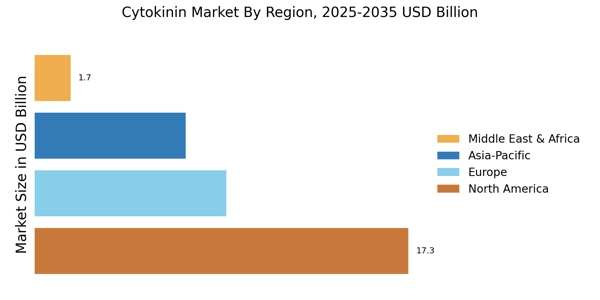
North America is witnessing robust growth in the cytokinin market, driven by increasing demand for high-yield crops and sustainable agricultural practices. The U.S. holds the largest market share at approximately 60%, followed by Canada at around 25%. Regulatory support for biostimulants and environmentally friendly products is further catalyzing market expansion. The region's focus on research and development is also a significant growth driver. Leading countries in this region include the United States and Canada, with major players like BASF SE and FMC Corporation dominating the landscape. The competitive environment is characterized by innovation and strategic partnerships among key stakeholders. The presence of advanced agricultural technologies and a strong distribution network enhances market accessibility, positioning North America as a pivotal player in The Cytokinin Market.
Europe is emerging as a significant player in the cytokinin market, driven by stringent regulations promoting sustainable agricultural practices. The region's market is primarily led by Germany and France, which together account for approximately 50% of the market share. The European Union's Green Deal and Farm to Fork strategy are pivotal in shaping demand for biostimulants, including cytokinins, fostering a shift towards eco-friendly farming solutions. Key countries such as Germany, France, and the Netherlands are at the forefront of this market, with major companies like Syngenta AG and Koppert Biological Systems leading the charge. The competitive landscape is marked by innovation and collaboration among industry players, supported by research institutions. The emphasis on organic farming and reduced chemical usage is driving the adoption of cytokinins, positioning Europe as a leader in sustainable agricultural practices.
The Asia-Pacific region is witnessing rapid growth in the cytokinin market, fueled by increasing agricultural productivity and the need for food security. China and India are the largest markets, collectively holding around 70% of the regional share. The rising adoption of modern farming techniques and government initiatives to enhance crop yields are significant drivers of this growth. Regulatory frameworks are gradually evolving to support the use of biostimulants, including cytokinins, in agriculture. China and India are leading the charge, with key players like Zhejiang Yongnong Bioengineering Group and Hanfeng Evergreen Inc. making substantial contributions. The competitive landscape is characterized by a mix of local and international companies, focusing on innovation and product development. The growing awareness of sustainable farming practices is further propelling the demand for cytokinins, making Asia-Pacific a vital region for market expansion.
The Middle East and Africa region is gradually recognizing the potential of the cytokinin market, driven by the need for improved agricultural productivity in arid climates. Countries like South Africa and Egypt are leading the market, holding approximately 40% of the regional share. The increasing focus on food security and sustainable farming practices is catalyzing interest in biostimulants, including cytokinins, as effective solutions for enhancing crop yields in challenging environments. South Africa and Egypt are at the forefront, with local companies and international players like Adama Agricultural Solutions Ltd. actively participating in the market. The competitive landscape is evolving, with a growing number of startups and established firms focusing on research and development. The region's unique agricultural challenges present opportunities for innovative solutions, positioning the Middle East and Africa as a promising market for cytokinins.
The Cytokinin Market is currently characterized by a dynamic competitive landscape, driven by increasing agricultural productivity demands and the need for sustainable farming practices. Key players such as BASF SE (Germany), Syngenta AG (Switzerland), and FMC Corporation (United States) are strategically positioned to leverage innovation and regional expansion. BASF SE (Germany) focuses on developing advanced formulations that enhance crop yield, while Syngenta AG (Switzerland) emphasizes partnerships with local farmers to tailor solutions to specific regional needs. FMC Corporation (United States) is actively pursuing mergers and acquisitions to bolster its product portfolio, thereby shaping a competitive environment that is increasingly collaborative yet fiercely competitive.In terms of business tactics, companies are localizing manufacturing to reduce costs and optimize supply chains, which is particularly crucial in the context of fluctuating global trade dynamics. The market appears moderately fragmented, with a mix of established players and emerging companies vying for market share. The collective influence of these key players is significant, as they not only drive innovation but also set industry standards that smaller firms often follow.
In August Syngenta AG (Switzerland) announced a strategic partnership with a leading agricultural technology firm to develop AI-driven solutions for crop management. This move is likely to enhance Syngenta's product offerings, allowing for more precise application of cytokinin-based products, which could lead to improved crop yields and reduced environmental impact. The integration of AI into their operations suggests a forward-thinking approach that aligns with current trends in digitalization within the agricultural sector.
In September BASF SE (Germany) launched a new line of cytokinin products specifically designed for high-stress environments, such as drought conditions. This initiative not only addresses the pressing challenges posed by climate change but also positions BASF as a leader in sustainable agricultural solutions. The introduction of these products indicates a strategic pivot towards resilience in crop production, which is increasingly vital in today's agricultural landscape.
In July FMC Corporation (United States) completed the acquisition of a biotechnology firm specializing in plant growth regulators, including cytokinins. This acquisition is expected to enhance FMC's research and development capabilities, allowing for the rapid introduction of innovative products to the market. Such strategic moves reflect a broader trend of consolidation within the industry, as companies seek to bolster their competitive edge through enhanced technological capabilities.
As of October the competitive trends in the Cytokinin Market are increasingly defined by digitalization, sustainability, and the integration of advanced technologies such as AI. Strategic alliances are becoming more prevalent, enabling companies to pool resources and expertise to address complex agricultural challenges. Looking ahead, it appears that competitive differentiation will increasingly hinge on innovation and technology rather than price alone, with a strong emphasis on supply chain reliability and sustainable practices.


Se proyecta que el mercado de citoquininas crecerá a una Tasa de Crecimiento Anual Compuesto (CAGR) del 3.57% desde 2024 hasta 2035, impulsado por la creciente demanda agrícola, los avances en biotecnología y el aumento de la conciencia sobre la salud de las plantas.
Nuevas oportunidades se encuentran en:
Para 2035, se espera que el mercado de citoquininas logre un crecimiento robusto, reflejando las prácticas agrícolas en evolución.
| MARKET SIZE 2024 | 28.89(USD Billion) |
| MARKET SIZE 2025 | 29.92(USD Billion) |
| MARKET SIZE 2035 | 42.5(USD Billion) |
| COMPOUND ANNUAL GROWTH RATE (CAGR) | 3.57% (2025 - 2035) |
| REPORT COVERAGE | Revenue Forecast, Competitive Landscape, Growth Factors, and Trends |
| BASE YEAR | 2024 |
| Market Forecast Period | 2025 - 2035 |
| Historical Data | 2019 - 2024 |
| Market Forecast Units | USD Billion |
| Key Companies Profiled | BASF SE (DE), Syngenta AG (CH), FMC Corporation (US), Nufarm Limited (AU), Koppert Biological Systems (NL), Zhejiang Yongnong Bioengineering Group Co., Ltd. (CN), Hanfeng Evergreen Inc. (CA), Adama Agricultural Solutions Ltd. (IL), Sumitomo Chemical Co., Ltd. (JP) |
| Segments Covered | Product Type, Application, End User, Source, Regional |
| Key Market Opportunities | Advancements in biotechnology enhance crop yield, driving growth in the Cytokinin Market. |
| Key Market Dynamics | Rising demand for sustainable agriculture drives innovation and competition in the cytokinin market. |
| Countries Covered | North America, Europe, APAC, South America, MEA |
 Snehal Singh

Complete el formulario a continuación para recibir una muestra gratuita de este informe

“This is really good guys. Excellent work on a tight deadline. I will continue to use you going forward and recommend you to others. Nice job”
 Noah Malgeri
Co-Founder

“Thanks for sending the report it gives us a good global view of the Betaïne market.”
 Peter Groot koerkamp
Account and Business Manager

“We found the report very insightful! we found your research firm very helpful. I'm sending this email to secure our future business.”
 Younghwan Choi
Senior Retail Manager

“I am very pleased with how market segments have been defined in a relevant way for my purposes (such as "Portable Freezers & refrigerators" and "last-mile"). In general the report is well structured. Thanks very much for your efforts.”
 Mark Irwin
Management Consultant

“We got the report in time, we really thank you for your support in this process. I also thank to all of your team as they did a great job.”
 Akif Moroglu
Strategy & Business Development Director

“The Automotive 48V ECU Components Procurement Intelligence Study” was a complex project, but the Market Research Future (MRFR) team handled it with quality, agility, and customer-centricity. They delivered all requested data on time and within the agreed scope. The team, including Shubhendra Anand and Rahul Gotadki, was always readily available to clarify questions and swiftly implement necessary adjustments, driving the project to a successful conclusion within a very demanding timeframe.
I would also like to specifically commend Akshay Agarwal for his responsiveness and support at every stage—from our initial inquiry on May 6th through to final delivery on June 18th. His dedication made the entire process seamless.”
 Guilherme Gomes Martins
Product Management Director

“Thanks. It’s been a pleasure working with you, please use me as reference with any other Intel employees.”
 Joseph Aguayo
Sales Operations & Pricing Manager

“Thank you, this will be very helpful for OQS.”
 La Terria Dodd
Program Support Specialist

“I have been reading the first document or the study, ,the Global HVAC and FP market report 2021 till 2026. Must say, good info! I have not gone in depth at all parts, but got a good indication of the data inside!”
 Rob Kooiker
Group Product Manager HVAC & Fire Protection GMA



