Mercado de Factores de Crecimiento en Terapia Celular

Informe de Investigación del Mercado de Factores de Crecimiento en Terapia Celular por Aplicación (Oncología, Cardiología, Ortopedia, Neurología, Dermatología), por Tipo de Factor de Crecimiento (Factores de Crecimiento de Fibroblastos, Factores de Crecimiento Transformantes, Factores de Crecimiento Derivados de Plaquetas, Factores de Crecimiento Endotelial Vascular), por Fuente (Derivados Humanos, Derivados Animales, Sintéticos, Recombinantes), por Tipo de Proceso (Terapia Autóloga, Terapia Alogénica, Terapias Biofabricadas) y por Región (América del Norte, Europa, América del Sur, Asia-Pacífico, Medio Oriente y África) - Pronóstico hasta 2035
ID: MRFR/Pharma/35528-HCR 100 Pages Nidhi Mandole, Rahul Gotadki Last Updated: November 17, 2026
Cell Therapy Growth Factor Market
Market Size
Forecast Period2025 - 2035
CAGR (2025 - 2035)7.63%
2024 Market Size$ 5.44 Billion
2025 Market Size$ 5.85 Billion
2035 Market Size$ 12.21 Billion
Key Players
Amgen
Roche
Novartis
Gilead Sciences
Bristol-Myers Squibb
Regeneron Pharmaceuticals
Opportunities
  • Advancements in Biotechnology
  • Increasing Prevalence of Chronic Diseases
  • Rising Investment in Regenerative Medicine

Mercado de Factores de Crecimiento en Terapia Celular Resumen

Tendencias clave del mercado y aspectos destacados

Tamaño del mercado y previsión

CAGR (2025 - 2035) 7.63%

Principales jugadores

Amgen(US), Roche (CH), Novartis (CH), Gilead Sciences (US), Bristol-Myers Squibb (US), Regeneron Pharmaceuticals (US), Takeda Pharmaceutical (JP), Sangamo Therapeutics (US), Celyad Oncology (BE)

Mercado de Factores de Crecimiento en Terapia Celular Impulsores

Advancements in Biotechnology

Technological advancements in biotechnology are significantly influencing the Cell Therapy Growth Factor Market. Innovations in gene editing, stem cell research, and biomanufacturing processes are enhancing the efficacy and safety of cell therapies. For instance, the development of CRISPR technology has opened new avenues for precise genetic modifications, which can improve the therapeutic potential of growth factors in cell therapies.
 
The market for biotechnology is projected to reach substantial figures, with estimates suggesting it could exceed USD 700 billion by 2025. This growth is likely to foster collaborations between biotech firms and research institutions, further driving the Cell Therapy Growth Factor Market. As these technologies evolve, they may lead to more personalized and effective treatment options, thereby attracting a broader patient base.

Increasing Prevalence of Chronic Diseases

The rising incidence of chronic diseases such as diabetes, cardiovascular disorders, and neurodegenerative conditions is a primary driver for the Cell Therapy Growth Factor Market. As these diseases become more prevalent, the demand for innovative treatment options intensifies. Cell therapy, particularly those utilizing growth factors, offers promising avenues for regeneration and repair of damaged tissues.
 
According to recent estimates, chronic diseases account for approximately 70% of all deaths worldwide, underscoring the urgent need for effective therapies. This trend is likely to propel investments in research and development, thereby expanding the Cell Therapy Growth Factor Market. Furthermore, as healthcare systems seek to reduce the burden of chronic illnesses, the adoption of cell therapies is expected to accelerate, creating a robust market environment.

Rising Investment in Regenerative Medicine

Investment in regenerative medicine is witnessing a notable surge, which is a key driver for the Cell Therapy Growth Factor Market. Venture capital funding and government grants are increasingly directed towards research initiatives focused on cell therapies. Reports indicate that the regenerative medicine market could reach USD 100 billion by 2025, reflecting a growing recognition of the potential of cell therapies.
 
This influx of capital is likely to accelerate the development of innovative growth factor therapies, enhancing their availability and accessibility. Additionally, as more clinical trials demonstrate the efficacy of these therapies, investor confidence is expected to grow, further propelling the Cell Therapy Growth Factor Market. The convergence of financial support and scientific advancement may lead to breakthroughs that redefine treatment paradigms in various medical fields.

Regulatory Support for Innovative Therapies

The evolving regulatory landscape is providing crucial support for the Cell Therapy Growth Factor Market. Regulatory agencies are increasingly recognizing the importance of expedited pathways for the approval of innovative therapies. Initiatives aimed at streamlining the approval process for cell therapies are likely to enhance market access and reduce time-to-market for new products. For instance, the introduction of breakthrough therapy designations has encouraged companies to invest in the development of growth factor-based cell therapies.
 
As regulatory frameworks adapt to accommodate advancements in science, the Cell Therapy Growth Factor Market is expected to benefit from a more conducive environment for innovation. This regulatory support may lead to an influx of new therapies, ultimately improving patient outcomes and expanding treatment options.

Growing Awareness and Acceptance of Cell Therapies

The increasing awareness and acceptance of cell therapies among healthcare professionals and patients are driving the Cell Therapy Growth Factor Market. Educational initiatives and successful case studies are contributing to a more informed public perception of these therapies. As patients become more aware of the potential benefits of cell therapies, demand is likely to rise. Surveys indicate that a significant percentage of patients are willing to consider advanced therapies for chronic conditions, which could lead to a substantial market expansion.
 
Furthermore, as healthcare providers become more familiar with the applications of growth factors in cell therapies, they may be more inclined to recommend these treatments. This shift in perception is expected to create a favorable environment for the Cell Therapy Growth Factor Market, fostering growth and innovation.

Perspectivas del segmento de mercado

Por Aplicación: Oncología (Más Grande) vs. Cardiología (Crecimiento Más Rápido)

En el mercado de factores de crecimiento para terapia celular, el segmento de aplicación está claramente dominado por la oncología, que captura una parte significativa del mercado debido a la creciente prevalencia del cáncer en todo el mundo. Este segmento es esencial ya que utiliza factores de crecimiento para mejorar la proliferación y diferenciación celular, lo que lo hace vital para el desarrollo de terapias efectivas contra el cáncer. Tras la oncología, la cardiología está emergiendo con una trayectoria de crecimiento más rápida, impulsada por los avances en medicina regenerativa que aprovechan la terapia celular para tratar enfermedades cardíacas y mejorar la salud cardiovascular.

Oncología: Dominante vs. Cardiología: Emergente

La oncología sigue siendo la aplicación dominante dentro del Mercado de Factores de Crecimiento en Terapia Celular, beneficiándose de una extensa investigación y ensayos clínicos enfocados en tratamientos contra el cáncer. La infusión de factores de crecimiento en los protocolos de terapia celular mejora significativamente su eficacia, lo que conduce a mejores resultados para los pacientes. Por otro lado, la cardiología está emergiendo como un sector vibrante dentro de este mercado, impulsada por enfoques innovadores que aprovechan la terapia celular para la reparación y regeneración cardíaca. La creciente incidencia de enfermedades cardiovasculares, junto con los avances tecnológicos, posiciona a la cardiología como un área prometedora para el crecimiento en el panorama de la terapia celular.

Por tipo de factor de crecimiento: factores de crecimiento de fibroblastos (más grandes) frente a factores de crecimiento endotelial vascular (de más rápido crecimiento)

En el mercado de factores de crecimiento en terapia celular, los factores de crecimiento de fibroblastos tienen la mayor participación de mercado, desempeñando un papel crucial en diversas aplicaciones terapéuticas, particularmente en la cicatrización de heridas y la reparación de tejidos. Los factores de crecimiento transformantes y los factores de crecimiento derivados de plaquetas también contribuyen significativamente, asistiendo en los procesos de proliferación y regeneración celular. Sin embargo, los factores de crecimiento endotelial vascular están emergiendo rápidamente, ganando atención por su papel fundamental en la angiogénesis y su aplicación en el tratamiento de una variedad de enfermedades.

Factores de Crecimiento de Fibroblastos (Dominantes) vs. Factores de Crecimiento Endotelial Vascular (Emergentes)

Los factores de crecimiento de fibroblastos (FGFs) son conocidos por su papel esencial en la diferenciación y el crecimiento celular, dominando el mercado debido a sus amplias aplicaciones en medicina regenerativa y terapia celular. Se han convertido en un elemento básico en varios tratamientos debido a su efectividad en la mejora de los procesos de curación. Por otro lado, los factores de crecimiento endotelial vascular (VEGFs) están ganando rápidamente terreno como una fuerza emergente en el mercado. Su capacidad única para estimular la formación de vasos sanguíneos está transformando los enfoques en el tratamiento de enfermedades isquémicas y promoviendo una integración exitosa de los tejidos. Tanto los FGFs como los VEGFs destacan la diversidad y especialización dentro del segmento de tipos de factores de crecimiento, atendiendo a necesidades terapéuticas específicas.

Por Fuente: Derivados Humanos (Más Grande) vs. Sintético (De Más Rápido Crecimiento)

En el mercado de factores de crecimiento en terapia celular, la distribución entre los segmentos de origen muestra que los factores de crecimiento derivados de humanos dominan el panorama, atribuido a su compatibilidad natural con los tejidos humanos y su amplia utilización en diversas aplicaciones terapéuticas. Este segmento representa una parte significativa de la cuota de mercado, ya que continúa siendo preferido por su eficacia y menor riesgo de inmunogenicidad en comparación con otras fuentes. Por otro lado, el segmento sintético está ganando impulso como la categoría de más rápido crecimiento, impulsado por los avances en biotecnología y la creciente demanda de factores de crecimiento personalizados. Los factores de crecimiento sintéticos ofrecen el potencial de escalabilidad y rentabilidad, lo que los convierte en alternativas atractivas en la terapia celular. Esta evolución se ve acentuada por las actividades de investigación y desarrollo en curso destinadas a mejorar la eficiencia y especificidad de las formulaciones sintéticas.

Derivado Humano (Dominante) vs. Sintético (Emergente)

Los factores de crecimiento derivados de humanos están bien establecidos en el mercado de factores de crecimiento para terapia celular, reconocidos por su superior actividad biológica y perfil de seguridad, lo que los convierte en una opción preferida para aplicaciones como la terapia con células madre y la regeneración de tejidos. Estos factores se derivan de fuentes humanas, asegurando la compatibilidad con la biología humana, lo que minimiza las reacciones adversas. En contraste, el segmento sintético está emergiendo rápidamente debido al aumento de inversiones en I+D y procesos de fabricación innovadores que mejoran la escalabilidad. Los factores de crecimiento sintéticos están diseñados para imitar a sus contrapartes naturales, facilitando el desarrollo de terapias dirigidas que pueden satisfacer mejor las necesidades de poblaciones específicas de pacientes. A medida que el mercado evoluciona, es probable que ambos segmentos se fusionen, impulsando los avances en medicina personalizada.

Por Tipo de Proceso: Terapia Autóloga (Más Grande) vs. Terapia Alogénica (De Más Rápido Crecimiento)

En el mercado de factores de crecimiento en terapia celular, el segmento de Terapia Autóloga posee una participación de mercado significativa, ya que utiliza las propias células del paciente para el tratamiento, mejorando la efectividad y minimizando los riesgos de rechazo. Con una creciente aceptación entre los pacientes y los proveedores de salud, las terapias autólogas dominan el panorama del mercado, particularmente en medicina personalizada y tratamientos regenerativos. Mientras tanto, el segmento de Terapia Alogénica, que implica el uso de células de donantes, exhibe una rápida trayectoria ascendente, impulsada por los avances en los procesos de fabricación y la creciente disponibilidad de productos listos para usar. El apoyo regulatorio y los éxitos clínicos están impulsando aún más su expansión, atendiendo a diversas necesidades de los pacientes.

Terapia Autóloga (Dominante) vs. Terapias Biofabricadas (Emergentes)

La Terapia Autóloga se destaca como una fuerza dominante en el Mercado de Factores de Crecimiento de Terapia Celular, caracterizada por su dependencia de células derivadas del paciente, asegurando compatibilidad y tratamiento personalizado. Este enfoque es particularmente favorecido para abordar condiciones complejas donde el tratamiento personalizado es primordial. Por otro lado, las Terapias Biofabricadas representan un segmento emergente, centrado en células diseñadas producidas en biorreactores para una mayor escalabilidad y consistencia. A medida que las tendencias de atención médica se desplazan hacia la eficiencia y la accesibilidad, las terapias biofabricadas están ganando terreno, especialmente en entornos clínicos que buscan estandarizar tratamientos en grupos de pacientes más grandes. Ambos segmentos son cruciales para dar forma al futuro de las terapias celulares, cada uno abordando desafíos médicos únicos.

Obtenga información más detallada sobre Mercado de Factores de Crecimiento en Terapia Celular

Perspectivas regionales

North America : Innovation and Market Leadership

North America is the largest market for cell therapy growth factors, holding approximately 45% of the global market share. The region benefits from advanced healthcare infrastructure, significant R&D investments, and a favorable regulatory environment. The demand for innovative therapies, particularly in oncology and rare diseases, is driving growth. Regulatory catalysts, such as expedited approval processes by the FDA, further enhance market dynamics.

The United States leads the market, with key players like Amgen, Gilead Sciences, and Bristol-Myers Squibb dominating the landscape. Canada also contributes significantly, focusing on research and development initiatives. The competitive landscape is characterized by collaborations and partnerships among biotech firms, enhancing innovation and product offerings. The presence of major pharmaceutical companies ensures a robust supply chain and access to cutting-edge therapies.

Europe : Emerging Market with Strong Potential

Europe is the second-largest market for cell therapy growth factors, accounting for approximately 30% of the global market share. The region is witnessing a surge in demand driven by increasing investments in biotechnology and supportive government policies. Regulatory frameworks, such as the European Medicines Agency's guidelines, are facilitating the approval of innovative therapies, thus propelling market growth.

Leading countries include Germany, France, and the UK, which are home to several key players like Roche and Novartis. The competitive landscape is marked by a mix of established pharmaceutical companies and emerging biotech firms. Collaborative efforts in research and development are prevalent, fostering innovation in cell therapies. The presence of strong academic institutions further supports the growth of the sector, ensuring a steady pipeline of new therapies.

Asia-Pacific : Rapid Growth and Investment

Asia-Pacific is rapidly emerging as a significant player in the cell therapy growth factor market, holding approximately 20% of the global market share. The region is characterized by increasing healthcare expenditure, a growing patient population, and rising awareness of advanced therapies. Countries like Japan and China are leading the charge, supported by government initiatives aimed at boosting biotechnology and healthcare innovation.

Japan is a frontrunner in the market, with Takeda Pharmaceutical and other local firms investing heavily in R&D. China is also witnessing a boom in biotech startups focusing on cell therapies. The competitive landscape is evolving, with collaborations between domestic and international firms becoming more common. This dynamic environment is expected to drive further advancements and market penetration in the coming years.

Middle East and Africa : Untapped Market with Opportunities

The Middle East and Africa represent an emerging market for cell therapy growth factors, currently holding about 5% of the global market share. The region is experiencing gradual growth driven by increasing healthcare investments and a rising prevalence of chronic diseases. Governments are beginning to recognize the importance of biotechnology, leading to supportive policies and funding initiatives that encourage research and development in this sector.

Countries like South Africa and the UAE are at the forefront, with growing interest from both local and international players. The competitive landscape is still developing, with opportunities for new entrants and collaborations. The presence of key players is limited, but as the market matures, it is expected that more companies will enter, enhancing the overall growth and innovation in cell therapies.
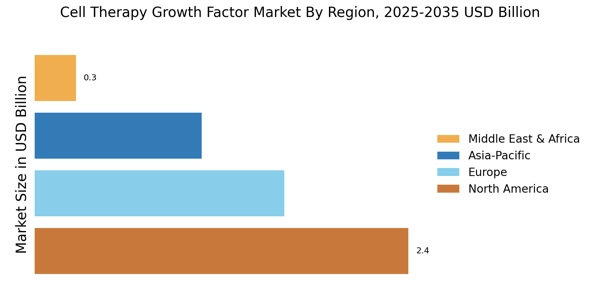
Mercado de Factores de Crecimiento en Terapia Celular Regional Image

Jugadores clave y perspectivas competitivas

The Cell Therapy Growth Factor Market is currently characterized by a dynamic competitive landscape, driven by advancements in biotechnology and an increasing focus on personalized medicine. Major players such as Amgen (US), Roche (CH), and Novartis (CH) are strategically positioned to leverage their extensive research capabilities and established market presence. Amgen (US) emphasizes innovation through its robust pipeline of growth factors aimed at enhancing cell therapies, while Roche (CH) focuses on strategic partnerships to bolster its research and development efforts.

Novartis (CH) appears to be concentrating on regional expansion, particularly in emerging markets, to tap into new patient populations and diversify its revenue streams. Collectively, these strategies contribute to a competitive environment that is increasingly focused on innovation and collaboration. In terms of business tactics, companies are localizing manufacturing to enhance supply chain efficiency and reduce costs. This approach is particularly relevant in the context of the Cell Therapy Growth Factor Market, which requires precise and timely delivery of products. The market structure is moderately fragmented, with several key players exerting influence over various segments. The collective actions of these companies indicate a trend towards consolidation, as they seek to optimize their operations and enhance their competitive positioning.

In August 2025, Gilead Sciences (US) announced a strategic collaboration with a leading biotechnology firm to develop next-generation growth factors for cell therapies. This partnership is expected to accelerate the development of innovative treatments, potentially positioning Gilead at the forefront of the market. The collaboration underscores the importance of alliances in driving research and development, as companies aim to combine their strengths to create more effective therapies.

In September 2025, Bristol-Myers Squibb (US) launched a new growth factor product aimed at enhancing the efficacy of CAR-T cell therapies. This product introduction is significant as it reflects the company's commitment to innovation and its strategic focus on expanding its oncology portfolio. By enhancing the performance of existing therapies, Bristol-Myers Squibb is likely to strengthen its market position and attract a broader patient base.

In October 2025, Regeneron Pharmaceuticals (US) revealed plans to invest in advanced manufacturing technologies to streamline the production of growth factors. This investment is indicative of a broader trend towards digital transformation within the industry, as companies seek to improve efficiency and reduce time-to-market for new therapies. Regeneron's focus on technology integration may provide it with a competitive edge in an increasingly fast-paced market.

As of October 2025, current competitive trends in the Cell Therapy Growth Factor Market include a pronounced shift towards digitalization, sustainability, and the integration of artificial intelligence in research and development processes. Strategic alliances are playing a crucial role in shaping the landscape, as companies recognize the value of collaboration in driving innovation. Looking ahead, competitive differentiation is likely to evolve, with a greater emphasis on technological advancements and supply chain reliability, rather than solely on price. This shift suggests that companies that prioritize innovation and operational excellence will be better positioned to thrive in the future.

Las empresas clave en el mercado Mercado de Factores de Crecimiento en Terapia Celular incluyen

Desarrollos recientes de la industria

In Oct 2026, The hold is a setback for Kite’s next-generation lymphoma pipeline. Anito-cel is the near-term catalyst for a cell therapy franchise whose Q3 sales fell 18% year over year. On its Q3 2026 earnings call, Gilead said the Palisades 1 and 2 trials of KITE-753 in second-line and third-line-plus large B-cell lymphoma were placed on a partial clinical hold while it investigates safety differences between Phase 1 and Phase 2. It also said FDA cleared Kite-512, a GPC3-targeted dual-armored CAR T, for clinical study in advanced liver cancer. The anito-cel FDA decision date is December 23, with a potential launch in fourth-line or later relapsed/refractory multiple myeloma. (Source: benzinga.com)

In Aug 2026, Both programs use faster manufacturing meant to speed up CAR-T production, and an analyst quoted in the coverage suggested this could be driving increased cell expansion and the reported toxicities, though other factors could be involved. It’s a safety signal for the autoimmune cell therapy field, which could affect how quickly it is adopted. Novartis said it started holds on its rap-cel autoimmune trials on Aug. 24 after three cases of immune effector cell-associated hemophagocytic syndrome (IEC-HS), a rare, potentially life-threatening reaction. Bristol Myers Squibb voluntarily paused enrollment in its zola-cel autoimmune trials as a precaution, citing transient and reversible inflammatory events. Novartis’s cancer trials of rap-cel are still ongoing. A trade-press report adds that zola-cel is furthest along in systemic sclerosis, in a Phase III trial. (Source: biopharmadive.com)

In Aug 2026, An early genomic medicine company is being broken up. Its zinc-finger, capsid-delivery and integrase technologies go to Lilly, and its most advanced clinical asset goes to PTC. Sangamo filed Chapter 11 on June 23 with Lilly and Astellas as stalking-horse bidders (per its press release). At the auction on Aug 10, Lilly won the platform and prion assets, and the court entered a sale order for them on Aug 20 at $50 million in cash plus assumed liabilities. PTC Therapeutics beat Astellas for the Fabry gene therapy, at $111 million at closing plus up to $100 million in milestones. (Source: biospace.com)

Perspectivas futuras

Mercado de Factores de Crecimiento en Terapia Celular Perspectivas futuras

Se proyecta que el mercado de factores de crecimiento en terapia celular crecerá a una Tasa de Crecimiento Anual Compuesto (CAGR) del 7.63% desde 2024 hasta 2035, impulsado por los avances en medicina regenerativa y la creciente demanda de terapias personalizadas.

Nuevas oportunidades se encuentran en:

  • Desarrollo de formulaciones de factores de crecimiento dirigidos para tipos celulares específicos.
  • Expansión en mercados emergentes con estrategias de distribución personalizadas.
  • Asociaciones con empresas biotecnológicas para el desarrollo de productos innovadores.

Para 2035, se espera que el mercado sea robusto, reflejando un crecimiento e innovación sustanciales.

Segmentación de mercado

Perspectiva del tipo de factor de crecimiento del mercado de terapia celular

  • Factores de Crecimiento de Fibroblastos
  • Factores de Crecimiento Transformantes
  • Factores de Crecimiento Derivados de Plaquetas
  • Factores de Crecimiento Endotelial Vascular

Perspectiva de la fuente del mercado de factores de crecimiento en terapia celular

  • Derivado Humano
  • Derivado Animal
  • Sintético
  • Recombinante

Perspectiva de Aplicación del Mercado de Factores de Crecimiento en Terapia Celular

  • Oncología
  • Cardiología
  • Ortopedia
  • Neurología
  • Dermatología

Perspectiva del Tipo de Proceso del Mercado de Factores de Crecimiento en Terapia Celular

  • Terapia Autóloga
  • Terapia Alogénica
  • Terapias Biofabricadas

Alcance del informe

MARKET SIZE 2024 5.436(USD Billion)
MARKET SIZE 2025 5.851(USD Billion)
MARKET SIZE 2035 12.21(USD Billion)
COMPOUND ANNUAL GROWTH RATE (CAGR) 7.63% (2025 - 2035)
REPORT COVERAGE Revenue Forecast, Competitive Landscape, Growth Factors, and Trends
BASE YEAR 2024
Market Forecast Period 2025 - 2035
Historical Data 2019 - 2024
Market Forecast Units USD Billion
Key Companies Profiled Amgen (US), Roche (CH), Novartis (CH), Gilead Sciences (US), Bristol-Myers Squibb (US), Regeneron Pharmaceuticals (US), Takeda Pharmaceutical (JP), Sangamo Therapeutics (US), Celyad Oncology (BE)
Segments Covered Application, Growth Factor Type, Source, Process Type, Regional
Key Market Opportunities Advancements in personalized medicine enhance growth potential in the Cell Therapy Growth Factor Market.
Key Market Dynamics Rising demand for innovative therapies drives competition and regulatory scrutiny in the Cell Therapy Growth Factor Market.
Countries Covered North America, Europe, APAC, South America, MEA

Preguntas frecuentes

¿Cuál es la valoración de mercado proyectada del mercado de factores de crecimiento en terapia celular para 2035?
Se espera que la valoración de mercado proyectada para el Mercado de Factores de Crecimiento en Terapia Celular alcance los 12.21 USD mil millones para 2035.
¿Cuál fue la valoración del mercado de factores de crecimiento en terapia celular en 2024?
La valoración total del mercado fue de 5.436 mil millones de USD en 2024.
¿Cuál es la CAGR esperada para el mercado de factores de crecimiento en terapia celular durante el período de pronóstico 2025 - 2035?
Se espera que la CAGR del mercado de factores de crecimiento en terapia celular durante el período de pronóstico 2025 - 2035 sea del 7.63%.
¿Qué segmento de aplicación se proyecta que tendrá el mayor crecimiento en el mercado de factores de crecimiento de terapia celular?
Se proyecta que el segmento de aplicaciones de Oncología crecerá de 1.5 mil millones de USD en 2024 a 3.5 mil millones de USD para 2035.
¿Cuáles son los tipos clave de factores de crecimiento en el mercado de factores de crecimiento para terapia celular?
Los tipos clave de factores de crecimiento incluyen factores de crecimiento de fibroblastos, factores de crecimiento transformantes, factores de crecimiento derivados de plaquetas y factores de crecimiento endotelial vascular.
¿Qué empresa es un actor principal en el mercado de factores de crecimiento de terapia celular?
Amgen, con sede en EE. UU., es reconocida como uno de los principales actores en el mercado de factores de crecimiento de terapia celular.
¿Cuál es el crecimiento proyectado para el segmento de Factores de Crecimiento Endotelial Vascular para 2035?
Se proyecta que el segmento de Factores de Crecimiento Endotelial Vascular crecerá de 1.736 mil millones de USD en 2024 a 3.7 mil millones de USD para 2035.
¿Cómo se compara el mercado de la Terapia Autóloga con la Terapia Alogénica en 2035?
Para 2035, se espera que el mercado de la Terapia Autóloga alcance los 5.75 mil millones de USD, mientras que se proyecta que la Terapia Alogénica alcance los 3.5 mil millones de USD.
¿Qué fuentes se utilizan en el mercado de factores de crecimiento de terapia celular?
Las fuentes utilizadas en el mercado incluyen factores de crecimiento de origen humano, de origen animal, sintéticos y recombinantes.
¿Cuál es el crecimiento anticipado para el segmento de aplicación de Ortopedia para 2035?
Se anticipa que el segmento de aplicaciones de Ortopedia crecerá de 0.9 mil millones de USD en 2024 a 2.0 mil millones de USD para 2035.
Autor
Author Author Profile Nidhi Mandole LinkedIn Senior Research Analyst
She is an extremely curious individual currently working in Healthcare and Medical Devices Domain. Nidhi is comfortably versed in data centric research backed by healthcare educational background. She leverages extensive data mining and analytics tools such as Primary and Secondary Research, Statistical Analysis, Machine Learning, Data Modelling. Her key role also involves Technical Sales Support, Client Interaction and Project management within the Healthcare team. Lastly, she showcases extensive affinity towards learning new skills and remain fascinated in implementing them.
Co-Author Co-Author Profile Rahul Gotadki LinkedIn Research Manager
He holds an experience of about 9+ years in Market Research and Business Consulting, working under the spectrum of Life Sciences and Healthcare domains. Rahul conceptualizes and implements a scalable business strategy and provides strategic leadership to the clients. His expertise lies in market estimation, competitive intelligence, pipeline analysis, customer assessment, etc.
Descargar muestra gratis

Complete el formulario a continuación para recibir una muestra gratuita de este informe

Download PDF ×

We do not share your information with anyone. However, we may send you emails based on your report interest from time to time. You may contact us at any time to opt-out.