Xylit-Markt (2026 - 2035)

Xylitol Marktgröße, Marktanteil, Branchentrend & Analyse Forschungsbericht Nach Form (Fest, Flüssig), Nach Anwendung (Lebensmittel und Getränke, Kaugummis, Backwaren und Süßwaren, Andere Lebensmittel und Getränke, Mundhygieneprodukte, Kosmetika und Toilettenartikel, Pharmazeutika), Nach Region (Nordamerika, Europa, Asien-Pazifik, Südamerika, Naher Osten & Afrika) - Prognose bis 2035
ID: MRFR/FnB/31366-HCR 111 Pages Varsha More Last Updated: November 12, 2026
Xylitol Market
Market Size
Forecast Period2026-2035
CAGR (2026-2035)5.45%
2025 Market SizeUSD 1.18 billion
2035 Market SizeUSD 2.01 billion
Key Players
Zhejiang Huakang Pharmaceutical
Shandong Futaste Pharmaceutical
International Flavors & Fragrances
Roquette Frères
Cargill
Shandong Lujian Biological Technology
Opportunities
  • Fermentation and Enzymatic Production Routes
  • Untapped Oral Care Demand in Emerging Economies
  • Biorefinery Co-Product Valorization

Xylit-Markt Marktzusammenfassung

Der globale Xylit-Markt erreichte 2025 einen Wert von 1,18 Milliarden USD und wird voraussichtlich von 1,24 Milliarden USD im Jahr 2026 auf 2,01 Milliarden USD bis 2035 wachsen, mit einer CAGR von 5,45 % über den Zeitraum 2026–2035. Zwei Katalysatoren verankern diese Entwicklung. Steuern auf zuckerhaltige Getränke gelten mittlerweile in mehr als 100 Ländern, so die Weltbank, und drängen Reformulierer zu Polyolen, die der Süße von Saccharose entsprechen [12]. Der von der EU genehmigte Anspruch auf Zahnplaque für Kaugummi, der vollständig mit Xylit gesüßt ist, verschafft der Zutat zudem einen regulatorischen Vorteil, den nur wenige Zuckeralternativen haben [5][6].

Dieser Bedarf verändert die Produktionstechnologien. Die meisten industriellen Kapazitäten basieren auf der katalytischen Hydrierung von Xylose aus Maiskolben und Hartholz-Hemicellulose, die hohen Druckwasserstoff und Nickel-Katalysatoren benötigt. Produzenten experimentieren derzeit mit mikrobieller Fermentation und integrierten Biorefinery-Modellen, die Xylose aus Rückständen der bereits in der Maisverarbeitung und Zellstoffketten gewonnenen Materialien ziehen. China, das 2023 fast 289 Millionen Tonnen Mais geerntet hat [11], liefert den Großteil des weltweiten Rohstoffs aus Maiskolben.

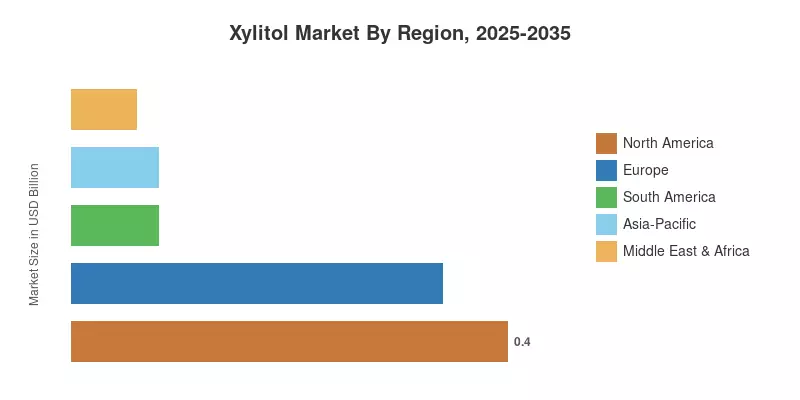
Nordamerika hat einen Anteil von 34,0 % am Xylit-Markt, angeführt von zuckerfreien Kaugummis, Zahnpflege und Keto-Lebensmittel-Formaten. Der asiatisch-pazifische Raum ist der am schnellsten wachsende Markt mit einer CAGR von 6,9 %, angetrieben durch die Produktionskapazität in China und steigende Zahnpflege-Ausgaben in Indien. Die nordischen Zahnpflege-Traditionen und strengen Gesundheitsanspruchsgesetze helfen Europa, mit einem Anteil von 28,5 % den zweiten Platz einzunehmen. Das kommende Jahrzehnt wird Unternehmen belohnen, die kostengünstige Rohstoffe mit umweltfreundlicher Umwandlungschemie kombinieren.

Wichtige Erkenntnisse aus dem Bericht

• Nach Form

  • Festes Xylit hält einen Anteil von 88,0 % am Xylit-Markt und spiegelt seine Dominanz in Kaugummi, Tabletten und Tischkristallen wider.
  • Flüssiges Xylit ist die am schnellsten wachsende Form mit einer CAGR von 6,6 % in Anwendungen wie Sirup, Getränken und Mundspülungen.

• Nach Anwendung

  • Lebensmittel und Getränke machen 61,5 % aus, wobei Kaugummis das größte Teilsegment sind.
  • Kosmetik und Toilettenartikel wachsen mit einer CAGR von 6,0 %, dem schnellsten Tempo unter den Anwendungen.
  • Pharmazeutika generierten 2025 0,12 Milliarden USD aus Sirupen, Kaubonbons und Lutschern.

• Nach Region

  • Nordamerika führt den Xylit-Markt mit einem Anteil von 34,0 % an.
  • Asien-Pazifik wächst bis 2035 mit einer CAGR von 6,9 %.
  • Südamerika trägt 0,08 Milliarden USD bei, angeführt von Brasilien.

Marktgröße und Prognose (2021–2035)

Market Research Future entwickelte die Basislinie für den Xylit-Markt anhand von Daten zur Herstellerkapazität und -lieferungen, Zollinformationen zu polyhydrierten Alkoholen unter HS 2905.49 und dem Verbrauch nach Endverwendung, der Kaugummi, Zahnpflege, pharmazeutische und Lebensmittelformulierungen umfasst. Diese Bottom-up-Zahlen wurden mit Umsatzangaben von börsennotierten Produzenten [17][18][19] abgeglichen und durch Interviews mit Einkaufsleitern, Formulierern und Distributoren in allen fünf Bereichen bestätigt.
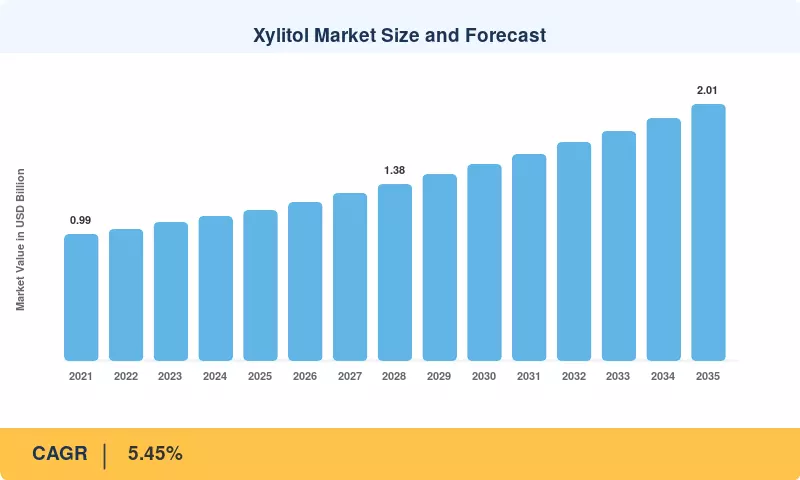
Xylit Marktgröße und Prognose
Our Impact

Enabled $4.3B Revenue Impact for Fortune 500 and Leading Multinationals

Partnering with 2000+ Global Organizations Each Year

30K+ Citations by Top-Tier Firms in the Industry

Driver Impact Analysis

Driver ~% Impact on CAGR Geographic Relevance Impact Timeline
Diabetes and Metabolic Health Burden ~+1.0% Global; strongest in Asia-Pacific and North America Long-term (≥4 yr)
Sugar Reduction Taxes and Reformulation Policy ~+0.9% Europe, South America, Middle East & Africa Medium-term (2–4 yr)
Oral Health Claims and Sugar-Free Gum Demand ~+0.9% Europe, North America, Japan Short-term (≤2 yr)
Clean-Label Reformulation in Food and Beverages ~+0.7% North America, Europe Medium-term (2–4 yr)
Pharmaceutical Excipient Demand ~+0.6% Global Medium-term (2–4 yr)
Asia-Pacific Feedstock and Capacity Scale ~+0.7% China, India Long-term (≥4 yr)

Diabetes and Metabolic Health Burden

The International Diabetes Federation counted 537 million adults with diabetes in 2021 and projects 783 million by 2045, a 46% increase . That trajectory directly expands the consumer base for sweeteners with minimal glycemic impact. Xylitol's glycemic index sits near 7, against roughly 65 for sucrose, which lets brands position diabetic-friendly confectionery, beverages, and baking mixes without the aftertaste issues of high-intensity sweeteners. Demand concentrates in China, India, and the United States, which together hold the largest diabetic populations.

Sugar Reduction Taxes and Reformulation Policy

Fiscal pressure on sugar keeps widening. The World Bank's global database tracks taxes on sweetened drinks in more than 100 countries [12], and tiered designs such as the UK levy, which steps up at 5 g and 8 g of sugar per 100 ml, reward deep reformulation rather than modest trimming. Xylitol delivers sucrose-equivalent sweetness at about 40% fewer calories, making it a practical bulk replacement where taste parity matters more than ingredient cost.

Oral Health Claims and Sugar-Free Gum Demand

Oral disease affects about 3.5 billion people worldwide, according to WHO's 2022 Global Oral Health Status Report [2]. Regulation (EU) No 432/2012 authorizes a plaque-reduction claim for gum sweetened with 100% xylitol [6], following EFSA's 2011 scientific opinion [5]. That claim creates a defensible marketing position for gum and mint brands. Pediatric dental associations also recognize xylitol as a caries-prevention adjunct [13], extending demand into school programs and family oral care.

Clean-Label Reformulation in Food and Beverages

Brand owners are removing artificial sweeteners from ingredient decks, and xylitol fits a plant-derived narrative that resonates with label-reading shoppers. The Codex General Standard for Food Additives lists xylitol (INS 967) for use across dozens of food categories under good manufacturing practice . Its 1:1 sweetness ratio with sucrose cuts reformulation time by an estimated 30–40% compared with high-intensity blends, which need bulking agents and masking flavors to rebuild texture.

Pharmaceutical Excipient Demand

Xylitol's non-fermentable profile and cooling taste make it a preferred sweetening excipient in pediatric syrups, chewable vitamins, and lozenges. U.S. regulation at 21 CFR 172.395 permits its use in foods for special dietary purposes [8], and pharmacopoeial monographs support drug-grade supply. Roquette's acquisition of IFF Pharma Solutions, valued at up to USD 2.85 billion, consolidated a major excipient portfolio and signals sustained strategic interest in pharmaceutical-grade polyols [19].

Asia-Pacific Feedstock and Capacity Scale

China's 2023 corn harvest of roughly 289 million tonnes, up about 4% year on year, generates a vast corncob stream that underpins low-cost xylose extraction [11]. Market Research Future estimates that Chinese plants supply around two-thirds of global xylitol volume. Integrated producers in Shandong and Zhejiang convert residues into xylose, xylitol, and arabinose in single facilities, compressing unit costs and enabling aggressive export pricing that widens access in price-sensitive emerging markets.

Restraints Impact Analysis

Restraint impacts are directional estimates of how far each factor pulls xylitol market growth below its potential. Values are not additive and should be read alongside the driver estimates in Section 4.

Restraint ~% Impact on CAGR Geographic Relevance Impact Timeline
Cardiovascular Safety Findings ~−0.6% North America, Europe Short-term (≤2 yr)
Production Cost Premium over Sucrose and Other Polyols ~−0.5% Global Medium-term (2–4 yr)
Gastrointestinal Tolerance and Laxative Labeling ~−0.3% Europe, North America Long-term (≥4 yr)
Competition from Stevia, Erythritol, and Allulose ~−0.4% North America, Asia-Pacific Medium-term (2–4 yr)
Pet Toxicity Awareness ~−0.2% North America, Europe Short-term (≤2 yr)

Cardiovascular Safety Findings

A Cleveland Clinic-led study published in the European Heart Journal in June 2024 analyzed more than 3,000 participants and associated elevated circulating xylitol with a higher three-year risk of major cardiac events [4]. A test drink raised plasma xylitol levels more than 1,000-fold and enhanced platelet reactivity. Causation remains unproven, but the findings prompted some formulators to pause high-dose beverage launches pending follow-up trials.

Production Cost Premium over Sucrose and Other Polyols

Hydrogenation-based production consumes significant energy and hydrogen, and xylose recovery from corncob typically yields only 20–30% of dry feedstock weight. Bulk xylitol therefore trades at several times the price of refined sugar and above sorbitol [21]. Cost-sensitive food manufacturers often blend xylitol with cheaper polyols, which dilutes per-unit consumption even when product launches grow.

Gastrointestinal Tolerance and Laxative Labeling

Regulation (EU) No 1169/2011 requires a laxative-effect warning on foods containing more than 10% added polyols [7]. That label discourages use in high-dose formats such as baked goods and meal replacements. Tolerance varies widely, and consumers new to polyols frequently report bloating, which limits repeat purchase in mainstream grocery categories outside gum and mints.

Competition from Stevia, Erythritol, and Allulose

Alternative sweeteners compete for the same reformulation budgets. U.S. FDA guidance excludes allulose from added-sugar declarations and assigns it 0.4 kcal/g, roughly 10% of sucrose , giving it a cleaner calorie story than xylitol's 2.4 kcal/g. Stevia blends win on cost per sweetness unit, pressuring xylitol in beverages where bulk is less important than sweetness intensity.

Pet Toxicity Awareness

The FDA warns that xylitol can cause life-threatening hypoglycemia in dogs at doses near 0.1 g/kg of body weight, with liver failure possible above roughly 0.5 g/kg . Retailers and brands increasingly add pet-warning labels, and some households avoid xylitol products entirely. The effect is modest but persistent in North America, where dog ownership is high.

Xylit-Markt Chancen

Fermentations- und enzymatische Produktionswege

Die mikrobielle Fermentation von Xylose unter Verwendung von gentechnisch veränderten Hefen vermeidet Hochdruckwasserstoff und Nickel-Katalysatoren, wodurch sowohl das Sicherheitsrisiko als auch die Belastungen durch Rückstandsmetalltests verringert werden. Produzenten, die diese Wege kommerzialisieren, können niedrigere Kohlenstoff-Xylitole an Markeninhaber vermarkten, die mit Scope-3-Berichtspflichten konfrontiert sind. Market Research Future erwartet, dass die erste bedeutende Fermentationskapazität um 2030 in den Xylitol-Markt eintreten wird.

Unerschlossene Nachfrage im Bereich Mundpflege in Schwellenländern

Südostasien, Südostasien und Subsahara-Afrika tragen einen großen Anteil der 3,5 Milliarden Menschen, die von Mundkrankheiten betroffen sind [2], dennoch bleibt die Xylitpenetration in Zahnpasta und Kaugummi gering. Die FSSAI-Zusatzstoffverordnungen Indiens erlauben Xylit in den Kategorien Süßwaren und Milchprodukte [14], und der wachsende moderne Einzelhandel schafft Zugang zur Distribution. Preisgünstige Portionsbeutel und schulische Zahnprogramme bieten Einstiegsmöglichkeiten.

Wertschöpfung von Co-Produkten in der Biorefinery

Zellstofffabriken und Zuckerrohrverarbeiter erzeugen Hemicelluloseströme, die oft zur Energiegewinnung verbrannt werden. Die Umwandlung dieser Xylose in ein lebensmitteltaugliches Produkt, das in den nordischen Ländern als Birkenzucker vermarktet wird, verwandelt ein niedrigwertiges Restprodukt in eine Premium-Zutat. Die Richtlinie zur Unternehmensnachhaltigkeitsberichterstattung der EU erhöht das Käuferinteresse an rückverfolgbaren, rückstandsbasierenden Inputs [15] und belohnt Mühlen, die Xylit zusammen mit Lignin und Bioethanol integrieren.

Co-Entwicklung und Direktvertriebs-Geschäftsmodelle

Zutatenlieferanten können über den Verkauf von Rohstoffen hinausgehen, indem sie Verträge für Formulierungen als Dienstleistung anbieten, sensorische und Stabilitätsdaten an Kaugummi- und Getränkentwickler lizenzieren und verifiziertes Beschaffungsdaten als Rückverfolgbarkeitsnachweis verkaufen. Direktvertriebs-Abonnementsmarken für Xylit-Minzbonbons, Kaugummi und Mundspülungen erzielen bereits Online-Preisaufschläge und schaffen einen margenstarken Kanal für vertikal integrierte Produzenten.

Pädiatrische und nasale pharmazeutische Formate

Die American Academy of Pediatric Dentistry erkennt Xylit als Zusatz zur Kariesprävention an [13], was Raum für dosierte Gele, Tücher und Sirupe für kleine Kinder schafft, die Kaugummi nicht sicher kauen können. Xylit-Nasensprays und Ohrpflegeprodukte sind eine separate Nische mit starken Wiederkäufen. Beide Formate bevorzugen flüssige Grade, was mit dem am schnellsten wachsenden Segment der Formen übereinstimmt.

Xylit-Markt Zukunftsaussichten

Biomanufacturing Replaces High-Pressure Hydrogenation

The next decade will test whether fermentation can match hydrogenation on cost. Producers that reach commercial scale with engineered yeast or enzymatic conversion will cut hydrogen demand, eliminate nickel residues, and reduce energy intensity. OECD-FAO projections of stable but volatile agricultural commodity prices through 2033 [21] favor routes that use residues rather than food crops. Market Research Future expects these technologies to reshape xylitol market cost curves after 2030.

Circular Feedstocks and Sustainability Reporting

The EU's Corporate Sustainability Reporting Directive brings roughly 50,000 companies into mandatory sustainability disclosure [15]. Food and personal care brands will need verifiable data on ingredient origin, land use, and process emissions. Xylitol made from pulp-mill hemicellulose, sugarcane bagasse, or corncob residues can document circularity credentials that commodity sweeteners lack, turning traceability into a pricing lever rather than a compliance cost.

Ageing Populations and Metabolic Health

WHO projects that by 2030 one in six people worldwide will be aged 60 or older [16], and IDF forecasts 783 million adults with diabetes by 2045 . Older consumers face higher risks of dry mouth, root caries, and glucose intolerance, all conditions where xylitol lozenges, rinses, and fortified foods offer functional value. Pharmacy and medical-nutrition channels will capture a growing share of demand.

Evidence-Led Regulation and Safety Science

Recent cardiovascular findings on xylitol [4] and erythritol will drive a wave of controlled trials and possible regulatory reviews. EFSA's 2023 re-evaluation of erythritol [24] shows how polyol safety assessments can tighten intake guidance. Producers that fund independent research and support dose-appropriate labeling will be better placed to defend positioning if regulators revisit xylitol's status.

Regional Market Share Analysis

Region Key Metric (2025) Primary Investment Themes
North America 34.0% share Sugar-free gum, keto foods, pediatric oral care
Europe 28.5% share Health-claim marketing, hardwood-derived supply, CSRD traceability
Asia-Pacific 6.9% CAGR Corncob feedstock, capacity expansion, rising oral care spend
South America USD 0.08 billion Front-of-pack labeling reformulation, confectionery
Middle East & Africa 5.5% share Sugar excise taxes, halal-certified imports
Total USD 1.18 billion Global reformulation and oral health demand

Regional growth in the xylitol market diverges sharply between mature consumption hubs and production-led emerging regions. North America and Europe hold most value through premium gum and oral care, while Asia-Pacific combines manufacturing scale with fast-rising domestic demand.

North America

Country Key Metric (2025) Key Driver
United States 78.5% share of region Sugar-free gum, keto and diabetic foods
Canada 5.2% CAGR Natural health product licensing, oral care
Mexico USD 0.03 billion Front-of-pack warning labels and soda tax
Rest of North America 3.0% share of region Imported confectionery and oral care

The United States dominates regional consumption, helped by FDA permission for xylitol in special dietary foods under 21 CFR 172.395 [8] and a large keto and diabetic product category. Canada's natural health product framework supports xylitol lozenges and oral rinses. Mexico is the reformulation story to watch: its 2014 beverage tax and the 2020 NOM-051 warning labels push manufacturers toward polyols that avoid "excess sugar" octagons. Pet-warning concerns temper household adoption .

Europe

Country Key Metric (2025) Key Driver
Germany 24.0% share of region Oral care manufacturing, pharmacy channel
United Kingdom 5.0% CAGR Soft Drinks Industry Levy reformulation
Italy USD 0.04 billion Sugar-free confectionery and mints
France 17.5% share of region Pharmacy oral care and sugar-free gum
Russia 3.8% CAGR Domestic confectionery under trade constraints
Rest of Europe 24.5% share of region Nordic hardwood-derived supply and dental programs

Europe benefits from the only harmonized dental health claim for xylitol gum [6], which major gum brands use across packaging and advertising. Germany and France channel significant volume through pharmacies, where xylitol toothpastes and lozenges command premium shelf space. Nordic countries, home to the original Turku caries studies of the 1970s, sustain hardwood-derived production. Laxative-labeling rules under Regulation 1169/2011 [7] restrain use in high-dose bakery, while Russia faces supply-chain friction from sanctions.

Asia-Pacific

Country Key Metric (2025) Key Driver
China 46.0% share of region Corncob feedstock, integrated production, GB 2760-2024
India 8.6% CAGR Oral care penetration, diabetic population
Japan USD 0.05 billion FOSHU-approved xylitol gum
Australia 6.5% share of region Sugar reduction and natural product retail
Rest of Asia-Pacific 6.4% CAGR Southeast Asian gum and beverage growth

China anchors the region as both producer and consumer, and the GB 2760-2024 food additive standard, effective February 2025, updated permitted uses across food categories . Japan built one of the world's most established xylitol gum categories through its Foods for Specified Health Uses system [20]. India posts the fastest country growth as modern retail expands and diabetes prevalence climbs [14]. Southeast Asian markets add incremental beverage and confectionery volume.

South America

Country Key Metric (2025) Key Driver
Brazil 61.0% share of region ANVISA front-of-pack labeling, confectionery scale
Argentina 4.9% CAGR Law 27,642 warning labels
Rest of South America 18.5% share of region Chile and Colombia labeling regimes

Front-of-pack labeling drives reformulation across the region. Brazil's ANVISA rule RDC 429/2020, enforced from October 2022, flags products high in added sugar with a magnifying-glass symbol, prompting confectioners to test polyol blends. Argentina's 2021 labeling law adopted black octagon warnings similar to Chile's pioneering system. Currency volatility and import dependence for xylitol keep prices elevated, so adoption concentrates in premium gum and pharmacy oral care.

Middle East & Africa

Country Key Metric (2025) Key Driver
South Africa 31.0% share of region Health Promotion Levy on sugary drinks
Saudi Arabia 6.1% CAGR SFDA excise tax and diabetes prevalence
Rest of Middle East & Africa 41.5% share of region UAE and Gulf imports, halal oral care

Saudi Arabia applies a 50% excise tax on sweetened beverages, and the Gulf carries some of the world's highest diabetes prevalence rates , creating demand for sugar-free confectionery and oral care. South Africa's Health Promotion Levy, introduced in 2018 at 2.1 cents per gram of sugar above 4 g per 100 ml, encourages beverage reformulation. Halal certification and import logistics shape supplier selection across the region.

Xylitol Market By Region, 2025-2035

Xylit-Markt Marktsegmentierung

By Form

Segment Key Metric (2025) Primary Demand Driver
Solid 88.0% share Gum, tablets, mints, and tabletop crystals
Liquid 6.6% CAGR Syrups, beverages, oral rinses, nasal sprays

Solid xylitol leads the xylitol market by form because crystalline material compresses cleanly into tablets, coats gum pellets, and stores without microbial risk. Most hydrogenation plants crystallize their output by default, reinforcing supply availability. Liquid xylitol grows faster as beverage developers, pediatric syrup makers, and oral rinse brands seek ready-to-dose solutions that skip dissolution steps. Its growth also benefits from nasal and ear-care formats that rely on solution-grade material.

By Application

Segment Key Metric (2025) Primary Demand Driver
Food and Beverages 61.5% share Sugar reduction in gum, confectionery, and drinks
Food and Beverages – Chewing Gums USD 0.45 billion Dental health claims and sugar-free positioning
Food and Beverages – Bakery and Confectionery 5.8% CAGR Diabetic and keto baked goods, sugar-free candy
Food and Beverages – Other Food and Beverages USD 0.15 billion Beverages, dairy, tabletop sweeteners
Oral Hygiene Products 21.0% share Toothpaste, mouthwash, and dry-mouth lozenges
Cosmetics and Toiletries 6.0% CAGR Humectant and skin-hydration formulations
Pharmaceuticals USD 0.12 billion Pediatric syrups, chewables, and lozenges

Food and Beverages remains the largest application in the xylitol market, and Chewing Gums is its anchor sub-segment thanks to the EU dental claim and decades of brand marketing. Bakery and Confectionery grows faster as diabetic and keto product lines expand, while Other Food and Beverages covers drinks and tabletop formats. Oral Hygiene Products ranks second, and Cosmetics and Toiletries posts the fastest growth as skin-care formulators adopt xylitol as a humectant.

Competitive Benchmarking

The xylitol market exhibits low concentration, with an estimated Herfindahl-Hirschman Index of approximately 700 and five leading manufacturers representing approximately 40-50% of revenue. Chinese integrated producers dominate on volume thanks to their availability of corncobs, while Western players compete on provenance from hardwood, medicinal grades and application assistance. Fragmentation continues because some regional operations service local gum and toothpaste manufacturers under short-term contracts.

Company Est. Revenue Share Range Key Offerings for Xylitol Strategic Positioning
Zhejiang Huakang Pharmaceutical ~11–14% Crystalline and liquid xylitol, xylose, arabinose Scale leader with integrated corncob processing
Shandong Futaste Pharmaceutical ~9–12% Food- and pharma-grade xylitol, xylo-oligosaccharides Vertically integrated corncob-to-polyol producer
International Flavors & Fragrances (IFF) ~7–10% Hardwood-derived xylitol for gum and oral care Premium Nordic-sourced supply for global brands
Roquette Frères ~5–8% Pharmaceutical-grade polyols and excipients Excipient leader expanded via IFF Pharma Solutions
Cargill ~4–7% Polyol portfolio and sweetener blends Global distribution and formulation support
Shandong Lujian Biological Technology ~3–6% Xylitol, xylose, and functional sugars Cost-competitive exporter
CSPC Shengxue Glucose ~3–5% Food-grade xylitol and polyols Diversified polyol producer in Hebei
Mitsubishi Shoji Foodtech ~2–4% Xylitol for gum and confectionery Strong position in Japanese FOSHU gum
Hylen Co., Ltd. ~1–3% Xylitol and specialty sugars Niche exporter to Asian and Western buyers
Novagreen Inc. ~1–2% Xylitol from agricultural residues Residue-based, sustainability-focused supplier

Recent News & Developments

  • Nature Medicine (February 2023): A Cleveland Clinic team linked high blood erythritol levels to cardiovascular event risk, prompting formulators to reassess polyol blends and shifting some demand toward xylitol before similar scrutiny followed.
  • World Health Organization (May 2023): WHO issued guidance against non-sugar sweeteners for weight control, but polyols including xylitol fell outside the guideline's scope, limiting direct regulatory spillover. [3]
  • EFSA (June 2023): EFSA completed its re-evaluation of erythritol (E 968), signaling closer intake scrutiny across polyol additives that may extend to xylitol. [24]
  • Roquette Frères (February 2024): Roquette agreed to acquire IFF Pharma Solutions, consolidating a major pharmaceutical excipient portfolio relevant to xylitol-sweetened drug formulations. [19]
  • National Health Commission of China (March 2024): China published GB 2760-2024, effective February 2025, updating food additive use provisions that govern domestic xylitol applications.
  • European Heart Journal (June 2024): A study associated high circulating xylitol with cardiovascular risk, triggering reformulation reviews and calls for controlled trials. [4]
  • Roquette Frères (May 2025): Roquette completed the IFF Pharma Solutions transaction, strengthening its ability to supply pharmaceutical-grade sweetening excipients globally. [19]

Xylit-Markt Marktberichtsumfang

Parameter Details
Marktumfang Der Bericht umfasst festes und flüssiges Xylitol, das in Lebensmitteln und Getränken, Mundhygieneprodukten, Kosmetika und Toilettenartikeln sowie in der Pharmaindustrie über direkte und Vertriebskanäle verwendet wird.
Studienzeitraum 2021–2035
Basisjahr 2025
Historische Daten 2021–2024
Prognosezeitraum 2026–2035
Marktgröße im Jahr 2025 1,18 Milliarden USD
Marktgröße im Jahr 2035 2,01 Milliarden USD
CAGR (2026–2035) 5,45%
Schnellst wachsende Segmente Asien-Pazifik (6,9% CAGR); Flüssig (6,6% CAGR); Kosmetika und Toilettenartikel (6,0% CAGR); Bäckerei und Süßwaren (5,8% CAGR)
Abgedeckte Regionen Nordamerika, Europa, Südamerika, Asien-Pazifik, Mittlerer Osten und Afrika sowie ROW
Profilierte Unternehmen Zhejiang Huakang Pharmaceutical, Shandong Futaste Pharmaceutical, International Flavors & Fragrances, Roquette Frères, Cargill, Shandong Lujian Biological Technology, CSPC Shengxue Glucose, Mitsubishi Shoji Foodtech, Hylen Co. Ltd, Novagreen Inc.
Bewährungswährung USD Milliarden
Methode 350+ primäre Experteninterviews; Bottom-up-Marktschätzung; Top-down-Validierung; Daten-Triangulation; szenariobasierte Prognosen; Echtzeit-Projektverfolgung

FAQs

Wie sollten Käufer die Lieferanten des Xylit-Marktes für pharmazeutische Anwendungen qualifizieren?
Fordern Sie die Einhaltung der USP-NF- oder Ph. Eur.-Xylitmonographien, eine Arzneimittel-Herstellungsakte oder ein Zertifikat über die Eignung sowie Daten über verbleibendes Nickel aus der Hydrierung an. Überprüfen Sie die Rückverfolgbarkeit des Rohmaterials während der Lieferantenanmeldung. [8]
Beeinflusst der Ursprung des Rohmaterials die Preise auf dem Xylit-Markt?
Ja. Xylit aus Hartholz wird normalerweise teurer verkauft als Material aus Maiskolben, da das Angebot aus nordischen Zellstofffabriken begrenzt ist und nach Herkunft vermarktet wird. Die chemische Identität ist dieselbe, daher spiegelt die Preisdifferenz eher das Branding als die Leistung wider. [18]
Was sollten Investoren bewerten, bevor sie neue Xylit-Kapazitäten finanzieren?
Priorisieren Sie langfristige Rohstoffverträge, Wasserstoffkosten und den Xylose-Umwandlungsgrad pro Tonne. Anlagen, die in der Nähe von Maisverarbeitern oder Zellstofffabriken liegen, haben ein geringeres Logistikrisiko und können Lignin und Arabinose-Nebenprodukte monetarisieren. [21]
Wird Xylit in halal- und koscheren Produkten akzeptiert?
Pflanzenbasiertes Xylit ist im Allgemeinen akzeptabel, aber die Zertifizierung hängt von den Verarbeitungshilfen und den Kontrollen der Einrichtung ab. Exporteure in die Golfstaaten benötigen in der Regel halal-Zertifikate von Stellen, die von der einführenden Behörde anerkannt sind.
Wie geht der Xylit-Markt mit Produkten für Kleinkinder um?
Pädiatrische zahnärztliche Richtlinien unterstützen Xylit zur Kariesprävention, raten jedoch zu Dosierungsgrenzen und dem Vermeiden von Kaugummi für kleine Kinder. Marken im Xylit-Markt bevorzugen daher Tücher, Gele und Sirupe für diese Altersgruppe. [13]
Kann Xylit Zucker eins zu eins beim Backen ersetzen?
Die Süße entspricht Saccharose, aber Xylit karamellisiert nicht und nährt Hefe nicht, sodass Bräunung und Aufgehen leiden. Bäcker mischen es typischerweise mit Fasern oder anderen Polyolen, um die Struktur wiederherzustellen.
Welche aufkommenden Anwendungsfälle könnten den Xylit-Markt umgestalten?
Xylit-abgeleitete Chemikalien wie Xylarsäure für Reinigungsmittel und biobasierte Polyester-Vorläufer bewegen sich in Richtung einer frühen kommerziellen Skalierung. Diese Absatzmöglichkeiten könnten nicht spezifikationsgerechtes Material aufnehmen und die Einnahmen des Xylit-Marktes über Lebensmittel hinaus diversifizieren. [21]
Autor
Autor Author Profile Varsha More LinkedIn Senior Research Analyst
Experienced business professional with a demonstrated history of working in the CFnB industry. Skilled in market research, and market estimation. Strong professional with a Masters focused in marketing management.

Research Approach


Secondary Research

The secondary research process involved comprehensive analysis of regulatory databases, peer-reviewed scientific journals, food science publications, and authoritative health and regulatory organizations. Key sources included the US Food & Drug Administration (FDA), European Food Safety Authority (EFSA), Joint FAO/WHO Expert Committee on Food Additives (JECFA), Codex Alimentarius Commission, International Food Additives Council (IFAC), International Sweeteners Association (ISA), Calorie Control Council, American Dental Association (ADA), European Association of Dental Public Health, National Institutes of Health (NIH), National Center for Biotechnology Information (NCBI/PubMed), US Department of Agriculture (USDA) Economic Research Service, Food Standards Australia New Zealand (FSANZ), Health Canada – Food Directorate, China National Center for Food Safety Risk Assessment (CFSA), European Commission Directorate-General for Health and Food Safety, World Health Organization (WHO) Global Health Observatory, EU Eurostat Agri-Food Database, and national food safety authority reports from key markets. These sources were used to collect regulatory approval data, safety assessments, production statistics, import/export data, dental health studies, and market landscape analysis for xylitol across food & beverage, oral care, pharmaceutical, and personal care applications.


Primary Research

In order to gather both qualitative and quantitative insights, supply-side and demand-side stakeholders were interviewed during the primary research process. CEOs, VPs of Manufacturing, heads of regulatory affairs, R&D directors, and commercial directors from producers of xylitol, processors of corn and birch, and suppliers of ingredients were examples of supply-side sources. Product development managers, procurement leads, and regulatory experts from food and beverage businesses, oral care product companies, pharmaceutical formulators, and producers of nutritional supplements were examples of demand-side suppliers. Primary research obtained information on formulation adoption patterns, pricing tactics, and raw material sourcing dynamics. It also verified manufacturing capacity expansion timeframes and validated market segmentation.

Primary Respondent Breakdown:

By Designation: C-level Primaries (32%), Director Level (31%), Others (37%)

By Region: North America (32%), Europe (30%), Asia-Pacific (33%), Rest of World (5%)


Market Size Estimation

Global market valuation was derived through revenue mapping and production volume analysis. The methodology included:

Identification of 40+ key manufacturers across North America, Europe, Asia-Pacific, and Latin America

Product mapping across corn-based, birch-based, sugarcane-based, and other plant-source xylitol categories

Analysis of reported and modeled annual revenues specific to xylitol portfolios

Coverage of manufacturers representing 72-78% of global market share in 2024

Extrapolation using bottom-up (production volume × ASP by region) and top-down (manufacturer revenue validation) approaches to derive segment-specific valuations across oral care, food & beverage, pharmaceuticals, cosmetics, and dietary supplements applications

Kostenloses Muster herunterladen

Bitte füllen Sie das folgende Formular aus, um ein kostenloses Muster dieses Berichts zu erhalten

Download PDF ×

We do not share your information with anyone. However, we may send you emails based on your report interest from time to time. You may contact us at any time to opt-out.
















